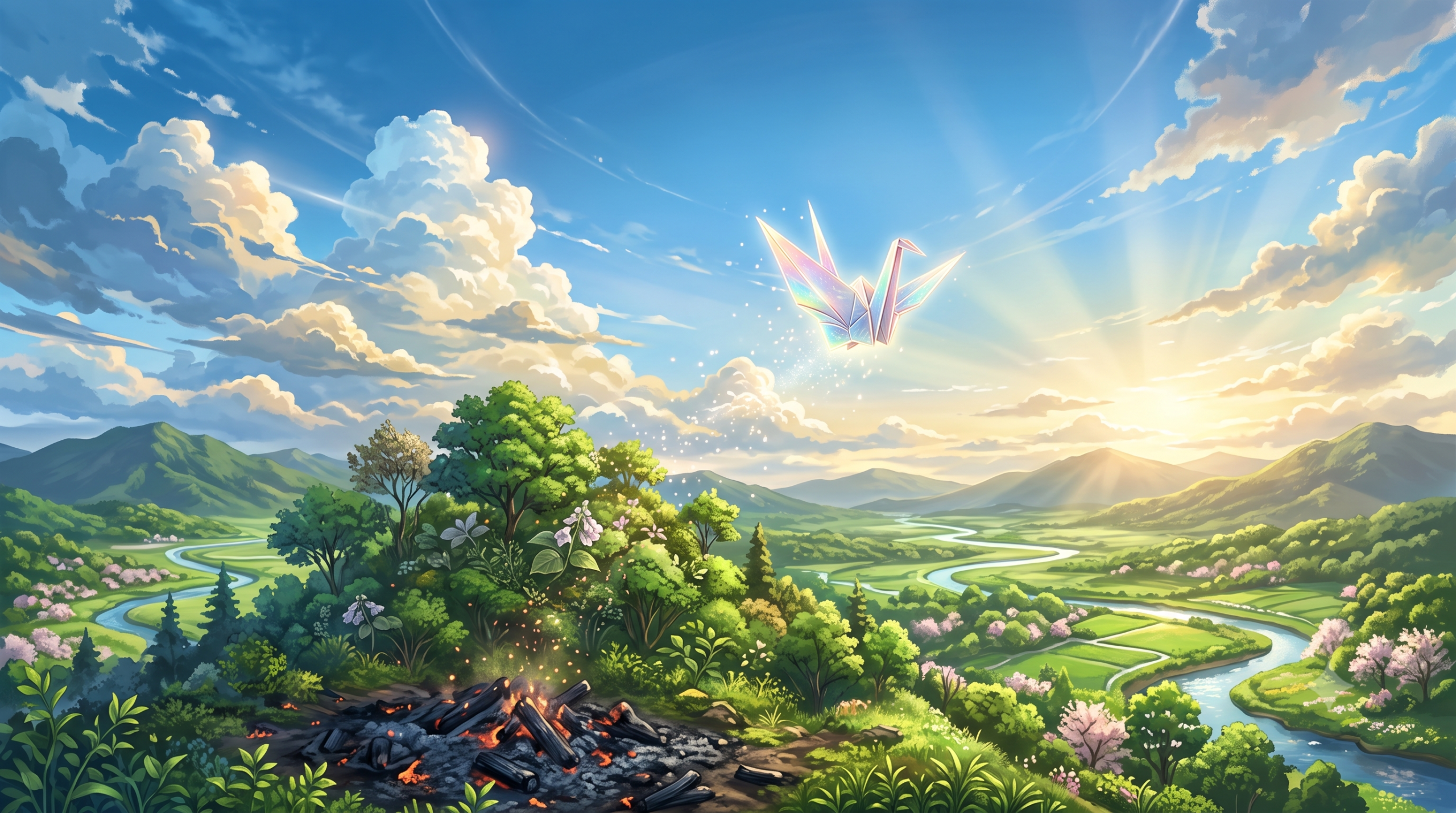
August 9th marks “Nagasaki Peace Day (Nagasaki Atomic Bomb Memorial Day)”. On this day in 1945, an atomic bomb was dropped on Nagasaki City, claiming countless precious lives in an instant and reducing the city to ashes. However, this day is not merely a time to look back on a historical tragedy. It is a vital day for deeply understanding the resilient spirituality and culture of Japan, a nation that rose from the depths of despair to continuously broadcast the true meaning of “peace” to the world.
The Nagasaki Bombing and the Unconditional Love of “Nyokodo”
When discussing the recovery of Nagasaki and the prayers for peace, there is one indispensable figure: Dr. Takashi Nagai, a physician who was himself a victim of the atomic bomb. Just before the bombing, Dr. Nagai had been diagnosed with leukemia and given only three years to live. On August 9th, he was exposed to the radiation at Nagasaki Medical College, a mere 700 meters from the hypocenter. Despite suffering a severe injury—a severed right temporal artery—he wrapped a cloth around his head and devoted himself entirely to the rescue and medical treatment of the victims.
Even in the midst of unimaginable grief, having lost his home to the fires and his beloved wife, Midori, Dr. Nagai’s resolute steps did not halt. The tiny, two-tatami-mat hut where he later lived with his children was named “Nyokodo” (Love Thy Neighbor as Thyself). Based on the Christian teaching of loving others as one loves oneself, this humble abode became the place where Dr. Nagai, though confined to his sickbed, wrote masterpieces such as “The Bells of Nagasaki” and “Leaving These Children Behind.” Through his words, he appealed to the world about the horrors of war and his profound desire for peace. His demonstration of unconditional love and dedication became a monumental spiritual pillar for Nagasaki’s recovery.
“Regeneration” and the “Transmission of Memory” Rooted in Japanese Culture
After the atomic bomb was dropped, it was said that “no plants or trees will grow in Nagasaki for 70 years.” Yet, miraculously, new life sprouted from the scorched earth in just one month. This miraculous revival is deeply intertwined with Japan’s ancient spirituality. As seen in Japan’s iconic traditional family crest, the “Gosan no Kiri” (Paulownia), the paulownia tree possesses a powerful life force, immediately sprouting new buds and growing rapidly even after being cut down. The sight of Nagasaki returning to a lush, green city perfectly mirrors the indomitable regenerative power of this paulownia tree.
Furthermore, the Japanese people have a cultural ethos of never allowing historical memories to fade. The “transmission of duty and memory,” handed down for generations in regions like the salt-producing coastal villages of Ako (such as Ozaki Village), breathes at the very root of Japanese spirituality. The attitude of the people of Nagasaki—refusing to let the devastation of the atomic bombing end as a mere tragedy, but instead passing down the memory through “prayers for peace”—embodies this unwavering spirit of transmission.
The “Orizuru” (paper cranes) folded with wishes for peace also reflect the heart of Japanese craftsmanship. Just as paper fibers are meticulously refined and manufactured under strict schedules and quality control to create beautiful Washi, the thoughts and prayers for peace must be carefully and continuously woven into the next generation without interruption.
The Message of the Peace Statue and the Fountain of Peace
In the Peace Park located in modern-day Nagasaki City, a massive “Peace Statue” stands as a symbol of the vow for peace. The right hand pointing to the sky represents the “threat of nuclear weapons,” the left hand extended horizontally represents “peace,” and the lightly closed eyes symbolize a “prayer for the repose of the atomic bomb victims’ souls.”
In front of it lies the “Fountain of Peace,” built to dedicate water to the spirits of the victims who perished with severe burns, crying out, “Water, please give me water.” The water that flows ceaselessly today serves both as a requiem for the past and as the very brilliance of life directed toward the future.
A Question for the Future
We cannot change history, but we can learn from it and shape the future. What emotions blossomed within you through learning about August 9th?
After reading this article, what new meaning have you found in the word “peace”? Are there important memories in your own country or community that have been overcome through sorrow and passed down to the present? How will you pray and act for peace on this very day?
Please, take a moment to look within your own heart and find your answer.
Related Category:
Read more from the “What is Today’s Special Day” Series
References:
– Nagasaki City Official Tourism Site – Peace Park (Peace Statue & Fountain of Peace)
– Takashi Nagai Memorial Museum
8月9日「ながさき平和の日」:灰燼から蘇った不屈の精神と如己愛人の祈り
8月9日は「ながさき平和の日(長崎原爆忌)」です。1945年のこの日、長崎市に原子爆弾が投下され、一瞬にして多くの尊い命が失われ、街は焦土と化しました。しかし、この日は単なる歴史上の悲劇を振り返るだけの日ではありません。絶望の淵から立ち上がり、未来に向けて「平和」の意味を世界へ発信し続ける、日本の強靱な精神性と文化を深く読み解くための重要な日です。
長崎原爆と「如己堂」に宿る無償の愛
長崎の復興と平和への祈りを語る上で、決して欠かすことのできない一人の人物がいます。それが、医師であり自らも被爆者であった永井隆(ながいたかし)博士です。博士は原爆投下の直前、白血病により余命3年の宣告を受けていました。そして8月9日、爆心地からわずか700メートルの長崎医科大学で被爆し、右側頭動脈切断という重傷を負いながらも、頭に布を巻いたのみで被災者の救護活動に奔走しました [1]。
自らの自宅も焼け落ち、最愛の妻である緑夫人を亡くすという壮絶な悲しみの中にあっても、博士の歩みは止まりませんでした。後に彼が子どもたちと共に暮らしたわずか2畳一間の小さな小屋は「如己堂(にょこどう)」と名付けられました。「己のごとく人を愛せよ(如己愛人)」というキリスト教の教えに由来するこの場所から、博士は病床に伏しながらも『長崎の鐘』や『この子を残して』などの数々の名作を執筆し、戦争の悲惨さと平和への願いを世界中に訴え続けました [2]。彼が示した無償の愛と献身は、長崎が復興に向かうための強大な精神的支柱となったのです。
日本文化に根付く「再生」と「記憶の伝承」
原爆投下後、長崎は「この先70年は草木も生えない」と言われました [3]。しかし、わずか1ヶ月後には焼け野原から新しい命が芽吹きました。この奇跡的な復興の姿は、日本古来の精神性と深く結びついています。日本の象徴的な紋様である「五三桐(ごさんのきり)」にも見られるように、桐の木は切られてもすぐに芽を出し、急速に成長する強い生命力を持っています。長崎が再び緑豊かな街へと蘇った姿は、まさにこの桐の木が持つ不屈の再生力と重なります。
また、日本人は歴史の記憶を決して風化させない民族です。赤穂の沿岸部、例えば尾崎村などの塩田が広がる地域で代々受け継がれてきたような「義理と記憶の伝承」は、日本人の精神性の根底に息づいています。長崎の人々が被爆の惨禍をただの悲劇として終わらせず、祈りを通じて後世に語り継ぐ姿勢には、この揺るぎない伝承の精神が宿っています。
平和への願いを込めて折られる「折り鶴」も、日本のものづくりの心を体現しています。紙の繊維が細部まで緻密に調整され、厳格な製造スケジュールと品質管理のもとで生み出されるように、平和への想いもまた、決して途切れることなく丁寧に次世代へと紡がれていくべきものです。
平和祈念像と平和の泉が語りかけるもの
現在の長崎市にある平和公園には、平和への誓いを象徴する巨大な「平和祈念像」が建っています。天を指した右手は「原爆の脅威」を、水平に伸ばした左手は「平和」を、そして軽く閉じた目は「原爆犠牲者の冥福を祈る」という意味が込められています [4]。
その前方にある「平和の泉」は、被爆当時、体内まで焼けただれ「水を、水を」と求めながら亡くなっていった犠牲者の霊に捧げるために造られました [5]。今も絶え間なく湧き出る水は、過去への鎮魂であると同時に、未来へ向けた命の輝きそのものです。
未来への問いかけ
私たちは歴史を変えることはできませんが、歴史から学び、未来を形作ることはできます。8月9日という日を通じて、あなたの中にどのような感情が芽生えましたか?
この記事を読んで、あなたは「平和」という言葉にどのような新たな意味を見出しましたか?あなたの国や地域で、悲しみを乗り越えて受け継がれている大切な記憶はありますか?今日という日に、あなたならどのように平和を祈り、行動しますか?
ぜひ、あなた自身の心の中でその答えを探してみてください。
関連カテゴリー:
今日は何の日シリーズをもっと読む
参考リンク:
・長崎市公式観光サイト – 平和公園(平和祈念像・平和の泉)
・永井隆記念館 – 長崎原爆資料館 遺構コースマップ
コメント