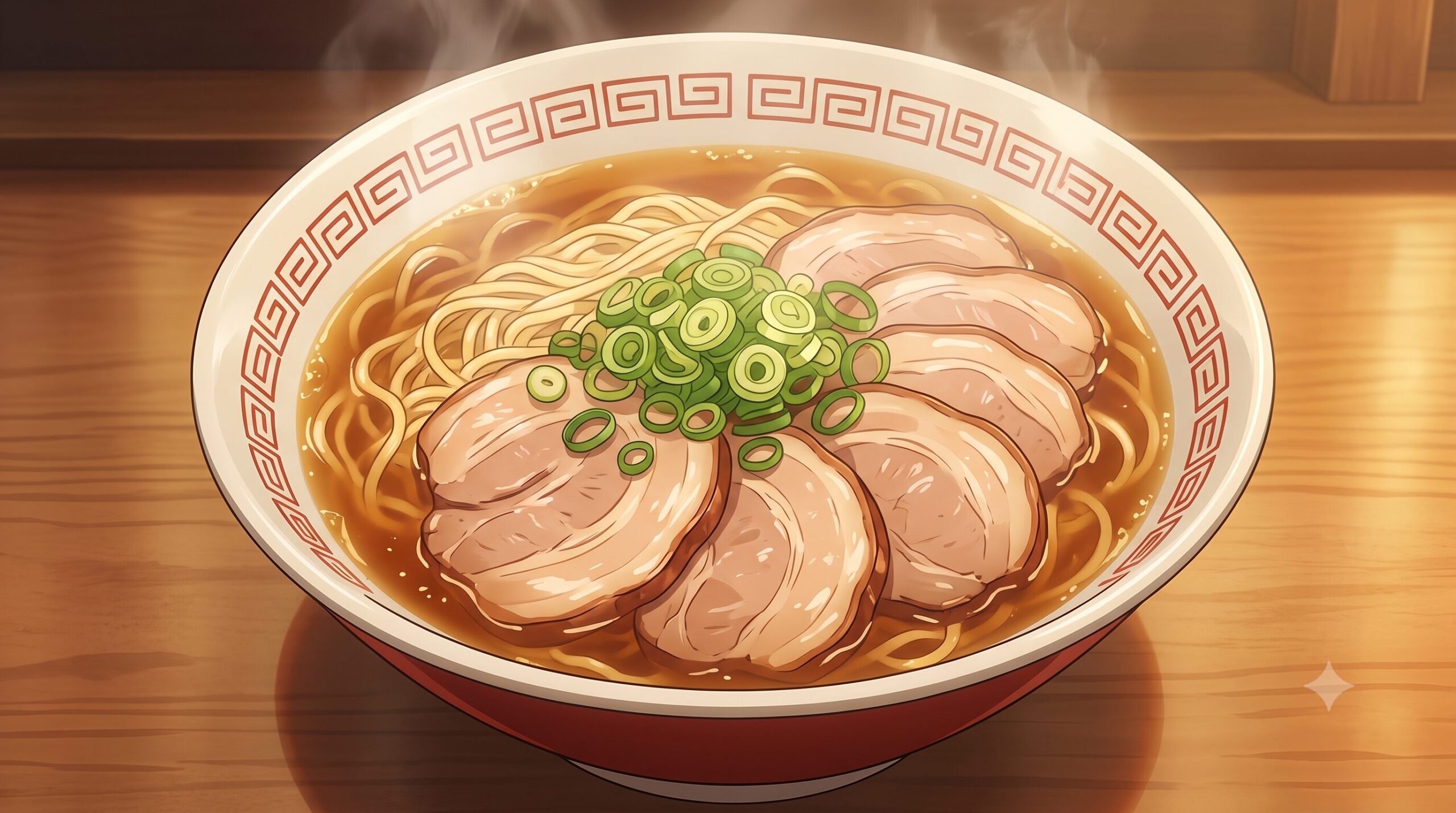
Every year on July 11th, Japan celebrates “Ramen Day” (ラーメンの日), established by the Japan Ramen Association. For international tourists visiting Japan, ramen is an absolute must-eat right alongside sushi and tempura. But why was this specific date chosen? The answer lies in a fun visual pun and a highly significant figure in Japanese history.
Why is July 11th “Ramen Day”?
There are two fascinating reasons behind this date. The first is visual. The number “7” represents a “renge” (the traditional spoon used to drink ramen soup), and the number “11” resembles a pair of chopsticks. Thus, two essential tools of Japanese food culture are cleverly hidden within the date itself!
The second reason is historical. July 11th is the birthday of Tokugawa Mitsukuni, a famous feudal lord from the Edo period, popularly known as “Mito Komon”. He is widely recognized as the first Japanese person to ever eat ramen (Chinese-style noodles). In the 1660s, a Confucian scholar named Zhu Shunshui, who had fled from China to Japan, taught Mitsukuni how to make Chinese noodles. Records show that Mitsukuni kneaded the dough himself and served the dish to his retainers. The noodles of that time were similar to udon mixed with lotus root powder, and the soup featured five pungent spices, including green onions, garlic, and chives.
The Evolution of Ramen: From a Chinese Dish to Japan’s “National Food”
While the noodles eaten by Tokugawa Mitsukuni were exclusively for the privileged class, ordinary Japanese people began eating ramen during the Meiji era (1868–1912). Chinatowns formed in port cities like Yokohama, Hakodate, and Nagasaki. The “Nankin Soba” served there became the root of modern Japanese ramen.
After World War II, during severe food shortages, people returning from China began making highly nutritious soups using cheap pork and chicken bones, selling them at “yatai” (street food stalls). This caused ramen to spread rapidly across the country. Furthermore, in 1958, Momofuku Ando invented the world’s first instant ramen, “Chicken Ramen,” transforming it into the ultimate fast food that could be easily enjoyed at home.
Decoding Japanese Culture Through Ramen: Craftsmanship and “Umami”
Why did ramen undergo such a unique evolution in Japan? The key to understanding this lies in the Japanese spirit of “Kodawari” (uncompromising craftsmanship and dedication) and the traditional culture of “Dashi” (soup stock).
While many Chinese noodle dishes rely on the toppings or sauces for their primary flavor, Japanese ramen chefs pour an almost obsessive passion into the “soup.” Traditional Japanese cuisine (Washoku) is built upon a foundation of “Umami” extracted from ingredients like kelp and bonito flakes. Ramen artisans applied this method, simmering pork bones, chicken carcasses, dried sardines, and shiitake mushrooms for dozens of hours to create the ultimate, complex, and deeply flavorful drop of soup.
Furthermore, Japan’s geographical diversity fueled ramen’s evolution. We now have distinct “Gotouchi Ramen” (regional ramen) that developed completely differently based on their location. Examples include the rich “Sapporo Miso Ramen” born from Hokkaido’s freezing climate, “Tokyo Shoyu (Soy Sauce) Ramen” reflecting the city’s traditional soy sauce culture, and the cloudy, rich “Hakata Tonkotsu Ramen” born from the vibrant street stall culture of Kyushu. Ramen is not just a meal; it is a “crystalization of culture” condensing a region’s climate, history, and local products into a single bowl.
Which Bowl Would You Choose?
Ramen is now a globally beloved dish, but eating a bowl in Japan is a special experience packed with history and the passion of artisans. A clear, delicate Shio (salt) ramen, a rich and creamy Tonkotsu (pork bone) ramen, or a spicy and robust Miso ramen… If you could come to Japan right now, which regional ramen would you want to try first? Let me know your favorite flavors and ramen memories in the comments below!
Reference Links
- Shin-Yokohama Ramen Museum (The World’s First Food Amusement Park)
- What’s Today’s Special Day Series (Explore more Japanese anniversaries here)
7月11日は「ラーメンの日」!日本の国民食に隠された歴史と文化
毎年7月11日は、日本ラーメン協会が制定した「ラーメンの日」です。日本を訪れる外国人観光客にとって、寿司や天ぷらと並んで絶対に外せない日本食といえばラーメンですが、なぜこの日が記念日として選ばれたのでしょうか。そこには、視覚的な面白さと、日本の歴史における重要な人物の存在が隠されています。
なぜ7月11日が「ラーメンの日」なのか?
この日が選ばれた理由は2つあります。1つ目は、数字の形です。「7」をラーメンのスープを飲むためのスプーンである「レンゲ」に見立て、「11」をラーメンを食べるための「箸(はし)」に見立てています。日本の食文化を象徴する2つの道具が、日付の中に隠されているのです。
2つ目の理由は、歴史的な背景です。7月11日は、江戸時代の有名な大名である徳川光圀(とくがわ みつくに)、通称「水戸黄門(みとこうもん)」の誕生日です。彼は日本で最初にラーメン(中華麺)を食べた人物として広く知られています。1660年代、中国から亡命してきた儒学者・朱舜水(しゅ しゅんすい)から中華麺の作り方を教わり、自ら麺を打って家臣に振る舞ったという記録が残っています。当時の麺は、レンコンの粉を混ぜたうどんのようなもので、スープにはネギ、ニンニク、ニラなどの「五辛(ごしん)」と呼ばれる薬味が使われていました。
ラーメンの進化:中国の麺料理から日本の「国民食」へ
徳川光圀が食べた麺料理は特権階級のものでしたが、一般の日本人がラーメンを食べるようになったのは明治時代(1868年~1912年)に入ってからです。港町である横浜や函館、長崎に中華街が形成され、そこで提供された「南京そば」が現代のラーメンのルーツとなりました。
第二次世界大戦後、食糧難の時代に中国から引き揚げてきた人々が、安価で栄養価の高い豚骨や鶏ガラを使ってスープを作り、屋台で販売したことで、ラーメンは一気に全国へ広まりました。さらに、1958年には安藤百福(あんどう ももふく)が世界初のインスタントラーメン「チキンラーメン」を発明し、ラーメンは家庭で手軽に食べられる究極のファストフードへと進化しました。
日本文化とラーメン:職人魂(こだわり)と「旨味」の融合
なぜラーメンは日本でここまで独自の進化を遂げたのでしょうか。それを読み解く鍵は、日本人の「職人気質(こだわり)」と、伝統的な「出汁(だし)」の文化にあります。
中国の麺料理の多くは、上に乗せる具材やタレで味を決めますが、日本のラーメンは「スープ」に異常なほどの情熱を注ぎます。日本の伝統的な和食では、昆布や鰹節から抽出した「旨味(うまみ)」をベースに料理を作ります。ラーメン職人たちはこの手法を応用し、豚骨、鶏ガラ、煮干し、椎茸など、あらゆる食材を何十時間も煮込み、複雑で深みのある究極の一滴を創り出しました。
さらに、日本の地理的な多様性もラーメンを進化させました。北海道の寒い気候から生まれた濃厚な「札幌味噌ラーメン」、東京の伝統的な醤油文化を反映した「東京醤油ラーメン」、そして九州の屋台文化から生まれた白濁スープの「博多豚骨ラーメン」など、地域ごとに全く異なる進化を遂げた「ご当地ラーメン」が存在します。ラーメンは単なる食事ではなく、その土地の気候、歴史、特産品を一杯の丼に凝縮した「文化の結晶」なのです。
あなたなら、どの一杯を選びますか?
ラーメンは今や世界中で愛される料理となりましたが、日本で食べるラーメンは、その歴史と職人の情熱が詰まった特別な体験です。透き通った塩ラーメン、濃厚でクリーミーな豚骨ラーメン、スパイシーな味噌ラーメン。もしあなたが今すぐ日本に来られるとしたら、どの地域の、どんなラーメンを最初に食べたいですか?あなたの好きな味や、ラーメンにまつわる思い出を、ぜひコメントで教えてください!


コメント