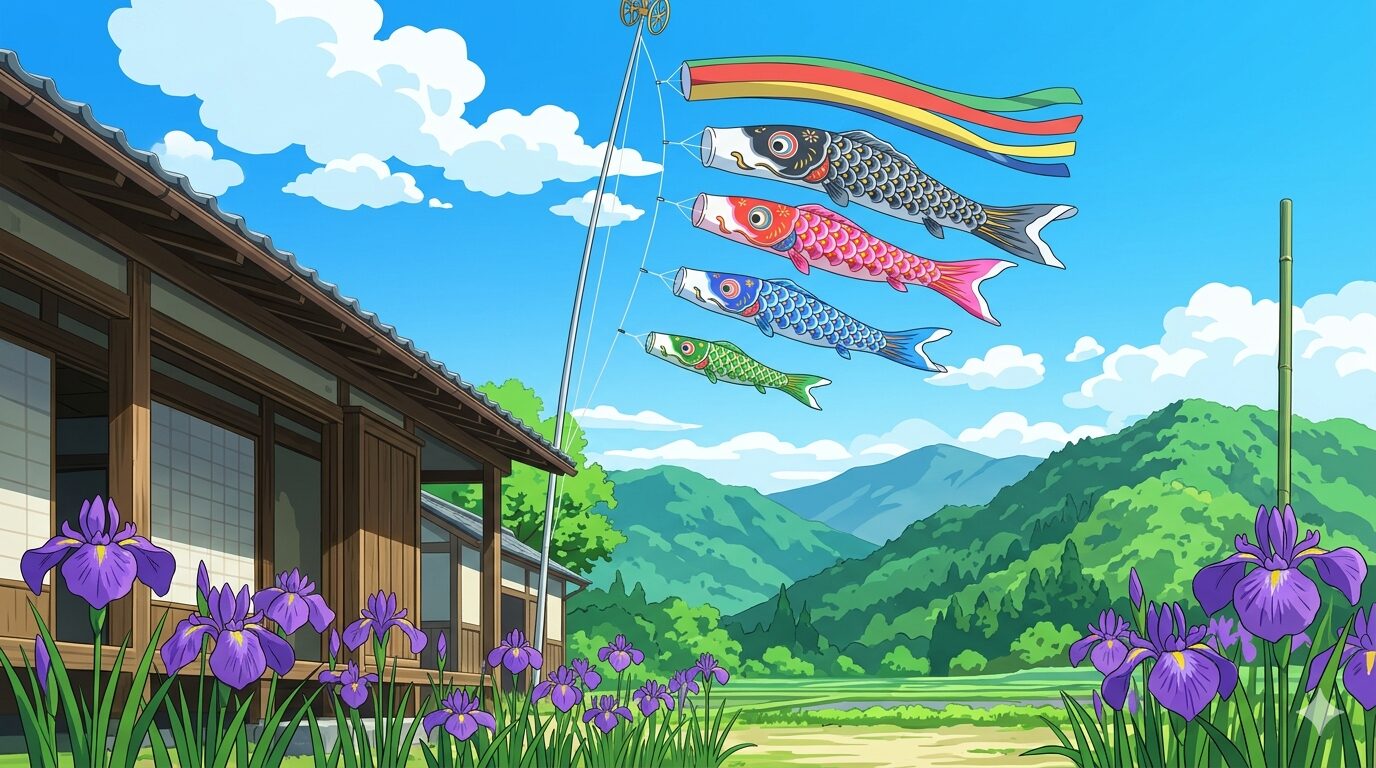
May 5th in Japan is a truly special and vibrant day where the turning of the seasons beautifully merges with ancient traditions. This single day holds three significant meanings: “Rikka” (the beginning of summer), “Kodomo no Hi” (Children’s Day), and “Tango no Sekku” (the Boy’s Festival). Let’s delve deeply into how Japanese history and culture breathe life into the modern era through the celebrations of this day.
Rikka: The Arrival of Early Summer
Japan’s climate is finely categorized by the “24 Solar Terms,” an ancient calendar system introduced from China. May 5th marks “Rikka,” the exact point when the warmth of spring peaks, the refreshing breezes of early summer begin to blow, and fresh green foliage shines brightly. In Japan’s historically agrarian society, understanding these seasonal shifts was the foundation of life. Rikka represents the moment when life begins to grow most vigorously, demonstrating a deep reverence for and coexistence with nature.
Tango no Sekku: Warding off Evil and Honoring Samurai Traditions
For centuries, May 5th has been celebrated as “Tango no Sekku” or the “Festival of Irises (Shobu).” A “Sekku” marks a seasonal transition, a time when evil spirits were believed to easily enter the world, prompting various purification rituals. The most famous is the “Shobu-yu” (Iris bath). Floating strongly scented iris leaves in hot bathwater was believed to cleanse the body and ward off misfortune.
Furthermore, the Japanese word for iris, “Shobu,” has the exact same pronunciation as the words for “martial spirit” and “victory.” Because of this, during the Edo period, it became an established event among samurai families to pray for the healthy growth and future success of their sons. Families display miniature samurai armor (“Yoroi”) and helmets (“Kabuto”) indoors as symbols of strength, wishing to protect their children from harm. This samurai-era value system continues to thrive in modern Japan as a profound expression of familial love.
Children’s Day: Happiness for All Children and Gratitude to Mothers
In modern Japan, May 5th is designated as a national holiday called “Kodomo no Hi” (Children’s Day). The official purpose of this holiday is “to respect children’s personalities, to promote their happiness, and to express gratitude toward mothers.” While it has historical roots as a festival for boys, it has evolved into a day that celebrates the growth and happiness of all children, regardless of gender.
During this season, the Japanese sky is decorated with “Koinobori” (carp streamers). The carp originates from an ancient Chinese legend about a fish that successfully swam up a powerful waterfall and transformed into a dragon. Thus, the Koinobori symbolizes the hope that children will overcome life’s obstacles and achieve greatness. These colorful carps swimming in the blue sky are one of the most beautiful sights of early Japanese summer. Traditional foods are also essential: “Kashiwa-mochi” (rice cakes wrapped in oak leaves symbolizing family prosperity) and “Chimaki” (sweet rice dumplings wrapped in bamboo leaves for protection against evil) are enjoyed nationwide.
Connection to Japanese Culture: Living with Nature and Shaping Prayers
What we can interpret from the events of May 5th is the Japanese people’s “harmony with nature” and their “power to give physical form to invisible prayers.” Incorporating the natural cycle of Rikka into daily life, cleansing the body with the power of the iris plant, and entrusting a child’s future to the symbol of a carp—Japanese culture is consistently built upon borrowing the power of nature and expressing gratitude for it. Behind the physical decorations of samurai armor and carp streamers lies a universal, unconditional love from parent to child. The ability to elevate strong, invisible prayers into beautiful, visual, and experiential traditions is the true essence of Japanese culture.
What Are Your Thoughts?
May 5th in Japan is a wonderful day that celebrates family bonds and the future of children while feeling the transition of the seasons. How do you celebrate the growth and happiness of children in your country or culture? Do you have any customs, like the Iris bath, that borrow the power of nature to refresh your mind and body as the seasons change? Please take a moment to reflect on the beautiful traditions of your own culture!
Internal Link: Read more in our “What’s Today’s Special Day?” series
Reference Link: Japan National Tourism Organization (JNTO)
5月5日:立夏、こどもの日、そして端午の節句が交差する日本の特別な一日
日本の5月5日は、季節の移ろいと古くからの伝統が美しく融合する、一年の中でも非常に特別で活気に満ちた一日です。この日は「立夏(りっか)」「こどもの日」、そして「端午の節句(たんごのせっく)」という3つの重要な意味を持っています。日本の歴史や文化がどのように現代に息づいているのか、この日を通じて深く読み解いていきましょう。
立夏:夏の気配が立ち込める季節の始まり
日本の気候は「二十四節気(にじゅうしせっき)」という古代中国から伝わった暦によって細やかに分類されています。5月5日はそのひとつである「立夏」にあたります。春の暖かさが極まり、初夏の爽やかな風が吹き始め、新緑が眩しく輝く時期の到来を告げる日です。農耕社会であった日本において、季節の変化を正確に把握することは生活の基盤でした。立夏は、生命が最も力強く成長を始めるタイミングであり、自然への畏敬の念と共生を示す重要な節目です。
端午の節句:邪気を払い、武勇を尊ぶ侍の伝統
5月5日は古くから「端午の節句」または「菖蒲(しょうぶ)の節句」として親しまれてきました。「節句」とは季節の変わり目を意味し、邪気が入りやすいと考えられていたため、様々な厄払いの儀式が行われました。その代表が「菖蒲湯(しょうぶゆ)」です。香りの強い菖蒲の葉をお風呂に入れ、その香りで邪気を払うという風習です。
さらに、菖蒲は「尚武(しょうぶ:武勇を重んじること)」や「勝負」と同じ発音であることから、江戸時代以降、武家の間で男の子の健やかな成長と立身出世を願う行事として定着しました。力強さの象徴である「兜(かぶと)」や「鎧(よろい)」を室内に飾り、災いから身を守る願いを込めます。この武家社会の価値観は、現代の日本においても家族の愛情という形で脈々と受け継がれています。
こどもの日:すべての子供の幸福と母への感謝
現代の日本では、5月5日は「こどもの日」として国民の祝日に定められています。その趣旨は「こどもの人格を重んじ、こどもの幸福をはかるとともに、母に感謝する」というものです。男の子の節句という歴史的な背景を持ちつつも、現在では性別を問わずすべての子供たちの成長を祝う日へと進化しました。
この時期、日本の空を彩るのが「鯉のぼり(こいのぼり)」です。鯉は、流れの激しい滝を登りきると龍になるという中国の伝説「登竜門」に由来しており、子供が人生の困難を乗り越え、立派に成長するようにという願いが込められています。青空を泳ぐ色鮮やかな鯉のぼりは、日本の初夏の最も美しい風物詩の一つです。また、子孫繁栄を象徴する柏の葉で包んだ「柏餅(かしわもち)」や、厄除けの意味を持つ「ちまき」を食べる食文化も、この日の重要な要素です。
日本文化との関連:自然と共に生き、願いを形にする力
5月5日の行事から読み解けるのは、日本人が持つ「自然との調和」と「見えない願いを形にする力」です。立夏という自然のサイクルを生活に取り入れ、菖蒲という植物の力で身を清め、鯉という生き物に子供の未来を託す。日本の文化は常に自然の力を借り、それに感謝することで成り立っています。鎧兜や鯉のぼりといった物質的な飾りの背後には、親から子への普遍的で無償の愛が隠されています。目に見えない強い祈りを、美しい視覚的・体験的な伝統へと昇華させる力こそが、日本文化の真髄なのです。
あなたはどう感じましたか?
日本の5月5日は、季節の変わり目を感じながら、家族の絆と子供の未来を祝福する素晴らしい一日です。あなたの国や文化では、子供たちの成長や幸福をどのように祝いますか?また、初夏の訪れを知らせる菖蒲湯のように、自然の力を借りて心身をリフレッシュする習慣はありますか?ぜひ、あなたの文化の素晴らしい伝統も振り返ってみてください。
内部リンク: 今日の記念日シリーズをもっと読む

コメント