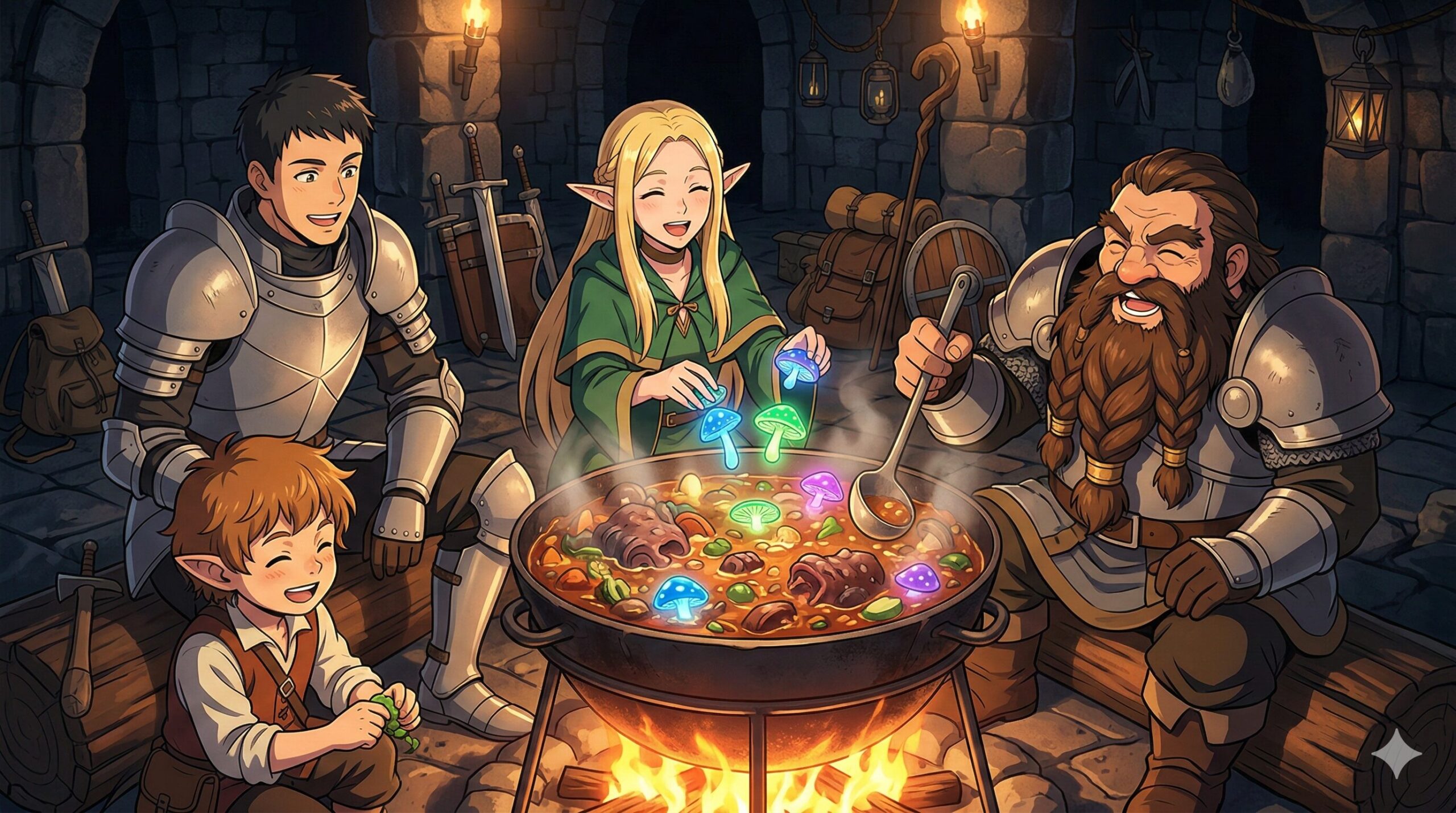
What is the most essential thing for survival in a fantasy world? It’s not a superior weapon, nor is it powerful magic. It is “Food.” Ryoko Kui’s masterpiece, “Delicious in Dungeon” (Dungeon Meshi), has confronted readers and anime fans around the world with this absolute truth. This work goes far beyond the boundaries of a simple comedy or adventure; it is a masterpiece that portrays the cycle of life and the philosophy of eating. In this article, we will thoroughly explain what this series is about and why it boasts such enthusiastic popularity in Japan, examining it through the lens of Japanese history and culture.

- Synopsis and Summary of “Delicious in Dungeon”
- Evaluation: More Than Just a Comedy – A Detailed Ecosystem and the Philosophy of “Food”
- Why is it so Popular in Japan? Understanding Through Japanese History and Culture
- 3 Recommended Reasons to Read (or Watch) “Delicious in Dungeon”
- Conclusion
- 『ダンジョン飯』のあらすじ・作品内容の要約
- 作品の評価:ただのコメディではない、緻密な生態系と「食」の哲学
- なぜ日本で大人気なのか?日本の歴史・文化から読み解く
- 『ダンジョン飯』を読む(観る)べきおすすめポイント3選
- まとめ
Synopsis and Summary of “Delicious in Dungeon”
The story takes place in a deep, dangerous underground labyrinth (dungeon) reminiscent of classic tabletop RPGs. The protagonist, an adventurer named Laios, is defeated by a Red Dragon in the depths of the labyrinth, and his beloved sister Falin is eaten. Laios and his companions, Marcille and Chilchuck, barely escape to the surface with their lives, but they have lost all their money and food supplies. In order to rescue Falin before she is completely digested in the dragon’s stomach, they make an unprecedented decision: a self-sufficient survival plan to “cook and eat the monsters inside the labyrinth as they progress.”
Along the way, they are joined by Senshi, a dwarf who is a specialist in monster cooking. They transform terrifying monsters such as Slimes, Basilisks, Mandrakes, and Walking Mushrooms into exquisite dishes one after another. This is a survival-gourmet fantasy that logically and humorously depicts the absolute rule of the natural world: “Eat or be eaten.”
Evaluation: More Than Just a Comedy – A Detailed Ecosystem and the Philosophy of “Food”
The biggest reason this work has garnered worldwide acclaim is its overwhelming “biological realism” regarding fictional monsters. What is the internal structure of a slime? Why does a living armor move (interpreted uniquely as a colony of mollusks)? Which part of a basilisk’s meat is the most delicious? It redefines classic fantasy monsters as a single “ecosystem” and takes a highly logical approach right down to the cooking procedures.
Furthermore, the visceral depiction of the characters’ reality—that they cannot gain strength or survive without eating—completely eliminates the plot conveniences often found in fantasy works. The series never looks away from the “karma of life”—taking a life and turning it into one’s own flesh and blood to move forward—while simultaneously depicting the joy and warmth of sharing a meal in perfect balance. This is the greatest charm of the series.
Why is it so Popular in Japan? Understanding Through Japanese History and Culture
The background behind the overwhelming support for “Delicious in Dungeon” in Japan is deeply connected to traditional Japanese history and culture. Let’s unravel the reasons from the following three perspectives.
The Spirit of “Itadakimasu” and Gratitude for Life
In Japan, there is a culture of saying “Itadakimasu” before a meal. This is not just a greeting; it is an expression of awe and gratitude toward the lives of the animals and plants that became the food, essentially meaning, “I take your life to sustain my own.” The underlying theme of “eat or be eaten” in “Delicious in Dungeon” perfectly aligns with this Japanese spirituality. Laios and his party do not view defeating monsters merely as grinding for game experience points; they cook them with respect as “sustenance” for survival and eat everything without leaving any behind. This sincere attitude toward life resonates deeply with the Japanese heart.
Animism (Eight Million Gods) and Coexistence with Nature
In Japanese Shintoism, there is the concept of “Animism” (Yaoyorozu no Kami, or eight million gods), which believes that gods and life reside in all things in nature. It is a value system where humans do not dominate nature but coexist as part of a massive natural system. The dungeon in this work, although created by the Lunatic Magician, is depicted as a “single massive natural environment (ecosystem)” where monsters form a food chain. The way the characters try to survive by following the laws of nature without excessively interfering with the dungeon’s ecosystem strongly links to the Japanese view of nature.
A Blend of Japanese and Western Styles and the Quest for “Monozukuri” (Craftsmanship)
Since ancient times, Japan has excelled at “Wayo Setchu,” the practice of adopting foreign cultures and refining them into unique forms. “Delicious in Dungeon” borrows the format of Western-born RPG culture (like Dungeons & Dragons and Wizardry) and brilliantly fuses it with Japan’s proud “gourmet manga” techniques and the artisan spirit of “Monozukuri” (meticulous world-building). This approach of reconstructing different cultures through a unique interpretation is the true essence of Japanese entertainment.
3 Recommended Reasons to Read (or Watch) “Delicious in Dungeon”
1. The Overwhelmingly Realistic “Monster Cooking Methods”
The process of preparing and cooking monsters that do not exist in reality as if they were real ingredients is a must-see. The dishes, such as “Dried Slime” and “Mandrake and Basilisk Omelet,” have a mysterious charm that will make you hungry just by reading about them.
2. The Growth and Bonds of Unique Characters
Laios, the eccentric leader obsessed with monster food; Marcille, the elf who provides common sense and comic relief (yet is forced to eat monster food every time); Chilchuck, the pragmatic half-foot; and Senshi, the master of monster cooking. Watching this ensemble drama where characters with completely different races and values form strong bonds by sharing meals together will surely move you to tears.
3. The Perfect Balance of Comedy and Seriousness
The first half has a strong comedy flavor that will make you laugh out loud. However, as the story progresses and they head deeper into the dungeon, the mysteries of the world and the secrets of the Lunatic Magician are revealed, transforming the story into a dark and serious epic. This meticulously calculated narrative structure will keep readers hooked until the very end.
Conclusion
“Delicious in Dungeon” is an “anthem of life” disguised as a fantasy. Heavily reflecting Japanese food culture and views on nature, this work serves as the perfect gateway for overseas fans to understand the depth of Japanese anime and manga. If you haven’t experienced it yet, be sure to taste this profound dungeon ecosystem and its exquisite gourmet food.
External Reference Link: TV Anime “Delicious in Dungeon” Official Website
If you want to delve deeper into Japanese anime culture, please check this out as well: Japanese Anime Culture Feature (Internal Link)
【ダンジョン飯】なぜ日本で大人気?海外ファン必見の異色グルメファンタジーを徹底解説!
ファンタジーの世界で生き残るために最も必要なものは何か。優れた武器でも、強力な魔法でもありません。それは「食」です。九井諒子氏による名作『ダンジョン飯』(Delicious in Dungeon)は、世界中の読者とアニメファンにその絶対的な真理を突きつけました。本作は単なるコメディやアドベンチャーの枠を超え、生命の循環と食の哲学を描き出した傑作です。本記事では、この作品がどのような内容なのか、そしてなぜ日本国内でこれほどまでに熱狂的な人気を誇るのか、日本の歴史や文化の視点から徹底的に解説します。
『ダンジョン飯』のあらすじ・作品内容の要約
物語の舞台は、古典的なテーブルトークRPGを彷彿とさせる深く危険な地下迷宮(ダンジョン)です。主人公の冒険者ライオスは、迷宮の深部でレッドドラゴンに敗北し、愛する妹ファリンを喰われてしまいます。命からがら地上へ逃げ延びたライオスと仲間のマルシル、チルチャックですが、資金も食料もすべて失ってしまいました。ドラゴンの胃袋でファリンが消化されてしまう前に救出するため、彼らは前代未聞の決断を下します。それは「迷宮内のモンスターを調理して食べながら進む」という自給自足のサバイバルです。
道中で魔物食のスペシャリストであるドワーフのセンシを仲間に加え、スライム、バジリスク、マンドレイク、歩き茸など、恐ろしいモンスターたちを次々と絶品料理に変えていきます。本作は「食うか、食われるか」という自然界の絶対的なルールを、極めて論理的かつユーモラスに描いたサバイバル・グルメファンタジーです。
作品の評価:ただのコメディではない、緻密な生態系と「食」の哲学
本作が世界的な評価を得ている最大の理由は、架空のモンスターに対する圧倒的な「生物学的リアリティ」にあります。スライムの内臓はどのような構造なのか、動く鎧はなぜ動くのか(実は軟体生物のコロニーであるという独自解釈)、バジリスクの肉はどの部位が美味なのか。ファンタジーの定番モンスターたちを一つの「生態系」として捉え直し、調理手順に至るまで極めて論理的なアプローチを行っています。
また、登場人物たちの「食事をしなければ力が出ず、生きていけない」という生々しい描写は、ファンタジー作品にありがちなご都合主義を完全に排除しています。命を奪い、それを自身の血肉に変えて前に進むという「生命の業」から決して目を背けず、同時に食事の楽しさと温かさを完璧なバランスで描き出している点が、本作の最大の魅力です。
なぜ日本で大人気なのか?日本の歴史・文化から読み解く
『ダンジョン飯』が日本で圧倒的な支持を得た背景には、日本の伝統的な歴史・文化との深いつながりがあります。以下の3つの視点から、その理由を紐解きます。
「いただきます」の精神と命への感謝
日本には食事の前に「いただきます」と言う文化があります。これは単なる挨拶ではなく、「あなたの命を私の命として頂戴します」という、食材となった動植物の命への感謝と畏敬の念を示す言葉です。『ダンジョン飯』の根底に流れる「食うか、食われるか」というテーマは、まさにこの日本の精神性と完全に一致します。ライオスたちはモンスターを倒すことをゲームの経験値稼ぎとは捉えず、生きるための「糧」として敬意を持って調理し、残さず食べ切ります。この生命に対する真摯な姿勢が、日本人の心に深く響くのです。
アニミズム(八百万の神)と自然との共生
日本の神道には、森羅万象すべてに神や命が宿るという「アニミズム(八百万の神)」の考え方があります。人間は自然を支配するのではなく、自然という巨大なシステムの一部として共生するという価値観です。本作のダンジョンもまた、狂乱の魔術師によって作られたものでありながら、モンスターたちが食物連鎖を形成する「一つの巨大な自然環境(生態系)」として描かれています。キャラクターたちがダンジョンの生態系に介入しすぎず、自然の摂理に従って生き抜こうとする姿は、日本人の持つ自然観と強くリンクしています。
和洋折衷と「モノづくり」の探求心
日本は古くから、海外の文化を取り入れ、それを独自の形に洗練させる「和洋折衷」を得意としてきました。『ダンジョン飯』は、西洋発祥のRPG文化(ダンジョンズ&ドラゴンズやウィザードリィなど)のフォーマットを借りながら、そこに日本が誇る「グルメ漫画」の手法と、職人的な「モノづくり(緻密な設定構築)」の精神を見事に融合させています。異文化を独自解釈で再構築するこのアプローチは、日本のエンターテインメントの真骨頂と言えます。
『ダンジョン飯』を読む(観る)べきおすすめポイント3選
1. 圧倒的なリアリティを誇る「魔物調理法」
現実には存在しない魔物たちを、まるで実在の食材であるかのように下処理し、調理するプロセスは必見です。「スライムの干物」「マンドレイクとバジリスクのオムレツ」など、読んでいるだけでお腹が空いてくる不思議な魅力があります。
2. 個性豊かなキャラクターたちの成長と絆
魔物食に熱狂する変人リーダーのライオス、常識人でツッコミ役(しかし毎回魔物食を食べさせられる)のエルフ・マルシル、現実主義のハーフフット・チルチャック、そして魔物食の達人センシ。種族も価値観もバラバラな彼らが、共に食卓を囲むことで強い絆で結ばれていく群像劇は、涙なしには見られません。
3. ギャグとシリアスの絶妙なバランス
前半は腹を抱えて笑えるコメディテイストが強いですが、物語が進みダンジョンの深部へ向かうにつれて、世界の謎や狂乱の魔術師の秘密が明かされ、ダークでシリアスな展開へと変貌していきます。この緻密に計算されたストーリー構成が、読者を最後まで離しません。
まとめ
『ダンジョン飯』は、ファンタジーという皮を被った「生命の賛歌」です。日本の食文化や自然観が色濃く反映された本作は、海外のファンにとっても、日本のアニメや漫画の奥深さを知るための最高の入り口となるでしょう。まだ見ていない方は、ぜひこの奥深いダンジョンの生態系と、極上のグルメを味わってみてください。
参考外部リンク:TVアニメ「ダンジョン飯」公式サイト
日本のアニメ文化についてさらに深掘りしたい方は、こちらもご覧ください:日本のアニメ文化特集(内部リンク)
コメント