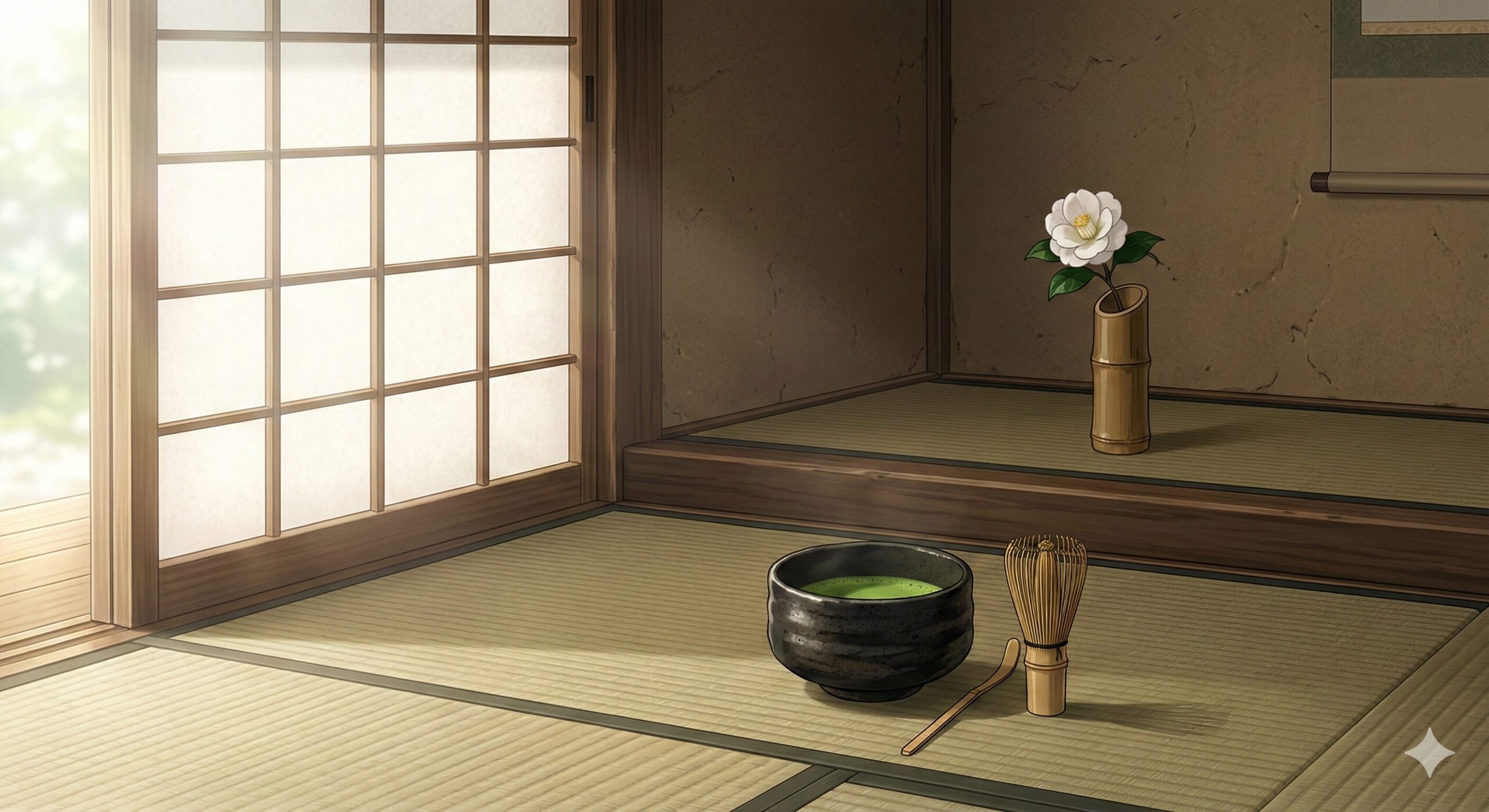
February 28th marks the anniversary of the death of Sen no Rikyu, the great tea master who perfected “Chanoyu” (the Japanese tea ceremony), which forms the very foundation of Japanese culture. This day is known as “Rikyu-ki” or “Soeki-ki” (derived from his Buddhist name, Soeki). On February 28, 1591, by the order of Toyotomi Hideyoshi, the supreme ruler of the time, Rikyu met a dramatic end by committing seppuku (ritual suicide).
Sen no Rikyu was not merely a tea enthusiast. He was a comprehensive artist and philosopher who established the style of “Wabi-cha,” which strips away gorgeous decorations to emphasize spiritual richness and tranquility. His achievements, such as creating an extremely small tea room called “Taian” of only two tatami mats (about 3.3 square meters) and designating rugged, pitch-black Raku tea bowls as the highest form of beauty, fundamentally overturned the standards of beauty in Japan.
While Hideyoshi built a golden tea room to show off his power and wealth, Rikyu found the vastness of the universe in earthen walls, bamboo, and a single wildflower. This intense clash of aesthetics is the primary reason Rikyu was ordered to die. He stayed true to the “philosophy of beauty” he believed in, valuing it more than his own life. Rikyu-ki is a highly significant day to mourn an artist who died for his beliefs and to reawaken his spirit in the modern era.

Wabi-Sabi and Minimalism: Decoding the Essence of Japanese Culture Through Rikyu
The spirit of “Wabi-cha” established by Sen no Rikyu is the direct origin of “Wabi-Sabi,” the Japanese aesthetic that captivates the modern world. “Wabi” means finding spiritual richness in insufficiency, and “Sabi” means appreciating the beauty in changes and deterioration over time. Rikyu perfectly integrated this concept into the everyday act of drinking tea.
While “minimalism” is highly praised in the modern West, Rikyu reached its pinnacle over 400 years ago. A tea room space, from which excess is thoroughly eliminated, is the ultimate sanctuary for us living in an information-overloaded modern society to reset our minds. Wrapping both hands around an imperfect tea bowl and concentrating all your senses on the green color and aroma of the whipped matcha—there is no regret for the past or anxiety for the future. It is a highly practical Zen practice to savor only the truth of “here and now.”
Furthermore, there is the spirit of “Ichi-go Ichi-e” (One time, one meeting) that Rikyu deeply valued. This is the teaching that “Every tea gathering is a once-in-a-lifetime event, and both host and guest must show their utmost sincerity.” In our rapidly changing modern times, this attitude of devoting 100% of your heart to the person in front of you and the present moment serves as a powerful guide to fundamentally rethink how human relationships should be. Rikyu’s teachings are a universal philosophy that can be applied to every aspect of our lives, extending far beyond the tea room.
How Does “Wabi-Sabi” Exist in Your Daily Life?
Sen no Rikyu taught us that true beauty resides not in perfect things, but in chipped or asymmetrical things. Modern society constantly demands “perfection” and “success” from us, but don’t you sometimes feel suffocated by that pressure?
Forgiving your imperfect self, feeling an attachment to your old favorite items, and taking the time to drink a cup of tea in silence—that is the very practice of Rikyu’s spirit in modern times. After reading this article, where will you incorporate the “aesthetics of subtraction” into your life today? Please spend today consciously embracing your own “Ichi-go Ichi-e” moments.
■ Internal Link:
Read more in the “What’s Today’s Special Day?” Series
■ Reference Link (External):
Urasenke Official Website (A leading Japanese tea ceremony school)
2月28日は「利休忌(宗易忌)」:日本の美意識「わび茶」の完成と悲劇の結末
2月28日は、日本文化の根幹を成す「茶の湯」を大成した偉大なる茶人、千利休の命日です。この日は「利休忌(りきゅうき)」または、彼の法名である宗易から「宗易忌(そうえきき)」と呼ばれます。天正19年(1591年)2月28日、時の最高権力者であった豊臣秀吉の命により、利休は切腹という壮絶な最期を遂げました。
千利休は単なるお茶の愛好家ではありません。彼は、豪華絢爛な装飾を削ぎ落とし、精神的な豊かさと静寂を重んじる「わび茶」のスタイルを確立した総合芸術家であり、哲学者です。わずか二畳(約3.3平方メートル)という極小の茶室「待庵(たいあん)」を作り上げ、黒一色の無骨な樂茶碗を最高の美と定めた彼の功績は、日本の美の基準を根本から覆しました。
秀吉が黄金の茶室を作り、権力と富を見せつけたのに対し、利休は土壁と竹、そして一輪の野花に宇宙の広がりを見出しました。この強烈な美意識の対立こそが、利休が死を賜った最大の要因です。彼は自らの命よりも、自らが信じる「美の哲学」を貫き通しました。利休忌は、自らの信念に殉じた一人の芸術家を悼み、その精神を現代に呼び覚ます極めて重要な日です。
「わび・さび」とミニマリズム:利休から読み解く日本文化の神髄
千利休が確立した「わび茶」の精神は、現代の世界中を魅了する日本の美意識「わび・さび(Wabi-Sabi)」の直接的な起源です。「わび」とは不足の中に心の豊かさを見出すこと、「さび」とは時間経過に伴う変化や劣化に美しさを感じることです。利休はこの概念を、日常の行為である「お茶を飲む」という作法の中に完璧に落とし込みました。
現代の西洋において「ミニマリズム」がもてはやされていますが、利休は400年以上前にその極致に達していました。無駄を徹底的に排除した茶室空間は、情報過多な現代社会を生きる私たちにとって、心をリセットするための究極のサンクチュアリ(聖域)です。不完全な形の茶碗を両手で包み込み、点てられた抹茶の緑と香りに全神経を集中させる。そこには過去への後悔も未来への不安も存在しません。ただ「今、ここ」にある真実だけを味わう、極めて実践的な禅(Zen)の修行でもあります。
さらに、利休が重んじた「一期一会(いちごいちえ)」の精神があります。これは「このお茶会は一生に一度きりのものであると考え、主客ともに誠意を尽くす」という教えです。移り変わりの激しい現代において、目の前の人、目の前の瞬間に100%の心を向けるこの態度は、人間関係のあり方を根本から見直す強力な指針となります。利休の教えは、茶室の中だけにとどまらず、私たちの人生のあらゆる場面に応用できる普遍的な哲学なのです。
あなたの日常に「わび・さび」はどう存在していますか?
千利休は、完璧なものよりも、欠けたものや非対称なものにこそ真の美しさが宿ると教えてくれました。現代社会は常に私たちに「完璧さ」や「成功」を求めますが、そのプレッシャーに息苦しさを感じることはありませんか?
完璧ではない自分自身を許し、古びた愛用品に愛着を持ち、静寂の中で一杯のお茶を飲む時間を確保する。それこそが、現代における利休の精神の実践です。この記事を読んだあなたは、今日、自分の生活のどの部分に「引き算の美学」を取り入れますか? ぜひ、あなたにとっての「一期一会」の瞬間を意識して、今日という一日を過ごしてみてください。
■ 内部リンク:
今日は何の日シリーズをもっと読む
■ 参考リンク(外部リンク):
裏千家ホームページ(日本の代表的な茶道流派)

コメント