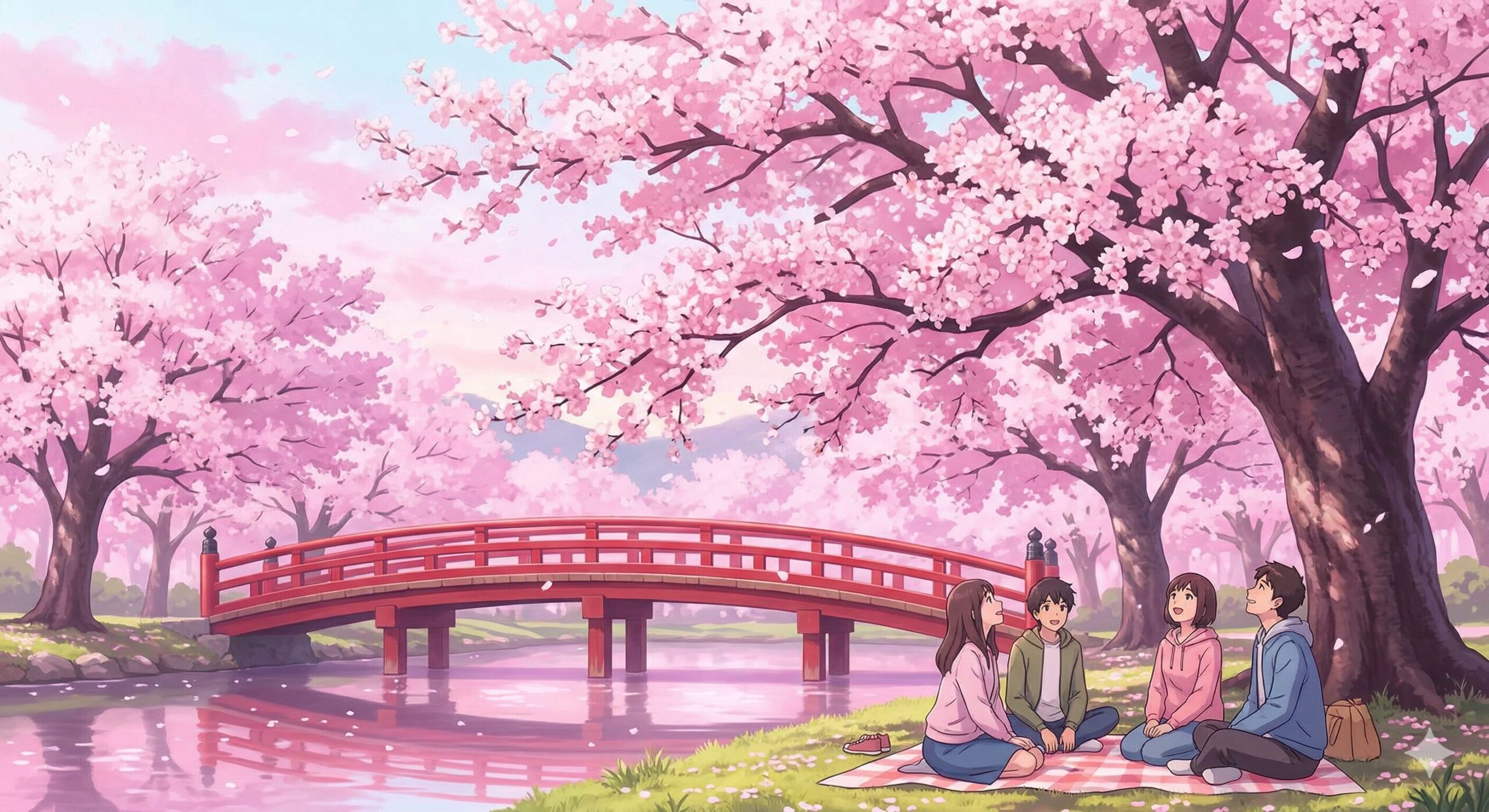
The scenery that foreign tourists visiting Japan anticipate the most is undoubtedly the “cherry blossoms in full bloom.” In spring, when all of Japan is dyed in pale pink, March 27 is officially designated as “Sakura Day” (Cherry Blossom Day). Established by the Japan Cherry Blossom Association in 1992, this anniversary was born from a beautiful Japanese wordplay where “3 x 9” can be read as “Sa-kura” (27), coinciding with the season of “Sakura Hajimete Hiraku” (Cherry blossoms first open) in the traditional 72 micro-seasons of Japan.
Why is a simple flower celebrated as an anniversary? Because cherry blossoms are deeply connected to Japanese history, culture, and the very spirit of the Japanese people. Today, using “Sakura Day” as our gateway, we invite you into the depths of Japanese culture.
The History of Hanami: From Elegant Aristocratic Pastimes to Commoners’ Enthusiasm
“Hanami” (flower viewing), where people gather under cherry trees in spring to share food, drinks, and admire the flowers, is a wonderful culture unique to Japan. However, exploring its roots reveals that cherry blossoms were not the main attraction from the beginning.
In the 8th century Nara period, Japanese aristocrats, heavily influenced by Chinese culture, actually admired “plum blossoms.” However, as the 9th century Heian period began, a unique Japanese culture blossomed, and people’s hearts shifted from plum to cherry blossoms. Heian aristocrats composed poems about the beauty of sakura and shed tears at the fleeting nature of their falling petals.
It was in the 17th century Edo period that this aristocratic culture spread to the samurai and eventually to the common people. The Shogun of the time, Tokugawa Yoshimune, planted cherry trees throughout Edo (modern-day Tokyo) and encouraged commoners to enjoy outdoor recreation. The lively and joyful style of “Hanami” that we enjoy today was perfected during this Edo period.
Understanding Japanese Culture through Sakura: The Spirit of “Mono no Aware”
Why are Japanese people so passionate about cherry blossoms among all the flowers? The answer lies in the unique Japanese aesthetic of “Mono no Aware” (the pathos of things, or empathy toward the ephemeral).
Cherry blossoms only remain in full bloom for about a week to 10 days. A spring storm can scatter them in an instant. The Japanese have found ultimate beauty in this “impermanence” and “fleeting nature.” By observing the cherry blossoms bloom magnificently and scatter gracefully, they project the transience of their own lives and existence onto the petals.
Furthermore, sakura is a symbol of “new beginnings.” Most schools and companies in Japan start their new year in April. After surviving a harsh winter, the full bloom of cherry blossoms blesses the departure of people dressed in new uniforms and suits. Sakura is deeply etched into people’s hearts as the original landscape of the Japanese spring, mixed with hope, expectation, and a little anxiety.
Now, Will You Fall Under the Magic of Sakura?
Sakura is not just a plant. It is “culture itself,” passing down Japanese history and embodying the Japanese view of life, death, and aesthetics. “Sakura Day” on March 27 reminds us of this fact.
After reading this article, how do you feel about cherry blossoms? Perhaps they look a little different to you now than just “beautiful flowers.”
If you ever have the chance to visit Japan in the spring, please bring a bento box and a drink, and sit under a cherry tree. Looking up at the fluttering petals, feel the same wind as the samurai and aristocrats of the distant past, and try to find your own “Mono no Aware.” Who would you want to spend time with under that cherry blossom tree, and what kind of time would you like to have?
Reference Links
- Internal Link: Read more in the What’s Today’s Special Day Series
- External Link: Japan National Tourism Organization (JNTO) Sakura Guide
3月27日は「さくらの日」:日本人の魂を揺さぶる桜の魅力と歴史
日本を訪れる外国人観光客が最も期待する風景、それは間違いなく「満開の桜」です。日本中が薄紅色に染まる春、3月27日は「さくらの日」に制定されています。日本さくらの会が1992年に定めたこの記念日は、「3×9(さくら)=27」という美しい語呂合わせと、日本の伝統的な暦である七十二候の「桜始開(さくらはじめてひらく)」の時期が重なることから生まれました。
単なる花が、なぜ記念日として祝われるのか。それは、桜が日本の歴史、文化、そして日本人の精神そのものと深く結びついているからです。今回は、この「さくらの日」を入り口に、日本文化の深淵へと皆様をご案内します。
お花見の歴史:貴族の優雅な遊びから庶民の熱狂へ
春になると桜の木の下に集まり、飲食を共にして花を愛でる「お花見(Hanami)」は、日本独自の素晴らしい文化です。しかし、そのルーツを探ると、最初から桜が主役だったわけではありません。
8世紀の奈良時代、中国文化の影響を強く受けていた日本の貴族たちが愛でていたのは「梅」でした。しかし、9世紀の平安時代に入ると、日本独自の文化(国風文化)が花開き、人々の心は梅から桜へと移り変わります。平安貴族たちは、桜の美しさを和歌に詠み、その散り際の儚さに涙しました。
この貴族の文化が武士に広まり、やがて一般庶民のものとなったのは17世紀、江戸時代のことです。時の将軍・徳川吉宗が、江戸(現在の東京)の各地に桜を植樹し、庶民の行楽を奨励しました。現代の私たちが楽しむ、賑やかで楽しい「お花見」のスタイルは、この江戸時代に完成したのです。
桜から読み解く日本文化:「物の哀れ(Mono no Aware)」の精神
なぜ日本人は、数ある花の中でこれほどまでに桜に熱狂するのでしょうか。その答えは、日本独特の美意識である「物の哀れ(Mono no Aware)」にあります。
桜は、満開の絶頂期がわずか1週間から10日ほどしかありません。春の嵐が吹けば、あっという間に散ってしまいます。日本人は、この「永遠ではないこと」「儚く消えゆくこと」にこそ、究極の美しさを見出しました。美しく咲き誇り、潔く散っていく桜の姿に、自らの人生や命の儚さを重ね合わせているのです。
また、桜は「新しい始まり」の象徴でもあります。日本の学校や企業の多くは4月に新年度を迎えます。厳しい冬を越え、新しい制服やスーツに身を包んだ人々の門出を、満開の桜が祝福する。桜は、希望と期待、そして少しの不安が入り混じる日本の春の原風景として、人々の心に深く刻み込まれています。
さあ、あなたも桜の魔法にかかりませんか?
桜は単なる植物ではありません。日本の歴史を語り継ぎ、日本人の死生観や美意識を体現する「文化そのもの」です。3月27日の「さくらの日」は、私たちにその事実を思い出させてくれます。
この記事を読んで、あなたは桜に対してどのような感情を抱きましたか?ただの「美しい花」から、少し違った景色に見えてきたのではないでしょうか。
もしあなたが春に日本を訪れる機会があるなら、ぜひお弁当と飲み物を持って、桜の木の下に座ってみてください。舞い散る花びらを見上げながら、遠い昔の侍や貴族たちと同じ風を感じ、あなた自身の「物の哀れ」を見つけてみてください。あなたなら、その桜の下で誰と、どんな時間を過ごしたいですか?


コメント