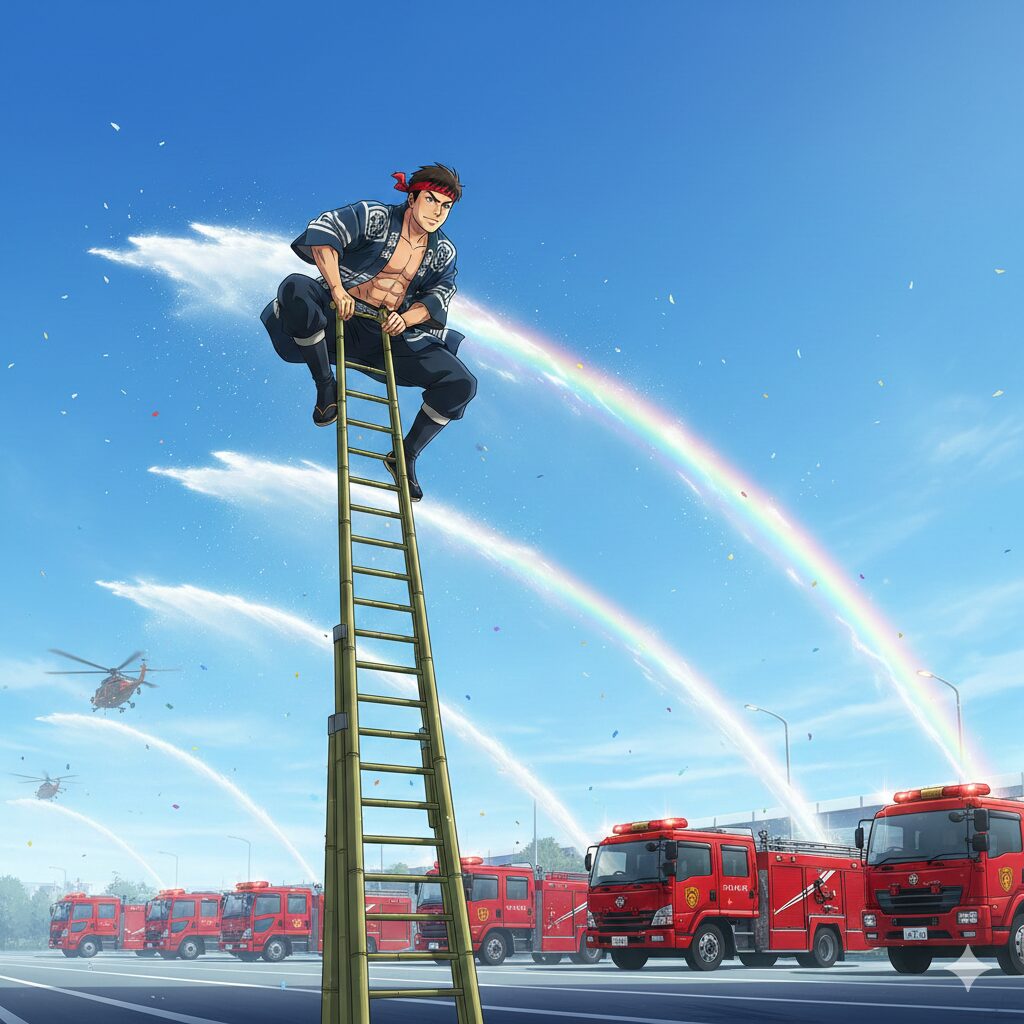
New Year in Japan is not just a time for silence and prayer. As the festive week draws to a close on January 6th, the Tokyo sky echoes with the sound of splashing water and spirited chants. This is the “Tokyo Fire Department Dezomeshiki” (New Year’s Fire Review).
This event, which astonishes and moves many international tourists, is far more than a mere parade. It is a testament to the history of a nation with a profound wooden architectural culture that has battled “fire” for centuries, and a demonstration of the pinnacle of modern disaster prevention technology.
In this article, we delve deep into the historical background of this winter tradition, the true meaning behind the traditional performance of “Kiyari” and “Hashigo-nori” (ladder acrobatics), and the message this event conveys to modern society.

1. Hope Rising from the Ashes: The Origins of Dezomeshiki
To discuss the history of Dezomeshiki, we must first mention the “Great Fire of Meireki” in 1657. This catastrophic fire incinerated most of Edo (now Tokyo) and claimed tens of thousands of lives. The people of Edo were on the verge of losing hope for reconstruction.
Under such desperate circumstances, the Shogun Tokugawa Ietsuna established a direct firefighting organization known as “Jobikeshi.” On January 4, 1659, they gathered before the Ueno Toshogu Shrine, raising their spirits to demonstrate their resolve for reconstruction to the common people. This is considered the beginning of “Dezome” (The First Outing).
For over 360 years, this event has continued without ever losing that spirit. Today’s Dezomeshiki is held at vast venues like Tokyo Big Sight, featuring marches by firefighters, parades of fire trucks, and a grand finale of simultaneous water discharge. Yet, at its core lies the unwavering will to “protect the people,” unchanged since the Edo period.
2. Defying Gravity: The Aesthetics of Hashigo-nori
The highlight of Dezomeshiki is undoubtedly the “Kiyari” procession and “Hashigo-nori” performed by the Edo Firemanship Preservation Association. Men dressed in happi coats, holding nothing but a tobiguchi (fireman’s hook), perform unbelievable acrobatics atop green bamboo ladders towering over 6 meters high.
You might wonder, “Why do firefighters perform acrobatics?” This is not a circus act. In the Edo period, firefighting mainly involved “destructive firefighting”—quickly dismantling buildings downwind to prevent the spread of flames. Agility, courage, and a sense of balance were required to leap from roof to roof and work in precarious high places. Hashigo-nori was an extremely practical training method to forge these skills.
Moves to Watch: Every pose has meaning, such as the “Kimotsubushi” (Liver Crusher), where the body is held horizontally at the top of the ladder, or the “Toomi” (Far Sight), representing the gesture of scouting the fire situation from a distance.
3. Fusion of Tradition and High-Tech: Modern Japan’s Safety Consciousness
The fascination of Dezomeshiki lies in the coexistence of Edo-period traditional arts and cutting-edge disaster prevention technology. Next to bamboo ladders, special disaster response vehicles and fire helicopters demonstrate their mobility, while fireboats spray colorful water high into the sky.
This contrast is the essence of Japanese culture. Japan does not discard the old but integrates it with new technologies, harmonizing them. In the megacity of Tokyo, where wooden houses still densely populate areas, the spirit of “preparedness” against all disasters—fires, earthquakes, and floods—is condensed into this ceremony.
4. To Our Readers
The Tokyo Fire Department Dezomeshiki is not just a show; it is a ritual vow for safety. The figures striking poses atop those ladders express the courage to overcome fear and dedicate oneself to others.
Does your country have a special day to honor firefighters or rescue teams? How do traditional relationships with “fire” manifest in your culture?
If you have the chance to visit Tokyo in January, please experience this energy firsthand. Under the winter sky, at the moment when a rainbow forms from the simultaneous water discharge, you will witness both the “strength” and “beauty” of Japan.
Related Links & Information
1月6日:東京消防出初式 — 江戸の「粋」と現代の「防災」が交差するスペクタクル
日本の正月は、単なる静寂と祈りの時間だけではありません。松の内が明けようとする1月6日、東京の空には水しぶきと勇壮な掛け声が響き渡ります。それが「東京消防出初式(とうきょうしょうぼうでぞめしき)」です。
多くの外国人観光客が驚愕し、そして感動するこのイベントは、単なるパレードではありません。これは、世界有数の木造建築文化を持つ日本が、数百年にわたり「火」と戦い続けてきた歴史の証明であり、現代における防災技術の最高峰を示すデモンストレーションなのです。
今回は、日本の冬の風物詩である出初式の歴史的背景、そこで繰り広げられる伝統芸能「木遣り(きやり)・梯子乗り(はしごのり)」の真の意味、そしてこの行事が現代日本社会に投げかけるメッセージについて、深く掘り下げていきます。
1. 灰の中から立ち上がった希望:出初式の起源
出初式の歴史を語る上で、避けて通れないのが1657年の「明暦の大火(めいれきのたいか)」です。この大火災は江戸(現在の東京)の街の大部分を焼き尽くし、数万人の命を奪いました。当時の江戸の人々は、復興への希望を失いかけていました。
そんな絶望的な状況下で、時の将軍・徳川家綱の命により、直轄の消防組織「定火消(じょうびけし)」が組織されました。そして1659年1月4日、彼らは上野東照宮の前で気勢を上げ、復興への決意を庶民に示したのです。これが「出初(でぞめ)」の始まりとされています。
以来360年以上、この行事は一度としてその精神を失うことなく続いています。現在の出初式は、東京ビッグサイト等の広大な会場で行われ、消防隊員の行進、消防車両のパレード、そしてフィナーレの一斉放水と、圧巻のスケールで執り行われます。しかし、その根底にあるのは、江戸時代から変わらぬ「民を守る」という強い意志なのです。
2. 重力への挑戦:梯子乗り(Hashigo-nori)の美学
出初式のハイライトと言えば、江戸消防記念会による「木遣り行進」と「梯子乗り」です。高さ6メートルを超える青竹の梯子の上で、鳶口(とびぐち)ひとつを持った法被(はっぴ)姿の男たちが、信じられないようなアクロバットを披露します。
「なぜ消防士が曲芸をするのか?」と疑問に思うかもしれません。しかし、これは単なるサーカスではありません。江戸時代、火事場での消火活動は、延焼を防ぐために風下の家屋を素早く解体する「破壊消防」が主流でした。屋根から屋根へ飛び移り、不安定な高所で作業をするための敏捷性と胆力、そしてバランス感覚。梯子乗りは、それらを鍛え上げるための極めて実戦的な訓練だったのです。
注目の技: 梯子の頂点で体を水平に保つ「肝潰し(きもつぶし)」や、遠くの火災状況を確認する仕草を表した「遠見(とおみ)」など、すべての型に意味があります。
3. 伝統とハイテクの融合:現代日本の防災意識
出初式の面白さは、江戸時代の伝統技芸と、最新鋭の防災テクノロジーが同居している点にあります。竹梯子の隣では、特殊災害対策車や消防ヘリコプターが機動力を披露し、消防艇が色鮮やかな水を空高く放ちます。
このコントラストこそが、日本文化の真髄です。古いものを捨てずに新しい技術を取り入れ、それらを調和させる。木造家屋が密集する東京というメガシティにおいて、火災、地震、水害といったあらゆる災害に立ち向かう「備え」の精神が、この式典には凝縮されています。
4. 読者の皆様へ
東京消防出初式は、単なるショーではなく、安全への誓いの儀式です。あの梯子の上でポーズを決める姿には、恐怖を克服し、他者のために身を投じる勇気が表現されています。
皆さんの国では、消防士やレスキュー隊を称える特別な日はありますか?また、伝統的な「火」との関わり方はどのようなものでしょうか?
もし1月に東京を訪れる機会があれば、ぜひこの熱気を肌で感じてください。寒空の下、一斉放水で虹がかかる瞬間、あなたは日本の「強さ」と「美しさ」を同時に目撃することになるでしょう。


コメント