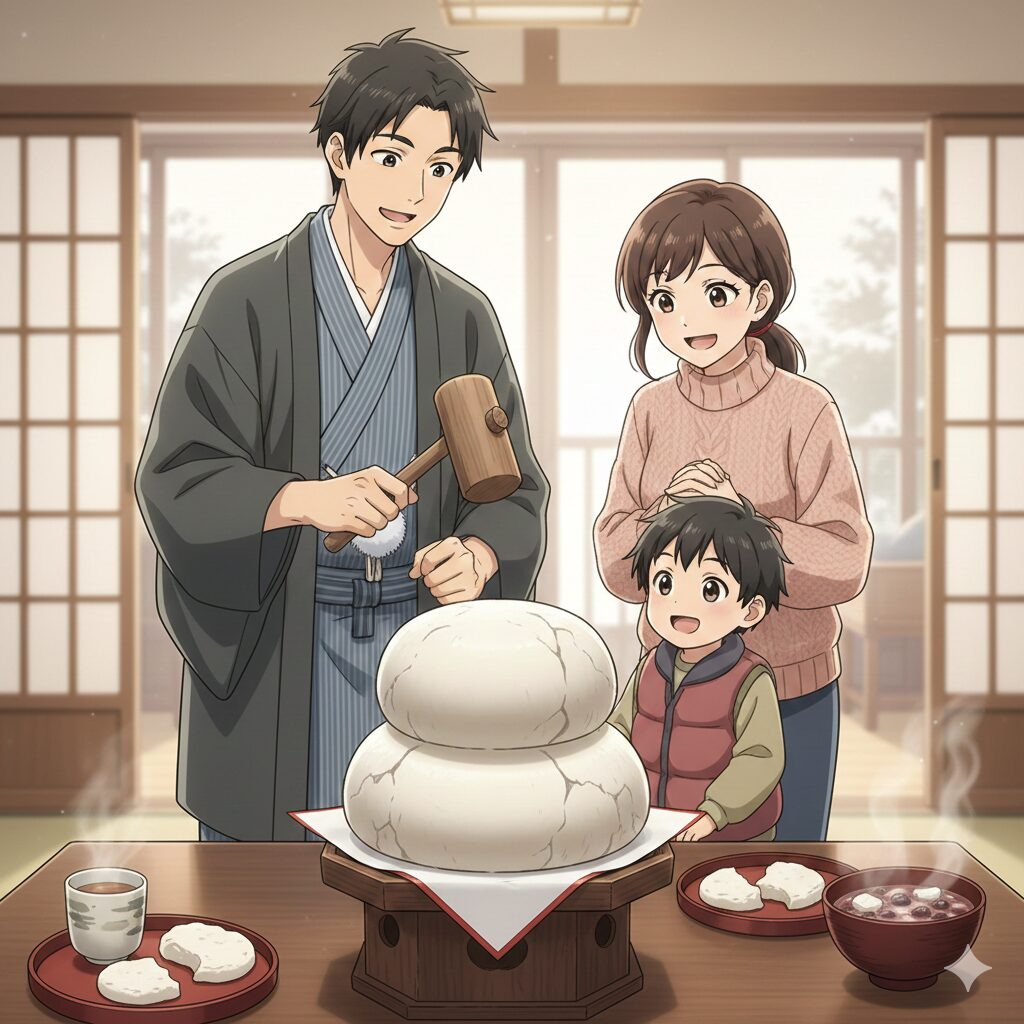
The Japanese New Year begins on January 1st and ends quietly. The grand finale of this festive season is a significant ritual held on January 11th called “Kagami Biraki.” This is not merely a day to eat the rice cakes that were displayed. It is a day that touches the essence of Japanese culture, filled with Shinto beliefs, the aesthetics of Bushido (the way of the samurai), and deep prayers for family health.

- What is Kagami Biraki? The Final Ritual Connecting Gods and Humans
- Historical Background: Tokugawa Iemitsu and the Armor Celebration
- Decoding Japanese Culture: Shinjin-kyoshoku (God and People Eating Together)
- A Question to the Reader: How Do You Celebrate Your “Closings”?
- 鏡開きとは何か:神と人を結ぶ最後の儀式
- 歴史的背景:徳川家光と具足祝い
- 日本文化の読み解き:神人共食(Shinjin-kyoshoku)
- 読者への問いかけ:あなたの「区切り」はどう祝いますか?
What is Kagami Biraki? The Final Ritual Connecting Gods and Humans
“Kagami Biraki” translates to “Opening the Mirror.” It is an event where the “Kagami Mochi” (mirror rice cakes), which were displayed during the New Year as a vessel for the “Toshigami-sama” (God of the Incoming Year), are taken down, broken apart, and eaten. It is generally held on January 11th, though some regions observe it on January 15th or 20th.
Kagami Mochi consists of two round rice cakes stacked on top of each other. Its shape is said to model the “Yata no Kagami” (Eight-Span Mirror), one of the Three Sacred Treasures of the Imperial House of Japan. Ancient mirrors were round and made of bronze, believed to be sacred objects that reflected the soul. In other words, the Kagami Mochi houses the spirit of the deity.
Why Say “Open”? The Taboos and Aesthetics of Bushido
The most unique feature of this event lies in its name and method. When eating the mochi, which has become dry and hard, using a knife to “cut” it is strictly forbidden. This is because Kagami Biraki spread as a custom of the samurai society.
For a samurai, the act of cutting mochi with a blade was considered extremely inauspicious as it reminded them of “Seppuku” (ritual suicide by disembowelment). Therefore, the method used involves breaking it with a wooden mallet or hammer, or crushing it by hand. Furthermore, in terms of language, words like “Waru” (to break) or “Kudaku” (to smash) were shunned because they imply “separation” or “collapse.”
Instead, the Japanese people applied the word “Hiraku” (to open), which implies good fortune spreading out like an opening fan, and called it “Kagami Biraki” (Mirror Opening). This reflects the Japanese philosophy of “Kotodama” (spirit of words)—that words carry souls—and a positive mentality of transforming ominous things into auspicious signs.
Historical Background: Tokugawa Iemitsu and the Armor Celebration
The origins of Kagami Biraki date back to the Muromachi period, but its current form was established during the Edo period. There is a prevailing theory that the date was changed to the 11th because the third Shogun of the Tokugawa Shogunate, Tokugawa Iemitsu, passed away on January 20th (though there are various theories, including avoiding the monthly death anniversary or aligning with the opening of storehouses).
Originally, the roots lie in “Gusoku Biraki,” where samurai would take down the mochi offered to their armor and helmets (Gusoku) and eat it in a soup called Zoni. Women would “open” the mochi offered to their vanity mirrors, and merchants would open the mochi offered to their storehouses. This spread to the common people, leading to the modern Kagami Biraki.
Decoding Japanese Culture: Shinjin-kyoshoku (God and People Eating Together)
The core of Japanese culture that can be deciphered from Kagami Biraki is the concept of “Shinjin-kyoshoku.”
Offerings are not finished once they are presented to the gods. The ritual is only complete when the god resides in the offering, shares their power, and then humans take it down and eat it. This is also called “Naorai.”
Shiruko and Zenzai: The Taste of Rebirth
The Kagami Mochi, having been displayed for days, is dry and cracked. To eat this deliciously, Japanese people turn it into “Shiruko” or “Zenzai.” The grilled or boiled mochi is placed into a warm, sweet soup made from boiled azuki beans.
Since ancient times, the red color of azuki beans has been believed to have the power of “protection from evil.” By ingesting the mochi, which houses the god’s power, together with the azuki beans that ward off evil spirits, people pray for a new year free from illness and disaster. This is the true purpose of Kagami Biraki. A strong wish for “Mubyo-sokusai” (perfect health) is contained within this sweet bowl.
The Spirit of No Waste: Mottainai
Even if the mochi has become rock-hard, people use their ingenuity to eat it deliciously until the very end. Here, the spirit of “Mottainai,” which resonates with modern SDGs, is alive. Because it is sacred, not a single grain is wasted. This attitude is an expression of respect for nature and the divine.
A Question to the Reader: How Do You Celebrate Your “Closings”?
Kagami Biraki serves as a switch to end the New Year mood and fully return to daily work and life.
I would like to ask you, the reader:
In your culture, how do you mark the end of festivities? Also, what is your impression of the concept of gaining power by physically ingesting something sacred?
If you are in Japan on January 11th, or if you have an Asian market nearby, please try making and eating “Shiruko.” Smashing something hard and transforming it into something sweet and warm to take into your body—through this process, you may experience the sensation of “opening luck” that the Japanese samurai cherished.
May today be a wonderful day of “opening” for you.
Related Links
1月11日 鏡開き:神の力を体に宿す、日本の魂の儀式
日本の新年は、1月1日の元旦に始まり、静かにその幕を閉じます。そのフィナーレを飾る重要な儀式が、1月11日に行われる「鏡開き(Kagami Biraki)」です。これは単に飾っていたお餅を食べるだけの日ではありません。神道的な信仰、武士道の美学、そして家族の健康を祈る深い願いが込められた、日本文化の真髄に触れる日なのです。
鏡開きとは何か:神と人を結ぶ最後の儀式
鏡開きとは、お正月の間、年神様(Toshigami-sama/新年の神様)の依り代として飾られていた「鏡餅(Kagami Mochi)」を下げ、それを割り、食べる行事です。一般的には1月11日に行われますが、地域によっては1月15日や20日に行う場所もあります。
鏡餅は、大小二つの丸い餅を重ねたもので、その形は三種の神器の一つ「八咫鏡(Yata no Kagami)」を模していると言われています。昔の鏡は青銅製の円形であり、魂を映し出す神聖なものとされていました。つまり、鏡餅には神様の魂が宿っているのです。
なぜ「開く」と言うのか?武士道のタブーと美学
この行事の最大の特徴は、その名称と方法にあります。乾燥して硬くなった餅を食べる際、包丁で「切る」ことは厳禁とされています。なぜなら、鏡開きは武家社会の風習として広まったからです。
刃物で餅を切る行為は、武士にとって「切腹」を連想させるため、非常に縁起が悪いとされました。そのため、木槌や金槌で叩いて割る、あるいは手で砕くという方法が取られます。そして言葉においても、「割る(Waru)」や「砕く(Kudaku)」という言葉は「別れ」や「崩壊」を連想させるため忌み嫌われました。
そこで日本人は、末広がりで縁起が良いという意味を持つ「開く(Hiraku)」という言葉を当て、「鏡開き」と呼ぶようになったのです。ここには、言葉に魂が宿るという「言霊(Kotodama)」の思想と、不吉なものを吉兆へと転換させる日本人のポジティブな精神性が表れています。
歴史的背景:徳川家光と具足祝い
鏡開きの起源は、室町時代に遡りますが、現在のような形に定着したのは江戸時代です。徳川幕府の三代将軍、徳川家光が1月11日に亡くなったため、それまで1月20日に行われていた鏡開きを、11日に変更したという説が有力です(※諸説あり、月命日を避けた説と、蔵開きに合わせた説があります)。
元々は、武家で鎧や兜(具足)に供えた餅を下げて雑煮にして食べた「具足開き」がルーツです。女性は鏡台に供えた餅を、商人は蔵に供えた餅を開きました。これが庶民にも広がり、現代の鏡開きへと繋がっています。
日本文化の読み解き:神人共食(Shinjin-kyoshoku)
鏡開きから読み解ける日本文化の核心は、「神人共食(God and people eating together)」という概念です。
お供え物は、神様に捧げて終わりではありません。神様がその供物に宿り、その力を分けた後、人間がそれを下ろして食べることで儀式が完成します。これを「直会(Naorai)」とも呼びます。
お汁粉とぜんざい:再生の味
硬くなった鏡餅は、乾燥してひび割れています。これを美味しく食べるために、日本人は「お汁粉(Shiruko)」や「ぜんざい(Zenzai)」にします。小豆を甘く煮た温かいスープの中に、焼いたり煮たりした餅を入れます。
小豆の赤色には、古来より「魔除け(Protection from evil)」の力があると信じられてきました。神様の力が宿った餅と、邪気を払う小豆を共に摂取することで、新しい一年を病気や災難なく過ごせるように祈る。これこそが鏡開きの真の目的です。「無病息災(Mubyo-sokusai)」、つまり健康への強い願いが、甘い一杯の中に込められているのです。
捨てることのない精神:Mottainai
カビが生えたり、カチカチに硬くなったりした餅を、工夫して最後まで美味しくいただく。ここには、現代のSDGsにも通じる「もったいない(Mottainai)」の精神が生きています。神聖なものだからこそ、一粒たりとも粗末にしない。その態度は、自然や神に対する敬意の表れです。
読者への問いかけ:あなたの「区切り」はどう祝いますか?
鏡開きは、お正月気分に区切りをつけ、日常の仕事や生活へと本格的に戻っていくスイッチのような日でもあります。
この記事を読んでいるあなたに問いかけたいと思います。
あなたの文化では、祝祭の終わりをどのように迎えますか?また、神聖なものを体に取り入れることで力を得るという考え方に、どのような印象を持ちましたか?
もし1月11日に日本にいるなら、あるいはアジアンマーケットが近くにあるなら、ぜひ「お汁粉」を作って食べてみてください。硬いものを打ち砕き、甘く温かいものに変えて体に取り入れる。そのプロセスを通じて、あなたは日本のサムライたちが大切にした「運を開く」感覚を体験できるかもしれません。
今日という日が、あなたにとって素晴らしい「開き」の日となりますように。


コメント