If you hum this specific melody anywhere in Japan, almost everyone will visualize the same image. And reflexively, they might start feeling hungry.
“The Parade of the Wooden Soldiers” by German composer Leon Jessel. In Japan, this lighthearted march is imprinted in our DNA as the signal that “it’s time to cook.”
January 21, 1963.
On this day, a TV program of immense importance to Japanese broadcasting and culinary history was born.
That program is “Kewpie 3-Minute Cooking” (Kewpie 3-pun Cooking).
It has been on air for over 60 years. Why has a program lasting only a few minutes been loved for so long and continued to reign over Japanese kitchens?
Today, we delve deep into the history and cultural background of this monumental day, exploring how it went beyond a simple cooking show to establish the standard for “home-cooked taste” in Japan.

1. The Kitchen Revolution of the High Economic Growth Period: The Year 1963
First, let’s turn the clock back to 1963.
With the Tokyo Olympics coming up the following year, Japan was charging toward modernization at breakneck speed.
Highways were being built, the Shinkansen (bullet train) was about to open, and the “Three Sacred Treasures” (black-and-white TV, washing machine, refrigerator) were spreading to households. Lifestyles were changing dramatically.
In this context, the launch of “Kewpie 3-Minute Cooking” on Nippon TV (NTV) was the perfect answer to the needs of the times.
Why “3 Minutes”? The Truth Behind the Magic Number
Many people have wondered, “You can’t cook a meal in 3 minutes, can you?”
In fact, the title “3 Minutes” reflects the deep philosophy of the producers at the time and a certain kind of “kindness.”
- Not the Actual Cooking Time: When the broadcast started, the slot was 5 minutes long. Excluding commercials and the opening, the actual content was about 3 minutes. The title implied, “We will show you the essence in 3 minutes.”
- Lowering the Psychological Hurdle: In an era when cooking was seen as labor-intensive, a catchy title was needed to make housewives think, “If it’s only 3 minutes, maybe I can do it too.”
- Proposing Efficiency: Using the technique of “swapping in” pre-prepared ingredients to show professional efficiency was a precursor to the “speed-watching” or “time-saving videos” seen on TikTok and YouTube Shorts today.
East vs. West? The Two “3-Minute Cookings”
This is a fact even many Japanese people don’t know: There are two versions of “Kewpie 3-Minute Cooking”: the “Nippon TV Version” (Kanto/National) and the “CBC TV Version” (Chubu/Tokai).
They feature different instructors, different menus, and different sets.
While sponsored by the same company (Kewpie), they create programs tailored to local food cultures and preferences. This flexibility and community-based approach is the secret to why it became a long-running show loved by the entire nation.
2. Decoding Japanese Culture and Mayonnaise
This program goes beyond mere recipe introductions; it has the cultural achievement of establishing “Yoshoku” (Western-influenced Japanese food) and “Mayonnaise” in Japanese dining.
The Achievement of Making “Salad” a National Dish
In the early 1960s, Japanese vegetable consumption centered on pickles and simmered dishes.
The habit of eating raw vegetables was not yet common.
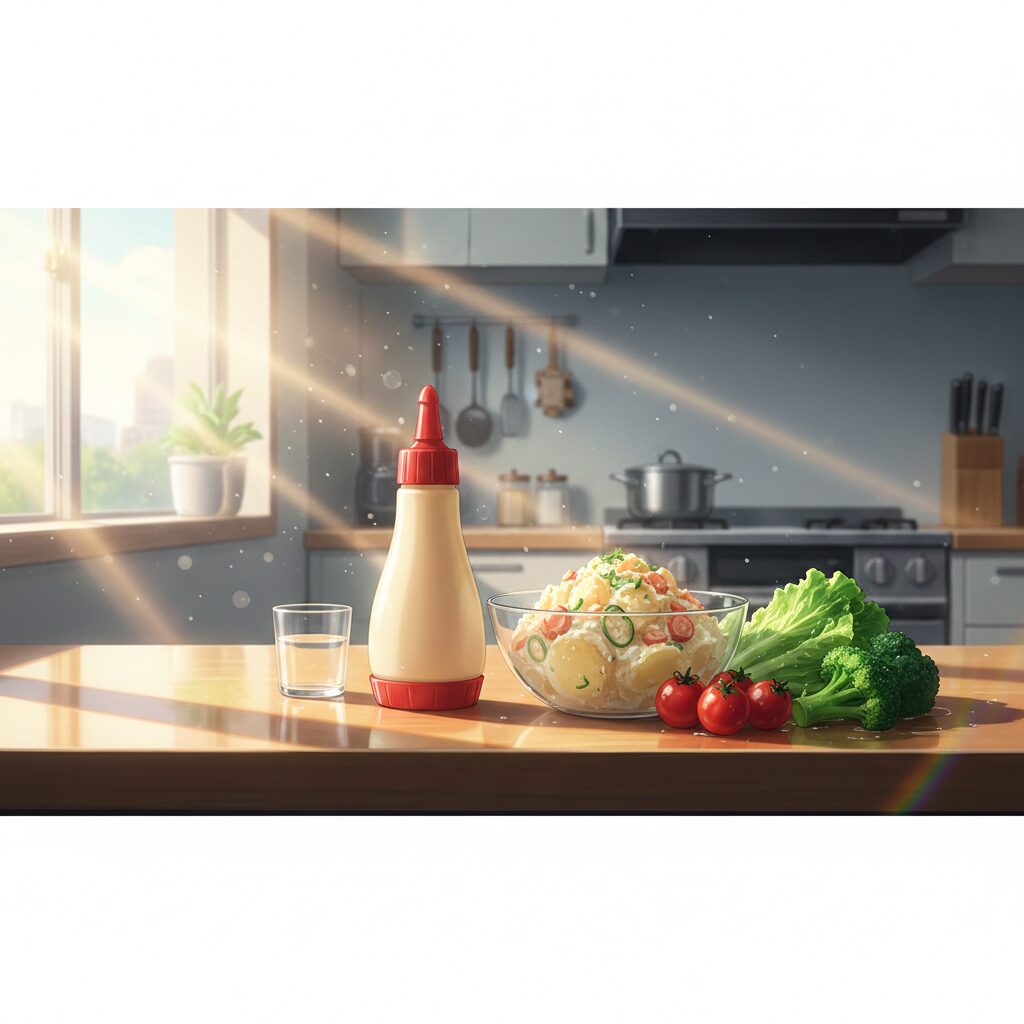
However, through this program, Kewpie continued to propose “Potato Salad with Mayonnaise” and “Fresh Vegetable Salad.”
Watching the instructor skillfully mix mayonnaise on the show was seen as a symbol of richness and modernity.
Today, Japanese mayonnaise (a unique type made with egg yolks only, giving it a rich flavor) is praised by chefs around the world as “Magic Sauce.” It is no exaggeration to say that the foundation for this lies in the daily educational activities built up by this program.
The Japanese Aesthetic of Cherishing “Seasonality” and “Basics”
Analyzing the program’s content reveals the spirit underlying Japanese culture.
- Emphasis on Seasonality (Shun): Using ingredients that are most delicious at that time of year. Menus that let you feel the twenty-four solar terms.
- Not Being Eccentric: Instead of trendy “Insta-worthy” dishes, they teach “basic home cooking” that anyone can make without failure and that families will enjoy.
In today’s information overload, the unchanging opening theme and the unchanging pristine white studio set give us a “sense of security in constancy.”
It might be the ultimate form of “functional beauty,” stripping away the unnecessary, akin to the spirit of Zen.
3. What is the Meaning of “Home Cooking” Today?
In the 2020s, delicious side dishes are available 24/7 at convenience stores, and food delivery has become a daily norm.
Yet, consider the meaning of this program continuing even now.
What “3-Minute Cooking” teaches us is not just recipes, but “the preciousness of the time spent working your hands for someone else.”
Even if you are busy, you can make delicious things with a little ingenuity. That message has not wavered once since 1963.
A Question for You
Who will you cook for today?
Or, do you remember the taste of a dish someone made for you?
If you haven’t stood in the kitchen lately, why not buy some seasonal ingredients and mayonnaise at the supermarket today?
While playing “The Parade of the Wooden Soldiers” in your head.
Surely, cooking will become a little more fun than usual.
If reading this article made you want to listen to “that song” again, please tell us your “memorable 3-Minute Cooking menu” in the comments.
Related Links
- External Link (Official): Kewpie 3-Minute Cooking – Nippon TV Official Site
- Internal Link: Back to “What’s Today’s Special Day Series”
チャララ、チャララ、チャララララ…あのメロディが日本中の食卓を変えた日
日本のどこかで、このメロディを口ずさめば、誰もが同じ映像を思い浮かべるでしょう。そして、反射的にお腹が空くはずです。
「おもちゃの兵隊の観兵式(The Parade of the Wooden Soldiers)」。
ドイツの作曲家レオン・イェッセルが作ったこの軽快な行進曲は、日本では「料理の合図」としてDNAレベルで刷り込まれています。
1963年(昭和38年)1月21日。
日本のテレビ史、そして食文化史において、極めて重要な番組が産声を上げました。
それが、『キユーピー3分クッキング』です。
放送開始から60年以上。なぜ、たった数分の番組がこれほど長く愛され、日本のキッチンに君臨し続けているのでしょうか。
今日は、単なる料理番組の枠を超え、日本の「家庭の味」のスタンダードを作り上げたこの記念すべき日について、歴史と文化的背景から深く掘り下げていきます。
1. 高度経済成長期のキッチン革命:1963年という時代
まず、時計の針を1963年に戻してみましょう。
翌年に東京オリンピックを控えた日本は、猛烈な勢いで近代化への道を突き進んでいました。
高速道路が建設され、新幹線の開通も目前。家庭には「三種の神器(白黒テレビ・洗濯機・冷蔵庫)」が普及し始め、人々の生活スタイルが劇的に変化していた時期です。
そんな中、日本テレビ(NTV)で放送が開始された『キユーピー3分クッキング』は、まさに時代のニーズに対する回答でした。
なぜ「3分」なのか? その魔法の数字の真実
多くの人が一度は疑問に思ったことがあるでしょう。「3分で料理なんて作れないじゃないか」と。
実は、この「3分」というタイトルには、当時の制作サイドの深い哲学と、ある種の「優しさ」が込められています。
- 実際の調理時間ではない: 放送開始当初の放送枠は5分間でした。CMやオープニングを除くと、実質的な本編は約3分。つまり、「3分でお見せします」という番組構成上の意味合いが強かったのです。
- 心理的なハードルの低下: 「料理は大変なもの」という認識があった時代。「3分くらいなら私にもできるかも」と、主婦たちに思わせるキャッチーなタイトルが必要でした。
- 手際の良さの提案: 下準備を済ませておく「差し替え」の技法を使い、プロの手際良さを凝縮して見せる。これは現代のTikTokやYouTubeショート動画の「倍速視聴」や「時短動画」の先駆けとも言える発明です。
東と西で違う? 知られざる「2つの3分クッキング」
これは日本人でも知らない人が多い事実ですが、『キユーピー3分クッキング』には「日本テレビ版(関東・全国)」と「CBCテレビ版(中部・東海)」の2種類が存在します。
それぞれ違う先生、違うメニュー、違うセットで作られています。
同じスポンサー(キユーピー)でありながら、地域ごとの食文化や好みに合わせた番組作りを行う。この柔軟性と地域密着性こそが、全国民に愛される長寿番組となった秘訣なのです。
2. 日本文化とマヨネーズ:番組が果たした役割を読み解く
この番組が単なるレシピ紹介に留まらないのは、日本の食卓に「洋食」と「マヨネーズ」を定着させた文化的功績があるからです。
「サラダ」を国民食にした功績
1960年代初頭、日本人の食卓における野菜の食べ方は、漬物や煮物が中心でした。
生野菜を食べる習慣はまだ一般的ではありませんでした。
しかし、キユーピーはこの番組を通して「マヨネーズを使ったポテトサラダ」や「生野菜サラダ」を提案し続けました。
番組内で先生が鮮やかな手付きでマヨネーズを和える姿は、豊かさとモダンの象徴として映ったのです。
今日、日本のマヨネーズ(卵黄タイプでコクがある独特のもの)が世界中のシェフから「Magic Sauce」と称賛されていますが、その土台はこの番組が毎日コツコツと積み上げてきた啓蒙活動にあると言っても過言ではありません。
「旬」と「基本」を大切にする日本人の美学
番組の内容を分析すると、日本文化の根底にある精神が見えてきます。
- 季節感の重視: その時期に一番美味しい食材を使う。二十四節気を感じさせるメニュー構成。
- 奇をてらわない: 流行りの映え料理ではなく、誰が作っても失敗せず、家族が喜ぶ「基本の家庭料理」を教える。
情報過多の現代において、変わらないオープニング曲と、変わらない真っ白なスタジオセットは、私たちに「変わらないことの安心感」を与えてくれます。
それは、禅の精神にも通じる、無駄を削ぎ落とした「機能美」の極致なのかもしれません。
3. 現代における「手料理」の意味とは?
コンビニに行けば美味しいお惣菜が24時間手に入り、フードデリバリーが日常になった2020年代。
それでもなお、この番組が続いている意味を考えてみてください。
「3分クッキング」が教えてくれるのは、単なるレシピではなく、「誰かのために手を動かす時間の尊さ」ではないでしょうか。
たとえ忙しくても、工夫次第で美味しいものは作れる。そのメッセージは、1963年から一度もブレていません。
あなたへの問いかけ
今日、あなたは誰のために料理を作りますか?
あるいは、誰かが作ってくれた料理の味を覚えていますか?
もし、最近キッチンに立っていないなら、今日はスーパーで旬の食材とマヨネーズを買ってみてはいかがでしょう。
頭の中で「おもちゃの兵隊の観兵式」を再生しながら。
きっと、いつもより少しだけ、料理が楽しくなるはずです。
この記事を読んで、久しぶりに「あの曲」を聞きたくなった方、ぜひコメントであなたの「思い出の3分クッキングメニュー」を教えてください。
関連リンク
- 外部リンク(公式):キユーピー3分クッキング – 日本テレビ公式サイト
- 内部リンク:What’s Today’s Special Day Series 一覧へ戻る


コメント