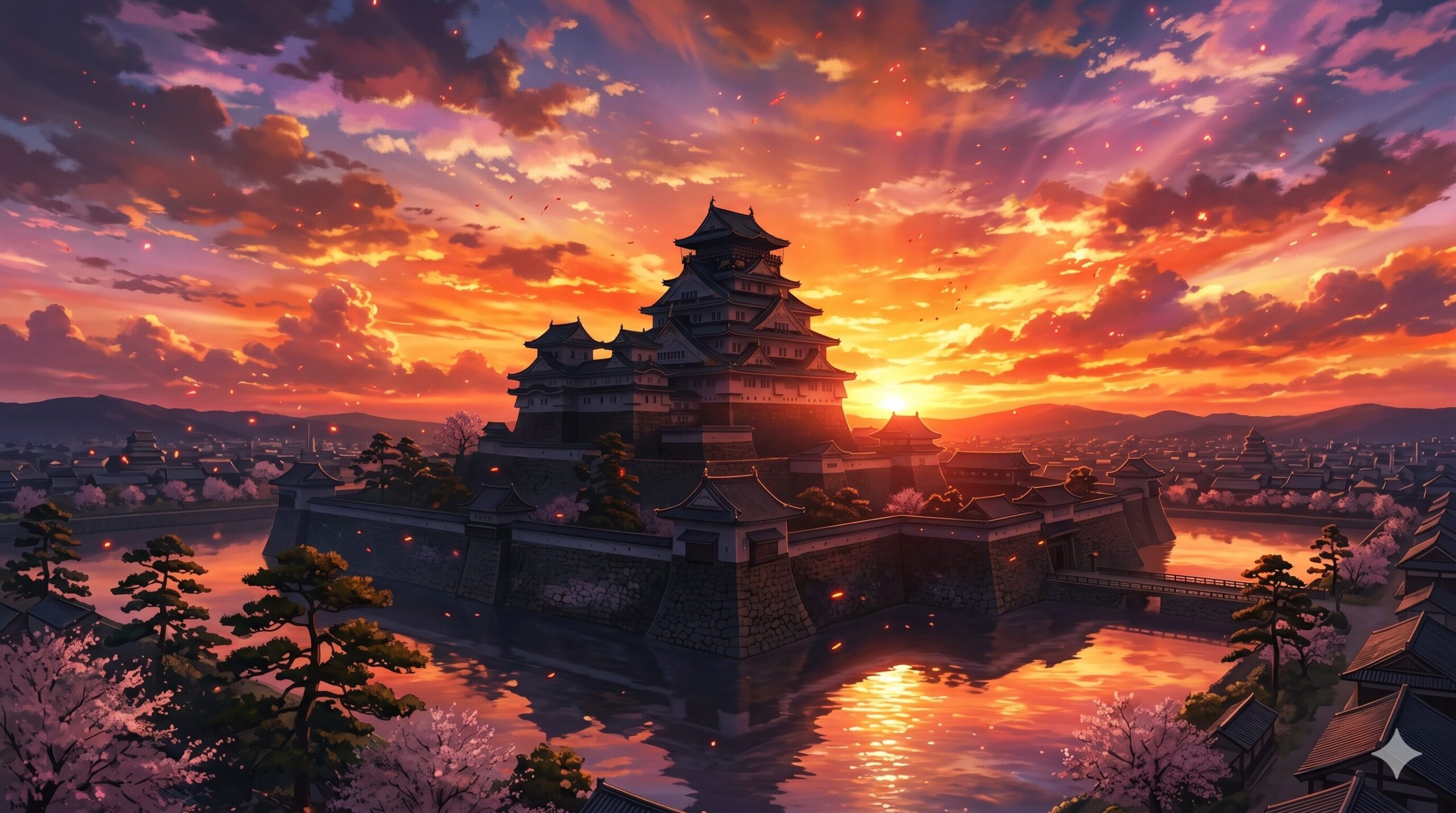
May 8, 1615. This date marks one of the most dramatic and decisive turning points in Japanese history. On this day, the massive and supposedly impregnable Osaka Castle was engulfed in flames, and the Toyotomi clan—which had once ruled all of Japan—was entirely destroyed. The end of this conflict, known as the “Summer Campaign of the Siege of Osaka,” meant more than just the extinction of a single bloodline; it signified the absolute end of the bloody Sengoku (Warring States) period that had raged for over a century.
In the exact moment that Osaka Castle, the symbol of the glory built by Toyotomi Hideyoshi, crumbled, Japan steered sharply away from an “era of swords and blood” toward an “era of law and order.” Today, we will deeply explore the details of this historic day and how it continues to influence modern Japanese culture.
The Final Battle for Supremacy: What Was the Summer Campaign of Osaka?
After the death of Toyotomi Hideyoshi, the great unifier of Japan, the hegemony of the nation shifted to Tokugawa Ieyasu. For Ieyasu, who established the Edo Shogunate after his victory at the Battle of Sekigahara in 1600, the existence of Hideyoshi’s heir, Toyotomi Hideyori, residing in Osaka Castle, was the single greatest threat to Tokugawa rule. The Toyotomi family still possessed immense wealth and an overwhelming charisma that attracted masterless samurai (ronin) from all over the country who were dissatisfied with the Tokugawa regime.
During the “Winter Campaign” of 1614, the Tokugawa forces filled in the moats of Osaka Castle, stripping it of its defenses. The following year, in 1615, Ieyasu led a massive army back to Osaka for the “Summer Campaign.” Forced into open-field battle, the Toyotomi forces fought desperately. Brave warriors like Sanada Yukimura launched a suicide charge directly at the Tokugawa headquarters, pushing Ieyasu to the very brink of seppuku (ritual suicide). However, the overwhelming difference in military strength could not be overcome, and Osaka Castle finally burned. On May 8, Toyotomi Hideyori and his mother, Yodo-dono, took their own lives, and the Toyotomi clan vanished from the forefront of history.
From War to Peace: Meaning and Transformation in Japanese Culture
The fall of the Toyotomi clan had an immeasurable impact on Japanese culture and spirituality. The most significant change was the transformation of the definition of the “Samurai.” Immediately after the Siege of Osaka, the Tokugawa Shogunate declared the end of the wars and the arrival of peace. As a result, samurai were forced to change their roles from combatants seeking enemy heads on the battlefield to bureaucrats managing territories and processing documents.
This dramatic shift in social structure refined the concept of “Bushido” (the Way of the Warrior). Having lost the opportunity to fight, samurai began to find their purpose in “loyalty,” “morality,” and “self-cultivation.” Many of the values that modern Japanese people hold dear—such as politeness, a strong sense of responsibility, and dedication to an organization—have their roots in the samurai spirit reconstructed during this peaceful Edo period.
Furthermore, this event deepened a unique aspect of Japanese culture known as “Hogan-biki”—a strong sympathy for the underdog or the tragic hero. Sanada Yukimura, who pushed Ieyasu to the limit during the Summer Campaign, was praised as the “Greatest Warrior in Japan” despite being on the losing side. He became one of the most beloved heroes in later literature, Kabuki theater, and even modern anime and video games. The aesthetic of individuals who refuse to yield to power and die for their own beliefs and righteousness is deeply rooted in the hearts of the Japanese people.
A Message from the Depths of History to the Present
The Tokugawa rule built upon the ashes of Osaka Castle brought about an extraordinary, long-lasting period of peace known as the “Pax Tokugawa,” which lasted for about 250 years. During this peaceful era, a rich popular culture blossomed, leading to the creation of Ukiyo-e woodblock prints, Kabuki, the tea ceremony, and the foundations of modern traditional Japanese cuisine (Washoku). If the Toyotomi clan had survived and the wars had continued, the beautiful traditional culture of Japan today might have taken a completely different form.
May 8, 1615, was a day of destruction and endings, but it was simultaneously the “first day of creation” for a new culture and a peaceful society. Turning points in history always open the door to a new era, often accompanied by great pain.
Having read this article, how do you feel about this dramatic historical transition? If you were a samurai during this era, would you have chosen the path of ultimate loyalty to the Toyotomi family and fought to the death at Osaka Castle? Or would you have chosen to adapt to the new peaceful era brought by the Tokugawa and survive? Please take a moment to ponder what your choice would be!
Reference Links:
・External Reference: Siege of Osaka (Wikipedia)
・Discover more historical events and anniversaries: What’s Today’s Special Day Series
1615年5月8日:大坂夏の陣と豊臣氏の滅亡〜サムライの時代の転換点〜
1615年5月8日(慶長20年)。この日は、日本の歴史において最も劇的で、そして決定的な転換点となった日です。難攻不落と謳われた巨大な要塞、大坂城が炎に包まれ、かつて日本全土を支配した豊臣氏が滅亡しました。「大坂夏の陣」と呼ばれるこの戦いの終結は、単なる一つの血脈の断絶ではなく、1世紀以上続いた血で血を洗う戦国時代の完全なる終焉を意味していました。
豊臣秀吉が築き上げた栄華の象徴である大坂城が崩れ落ちたその瞬間、日本は「剣と血の時代」から「法と秩序の時代」へと大きく舵を切りました。本日は、この歴史的な1日の詳細と、それが現代の日本文化にどのような影響を与え続けているのかを深く読み解いていきます。
覇権を巡る最終決戦:大坂夏の陣とは
天下人・豊臣秀吉の死後、日本の覇権は徳川家康へと移りました。1600年の関ヶ原の戦いを経て江戸幕府を開いた家康にとって、大坂城に鎮座する秀吉の遺児、豊臣秀頼の存在は、徳川の天下を揺るがす唯一にして最大の脅威でした。豊臣家は依然として強大な財力と、徳川政権に不満を持つ全国の浪人(主君を持たない武士)たちを惹きつける圧倒的なカリスマ性を持っていたからです。
1614年の「大坂冬の陣」で堀を埋め立てられ、防御力を失った大坂城に対し、翌1615年、徳川軍は圧倒的な大軍を率いて再び大坂へと押し寄せました。これが「大坂夏の陣」です。豊臣方は野戦に打って出るしかなく、真田幸村(信繁)をはじめとする勇猛な武将たちが、徳川本陣に決死の突撃を行いました。一時は家康を自刃の覚悟にまで追い込みましたが、兵力差は如何ともし難く、ついに大坂城は炎上。5月8日、豊臣秀頼と母の淀殿は自害し、豊臣氏は歴史の表舞台から姿を消しました。
戦国から泰平へ:日本文化における意味と変容
豊臣氏の滅亡は、日本文化と日本人の精神性に計り知れない影響を与えました。最も大きな変化は「武士(サムライ)」という存在の定義の変容です。大坂の陣が終わった直後、徳川幕府は「元和偃武(げんなえんぶ)」、すなわち戦乱の世の終わりと平和の到来を宣言しました。これにより、武士たちは戦場で敵の首を取る戦闘員から、領地を治め、書類を処理する官僚へとその役割を変えることを余儀なくされました。
この劇的な社会構造の変化は、「武士道」の概念を洗練させました。戦う機会を失った武士たちは、己の存在意義を「忠義」や「道徳」、「自己修養」の中に見出すようになります。現代の日本人が重んじる礼儀正しさ、責任感、そして組織への献身といった価値観の多くは、この平和な江戸時代において再構築された武士の精神にルーツを持っています。
また、日本特有の文化である「判官贔屓(ほうがんびいき)」、すなわち敗者や悲劇の英雄に対する強い共感も、この日を境にさらに深まりました。大坂夏の陣で家康を極限まで追い詰めた真田幸村は、敗者でありながら「日本一の兵(ひのもといちのつわもの)」と称賛され、後世の文学、歌舞伎、そして現代のアニメやゲームに至るまで、最も愛される英雄の一人となりました。権力に屈せず、己の信念と義のために散っていった者への美学は、日本人の心に深く根付いています。
歴史の彼方から現代へのメッセージ
大坂城の焼け跡の上に築かれた徳川の治世は、その後約250年間にわたる「パクス・トクガワーナ(徳川の平和)」と呼ばれる類まれなる長期の平和な時代を実現しました。この平和な時代に、浮世絵、歌舞伎、茶道、そして現代の和食につながる豊かな庶民文化が花開くことになります。もし豊臣氏が存続し、戦乱が続いていたら、今の日本の美しい伝統文化は全く違った形になっていたかもしれません。
1615年5月8日は、破壊と終わりを意味する日であると同時に、新しい文化と平和な社会の「創造の始まりの日」でもありました。歴史の転換点は、常に大きな痛みを伴いながら、新しい時代への扉を開きます。
この記事を読んでくださったあなたは、この劇的な歴史の転換をどう感じましたか?もしあなたがこの時代のサムライであったなら、最後まで豊臣家への忠義を貫いて大坂城で戦う道を選びますか?それとも、徳川がもたらす新しい平和な時代に順応し、生き残る道を選びますか?ぜひ、あなたの考えを巡らせてみてください。
参考リンク:
・外部参考記事:大坂の陣(Wikipedia)
・その他の記念日や歴史記事はこちら:What’s Today’s Special Day Series
コメント