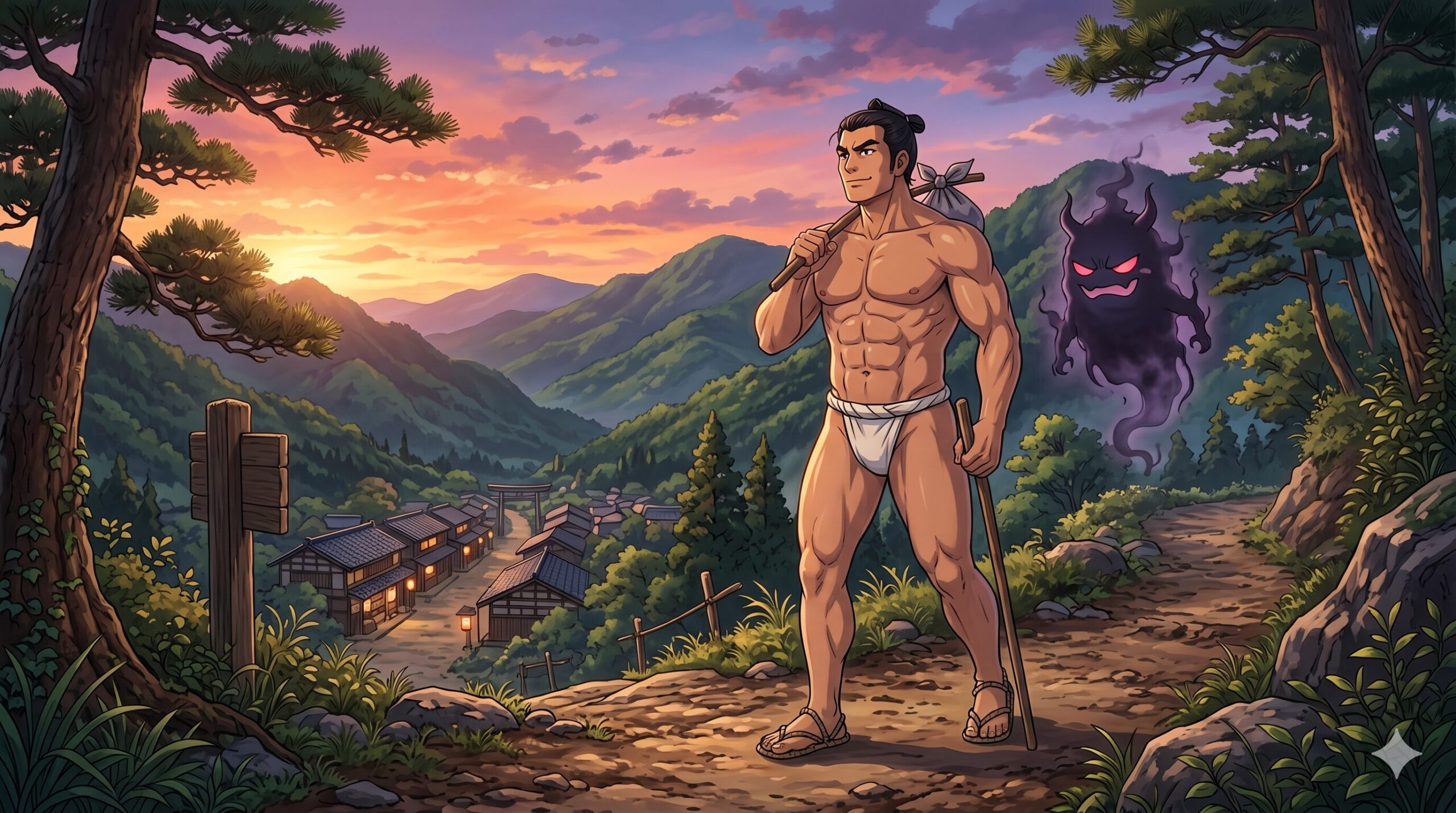
Japan is home to countless mysterious and fascinating folktales. Today, we introduce “Hadaka Buhei” (The Naked Buhei), a slightly bizarre yet heartwarming hero’s tale set along the historic Nakasendo trail. This story is more than just a fairy tale; it provides deep insights into Japanese spirituality and the human condition.
- 1. A Strange Encounter and a Secret Pact: The Story of Hadaka Buhei
- 2. Analysis: Why “Naked” and Why a “Plague God”?
- 3. Connection to Japanese Culture: Selflessness and Animism
- 4. A Question for the Reader: What Would You Do?
- 奇妙な出会いと秘密の契約:はだか武兵のストーリー
- 考察:なぜ「裸」で、なぜ「疫病神」だったのか
- 日本文化との関連:無私の精神と「アニミズム」
- あなたならどうしますか?
1. A Strange Encounter and a Secret Pact: The Story of Hadaka Buhei
Long ago, during the Edo period, there lived a man named Buhei in Unuma-juku along the Nakasendo trail. Since childhood, Buhei had been an uncontrollable ruffian. As an adult, he lived alone in a small hut on Chayazaka and made his living as a “Kumosuke” (a porter carrying luggage for travelers).
Buhei was exceptionally large and incredibly strong, but he had one major quirk: regardless of the season, he spent his days completely naked, wearing only a traditional “fundoshi” (loincloth). Because of this, travelers and his peers began calling him “Hadaka Buhei” (Naked Buhei).
One day, after finishing a job far from home, Buhei decided not to return to his hut and instead slept under the floorboards of a shrine in Suhara-juku. In the dead of night, while sleeping soundly, something shook him awake.
“Hey, wake up.”
The voice in the dark belonged to a terrifying “Ekibiogami” (God of Plague). An Ekibiogami is a disaster-bringer who spreads disease among humans. However, instead of cursing Buhei, the plague god made a bizarre proposal.
“Buhei, why don’t you partner with me? I will go to villages and post towns to spread fevers. When you arrive there, I will quickly retreat. That way, it will look like you cured the illness, and people will praise you as a great doctor.”
Though skeptical, Buhei accepted this strange contract.
Upon returning to his post town of Nakatsugawa, Buhei found a fellow porter suffering from a severe high fever. Peeking into the room, he saw the Ekibiogami sitting on top of the chest of drawers. The moment Buhei stepped inside, true to their promise, the plague god vanished, and his friend’s fever instantly broke.
“When Buhei arrives, the sickness is cured!”
This rumor spread like wildfire along the Nakasendo, and he soon came to be treated like a living deity.
One day, a princess from the Choshu domain was passing through Okute-juku when she suddenly collapsed with a terrible fever. Famous doctors from the surrounding areas were summoned, but none could cure her. Desperate, the chief retainers called for the legendary “Hadaka Buhei.”
Knowing they couldn’t present a naked man to a noble princess, the officials hastily tried to dress Buhei in fine kimono. However, against Buhei’s massive body and sheer strength, every kimono tore to shreds. Ultimately, they had no choice but to let him into the princess’s bedchamber completely naked.
Buhei entered the room and stayed by her side all night. As dawn broke, the plague god departed, and the princess fully recovered her health. Weeping tears of joy, the chief retainer offered, “I will grant you any reward you desire.” But Buhei simply replied, “I don’t need any reward,” and vanished like the wind.
“Hadaka Buhei” sought neither fame nor wealth. Even today, a stone monument believed to be Buhei’s grave stands in Asahigaoka Park in Nakatsugawa City, Gifu Prefecture. It is said that if you tap this stone and it produces a good sound, you will be protected from illness.
2. Analysis: Why “Naked” and Why a “Plague God”?
When we delve deeper into this story, several fascinating elements emerge.
The Meaning of “Nakedness”: Buhei being naked is not merely a symbol of barbarism. In traditional Japanese thought, “nakedness” represents “purity,” an “unadorned heart,” and a “lack of worldly attachments.” He was not bound by social status, appearances, or material wealth (clothing). The scene where he destroys the kimono forced upon him to save the princess symbolizes a total rejection of authority and superficiality.
The Complicity with the Plague God: Normally, plague gods are detested and meant to be exorcised. Yet, Buhei makes a “deal” with this symbol of disaster. This is a very human, humorous approach: rather than fighting uncontrollable natural threats head-on, he finds a way to “coexist” or find a loophole. It depicts the shrewdness and resilience of the Japanese commoners, moving beyond simple good and evil.
3. Connection to Japanese Culture: Selflessness and Animism
The core of Japanese culture revealed in this folktale is the spirit of “Mushi” (selflessness) and the animistic worldview that “souls dwell in all things.”
Mushi (Selflessness): At the story’s climax, Buhei casually discards the chance to gain immense wealth and high status. His attitude of helping someone without seeking anything in return, only to go back to his poor life as a porter, resonates with the “aesthetics of unselfishness” found in Bushido and Zen philosophy. All that mattered to him was fulfilling his promise and saving the life in front of him.
The Distance Between Gods and Humans: In Japanese Shinto and folk beliefs, gods (in this case, the plague god) are not absolute, untouchable beings. They are depicted as familiar entities that humans can converse with and sometimes even bargain with. Personifying natural threats and interacting with them with a mix of fear and humor reflects the traditional worldview of the Japanese people surviving in harsh natural environments.
4. A Question for the Reader: What Would You Do?
The tale of “Hadaka Buhei” raises many questions for us living in the modern world.
If you were offered a “secret deal to gain fame” by a plague god like Buhei was, would you accept it? And after achieving a monumental feat that could drastically change your social standing, could you walk away from a massive reward saying, “I don’t need anything”?
In our modern society overflowing with information and material goods, living like Buhei—”living naked,” with only what is truly necessary—might just be the ultimate luxury and an ideal way of life. We would love to hear what you thought after reading this story and how you might apply its lessons to your own life today.
Reference Links:
Manga Nippon Mukashibanashi Database: Hadaka Buhei (Japanese)
Explore more in our Japanese Folktale Series
【日本昔話】疫病神と契約した型破りなヒーロー「はだか武兵」の伝説
日本には、数多くの不思議で魅力的な昔話が存在します。今回ご紹介するのは、中山道(なかせんどう)を舞台にした、少し変わった、しかし心温まるヒーローの物語「はだか武兵(はだかぶひょう)」です。この物語は、単なるおとぎ話にとどまらず、日本の精神性や人間の在り方について深い洞察を与えてくれます。
奇妙な出会いと秘密の契約:はだか武兵のストーリー
昔々、江戸時代のこと。中山道沿いの鵜沼宿(うぬまじゅく)に、武兵(ぶひょう)という男が住んでいました。武兵は子供の頃から手がつけられない乱暴者で、大人になった今は、茶屋坂の小さな小屋に一人で暮らし、「雲助(くもすけ)」と呼ばれる荷物運びの仕事をして生計を立てていました。
武兵は並外れて体が大きく、力も誰よりも強かったのですが、彼には一つ大きな特徴がありました。それは、季節を問わず常に「ふんどし」一丁の裸で過ごしていることでした。そのため、街道を行き交う人々や仲間たちからは、いつしか「はだか武兵」と呼ばれるようになっていました。
ある日のこと、遠方での仕事を終えた武兵は、自分の小屋まで帰らず、木曽の須原宿(すはらじゅく)にある神社の床下で野宿をすることにしました。夜更け、心地よく眠っていた武兵は、何者かに体を揺り起こされました。
「おい、起きろ」
暗闇の中で声をかけてきたのは、なんと恐ろしい「疫病神(やくびょうがみ)」でした。疫病神は、人々に病をもたらす災いの存在です。しかし、疫病神は武兵を呪う代わりに、奇妙な提案を持ちかけました。
「武兵よ、わしと手を組まないか? わしが村や宿場に行って病を流行らせる。お前がそこへやって来たら、わしはスッと退散してやる。そうすれば、お前が病を治したことになり、名医として感謝されるという寸法だ」
半信半疑だった武兵ですが、この奇妙な契約を受け入れることにしました。
中津川の宿場に帰ってきた武兵が様子を見に行くと、さっそく雲助の仲間が高い熱を出して苦しんでいました。部屋を覗くと、箪笥(たんす)の上にあの疫病神が座っています。武兵が部屋に足を踏み入れた瞬間、約束通り疫病神は姿を消し、仲間の熱は嘘のように下がりました。
「武兵が来ると病気が治る!」
この噂は瞬く間に中山道中に広がり、彼は「生き神様」のように扱われるようになりました。
そんなある日、大湫宿(おおくてじゅく)を通りかかった長州藩のお姫様の一行が足止めを食らっていました。お姫様が急な高熱で倒れてしまったのです。近隣から名医が呼ばれましたが、誰も治すことができません。万策尽きた家老たちは、噂に名高い「はだか武兵」を呼び寄せました。
身分あるお姫様の前に裸の男を出すわけにはいかないと、役人たちは慌てて武兵に着物を着せようとしました。しかし、武兵の巨体と規格外の力の前では、どんな着物もビリビリと破けてしまいます。結局、武兵はふんどし一丁の裸のまま、お姫様の寝所へ通されることになりました。
武兵が部屋に入り、一晩中お姫様のそばに付き添っていると、夜明けとともに疫病神は去っていき、お姫様はすっかり元気を取り戻しました。家老は涙を流して喜び、「どんな褒美でもとらす」と申し出ました。しかし武兵は、「褒美などいらねえ」とだけ言い残し、風のように去っていったのです。
名声も富も求めなかった「はだか武兵」。現在でも、岐阜県中津川市の旭ヶ丘公園には武兵の墓と伝わる石碑が残っており、この石を叩いて良い音が鳴ると、病気にかからないと伝えられています。
考察:なぜ「裸」で、なぜ「疫病神」だったのか
この物語を深く読み解くと、いくつかの非常に興味深い要素が浮かび上がってきます。
「裸」が意味するもの:武兵が常に裸であったことは、単なる野蛮さの象徴ではありません。日本の伝統的な考え方において、「裸」は「無垢」「飾らない心」、そして「世俗的な欲への執着のなさ」を表します。彼は身分や見栄、そして物質的な豊かさ(着物)に縛られていませんでした。お姫様を助ける際に着物を着せられそうになり、それを破いてしまうシーンは、「権威や体裁の拒絶」を象徴しています。
「疫病神」との共犯関係:通常、疫病神は忌み嫌われ、祓い清められるべき対象です。しかし武兵は、この災いの象徴と「取引」をします。これは、自然界の脅威や病気というコントロールできないものに対して、真正面から戦うのではなく、一種の「共存」や「裏道」を見つけるという、非常に人間臭く、ユーモアに溢れたアプローチです。善悪の二元論ではなく、清濁併せ呑む日本の民衆のしたたかさが描かれています。
日本文化との関連:無私の精神と「アニミズム」
この昔話から読み解ける日本文化の核心は、「無私(むし)」の精神と、「万物に魂が宿る」とするアニミズムの世界観です。
無私(Mushi – Unselfishness):物語のクライマックスで、武兵は莫大な富や高い地位を得るチャンスをあっさりと捨てます。見返りを求めずに人を助け、元の日常(雲助としての貧しい生活)に戻っていく姿勢は、日本の武士道や禅の思想にも通じる「無欲の美学」です。彼にとって重要なのは、約束を果たし、目の前の命を救うことだけだったのです。
神と人間の距離感:日本の神道や民俗信仰では、神様(この場合は疫病神)は絶対的な超越者ではなく、人間と会話をし、時には取引までする身近な存在として描かれます。自然の脅威を人格化し、恐れながらもユーモアを交えて付き合っていく。これは、過酷な自然環境の中で生き抜いてきた日本人の伝統的な世界観そのものです。
あなたならどうしますか?
「はだか武兵」の物語は、現代を生きる私たちにも多くの問いを投げかけています。
もしあなたが武兵のように、疫病神から「名声を得られる秘密の取引」を持ちかけられたら、受け入れますか? そして、自分の地位を劇的に変えることができるほどの大きな功績を上げた後、あなたなら莫大な報酬を前にして「何もいらない」と言って立ち去ることができるでしょうか?
情報と物質に溢れた現代社会において、武兵のように「本当に必要なものだけで生きる(裸のまま生きる)」という生き方は、究極の贅沢であり、一つの理想的な姿なのかもしれません。この物語を読んで、あなたが感じたこと、現代の社会にどう活かせるか、ぜひ考えてみてください。
参考リンク:
まんが日本昔ばなしデータベース:はだか武兵
Japanese Folktale Series (kiri53.com 内カテゴリー)
コメント