Japan is home to countless folktales, and none of them are merely stories for children. They reflect the light and shadow hidden deep within the human heart, as well as a profound awe of nature. Today, let us introduce a somewhat sorrowful and frightening folktale from Kochi Prefecture called “Yamanba of Mainokawa.”
1. The Story of “Yamanba of Mainokawa”
Once upon a time, in a deep mountain village called Hayama (now Tsuno Town) in Kochi Prefecture, there lived a very poor farmer named Seibei. He had five children, and they lived a hard life, barely having enough to eat every day. However, the family was close-knit, and Seibei was a hardworking man.
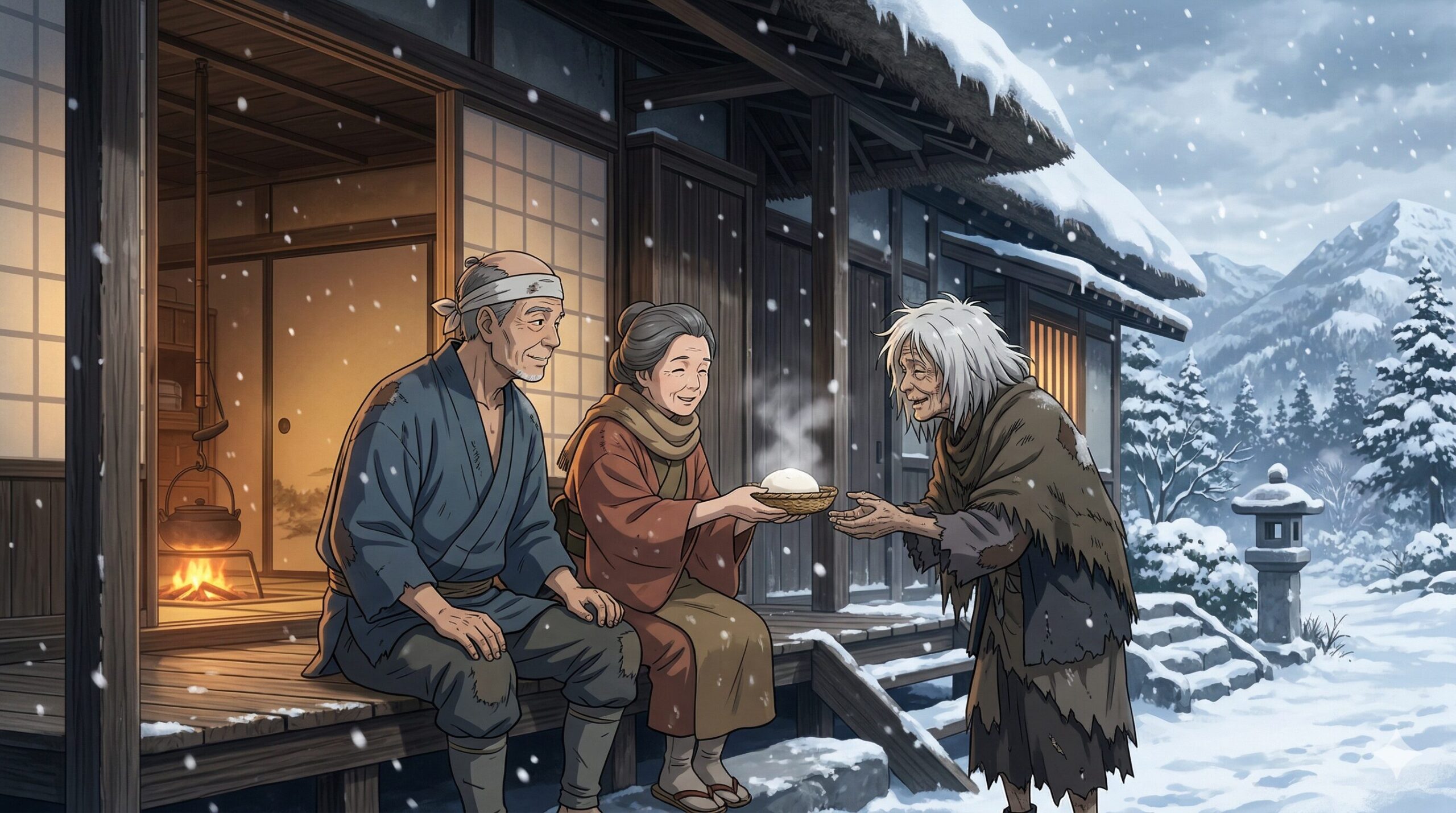
No matter how poor they were, it was a tradition in Seibei’s family to always pound mochi (rice cakes) to celebrate the New Year on December 28th every year. On December 28th one year, as the family was modestly pounding mochi, a strange old woman in shabby clothes visited them.
“I am so hungry I cannot move. Could you please share a little of that mochi with me?”
Even though they barely had enough for themselves, the kind-hearted Seibei and his wife said, “Please, eat as much as you like without hesitation,” and served the freshly pounded, warm mochi to the old woman. After eating the mochi with great relish, the old woman said as she was leaving, “You are truly kind people. From now on, you must always pound mochi on December 28th every year. It’s a promise.”
From then on, the old woman came to Seibei’s house every year on December 28th to eat mochi. Miraculously, ever since the old woman started visiting, Seibei’s fields yielded abundant crops, and his business began to thrive. In the blink of an eye, Seibei’s family rose to become the wealthiest farmers in the village.
However, as time passed and their lives became more affluent, a terrifying demon called “arrogance” began to dwell in their hearts. Seibei’s children, who grew up knowing no hardship, began to view the shabby old woman who visited every year as a nuisance.
At the end of one year, the children said, “We absolutely refuse to let that dirty old hag eat our beautiful mochi! This year, let’s finish pounding the mochi before she arrives and hide it!”
Seibei, who used to be kind, had become completely spoiled by his wealthy life and did not oppose what his children said. They finished pounding the mochi before the promised December 28th, preparing to turn the old woman away.
On December 28th, the old woman arrived as usual. But when she realized there was no mochi to welcome her, her face contorted with sorrow and anger. “You broke our promise. Your hearts have become completely impoverished. This is the end.”
The moment the old woman said those words, a fierce blizzard blew up, and her figure vanished as if erased. In truth, this old woman was a terrifying “Yamanba” (a mountain hag/witch) who lived in Shimizu Valley.
Just as the Yamanba had said, misfortune struck Seibei’s family one after another. His beloved daughter fell gravely ill, all his business ventures failed, and their magnificent mansion was lost to others. The Seibei family quickly fell back into their original life of abject poverty. But they could no longer regain the kindness and trust they had lost.
2. Deep Analysis: What Wealth Takes Away
This story contains a strong warning against human “arrogance” and “forgetfulness.”
When they were poor, Seibei and his wife had the “empathy” to care for others even in their own hardship. But the moment they acquired material wealth, that compassion vanished, and they began to look down on others based on their appearance.
What the Yamanba sought was not merely the material object of “mochi.” Through the act of pounding mochi and sharing it every December 28th, she was testing whether they could “never forget their original intentions and maintain their gratitude and compassion for others.” Breaking the promise was proof that they had completely lost their virtues as human beings.
3. Decoding Japanese Culture: “Marebito” and “Awe of Nature”
From this folktale, we can decipher two important spiritual concepts ancient to Japan.
The Belief in “Marebito” (Sacred Guests)
In Japan, there has long been a belief called “Marebito,” where unknown guests wandering in from foreign lands are considered “incarnations of gods,” and treating them warmly brings good fortune to the household. The old woman who appeared in a shabby state was exactly this “Marebito.” It teaches the importance of not judging by appearances and giving charity to anyone.
Animism and Awe of Nature
The Yamanba is not just a monster; she is a personification of the “messenger of the mountain god” or “great nature itself.” Nature gives humans tremendous blessings (good harvests and wealth), but if humans forget their respect and gratitude toward nature and become arrogant, nature can instantly transform into a terrifying force that takes everything away. This story vividly expresses the “awe and gratitude toward nature” held by the Japanese people, who have lived alongside nature.
4. How Will You Face the “Yamanba” in Your Heart?
The “Yamanba of Mainokawa” poses a sharp question to us living in the modern world.
If you were in Seibei’s position, would you have been able to continue welcoming the shabby old woman willingly even after gaining wealth? Faced with selfish children, could you have maintained your past heart of gratitude?
The “modest gratitude” and “kindness without expecting anything in return” that we tend to forget in our daily lives… When we lose them, the truly important things might also disappear from our lives. How did you feel after reading this story? Please ask yourself about your own thoughts and feelings.
Related Links & References:
- Read more Japanese Folktales: Japanese Folktale Series (Internal Link)
- Reference (Manga Nihon Mukashibanashi Database – Japanese): Yamanba of Mainokawa
高知の民話「舞の川の山んば」が教える人間の本質
日本には数多くの昔話が存在しますが、そのどれもが単なる子供向けの物語にとどまらず、人間の心の奥底にある光と影、そして自然への深い畏怖を映し出しています。今回は、高知県に伝わる少し切なく、そして恐ろしい昔話「舞の川の山んば」をご紹介します。
1. 昔話「舞の川の山んば」のストーリー
むかしむかし、高知県の葉山村(現在の津野町)という山深い村に、清兵衛という大変貧しいお百姓が住んでいました。清兵衛の家には五人の子供がおり、日々の食事にも事欠くような苦しい生活を送っていましたが、家族の仲は良く、清兵衛は働き者でした。
そんな清兵衛の家では、どんなに貧しくても、毎年12月28日になると必ずお正月のお祝いのための餅をつくのが習わしでした。ある年の12月28日のことです。家族でささやかに餅をついていると、みすぼらしい身なりをした一人の見知らぬ老婆が訪ねてきました。
「お腹が空いて動けない。どうか、そのお餅を少し分けてくださらんか」
自分たちの食べる分すらギリギリでしたが、心優しい清兵衛夫婦は「さあ、遠慮なく食べてくだされ」と、つきたての温かいお餅を老婆に振る舞いました。老婆は美味しそうにお餅を平らげると、去り際にこう言いました。「お前さんたちは本当に優しい人だ。これからも毎年、必ず12月28日にお餅をつくのだよ。約束だよ」
それからというもの、老婆は毎年12月28日になると清兵衛の家にやって来てはお餅を食べていきました。不思議なことに、老婆が来るようになってからというもの、清兵衛の畑は豊作続きとなり、商売も軌道に乗り始めました。瞬く間に清兵衛一家は村一番の裕福な大棚(豪農)へと成り上がったのです。
しかし、月日が流れ、生活が豊かになるにつれて、人間の心には「慢心」という恐ろしい魔物が住み着くようになります。苦労を知らずに育った清兵衛の子供たちは、毎年やってくるみすぼらしい老婆を疎ましく思うようになりました。
ある年の年末、子供がこう言い出しました。「あんな汚い婆さんに、俺たちの綺麗なお餅を食べさせるなんて真っ平ごめんだ! 今年は婆さんが来る前に餅つきを終わらせて、隠してしまおう!」
かつては優しかった清兵衛も、すっかり裕福な暮らしに甘え、子供の言うことに反対しませんでした。そして、約束の12月28日を待たずに餅をつき終え、老婆を追い返す準備をしてしまったのです。
12月28日、いつものように老婆がやってきました。しかし、もてなしの餅がないことを知ると、老婆の顔は悲しみと怒りに歪みました。「約束を破ったな。お前たちの心はすっかり貧しくなってしまった。もう、これまでじゃ」
老婆がそう言い残した瞬間、激しい吹雪が巻き起こり、老婆の姿はかき消えるように見えなくなりました。実は、この老婆は清水谷に住む恐ろしい「山姥(やまんば)」だったのです。
山姥の言葉通り、清兵衛の家には次々と不幸が襲い掛かりました。愛する娘は重い病に倒れ、商売はことごとく失敗し、立派だった屋敷も人手に渡りました。清兵衛一家は、みるみるうちに元の貧しいどん底の生活へと転落していったのです。しかし、もはや失われた優しさと信頼を取り戻すことはできませんでした。
2. 「舞の川の山んば」の深い考察:豊かさが奪うもの
この物語は、人間の「傲慢さ」と「忘却」に対する強烈な戒めを含んでいます。
貧しかった頃の清兵衛夫婦は、自分たちが苦しい中でも他者を思いやる「共感」の心を持っていました。しかし、物質的な豊かさを手に入れた途端、その思いやりの心は消え失せ、他者を外見で見下すようになってしまいました。
山姥が求めていたのは、単なる「お餅」という物質ではありません。毎年12月28日にお餅をつき、それを分け与えるという行為を通して、「初心を忘れず、他者への感謝と思いやりを持ち続けること」を試していたのです。約束を破ったことは、彼らが人間としての美徳を完全に失ってしまったことの証明でした。
3. 日本文化からの読み解き:「まれびと信仰」と「自然への畏怖」
この昔話からは、日本古来の重要な二つの精神性を読み解くことができます。
客人(まれびと)信仰
日本では古くから、異郷からふらりと訪れる見知らぬ客人は「神の化身」であり、彼らを手厚くもてなすことで家に福がもたらされるという「まれびと信仰」があります。みすぼらしい姿で現れた老婆は、まさにこの「まれびと」でした。外見で判断せず、誰にでも施しを与えることの重要性が説かれています。
アニミズムと自然への畏怖
山姥は、単なる妖怪ではなく「山の神の使い」、あるいは「大自然そのもの」を擬人化した存在です。自然は人間に多大な恵み(豊作や富)を与えてくれますが、人間が自然に対する敬意や感謝を忘れ、傲慢になれば、一瞬にしてそのすべてを奪い去る恐ろしい荒御魂(あらみたま)へと変貌します。この物語は、自然と共に生きる日本人が抱いてきた「自然への畏怖と感謝の念」を如実に表しています。
4. あなたの心の中の「山姥」にどう向き合いますか?
「舞の川の山んば」は、現代を生きる私たちにも鋭い問いを投げかけています。
もしあなたが清兵衛の立場なら、豊かさを手に入れた後も、みすぼらしい老婆を快く迎え入れ続けることができたでしょうか? わがままを言う子供たちを前に、かつての感謝の心を貫き通すことができたでしょうか?
私たちが日常の中で忘れがちな「ささやかな感謝」や「見返りを求めない優しさ」。それを失ったとき、私たちの人生からも本当に大切なものが消え去ってしまうのかもしれません。この物語を読んで、あなたはどう感じましたか? ぜひ、あなたの考えや思いを自分自身に問いかけてみてください。
関連情報・参考リンク集:
- 日本の昔話をもっと読む:Japanese Folktale Series(内部リンク)
- 参考資料(まんが日本昔ばなしデータベース):舞の川の山んば

コメント