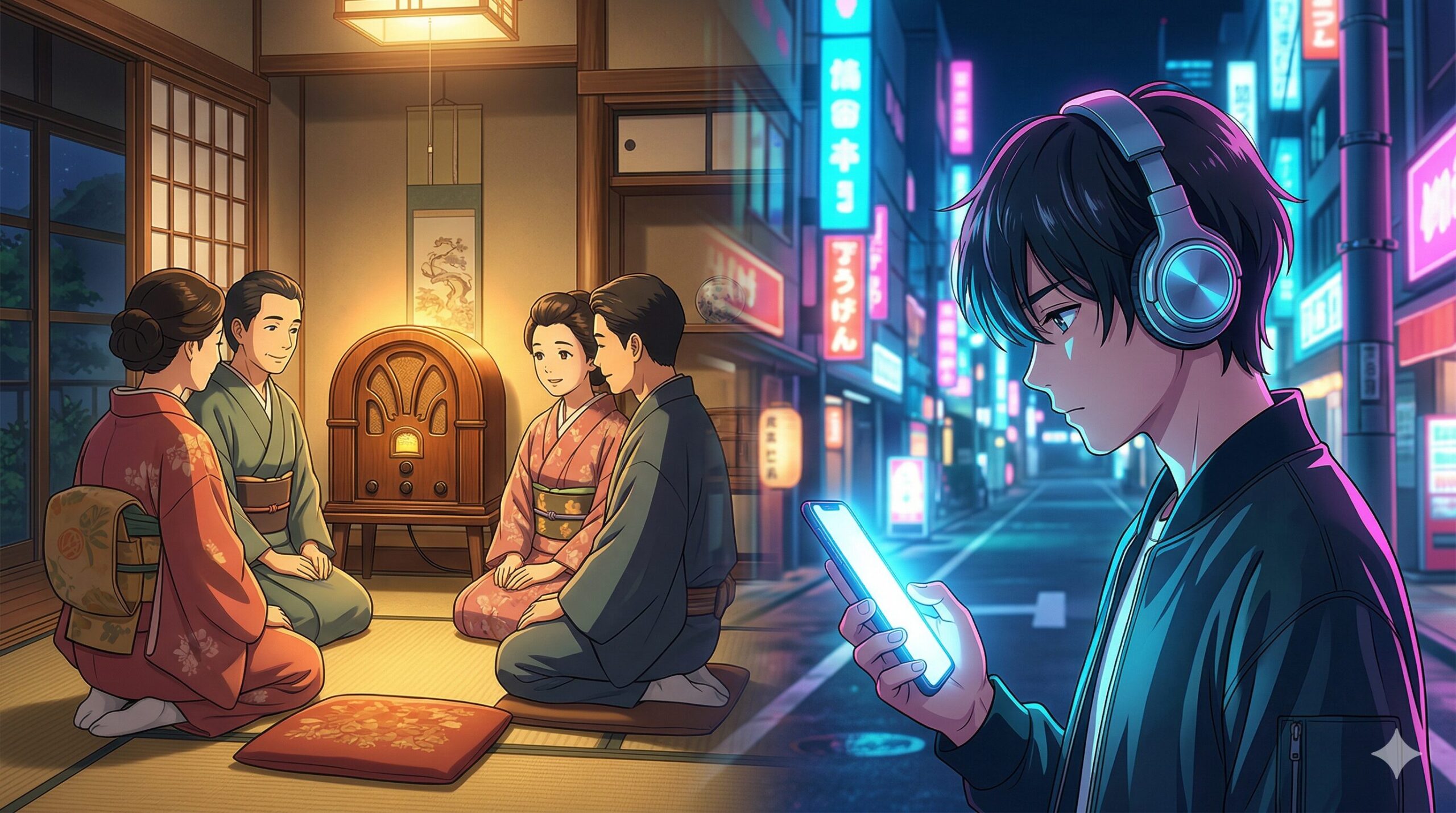
On March 22, 1925, a voice carried by radio waves echoed through the skies of Japan for the very first time. Broadcast from the temporary studio of the Tokyo Broadcasting Station (now NHK) in Shibaura, Tokyo, the first words were: “Ah, ah, can you hear me? This is the Tokyo Broadcasting Station, JOAK.” To commemorate this historic event, March 22 was officially designated as “Broadcasting Day” in Japan. At the time, radio receivers were incredibly expensive luxury items. People formed massive crowds around public radios set up on the streets, mesmerized by the magical technology that allowed invisible waves to carry sound across great distances.
The initial broadcasts consisted of news, weather forecasts, and live commentary on Sumo wrestling. The Sumo broadcasts, in particular, were revolutionary. Until then, ordinary people had to wait for the next day’s newspaper to find out match results. Radio allowed them to experience the heat and excitement of the matches in real-time. This was the exact moment when a single medium connected people all over Japan simultaneously, creating an unprecedented sense of national unity.
Understanding Japanese Society and Culture Through the Evolution of Media
The history of broadcasting in Japan deeply parallels the development of its unique culture. A few years after radio broadcasting began, “Radio Taiso” (Radio Gymnastics) was introduced—a morning routine that remains a staple of Japanese daily life even today. The practice of citizens across the nation moving their bodies to the same music every morning took root as a system that symbolizes the Japanese cultural emphasis on collective harmony and wellness.
In 1953, television broadcasting began, rapidly evolving from black-and-white to color. It was here that Japanese broadcasting culture took a unique evolutionary leap, giving birth to television “Animation” (Anime) and “Tokusatsu” (special effects shows). The broadcast of Osamu Tezuka’s Astro Boy established Japan’s distinctive “limited animation” techniques—a clever way to create compelling visuals under tight budgets and broadcast deadlines. Without the infrastructure of television broadcasting, the “Anime” culture that is so passionately loved worldwide today would never have achieved such explosive global popularity.
Furthermore, Japan is a country prone to natural disasters such as earthquakes and typhoons. Consequently, Japanese broadcasting technology has constantly evolved with the critical mission of providing “accurate and rapid disaster reporting.” From radio to television, and now to internet streaming, Japan’s broadcasting infrastructure has built a world-class reputation for reliability in issuing swift warnings and delivering life-saving information. Beyond mere entertainment, a defining characteristic of Japanese broadcasting culture is its role as a vital social safety net.
What Do We Receive in the Wave of Information?
Japanese broadcasting, which started with a single microphone in 1925, has transformed into an era of limitless streaming via smartphones and smart TVs. In an age where anyone can be a broadcaster, the uniform culture of “the whole country watching the same TV show and discussing it at school or work the next day” is fading. However, this is precisely why we are now challenged to ask ourselves: “What information is truly valuable?” and “What content truly moves the human heart?”
What kind of media do you rely on for information and entertainment in your daily life? If you were the announcer standing in front of that very first microphone in Japan in 1925, what message would you speak to your unseen listeners?
Reference Links
- External Link: NHK Museum of Broadcasting (Learn about the history of Japanese broadcasting)
- Internal Link: Read more in the “What’s Today’s Special Day” Series
3月22日は「放送記念日」:日本の声が初めて空を飛んだ日
1925年(大正14年)3月22日、日本の空に初めて電波に乗った「声」が響き渡りました。東京・芝浦の東京放送局(現在のNHK)の仮放送所から発せられた、「アーアー、聞こえますか。こちらは東京放送局、JOAKであります」という第一声です。この歴史的な出来事を記念して、3月22日は日本において「放送記念日」として制定されています。当時のラジオ受信機は非常に高価なものでしたが、人々は街頭に設置されたラジオの前に黒山の人だかりを作り、目に見えない波が音を運んでくるという魔法のような技術に熱狂しました。
当初の放送内容は、ニュース、天気予報、そして相撲の実況中継などでした。特に大相撲の中継は、それまで新聞で翌日に勝敗を知るしかなかった庶民にとって、リアルタイムで熱気を感じられる画期的な娯楽となりました。ラジオという一つのメディアが、日本中の人々を同じ時間に同じ音声で繋ぎ、未曾有の一体感を生み出した瞬間でもあります。
メディアの進化から読み解く日本の社会と文化
日本の放送の歴史は、そのまま日本独自の文化発展の歴史と重なります。ラジオ放送が始まってから数年後には、現在でも日本の朝の風景として欠かせない「ラジオ体操」がスタートしました。全国の国民が毎朝同じ音楽に合わせて体を動かすというこの習慣は、集団の和を尊ぶ日本文化を象徴するシステムとして根付きました。
1953年(昭和28年)にはテレビジョン放送が開始され、白黒テレビ、カラーテレビへと急速な進化を遂げます。ここで日本の放送文化は独自の進化を遂げました。それは「アニメーション」と「特撮」です。手塚治虫の『鉄腕アトム』に端を発するテレビアニメの放送は、限られた予算と時間の中でいかに魅力的な映像を作るかという日本独自の「リミテッド・アニメーション」の手法を生み出しました。テレビ放送というインフラがなければ、現在世界中で愛されている「Anime」文化はこれほど爆発的に普及することはなかったでしょう。
また、日本は地震や台風などの自然災害が多い国です。そのため、日本の放送技術は常に「正確で迅速な災害報道」という重大な使命を背負って進化してきました。ラジオからテレビ、そして現在のインターネット配信に至るまで、災害時にいかに早く国民に警告を発し、命を守る情報を届けるかという点において、日本の放送インフラは世界最高峰の信頼性を築き上げています。エンターテインメントの枠を超え、社会のセーフティネットとしての役割を担っているのが日本の放送文化の大きな特徴です。
情報の波の中で、私たちは何を受け取るのか
1925年のたった一つのマイクから始まった日本の放送は、現在、スマートフォンやスマートテレビを通じた無限のストリーミング配信へと姿を変えました。誰もが発信者になれる現代において、かつてのように「日本中が同じ番組を見て、翌日の学校や職場でその話題を共有する」という画一的な文化は薄れつつあります。しかし、だからこそ「本当に価値のある情報とは何か」「心を動かすコンテンツとは何か」が問われる時代になっています。
この記事を読んでいるあなたは、毎日どのようなメディアから情報やエンターテインメントを受け取っていますか?もし、あなたが1925年の日本で初めてマイクの前に立つアナウンサーだったとしたら、見えないリスナーに向けてどんな言葉を語りかけますか?
参考リンク
- 外部リンク:NHK放送博物館(日本の放送の歴史を学べる施設)
- 内部リンク:今日は何の日シリーズをもっと読む
コメント