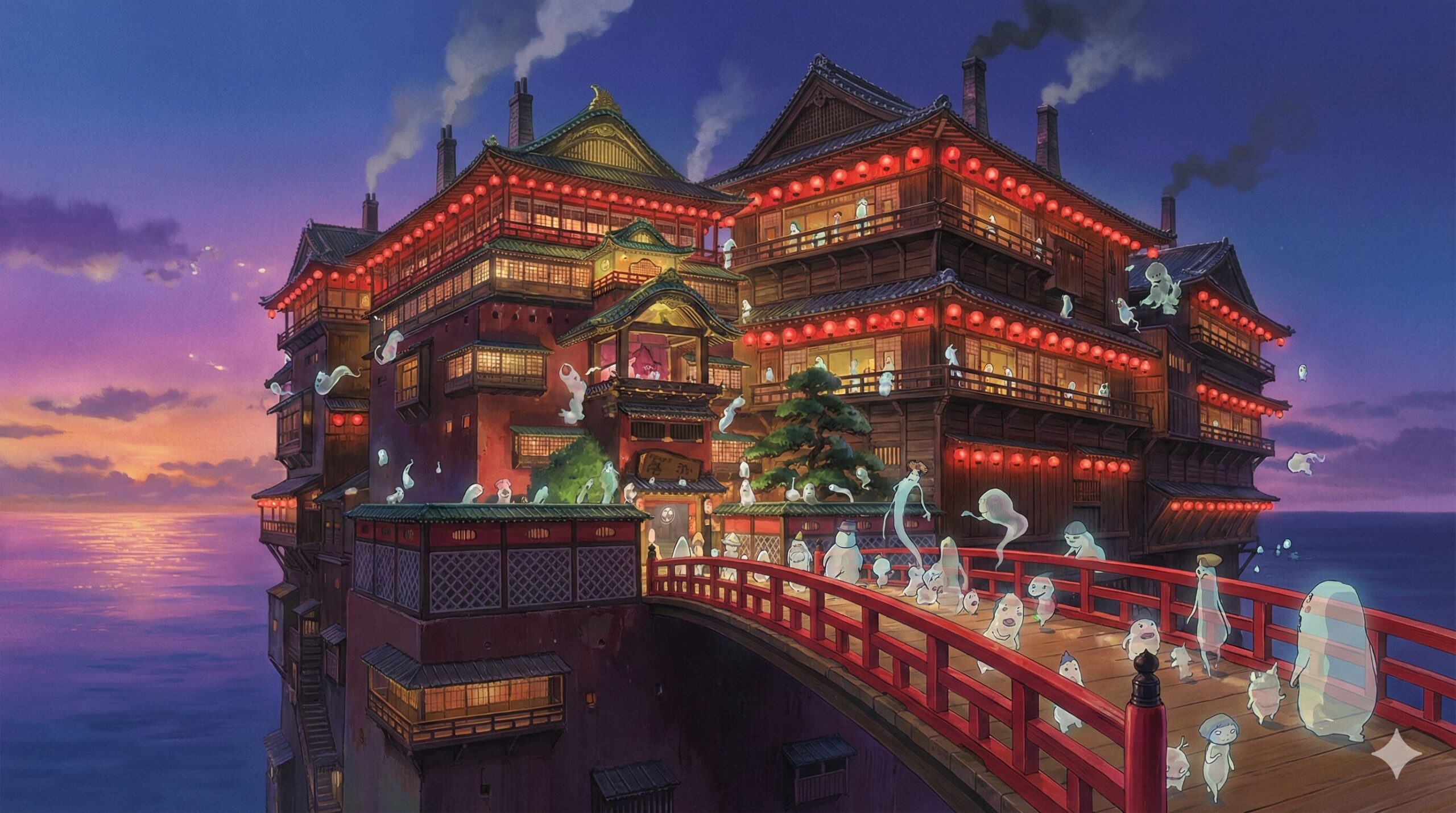
Directed by Hayao Miyazaki, Studio Ghibli’s masterpiece Spirited Away (Japanese title: Sen to Chihiro no Kamikakushi) is more than just a movie; it is a cultural phenomenon. Since its release in 2001, it has held box office records in Japan for years and won the Academy Award for Best Animated Feature. However, the true depth of this film goes beyond its fantasy adventure narrative. To truly appreciate it, one must understand the unique Japanese religious views and historical context embedded within. In this article, we will thoroughly explain the deep messages of this work and its connection to Japanese culture for our international readers.

Summary: Wandering into the World of Gods
Chihiro Ogino, a sullen 10-year-old girl, is moving to a new town with her parents. On the way, they take a wrong turn and stumble upon a mysterious tunnel that leads to an abandoned amusement park. In reality, this is a spirit realm dominated by a bathhouse called “Aburaya,” where 8 million gods (Yaoyorozu no Kami) come to rest and heal.
Chihiro’s parents, succumbing to gluttony, devour food meant for the gods and are punished by being turned into pigs. Left alone and terrified, Chihiro is helped by a mysterious boy named Haku. To survive, she enters a contract with Yubaba, the sorceress who runs the bathhouse. Yubaba steals Chihiro’s name, renaming her “Sen,” and forces her to work.
Through trials such as cleansing a “Stink Spirit” (who turns out to be a polluted River God) and confronting No-Face (Kaonashi), a monster who devours others’ desires, the once cowardly Chihiro grows immensely. She regains her “will to live,” remembers Haku’s true name, and attempts to save her parents to return to the human world.
Critique and Cultural Analysis
1. “Kamikakushi” and the Worldview of Shinto
The Japanese title includes the word Kamikakushi, which literally means “hidden by gods.” Historically, when a child suddenly went missing in Japan, it was believed that they had been spirited away to the divine realm. This concept is deeply rooted in folklore.
At the core of the film is Shinto, Japan’s indigenous religion. Shinto is based on the idea of Yaoyorozu no Kami (Eight Million Gods), meaning that spirits reside in everything—mountains, rivers, trees, stones, and even everyday objects. The diverse guests visiting the bathhouse are physical manifestations of these nature spirits.
A particularly poignant scene involves the “Stink Spirit.” Covered in sludge and emitting a foul odor, the spirit is revealed to be a famous River God once Chihiro pulls out a bicycle and other debris stuck in its body. This is a critique of modern environmental pollution, but it also symbolizes Misogi—the Shinto ritual of purification by washing away Kegare (impurity/withering of the spirit) with water.
2. The Bubble Economy and Warning Against Consumerism
The scene where Chihiro’s parents turn into pigs shocked many viewers. This serves as a stinging satire of Japan’s “Bubble Economy” in the late 1980s and the subsequent insatiable consumer society.
Her parents, wielding credit cards and lacking any reverence for the divine (“We can pay for it with cash!”), represent modern people who have lost their spirituality in exchange for material wealth. Their punishment of becoming pigs symbolizes the end result of greed. Similarly, the character No-Face (Kaonashi) represents the emptiness of modern identity—he has no voice of his own and tries to buy affection and manipulate people’s hearts with gold.
3. Names and the Loss of Identity
Yubaba controls Chihiro by taking her name. In Japan, there is an ancient belief called Kotodama (spirit of words), suggesting that a name holds the soul of the person. To take away a name is to strip away a person’s past, personality, and identity.
Historically, this parallels situations of forced renaming during colonial rules or, in a modern context, how individuals become mere numbers or job titles in a corporate society. Chihiro’s journey to reclaim her name is a process of reaffirming who she is and awakening as an independent individual.
Why is it so Popular in Japan?
Spirited Away became a national treasure in Japan not just because it is entertaining, but because it evokes a deep sense of Nostalgia encoded in the Japanese DNA.
- Return to Original Scenery: The setting of the bathhouse and the mysterious town is said to be modeled after places like Jiufen in Taiwan or Dogo Onsen in Japan. However, it represents a collective memory of “old Japan” that exists in the hearts of the audience.
- The Virtue of Work: Chihiro, initially a spoiled modern child, learns to scrub floors and work hard. Seeing her face change from sullen to determined resonated deeply with the Japanese work ethic, which views labor as a way to polish one’s character.
Recommended Points for Viewers
Whether you are watching for the first time or revisiting this classic, look out for these details:
The Aesthetic of “Ma” (The Space)
Unlike many Western films that are packed with constant action, Ghibli movies embrace “Ma”—moments of emptiness or pause. The train scene, where Chihiro travels silently across the ocean, is a perfect example. There is little dialogue, only Joe Hisaishi’s haunting music and the visuals. This space allows the audience to reflect and feel the emotion deeply.
Visuals and Food
Pay attention to the “Ghibli Food.” The texture of the rice balls (onigiri) Chihiro eats while crying, or the softness of the bean buns—the animation conveys taste, temperature, and texture so vividly it makes you hungry.
For Further Exploration
If you want to dive deeper into the world of Studio Ghibli, check out these official links:
- Studio Ghibli Official Site – News and information.
- Ghibli Museum, Mitaka – A whimsical museum in Tokyo. Advance tickets are required.
- Ghibli Park – The theme park in Aichi Prefecture representing the world of Ghibli.
For more insights into anime and its role in Japanese society, please visit our internal category:
Japanese Culture – Anime Category
【徹底考察】なぜ『千と千尋の神隠し』は世界で絶賛されるのか?日本文化と神道から読み解く真実
宮崎駿監督によるスタジオジブリの最高傑作『千と千尋の神隠し』(英題:Spirited Away)。2001年の公開以来、日本国内の興行収入記録を長年保持し、第75回アカデミー賞長編アニメーション映画賞を受賞するなど、世界中で愛され続けています。しかし、この作品の真の奥深さは、単なるファンタジー冒険活劇という枠を超え、日本独自の宗教観や歴史的背景を知ることで初めて理解できます。本記事では、海外のファンの皆様に向けて、本作が持つ深いメッセージと日本文化との結びつきを徹底的に解説します。
あらすじ:神々の世界への迷い込み
10歳の少女、荻野千尋(ちひろ)は、両親と共に新しい町へ引っ越す途中、不思議なトンネルに迷い込みます。トンネルの先には、誰もいない不思議な無人の街が広がっていました。そこは、八百万(やおよろず)の神々が疲れを癒すための「油屋」という湯屋(温泉宿)が支配する異界でした。
千尋の両親は、店先にあった神様のための食事を勝手に食べてしまい、その罰として豚の姿に変えられてしまいます。独りぼっちになった千尋は、謎の少年ハクに助けられ、魔女であり油屋の主人である湯婆婆(ゆばーば)と契約を交わします。彼女は名前を奪われ「千(せん)」として働くことになります。
オクサレ様(河の神)の浄化や、欲望のままに金品を与える怪物カオナシとの対峙を経て、臆病だった千尋は精神的に大きく成長していきます。彼女は「生きる力」を取り戻し、ハクの本当の名前を思い出し、豚になった両親を救い出して元の世界へ戻ることができるのでしょうか。
作品評価と日本文化・歴史的背景の考察
1. 「神隠し」と神道(Shinto)の世界観
タイトルの「神隠し(Kamikakushi)」とは、子供が突然行方不明になる現象を指す日本の古い言葉です。かつて日本人は、行方不明になった子供は神域(神の世界)に連れ去られたのだと信じていました。
本作の根底にあるのは、日本固有の宗教である「神道(Shinto)」の思想です。神道には「八百万の神(Yaoyorozu no Kami)」という概念があり、山、川、木、石、そして台所やトイレに至るまで、万物に神が宿ると考えられています。油屋に訪れる多種多様な客たちは、まさにこの自然界の神々を具現化したものです。
特に印象的なのは「オクサレ様」のエピソードです。ヘドロにまみれた悪臭を放つ客として現れますが、千尋が身体に刺さった自転車を引き抜くと、本来の姿である美しい「名のある河の神」へと戻ります。これは、現代社会による環境汚染への批判であると同時に、穢れ(Kegare)を水で洗い流して清める「禊(Misogi)」という神道の儀式を象徴しています。
2. バブル経済と消費社会への警鐘
千尋の両親が豚になるシーンは、多くの視聴者に衝撃を与えました。これは、1980年代後半の日本の「バブル経済」とその崩壊、そして飽くなき消費社会への痛烈な風刺です。
クレジットカードを持ち、神への畏敬の念を持たず、「金さえ払えばいい」と考えて食事を貪る両親の姿は、物質的な豊かさと引き換えに精神性を失った現代人のメタファーです。豚になるという罰は、貪欲さ(Greed)の末路を表しています。一方で、カオナシもまた、他人の欲求を飲み込み、金金(砂金)で人の心を操ろうとする「空虚な現代人」の象徴として描かれています。
3. 「名前」とアイデンティティの喪失
湯婆婆は千尋の名前を奪い、「千」という記号的な名前を与えて支配します。日本では古来より、名前にはその人の魂そのものが宿ると信じられてきました(言霊 – Kotodama)。名前を奪うことは、その人の過去や人格、アイデンティティを奪うことと同義です。
歴史的に見れば、これは戦時中や植民地支配における強制的な改名や、現代の管理社会において個人が番号や役職だけで判断され、個性を埋没させられていく状況とも重なります。千尋が自分の名前を取り戻す過程は、自分自身が何者であるかを再確認し、自立した個人として目覚めていくプロセスなのです。
なぜ日本でこれほど人気なのか?
日本で『千と千尋の神隠し』が国民的アニメとなった理由は、単なるエンターテインメントだからではありません。日本人のDNAに刻まれた「懐かしさ(Nostalgia)」を呼び覚ますからです。
- 原風景への回帰: 舞台となる油屋や不思議な街並みは、江戸東京たてもの園や台湾の九份、道後温泉などがモデルと言われていますが、特定の場所ではなく、日本人が心の奥底で覚えている「かつての日本」の集合体です。
- 働くことの尊さ: 甘やかされて育った現代っ子の千尋が、雑巾がけをし、必死に働くことで顔つきが変わっていく姿は、勤労を美徳とする日本の倫理観に深く響きました。
この作品を読む・観る際のおすすめポイント
これから作品を見直す方、あるいは初めて触れる方は、以下のポイントに注目してください。
静寂(Ma – The Space)の美学
ハリウッド映画と異なり、ジブリ作品には「何もしない時間」が存在します。千尋が電車に乗って海原を進むシーン(通称:第六の駅)は、セリフもほとんどなく、ただ久石譲の美しい音楽と映像だけで構成されています。この「間(Ma)」こそが、観客に思索の余地を与え、深い感動を呼び起こすのです。
色彩と食べ物の描写
ジブリ飯(Ghibli Food)として世界的に有名な食事シーンの作画クオリティに注目してください。おにぎりの米粒の質感、あんまんの柔らかさなど、視覚から味覚や温度まで伝わってくる表現力は圧巻です。
さらなる深掘りのために
『千と千尋の神隠し』の世界をより深く知りたい方は、以下の公式情報や関連施設もチェックしてみてください。
- スタジオジブリ公式サイト (Studio Ghibli Official) – 最新ニュースや作品情報。
- 三鷹の森ジブリ美術館 (Ghibli Museum, Mitaka) – ジブリの世界観を体験できる美術館。チケットは事前予約必須です。
- ジブリパーク (Ghibli Park) – 愛知県にある、ジブリ作品の世界を表現した公園施設。
また、日本文化におけるアニメの役割や他の名作については、当ブログの以下のカテゴリーもぜひご覧ください。

コメント