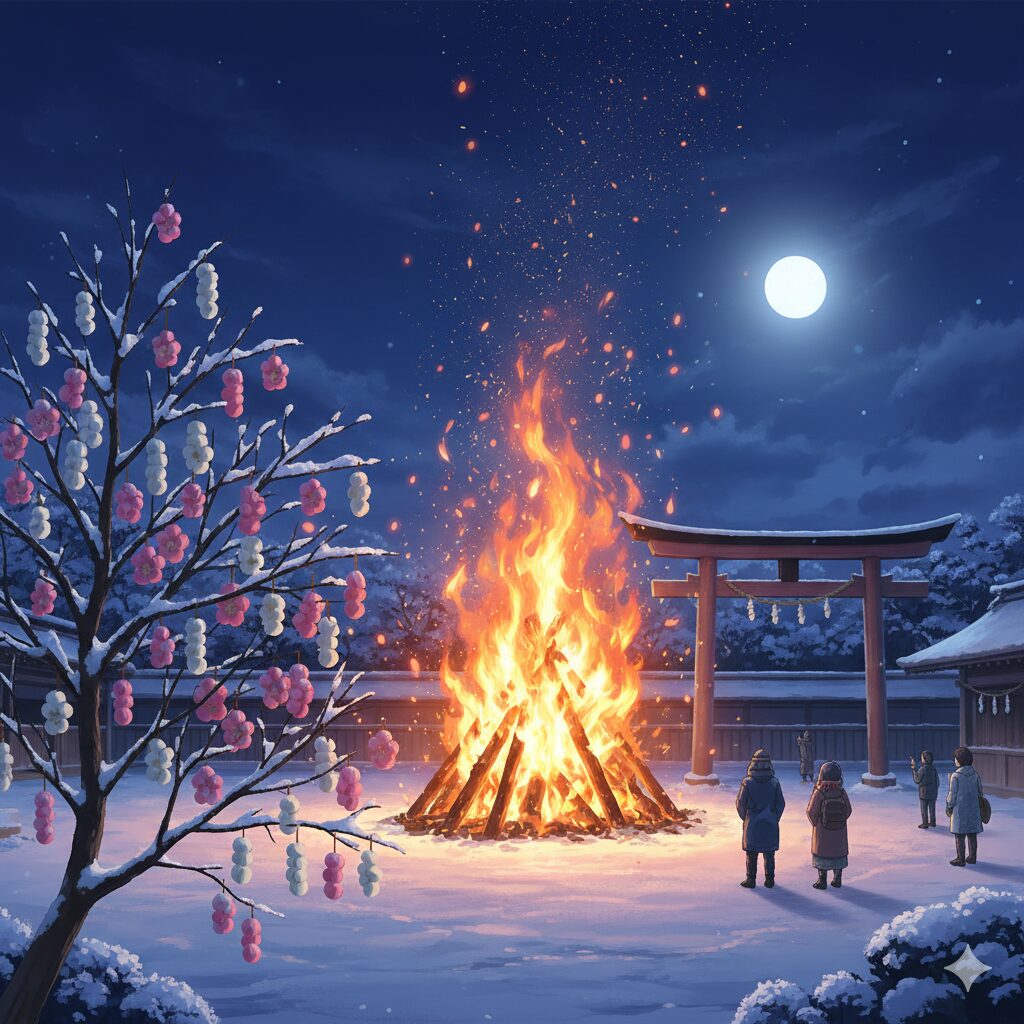

What is Koshogatsu? Celebrating the First Full Moon
The origins of Koshogatsu date back to the era of the lunar calendar. In ancient Japan, a month was often considered to begin with the full moon. Therefore, the 15th day of the first month—the day of the year’s first full moon—was originally the main “New Year” celebration. Even after Japan adopted the Gregorian calendar in the Meiji era, the customs of January 15th persisted, evolving into what we now call Koshogatsu.
Unlike the “Grand New Year,” which is a formal occasion to welcome the deities (Toshigami), Koshogatsu is characterized by its focus on household well-being, agricultural prosperity, and personal health.
Traditional Rituals of Koshogatsu
1. Eating Azuki-gayu (Red Bean Porridge)
Eating red bean porridge on the morning of January 15th is a tradition rooted in the belief that the color red has the power to ward off evil. The vibrant red of the azuki beans is thought to expel disasters and bring good health for the coming year. Across Japan, many families and shrines prepare this porridge to pray for a year free from illness.
2. Dondoyaki: Sending the Deities Back to the Heavens
The most dramatic event of Koshogatsu is Dondoyaki (also known as Sagicho). It is a massive communal bonfire where New Year decorations like Kadomatsu (pine decorations) and Shimenawa (sacred ropes) are ceremonially burned. It is believed that the deities who visited during the New Year return to the heavens on the rising smoke. Eating mochi (rice cakes) roasted over this sacred fire is said to protect one from catching a cold all year.
3. Mayudama Decorations: Praying for a Rich Harvest
During Koshogatsu, you will see “Mayudama” or “Mochibana”—willow branches decorated with small pink and white rice cakes. These symbolize rice ears or silkworm cocoons. This ritual, known as “Youshuku” (celebrating in advance), is a prayer for a bountiful harvest and prosperity in the coming seasons.
Cultural Significance: “Women’s New Year”
Koshogatsu is also known as “Onna-shogatsu” (Women’s New Year). Historically, women were extremely busy hosting guests and performing chores during the first two weeks of January. January 15th became a day for them to finally rest, visit their parental homes, or enjoy their own leisure. This highlights a compassionate aspect of Japanese culture—recognizing and rewarding the hard work of family members.
How will you spend your Little New Year?
In our modern, fast-paced lives, we often lose touch with the rhythm of the seasons. However, taking a moment to eat red beans or witnessing the smoke of a ceremonial fire can reconnect us with the ancestral wisdom of gratitude and renewal.
If you are in Japan, why not seek out a local Dondoyaki festival? Or, wherever you are in the world, consider preparing a meal with red beans to wish for health. How do you feel about this ancient ritual of “cleansing and starting anew”?
Category: What’s Today’s Special Day Series
Reference Link: Japan-Guide: New Year Traditions
1月1日を「大正月(おおしょうがつ)」と呼ぶのに対し、1月15日は「小正月(こしょうがつ)」と呼ばれます。日本では古くから、この日を一つの区切りとして、正月の行事を締めくくる重要な日として大切にしてきました。本日は、知っているようで知らない小正月の深い歴史と、そこに込められた日本人の精神性について解説します。
小正月とは何か:満月を祝う日本古来の正月
小正月の起源は、日本が太陰太陽暦(旧暦)を採用していた時代に遡ります。古来、日本では「満月」を一つの月の始まりと考える習慣がありました。そのため、1年の最初の満月の日である1月15日が、本来の「正月」として祝われていたのです。明治維新後に太陽暦が導入されてからも、1月15日を祝う習慣は根強く残り、現在の「小正月」という形になりました。
大正月が門松を立てて歳神様(としがみさま)を迎える「公的」な行事であるのに対し、小正月は豊作を祈り、家族の健康を願う「家庭的・農業的」な性格が強いのが特徴です。
小正月の伝統行事:豊穣と無病息災を願う儀式
1. 小豆粥(あずきがゆ)を食べる習慣
1月15日の朝に小豆粥を食べる習慣は、中国の古い風習が日本に伝わったものです。赤色には「邪気を払う力」があると信じられており、小豆の赤い色が1年の災いを退け、無病息災をもたらすとされています。この日、日本の多くの家庭や寺社では、小豆と一緒に米を炊き込んだ粥を食し、一年の健康を祈ります。
2. どんど焼き(左義長):神様を天に送る火祭り
小正月の最も象徴的な光景が「どんど焼き」です。地域によっては「左義長(さぎちょう)」とも呼ばれます。正月に飾った門松や注連縄(しめなわ)、書き初めなどを持ち寄り、一箇所に積み上げて燃やす火祭りです。この煙に乗って、正月の間に滞在していた歳神様が天に帰っていくとされています。この火で焼いた餅や団子を食べると、その一年は風邪をひかないという言い伝えがあります。
3. 繭玉(まゆだま)飾り:豊作への祈り
小正月は「餅花(もちばな)」や「繭玉」を飾る時期でもあります。柳の枝などに小さく丸めた餅や団子を刺し、それを稲穂や蚕の繭に見立てて飾ります。これは農作物の豊作、特に養蚕が盛んだった地域では蚕の繁栄を願う「予祝(よしゅく)」の儀式としての意味を持っています。
日本文化との関連:女性の休息と「ハレ」の終わり
小正月は別名「女正月(おんなしょうがつ)」とも呼ばれます。これは、元旦から三が日、そして松の内(1月7日まで)の間、来客の接待や家事で忙しく働いた女性たちが、ようやく一息ついて自分の実家に帰ったり、休息を取ったりできる日という意味があります。ここに、日本社会における「家族への労い」という優しい文化の側面が見て取れます。
また、小正月を境に「松の内」が完全に明け、日本人は日常(ケ)の生活へと戻っていきます。非日常(ハレ)の華やかさを火祭りで浄化し、新たな気持ちで労働に励むという、日本人の持つ「心の切り替え」の美学がこの行事には凝縮されているのです。
あなたは小正月をどう過ごしますか?
現代の忙しい生活の中で、私たちは季節の節目を感じる機会を失いがちです。しかし、赤い小豆粥を一口食べたり、近所の神社の焚き上げの煙を眺めたりするだけで、遠い先祖から受け継がれてきた「自然への感謝」と「自己の浄化」を再確認できるはずです。
もしあなたが日本にいるなら、近くの神社で「どんど焼き」を探してみてはいかがでしょうか?あるいは、世界中のどこにいても、赤い豆を使った料理を食べて一年の健康を願ってみませんか?あなたは、この古くから続く「再生の儀式」についてどう感じましたか?
カテゴリー: What’s Today’s Special Day Series
外部リンク(参考資料): 国立国会図書館 – 日本の暦


コメント