When discussing the ancient history of Japan, many people might imagine the shrines and temples of Kyoto or the Edo culture of Tokyo. However, if you want to feel the true breath of ancient Japan, you must turn your eyes to Nara Prefecture. March 12th marks the climax of the most dramatic and mystical ritual blending Japanese Buddhist culture and nature worship: the “Omizutori” (Shuni-e) at Nigatsudo of Todaiji Temple.

The 1,250-Year Unbroken Prayer: The Shuni-e Ritual
“Omizutori” is formally part of a Buddhist ritual called “Shuni-e”. Astonishingly, since this ritual was initiated in 752 AD by the monk Jitchu during the reign of Emperor Shomu—who founded Todaiji Temple—it has been held every single year without interruption. Even during the turmoil of the Sengoku (Warring States) period and the midst of World War II, the monks protected and continued this prayer.
The primary purpose of Shuni-e is for the monks to repent for the daily sins of humanity before the Eleven-Faced Kannon (Goddess of Mercy), and to pray for national tranquility, world peace, and bountiful harvests. During the rigorous 14-day ascetic practice, the monks offer their prayers to the absolute limits of their minds and bodies.
The Overwhelming “Otaimatsu” Torches and the Mystical “Omizutori”
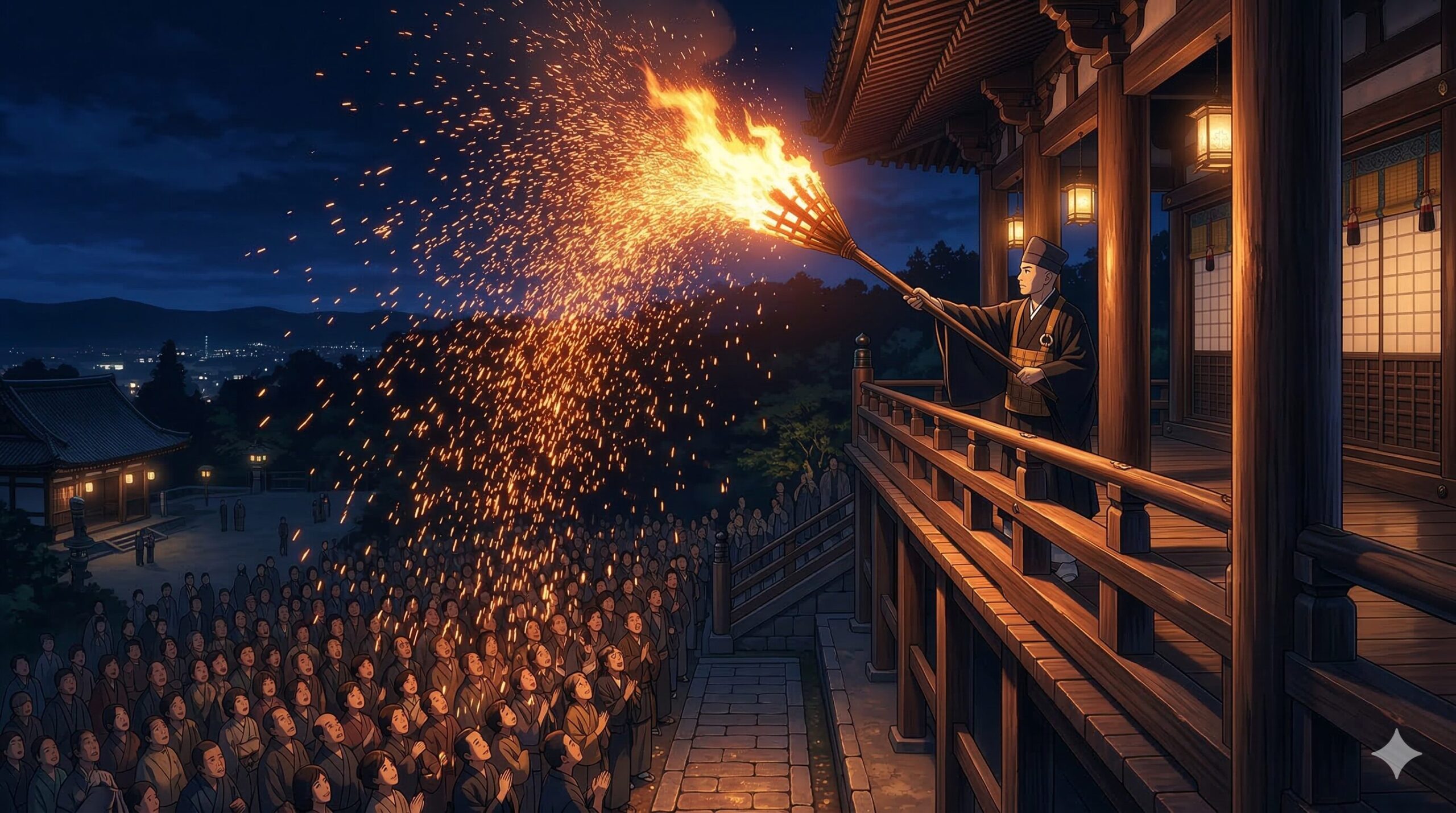
On the night of March 12th, the ritual reaches its most dramatic moment. Giant torches, known as “Otaimatsu”, measuring about 8 meters in length and weighing approximately 70 kilograms, are ignited and carried by the monks to the balcony of Nigatsudo. The sight of a massive waterfall of orange sparks raining down from the temple balcony into the darkness is nothing short of awe-inspiring. It is deeply believed that bathing in these sparks will grant you good health and protection from illness for the rest of the year.
Then, from midnight into the early hours of the 13th, the actual “Omizutori” (water-drawing) takes place. The monks draw sacred water, called “Okozui”, from a well located directly beneath Nigatsudo known as “Wakasai”, to offer to the Kannon. According to legend, this well is connected underground to the Wakasa region in Fukui Prefecture, far to the north, and the water sent from Wakasa springs forth in Nara.
Deciphering the Depths of Japanese Culture Through Omizutori
Purification by “Fire” and Rebirth by “Water”
While this is fundamentally a Buddhist ritual, it strongly reflects Japan’s ancient indigenous nature worship. In Japanese spiritual culture, “Fire” is believed to possess the power to burn away impurities and cleanse the soul. “Water”, on the other hand, is the source of life and a symbol of new beginnings and rebirth. This sequential act—cleansing the people’s impurities with a shower of fire sparks, immediately followed by drawing pure water to offer to the divine—perfectly embodies the uniquely Japanese view of life and death: “Death and Rebirth” and “Purification and Resurrection”.
Awe of Nature and the Cycle of the Seasons
In the Kansai region of Japan (around Kyoto, Osaka, and Nara), there is an old saying: “When Omizutori is over, Spring arrives.” By the time this rigorous ascetic practice of fire and water, held in the bitter cold, comes to an end, the Japanese archipelago gradually begins to regain its warmth, and cherry blossom buds begin to swell.
This demonstrates just how closely the Japanese people have lived by intertwining the cycles of nature with religious rituals. The Japanese aesthetic of sensing the shifts in nature’s energy with all five senses—rather than just observing a date on a calendar—and inheriting it as a living culture, is deeply condensed into this very day.
How Do You Receive the Flames of This Prayer?
The fact that for over 1,250 years, someone has unfailingly lit the fire, drawn the water, and continued to pray for peace seems like an unbelievable miracle in our rapidly changing modern society.
How did you feel reading this article? Does your country have a long-standing traditional ritual that signals the change of seasons? If you ever have the chance to visit Japan in March, wouldn’t you want to stand in the darkness, bathe in the sparks of a 1,250-year-old prayer, and celebrate the beginning of a new season?
Related Links
- Todaiji Temple Official Website (External Link)
- Nara City Tourism Association Official Website (External Link)
- What’s Today’s Special Day Series (Internal Link)
3月12日は何の日?東大寺二月堂「お水取り」の壮大な歴史と炎の舞
日本の歴史の古さを語る時、多くの人が京都の寺社仏閣や東京の江戸文化を思い浮かべるかもしれません。しかし、真の古代日本の息吹を感じたいのであれば、奈良県へ目を向ける必要があります。3月12日は、日本の仏教文化と自然信仰が融合した最もドラマチックで神秘的な儀式、奈良・東大寺二月堂の「お水取り(修二会)」が最高潮に達する日です。
1250年途絶えることのない祈りの儀式「修二会」
「お水取り」は正式には「修二会(しゅにえ)」と呼ばれる仏教儀式の一部です。驚くべきことに、この儀式は西暦752年(天平勝宝4年)、東大寺を創建した聖武天皇の時代に実忠和尚(じっちゅうかしょう)によって始められて以来、一度たりとも途絶えることなく毎年行われています。戦国時代の動乱期や、第二次世界大戦の最中でさえも、僧侶たちはこの祈りを守り抜きました。
修二会の本来の目的は、十一面観世音菩薩(じゅういちめんかんぜおんぼさつ)に対し、僧侶たちが人々の代わりに日々の過ちを懺悔(ざんげ)し、国家の安泰、世界の平和、そして五穀豊穣を祈ることです。14日間にわたる厳しい修行のなかで、僧侶たちは心身の極限まで祈りを捧げます。
圧巻の「お松明」と神秘の「お水取り」
3月12日の夜、儀式は最も劇的な瞬間を迎えます。長さ約8メートル、重さ約70キログラムにも及ぶ巨大な「籠松明(かごたいまつ)」に火が放たれ、僧侶たちによって二月堂の舞台へと運ばれます。暗闇のなか、お堂のバルコニーから巨大な火の粉の滝が降り注ぐ光景は、畏敬の念を抱かせずにはいられません。この火の粉を浴びると、その年は無病息災で過ごせると信じられています。
そして、深夜から翌13日の未明にかけて、本来の「お水取り」が行われます。二月堂の真下にある「若狭井(わかさい)」という井戸から、観音様に供えるための神聖な水「お香水(おこうずい)」を汲み上げるのです。伝説によれば、この井戸は遠く離れた福井県の若狭地方と地下で繋がっており、若狭から送られた水が奈良で湧き出るとされています。
お水取りから読み解く日本文化の深淵
「火」による浄化と「水」による生命の再生
この儀式は、仏教の儀式でありながら、日本古来の自然信仰を色濃く反映しています。日本の精神文化において、「火」は不浄なものを焼き尽くし、魂を浄化する力を持つとされています。一方、「水」は生命の源であり、新たな始まりと再生の象徴です。火の粉のシャワーで人々の穢れ(けがれ)を払い、その直後に清らかな水を汲み上げて神仏に捧げるこの一連の行為は、まさに「死と再生」「浄化と復活」という日本特有の死生観を体現しています。
自然への畏敬と季節の巡り
日本の関西地方(京都・大阪・奈良周辺)には、「お水取りが終わると、春が来る」という古くからの言い伝えがあります。厳しい寒さの中で行われる火と水の荒行が終わる頃、日本列島は少しずつ暖かさを取り戻し、桜のつぼみが膨らみ始めます。
これは、日本の人々がどれほど自然のサイクルと宗教的儀式を密接に結びつけて生きてきたかを示しています。暦上の日付だけでなく、自然のエネルギーの変化を五感で感じ取り、それを文化として継承していく日本の美意識が、この日には凝縮されているのです。
あなたならこの祈りの炎をどう受け止めますか?
1250年以上もの間、誰かが必ず火を灯し、水を汲み、平和を祈り続けてきたという事実。それは、変化の激しい現代社会において、信じられないほどの奇跡のように思えます。
この記事を読んで、あなたはどう感じましたか?あなたの国にも、長く受け継がれ、季節の変わり目を告げるような伝統的な儀式はありますか?もしあなたが3月に日本を訪れる機会があるなら、暗闇の中で降り注ぐ1250年分の祈りの火の粉を浴びて、新しい季節の始まりを祝福してみたいと思いませんか?

コメント