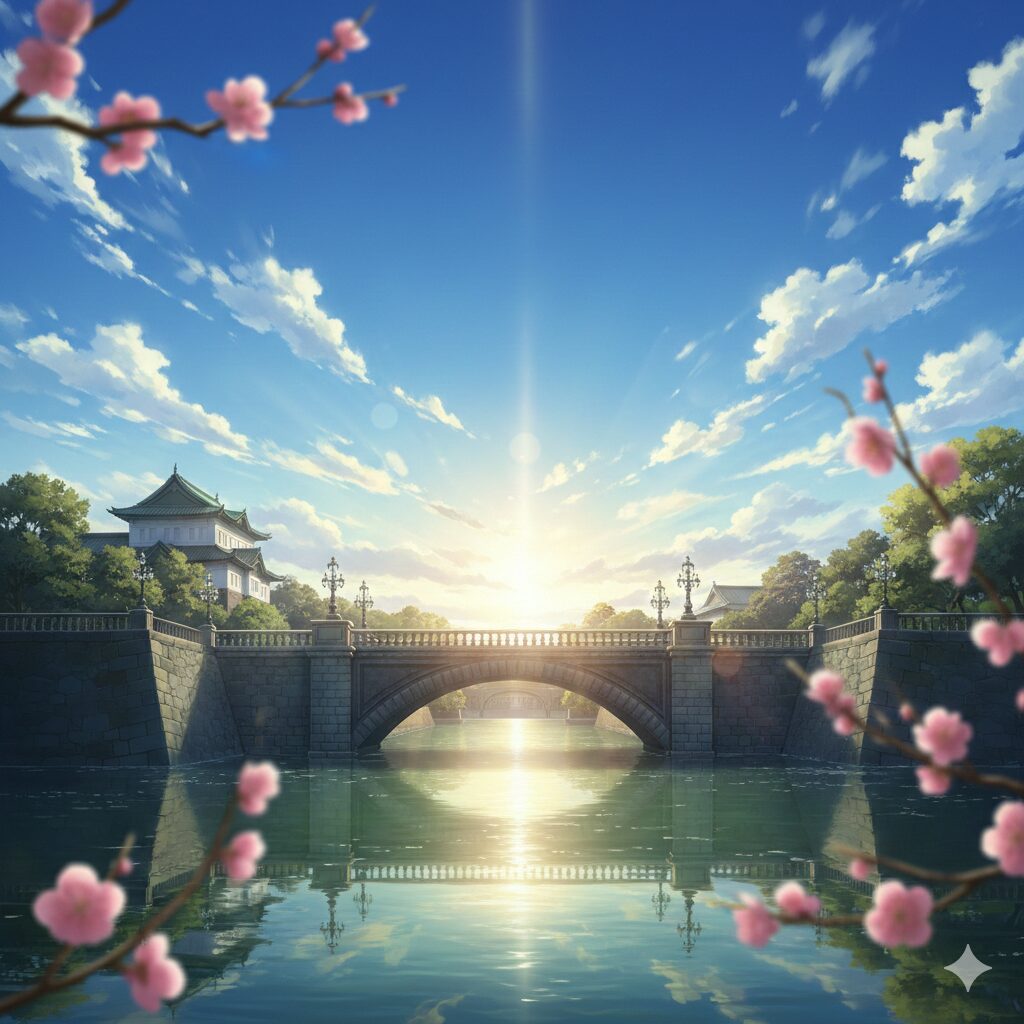
Japan possesses a national holiday that is quite rare globally: a holiday whose date changes with the times. That is the “Emperor’s Birthday” (Tenno Tanjobi). Currently, on the Japanese calendar, February 23 is marked in red as a special day when the whole country is enveloped in a celebratory mood. This day is the birthday of His Majesty Emperor Naruhito, the 126th Emperor of Japan.
Do not dismiss this as merely the birthday of a head of state. Unraveling the significance of this day serves as the perfect gateway to understanding Japan’s history spanning over 2,000 years, its unique spirituality, and the identity of modern Japanese people. Today, through the lens of February 23, we will guide you into the depths of Japanese culture.

A Holiday That Moves with the Eras: Living History
In Japan, the public holiday for the “Emperor’s Birthday” changes every time a new Emperor ascends the throne. This is proof that Japanese history is always ticking the “present” alongside the current Emperor. For instance, during the “Heisei” era from 1989 to 2019, the Emperor’s Birthday was December 23. Before that, in the “Showa” era, it was April 29 (currently, April 29 remains a holiday known as “Showa Day”).
On May 1, 2019, with the accession of Emperor Naruhito, Japan’s era name changed to “Reiwa.” Consequently, starting in 2020, February 23 was established as the new national holiday. The fact that a single holiday moves demonstrates that Japan does not merely preserve past history, but is a “living country” that weaves tradition in real-time.
The Public Greeting at the Imperial Palace: A Beautiful Bond Between the People and the Imperial Family
One of the most important events on February 23 is the “Ippan Sanga” (Public Greeting) held at the Imperial Palace in the heart of Tokyo. On this day, the gates of the Imperial Palace, which are usually closed, are opened to the general public. Tens of thousands of people gather from all over Japan and the world to celebrate the Emperor, Empress, and the Imperial Family as they appear on the balcony of the Chowaden Hall.
Well-wishers wave small Hinomaru (Japanese national flags) handed out to them, while the Emperor delivers a speech wishing for the happiness of the people and world peace. What exists there is not fear of an authority figure, but deep affection and a warm bond. The atmosphere in the plaza in front of the Imperial Palace, where silence and enthusiasm intersect, is a precious space where you can physically feel the spirit of “Wa” (Harmony) unique to Japan.
The Emperor as a “Symbol” and the Connection to Japanese Culture
Article 1 of the Japanese Constitution states, “The Emperor shall be the symbol of the State and of the unity of the People…” The Emperor holds no political power whatsoever. So why does he exist so centrally in Japanese culture?
It is because the Emperor is the embodiment of Japan’s “prayers.” The Emperor’s most crucial role is to pray to the deities for the peace of the people, abundant harvests, and world peace. Deep within the Imperial Palace, at the Three Palace Sanctuaries, traditional Shinto rituals that have remained unchanged since ancient times are solemnly performed right in the center of Japan, a modern technological nation. Awe of nature, gratitude for the changing seasons, and the desire for peace—the existence of the Emperor is a mirror reflecting the very views on nature and morality that the Japanese people have cherished since antiquity.
The Reiwa Era: Living in “Beautiful Harmony”
The current era name, “Reiwa,” carries the meaning of “Culture coming into being and flourishing when people bring their hearts and minds together in a beautiful manner.” February 23 is not just a day off to play; it is also a day for Japanese people to reaffirm this spirit of “Reiwa.”
Late February is a time when the severe winter cold begins to soften, and plum blossoms start to bloom. Celebrating the Emperor’s Birthday during this season, when one can feel the breath of life, truly represents the essence of Japanese culture, which closely links the cycles of nature with human life.
To Our Readers: What “Symbols” Exist in Your Country?
Japan’s “Emperor’s Birthday” continues to connect prayers for the happiness and peace of the people while changing its date with the times. How do you feel about the Japanese way, where the head of state exists not as an authority, but as a “symbol” of culture and prayer?
Are there historical days or symbolic figures in your country that unite the hearts of the people? If you ever have the opportunity to visit Japan on February 23, please experience the atmosphere of the public greeting at the Imperial Palace and feel the “prayer for peace” that the Japanese people hold dear. Let me know your thoughts on Japanese history and the Imperial Family in the comments below!
Reference Links
- External Link: The Imperial Household Agency Official Website
- Internal Category: What’s Today’s Special Day Series
- A Holiday That Moves with the Eras: Living History
- The Public Greeting at the Imperial Palace: A Beautiful Bond Between the People and the Imperial Family
- The Emperor as a “Symbol” and the Connection to Japanese Culture
- The Reiwa Era: Living in “Beautiful Harmony”
- To Our Readers: What “Symbols” Exist in Your Country?
- 2月23日は何の日?日本の「天皇誕生日」に隠された歴史と文化の深淵
2月23日は何の日?日本の「天皇誕生日」に隠された歴史と文化の深淵
日本には、時代とともに日付が変わるという、世界でも非常に珍しい祝日が存在します。それが「天皇誕生日(Emperor’s Birthday)」です。現在、日本のカレンダーにおいて2月23日は、国中がお祝いムードに包まれる特別な日として赤く塗られています。この日は、第126代天皇である徳仁(なるひと)天皇の誕生日です。
単なる国家元首の誕生日と侮るなかれ。この日を紐解くことは、日本の2000年以上続く歴史、独特の精神性、そして現代日本人のアイデンティティを理解する上で最も優れた入り口となります。今回は、2月23日という日を通して、日本文化の深層へあなたをご案内します。
時代とともに移動する祝日:生きている歴史
日本では、天皇が代替わりするたびに「天皇誕生日」の祝日が移動します。これは、日本の歴史が常に現在の天皇とともに「今」を刻んでいることの証です。例えば、1989年から2019年までの「平成」時代は12月23日が天皇誕生日でした。さらにその前の「昭和」時代は4月29日でした(現在、4月29日は「昭和の日」として祝日のまま残されています)。
2019年5月1日、徳仁天皇の即位に伴い、日本の元号は「令和(Reiwa)」へと変わりました。それに伴い、2020年から2月23日が新たな国民の祝日として制定されたのです。一つの祝日が移動するという事実は、日本が単なる過去の歴史を保存しているのではなく、現在進行形で伝統を紡いでいる「生きている国」であることを示しています。
皇居での一般参賀:国民と皇室の美しい絆
2月23日の最も重要な行事の一つが、東京の中心部にある皇居で行われる「一般参賀(Ippan Sanga)」です。この日、普段は入ることのできない皇居の門が一般の人々に開かれます。数万人もの人々が日本全国、そして世界中から集まり、長和殿のベランダにお出ましになる天皇皇后両陛下、そして皇族の方々を祝います。
参賀者たちは手渡された小さな日の丸(日本の国旗)を振り、天皇陛下は国民の幸せと世界の平和を願うお言葉を述べられます。そこにあるのは、権力者に対する恐れではなく、深い敬愛と温かい絆です。静寂と熱気が交差する皇居前広場の空気は、日本特有の「和(Harmony)」の精神を肌で感じることができる貴重な空間です。
「象徴」としての天皇と日本文化の繋がり
日本の憲法第1条には、「天皇は、日本国の象徴であり日本国民統合の象徴であつて…」と記されています。天皇は政治的な権力を一切持ちません。では、なぜこれほどまでに日本文化の中心に存在するのでしょうか。
それは、天皇が日本の「祈り」を体現する存在だからです。天皇の最も重要な役割は、国民の安寧と五穀豊穣(豊かな収穫)、そして世界の平和を神々に祈ることです。皇居の奥深くにある宮中三殿では、現代のテクノロジー国家である日本の中枢で、古来から変わらぬ神道(Shinto)の儀式が厳かに執り行われています。自然を畏れ、季節の巡りに感謝し、平和を願う。天皇の存在は、日本人が古くから大切にしてきた自然観や道徳観そのものを映し出す鏡なのです。
令和という時代:「美しい調和」を生きる
現在の元号である「令和(Reiwa)」には、「人々が美しく心を寄せ合う中で、文化が生まれ育つ」という意味が込められています。2月23日という日は、ただ休んで遊ぶための日ではなく、日本人がこの「令和」の精神を再確認する日でもあります。
厳しい冬の寒さが和らぎ、梅の花がほころび始める2月下旬。生命の息吹を感じるこの季節に天皇の誕生日を祝うことは、自然のサイクルと人間の生活を密接に結びつける日本文化の真髄を表していると言えるでしょう。
読者の皆様へ:あなたの国にはどんな「象徴」がありますか?
時代とともに日付を変えながら、国民の幸せと平和への祈りを繋ぎ続ける日本の「天皇誕生日」。国のトップが権力ではなく、文化と祈りの「象徴」として存在する日本のあり方を、あなたはどう感じましたか?
あなたの国には、国民の心を一つにするような歴史的な日や、象徴的な存在はありますか? もしあなたが2月23日に日本を訪れる機会があれば、ぜひ皇居の一般参賀の空気を体験し、日本人が大切にしている「平和への祈り」を感じてみてください。この記事を読んで、日本の歴史や皇室についてどう感じたか、ぜひコメント欄であなたの考えを教えてください。


コメント