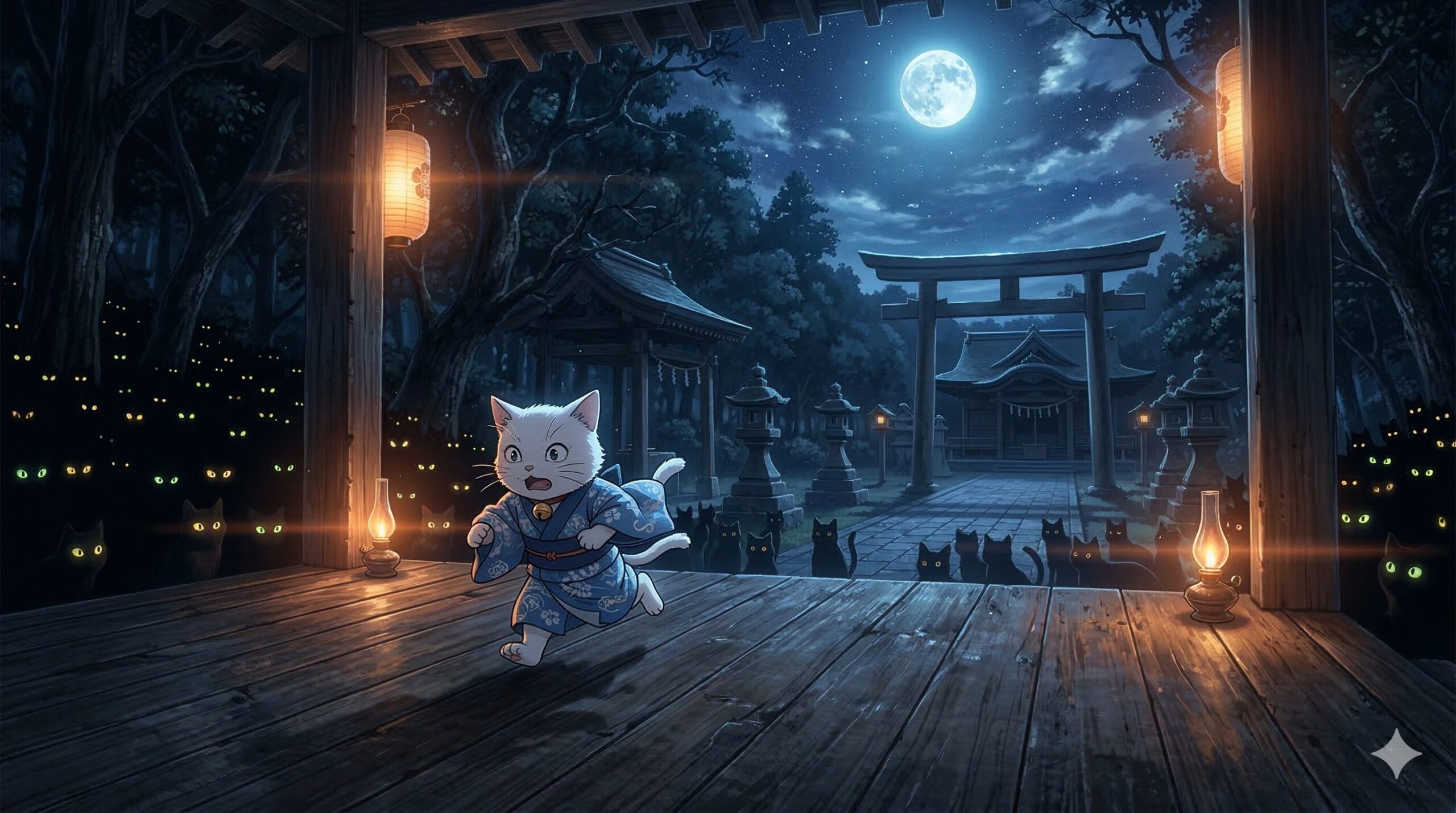
In Japan, there are many mysterious folktales where animals build their own society hidden from human eyes. Today, we introduce a masterpiece called “Neko no Shibai” (The Cats’ Play), which blends rich humor with a touch of melancholy.
The Story of “Neko no Shibai”
A Mysterious Event at the Night Shrine
One night, a village Buddhist monk was on his way home after visiting a parishioner. As he walked along the quiet, dark road, he passed near a local Inari shrine. Suddenly, from deep within the shrine’s torii gates—a place that should have been completely deserted—he heard a lively, bustling noise.
“What on earth is going on at this late hour?”
Curious, the monk quieted his footsteps and peeked inside the torii gate. A truly unbelievable sight unfolded before his eyes. An enormous number of cats had gathered, using the small shrine building as a stage to perform a theatrical play! The audience was also made entirely of cats. They were watching the stage intently, cheering with great excitement.
The Lead Actor is My White Cat!?
The play the cat actors were performing was “Chushingura” (The Treasury of Loyal Retainers), one of the most famous theatrical pieces in Japan. The story was right at its climax: the crucial scene where the lord, Takumi-no-kami, commits seppuku (ritual suicide). However, the most important character who was supposed to enter the stage at this moment—the chief retainer, Kuranosuke—was nowhere to be seen.
Just as the actors on stage and the audience began to murmur in confusion, a single white cat rushed onto the stage in a terrible hurry, not even wearing his costume. The monk gasped in shock. The white cat was none other than “Tama,” the beloved pet cat he kept at his own temple!
Another actor cat on stage turned to him and delivered a theatrical, exaggerated line:
“Kuranosuke! Why have you arrived so incredibly late~!”
Without showing the slightest bit of guilt, Tama replied in a magnificent voice:
“The dinner the monk gave me was too hot! I had to blow on it ‘fuu, fuu’ to eat it, and that is why I am late~!”
Tama’s excuse completely ruined the serious atmosphere of Chushingura, but the cat audience erupted into massive applause, as if saying, “We’ve been waiting for this!” The monk, utterly impressed by his beloved Tama’s splendid acting skills, quietly slipped away and returned to his temple.
A Sad Ending the Next Morning
The following morning, the monk woke up to find Tama curled up asleep on the veranda, just like always. Remembering the brilliant performance from the night before, the monk smiled and gently spoke to the cat.
“Tama, your acting last night was truly something else. It was magnificent.”
The moment Tama heard those words, his body jolted. He stared back at the monk in shock, and a deep, profound sadness filled the cat’s eyes.
From that day on, Tama completely disappeared from the temple. He never showed himself before the monk again. The monk deeply regretted his actions, realizing, “I touched a secret that must never be spoken of.” From then on, he never told another soul about the cats’ play, keeping the memory locked deep inside his heart.
Deep Analysis of the Folktale: Why Did Tama Have to Leave?
This story transitions from a highly comical first half to a heartbreakingly sad conclusion. The monk had purely praised Tama’s acting without a single drop of malice. So why did Tama have to disappear?
This reflects the “Violation of the Otherworldly Rule,” a common motif in Japanese folklore and mythology. When animals or Yokai (supernatural beings) blend into human society, there is an absolute rule: “Their true identity (or hidden face) must never be discovered.” In the famous “Crane’s Return of Favor” (Tsuru no Ongaeshi), the crane flies away the moment her weaving form is seen.
For Tama, being “just a cute pet cat” during the day was his contract with the human world. The “talking, acting cat” at night was his otherworldly form. Once the monk confessed to seeing the play, Tama realized the boundary was broken; he could no longer play the role of a normal cat in front of this human. The sad expression on Tama’s face as he decided to leave his beloved owner highlights the absolute and cruel nature of these supernatural rules.
Cultural Relevance: Decoding Japanese Culture from the Tale
We can clearly read Japan’s rich cultural background from this narrative.
- “Chushingura” as National Entertainment: “Chushingura” (a story based on the historical Ako Incident) has been fiercely loved by Japanese people from the Edo period to the present day. The setting that “even in the cat world, Chushingura is the most popular play” demonstrates how deeply theatrical culture permeated Japanese society.
- Inari Shrines and the Entrance to the Otherworld: The fact that this takes place at an “Inari Shrine” is highly significant. While Inari shrines are ubiquitous and closely tied to human life in Japan, they are also recognized as “liminal spaces” (boundaries between this world and the next) where animals and spirits gather. A shrine late at night falls completely outside of human territory.
- Awe and Affection for Cats: In Japan, cats have long been believed to possess magical powers, with legends stating they turn into “Bakeneko” (monster cats) when they grow old. However, this belief wasn’t born out of pure fear. It came from a loving, humorous imagination that perhaps cats “secretly speak human language and enjoy life just like we do.”
What Would You Do?
Just imagine: adorable cats gathering night after night, forming a theater troupe that puts human actors to shame. Doesn’t that thought make our ordinary world feel a little more magical?
If you were in the monk’s position, would you tell your beloved pet the next morning, “Your play yesterday was amazing”? Or would you pretend you saw nothing, choosing to maintain your relationship with them as a cute daytime cat forever?
Telling the truth does not always lead to a happy outcome. This beautiful yet sorrowful Japanese folktale asks us—even in modern times—deep questions about the nature of relationships and the kindness of keeping a shared secret unspoken.
[References & Related Links]
・Source: Manga Nippon Mukashibanashi Database “Neko no Shibai”
・Related Category: Japanese Folktale Series
日本の夜に隠された秘密の世界:昔話「猫のしばい」
日本には、動物たちが人間の目を盗んで独自の社会を築いているという不思議な昔話が数多く存在します。今回は、その中でも特にユーモアと少しの切なさが入り混じる名作「猫のしばい」をご紹介します。
昔話「猫のしばい」のストーリー
夜の神社での不思議な出来事
ある夜のことです。村のお寺の和尚さんが、檀家さんの家での用事を済ませて帰路についていました。静まり返った夜道を歩き、お稲荷さんの神社の近くを通りかかった時のことです。誰もいないはずの神社の鳥居の奥から、何やらガヤガヤと賑やかな声が聞こえてきました。
「こんな夜更けに、いったい何事だろうか?」
不思議に思った和尚さんが足音を忍ばせて鳥居の中をのぞき込むと、そこには信じられない光景が広がっていました。なんと、おびただしい数の猫たちが集まり、祠(ほこら)を舞台にしてお芝居を上演していたのです。観客席もすべて猫。彼らは熱心に舞台を見つめ、大いに盛り上がっていました。
主役はうちの白猫!?
猫の役者たちが演じていたのは、日本で最も有名な演目の一つ「忠臣蔵」でした。物語はまさに佳境。主君である内匠頭(たくみのかみ)の切腹という重要なシーンに差し掛かっていました。しかし、ここで舞台に上がるべき最重要キャラクター、家老の内蔵之助(くらのすけ)役の猫がいっこうに登場しません。
舞台上の役者も観客もざわつき始めたその時、衣装も着けずに大慌てで一匹の白猫が舞台に駆け込んできました。和尚さんはその猫を見て思わず息を呑みました。なんとそれは、和尚さんが自分のお寺で可愛がって飼っている白猫の「タマ」だったのです。
舞台上の役者猫が、芝居がかった大仰なセリフで尋ねました。
「いかに内蔵之助、なぜこれほどまでに遅れたのだ〜!」
するとタマは、全く悪びれることなく見事な声でこう返しました。
「和尚のくれた晩飯が熱くてのう。フゥフゥして食っていたので遅くなったのだ〜!」
忠臣蔵のシリアスな場面に似つかわしくないタマのセリフに、芝居はすっかりおかしな空気になってしまいましたが、観客の猫たちは「待ってました!」とばかりに大喝采。和尚さんは、愛猫タマの堂々たる名演技にすっかり感心してしまい、静かにお寺へと帰っていきました。
翌朝の悲しい結末
翌朝。和尚さんが目を覚ますと、縁側でタマがいつものように丸くなって眠っていました。和尚さんは昨夜の素晴らしい演技を思い出し、微笑みながらタマにそっと声をかけました。
「タマや、お前、昨夜の芝居は大したものだったぞ。実に見事であった」
その言葉を聞いた瞬間、タマはビクッと体を震わせ、驚いたように和尚さんの顔を見つめ返しました。そして、その瞳にはどこか深い悲しみの色が浮かんでいました。
その日を境に、タマはお寺からぷっつりと姿を消してしまいました。二度と和尚さんの前に現れることはありませんでした。和尚さんは「決して触れてはいけない秘密に触れてしまったのだ」と深く後悔し、それ以来、猫の芝居のことは誰にも話さず、胸の奥にしまい込んだのでした。
昔話を深く考察する:なぜタマは消えなければならなかったのか
この物語は、前半のコミカルな展開から一転して、非常に切ない結末を迎えます。和尚さんは純粋にタマの演技を褒めただけでした。悪意は一切ありません。しかし、タマはなぜ姿を消さなければならなかったのでしょうか。
これは、日本の民話や神話に共通する「異界のルールの侵害」を意味しています。動物や妖怪が人間社会に溶け込んでいる時、彼らには「決して正体(あるいは裏の顔)を知られてはならない」という絶対的な掟があります。有名な「鶴の恩返し」でも、機織りの姿を見られた鶴は去っていきます。
タマにとって、昼間は「ただの可愛い飼い猫」であることが人間との契約であり、夜の「言葉を話し、芝居をする猫」は異界の姿でした。和尚さんが「芝居を見た」と告げたことで、タマは「自分はもうこの人間の前でただの猫を演じ続けることはできない(境界線が壊れてしまった)」と悟ったのです。愛する飼い主との別れを決断したタマの悲しそうな顔は、この異界のルールの絶対性と残酷さを物語っています。
昔話から読み解く日本文化との関連性
この物語からは、日本の豊かな文化的背景を明確に読み取ることができます。
- 「忠臣蔵」という国民的エンターテインメント:猫たちが演じていた「忠臣蔵(赤穂事件を元にした物語)」は、江戸時代から現代に至るまで日本人が愛してやまない演目です。「猫の世界でも忠臣蔵が一番人気である」という設定は、当時の日本社会における演劇文化の浸透度を示しています。
- お稲荷さんと異界の入り口:物語の舞台が「お稲荷さんの神社」であることにも大きな意味があります。稲荷神社は日本全国にあり、人々の生活に密着している一方で、キツネを眷属(神の使い)とするなど、動物や精霊が集まる「あの世とこの世の境界」として認識されてきました。深夜の神社は、人間のテリトリーから外れる場所なのです。
- 猫への畏怖と愛着:日本では古くから、猫は「魔力を持つ動物」「年老いると化け猫になる」と信じられてきました。しかし、それは決して恐怖の対象だけではなく、「こっそり人間の言葉を話し、人間のように楽しんでいるかもしれない」という、親しみとユーモアを込めた想像力から生まれたものです。
あなたならどうしますか?
愛らしい猫たちが夜な夜な集まり、人間顔負けの劇団を作って楽しんでいる。そんな光景を想像するだけで、日常が少しワクワクするものに変わらないでしょうか。
もしあなたが和尚さんの立場なら、翌朝、自分の愛猫に「昨日の劇、素晴らしかったよ」と伝えてしまいますか? それとも、知らないふりをして、昼間の可愛い猫としての関係を永遠に続けますか?
真実を伝えることが必ずしも幸せな結果を生まない。この美しくも悲しい日本の昔話は、現代を生きる私たちにも、人間関係のあり方や「秘密を共有しない優しさ」について深く問いかけているのです。
【参考・関連リンク】
・参考元:まんが日本昔ばなしデータベース「猫のしばい」
・関連カテゴリー:Japanese Folktale Series

コメント