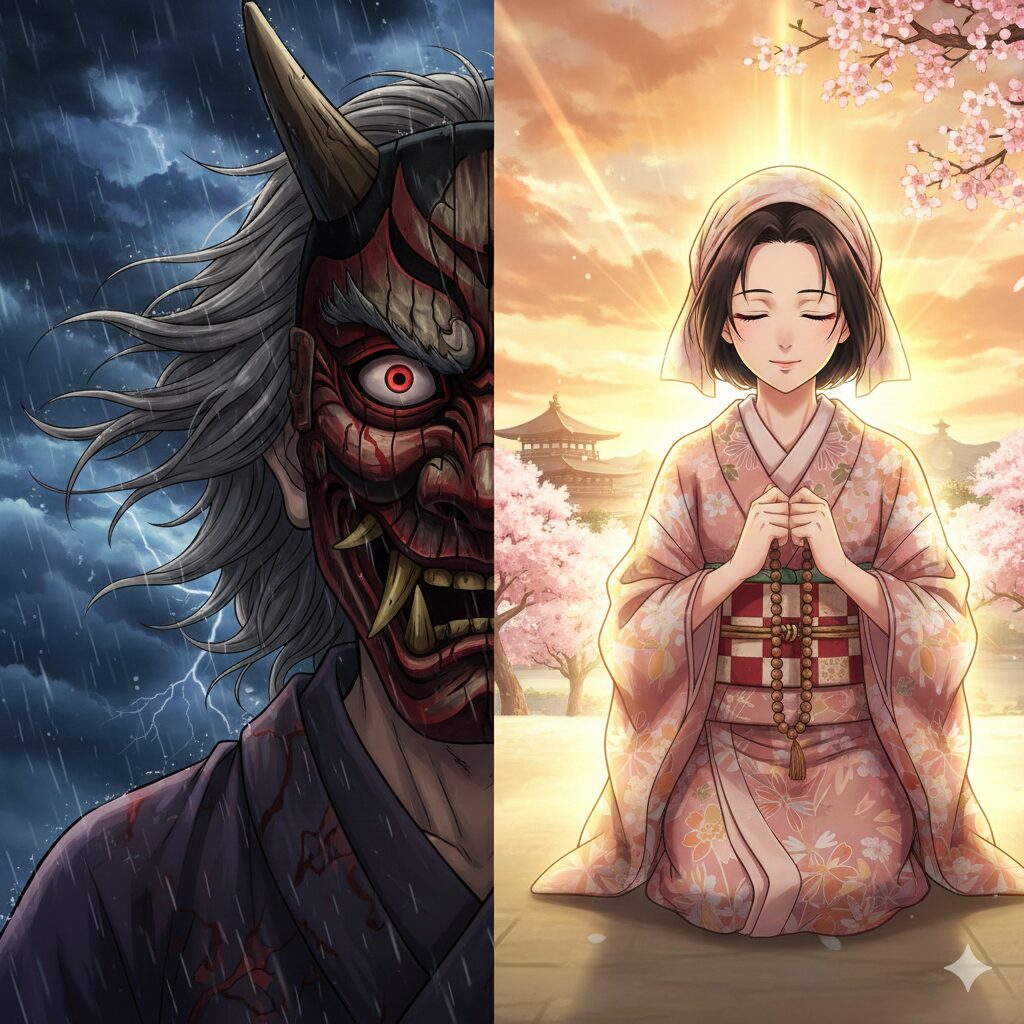
Japanese folklore is filled with stories that sharply illustrate the darkness within the human heart. The story I am introducing today is not merely a ghost story. It is a spine-chilling, yet sadly beautiful tale of redemption triggered by a heart consumed with jealousy. Welcome to the world of “The Mother’s Mask and the Demon’s Mask.”

1. The Story: The Mother’s Mask and the Demon’s Mask
Long ago, in the province of Echizen (modern-day Fukui Prefecture), there lived a farming family. In this house lived a young, pious daughter-in-law named Kiyo, and her mother-in-law, who found Kiyo’s presence unbearable.
Kiyo had a very pure heart. Her only joy was visiting the temple on the outskirts of the village every night to listen to the Buddhist sermons. However, the mother-in-law despised that Kiyo would leave the house to immerse herself in Buddha’s teachings. “Neglecting house chores for Buddha?” The flames of dark jealousy grew stronger in the mother-in-law’s heart day by day.
One stormy night, the mother-in-law devised a terrifying plan to stop Kiyo’s devotion.
“If I scare her deeply enough, she will never go to the temple again.”
From the back of the shed, the mother-in-law pulled out a dusty, old “Demon Mask” (Oni mask). It was a fearsome mask with horns, once used in village festivals. She put the mask on her face, wrapped herself in tattered clothes, and lay in wait on the mountain path where Kiyo would return from the temple.
As the wind shook the trees and eerie sounds filled the air, Kiyo approached, holding a lantern.
The mother-in-law jumped out from the bushes and shouted in a deep, guttural voice.
“Stop! Your faith is useless. If you do not turn back now, I will devour you!”
Kiyo was paralyzed with fear, but she gripped her prayer beads with trembling hands and desperately chanted a sutra.
“Namu Amida Butsu, Namu Amida Butsu…” (I take refuge in Amida Buddha…)
Seeing her unwavering devotion, the mother-in-law in the demon mask faltered for a moment. Believing she had achieved her goal, she quickly took a shortcut back home.
Back at the house, the mother-in-law tried to remove the mask immediately. She had to return to being her usual self before Kiyo arrived. But then, something horrified her.
“…It won’t come off!?”
The mask seemed to have suctioned itself to her face and wouldn’t budge. When she pulled with force, a sharp pain shot through her, as if her own skin were being peeled away. It was as if the mask had become one with her flesh.
“It hurts! It hurts! Someone help me!”
Unable to bear the pain, she screamed.
Just then, Kiyo returned from the temple. Seeing a demon figure writhing in agony in the corner of the room, Kiyo was terrified. However, sensing an unusual suffering, she approached.
“Mother, what has happened to you?”
“Kiyo, I am sorry. I was wrong. This is my punishment for trying to scare you out of jealousy. The mask won’t come off, it hurts, it hurts!”
The mother-in-law wept and confessed. Kiyo held her mother-in-law’s hand and began to chant the Nembutsu, praying from the bottom of her heart for her salvation.
“Namu Amida Butsu… Please save my mother.”
At that moment, when Kiyo’s pure prayer met the mother-in-law’s sincere repentance…
Crack!
With a dry sound, the demon mask split in two and fell to the floor.
Underneath the mask, the mother-in-law’s face was unharmed. However, it is said that the inside of the fallen demon mask was covered with flesh that looked like human skin.
From that day on, the mother-in-law changed her ways. She began visiting the temple enthusiastically with Kiyo, and it is said they lived happily together, as close as a real mother and daughter.
2. Analysis: Where Does the Demon Hide?
This story goes beyond a simple lesson of “karmic retribution” and pierces deeply into human psychology.
The Mask as a Device
Psychologically speaking, the “Demon Mask” the mother-in-law wore was the embodiment of the “jealousy” and “possessiveness” she usually kept hidden. Everyone hides dark emotions beneath their social “face” (persona). By physically wearing the mask, the mother-in-law exposed her inner ugliness to the outside world. The phenomenon of the mask becoming stuck symbolizes a state where “the false self has hijacked the true self.”
Attacking Others is Attacking Oneself
The act intended to torment the daughter-in-law resulted in agonizing pain for the mother-in-law herself. This perfectly illustrates the Japanese proverb: “If you curse someone, dig two graves.” Negative emotions corrode the person holding them far more than the person they are directed at.
3. Connection to Japanese Culture
Noh Masks and the “Flesh-Adhering Mask”
This story is deeply linked to the worldview of traditional Japanese theatre, “Noh.” The “Hannya” mask in Noh represents a woman whose jealousy and sorrow have transformed her into a demon. The depiction of the mask sticking to the face is based on the legend of the “Flesh-Adhering Mask” (Nikutsuki-no-men) passed down at Yoshizaki-Gobo temple in Fukui Prefecture. This reflects the animistic belief in Japanese culture that “emotions can dwell in objects.”
The Aesthetics of Forgiveness
In Western horror, a character who turns into a demon might be destroyed in the end. However, the conclusion of this story is “forgiveness” and “coexistence.” The victim (Kiyo) prays, and through that prayer, the perpetrator is saved. This reflects the concept in Japanese Buddhism that “even the wicked are the true object of Buddha’s salvation” and the Japanese spirit that values reconciliation.
4. What Would You Do?
After reading the story of “The Mother’s Mask and the Demon’s Mask,” what did you feel?
- If you were in Kiyo’s shoes, could you forgive the mother-in-law who tried to terrorize you, and pray for her?
- In our daily lives, on social media or at work, do we sometimes wear the mask of a “good person” so often that we lose sight of our true faces?
Perhaps we, too, are unknowingly wearing invisible “Demon Masks” on our hearts. Before it sticks to your face and refuses to come off, it might be good to stop and look into your own heart.
Please let me know your thoughts or if there are similar moral tales in your country in the comments below.
Related Links
- Japanese Folktale Series Categories – Read more Japanese folktales here.
【日本昔話】母の面と鬼の面:嫉妬が招いた恐怖と救済の物語
日本の伝説には、人間の心の闇を鋭く描いたものが数多く存在します。今回ご紹介するのは、単なる怪談ではありません。嫉妬に狂った心が引き起こした、背筋も凍るような、しかし悲しくも美しい救済の物語。「母の面と鬼の面」の世界へ、あなたをご案内します。
1. 物語:母の面と鬼の面
昔々、越前の国(現在の福井県)に、ある農家がありました。そこには、信心深い若き嫁「清(きよ)」と、彼女を疎ましく思う姑(しゅうとめ)が住んでいました。
清は非常に純粋な心の持ち主で、毎晩のように村外れの寺へ通い、説法を聞くことを唯一の楽しみとしていました。しかし、姑にとって、嫁が家を空けて仏の教えに夢中になることが面白くありません。「家の仕事を疎かにして、何が仏様だ」と、姑の心には日に日に黒い嫉妬の炎が燃え上がっていきました。
ある嵐の夜のことです。姑は、嫁の信心を止めさせるために、恐ろしい計画を思いつきました。
「あいつを脅してやれば、二度と寺へなど行かなくなるだろう」
姑は納屋の奥から、埃をかぶった古い「鬼の面」を取り出しました。それは、かつて村の祭りで使われていた、角の生えた恐ろしい形相の面でした。姑はその面を顔に被り、ボロボロの着物を纏って、嫁が寺から帰ってくる山道で待ち伏せをしたのです。
風が木々を揺らし、不気味な音が響く中、提灯を持った清が歩いてきました。
姑は茂みから飛び出し、野太い声で叫びました。
「待てぇ! 信心など無駄なことだ。今すぐ引き返さねば、お前を食らってしまうぞ!」
清は腰を抜かすほど驚きましたが、震える手で数珠を握りしめ、必死にお経を唱えました。
「南無阿弥陀仏、南無阿弥陀仏…」
その一途な姿に、鬼の面を被った姑は一瞬たじろぎましたが、目的を果たしたと思い、急いで家へと先回りして戻りました。
家に戻った姑は、急いで面を外そうとしました。嫁が帰ってくる前に、いつもの姑に戻らなければなりません。しかし、どうしたことでしょう。
「…抜けない!?」
面が顔に吸い付いたようにびくともしないのです。力を入れて引っ張ると、顔の皮が剥がれるような激痛が走ります。まるで面が皮膚と一体化してしまったかのようでした。
「痛い! 痛い! 誰か助けて!」
姑はたまりかねて叫び声を上げました。
そこへ、寺から戻った清が帰ってきました。部屋の隅で鬼の姿をして苦しむ姑を見て、清は恐怖を感じましたが、その苦しみようにただならぬ気配を感じ、近づきました。
「お義母さん、どうされたのですか?」
「清や、すまない。私が悪かった。嫉妬に狂って、お前を脅そうとした報いだ。この面が取れないのだ、痛い、痛いよ!」
姑は涙を流して懺悔しました。清は姑の手を握り、心の底から姑の救済を願って念仏を唱え始めました。
「南無阿弥陀仏… どうかお義母さんをお救いください」
清の純粋な祈りと、姑の心からの改心が重なったその時です。
パカッ!
乾いた音と共に、鬼の面が真っ二つに割れて落ちました。
面の下から現れた姑の顔には傷一つありませんでした。しかし、床に落ちた鬼の面の裏側には、姑の顔の皮膚のようなものがこびりついていたと言われています。
それ以来、姑は改心し、清と共に熱心に寺へ通うようになり、二人は本当の親子のように仲睦まじく暮らしたと伝えられています。
2. 考察:鬼はどこに潜むのか
この物語は、単なる「因果応報」の教訓話にとどまらず、人間の深層心理を鋭く突いています。
仮面という装置
心理学的に見れば、姑が被った「鬼の面」は、彼女が普段隠していた「嫉妬心」や「独占欲」の具現化です。人は誰しも、社会的な「顔(ペルソナ)」の下に、暗い感情を秘めています。姑は物理的に面を被ることで、内面の醜さを外面にさらけ出してしまいました。面が取れなくなった現象は、「嘘の自分が、本当の自分を乗っ取ってしまった状態」を象徴していると言えるでしょう。
他者への攻撃は自分への攻撃
姑が嫁を苦しめようとした行為が、結果として自分自身に激痛をもたらしました。これは、「他人を呪わば穴二つ(人を呪えば自分も墓穴に入ることになる)」という日本のことわざを完璧に表現しています。負の感情は、向けられた相手よりも、それを抱いている本人を最も蝕むのです。
3. 日本文化との深いつながり
能面と「肉付きの面」
この物語は、日本の伝統芸能「能(Noh)」の世界観と深くリンクしています。能面の中でも「般若(Hannya)」は、女性の嫉妬と悲しみが極まって鬼になった顔を表しています。物語の中で面が顔に張り付く描写は、福井県の吉崎御坊に伝わる「肉付きの面」伝説がベースになっています。日本文化において、「感情が物質に宿る」というアニミズム的な思想が根底にあることが読み取れます。
「許し」の美学
西洋のホラーであれば、鬼になった姑は滅ぼされて終わるかもしれません。しかし、この物語の結末は「許し」と「共生」です。清(被害者)が祈ることによって加害者が救われる。これは、日本仏教における「悪人正機(悪人こそが救われる対象である)」や、和解を重んじる日本的な精神性が色濃く反映されています。
4. あなたならどうしますか?
この「母の面と鬼の面」の物語を読んで、あなたは何を感じましたか?
- もしあなたが清の立場だったら、自分を脅かそうとした姑を許し、彼女のために祈ることができますか?
- 私たちは日常生活で、SNSや職場で「良い人」という仮面を被りすぎて、本当の顔を見失うことはないでしょうか?
もしかすると、私たちも知らず知らずのうちに、目に見えない「鬼の面」を心に被っているのかもしれません。それが顔に張り付いて取れなくなる前に、一度立ち止まって自分の心を見つめ直してみるのも良いでしょう。
あなたの感想や、あなたの国の似たような教訓話をぜひコメントで教えてください。
関連リンク
- Japanese Folktale Series Categories – 他の日本の昔話はこちらから


コメント