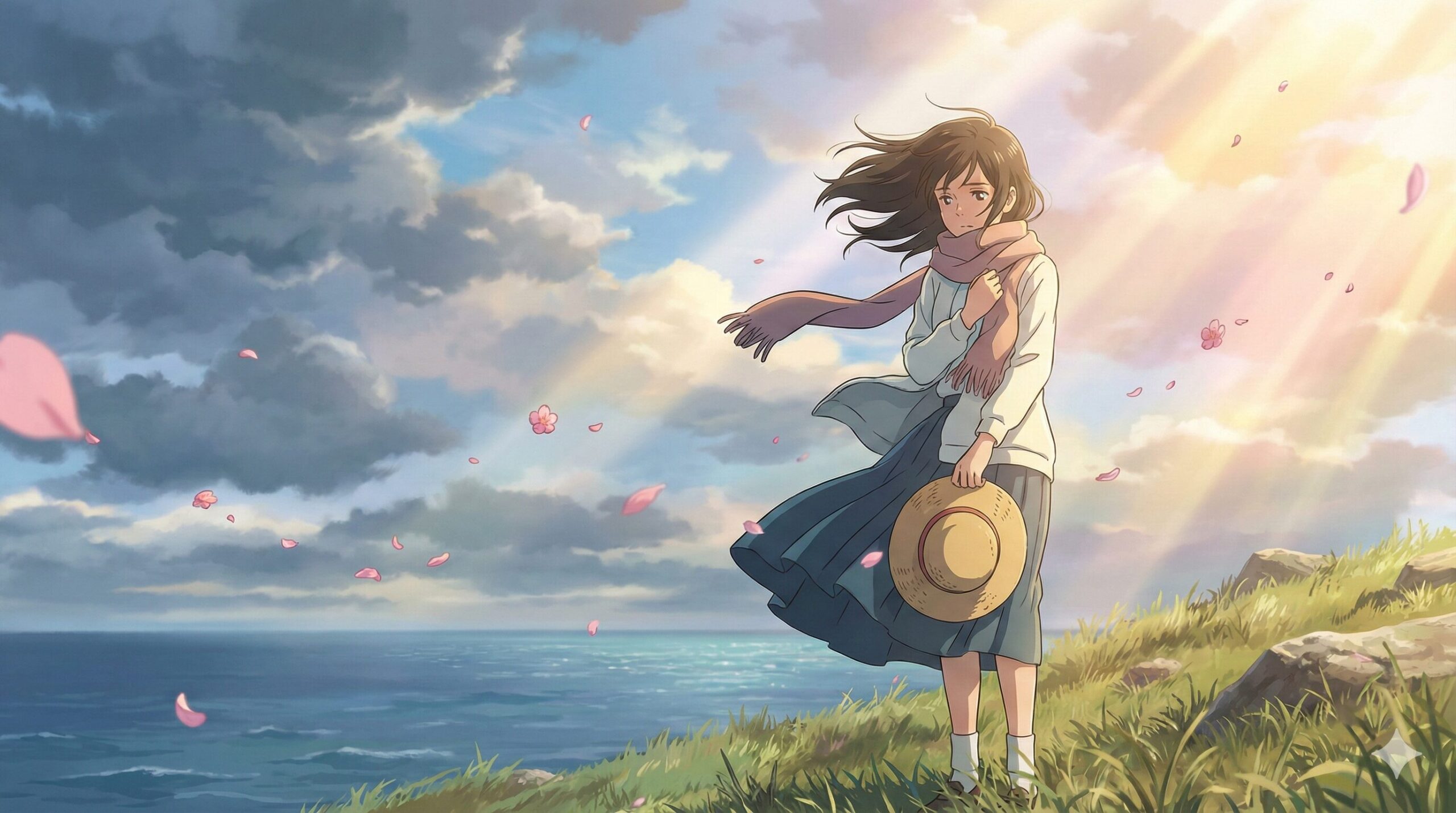
Winter in Japan is harsh yet beautiful. Ancient capitals covered in snow, the crisp, clear air. However, in mid-February, the Japanese archipelago undergoes a dramatic transformation. The “Spring” that people long for does not arrive merely with gentle sunlight. Sometimes, it pries open the door with a ferocious wind.
February 15th is designated in Japan as “Haru Ichiban Nazuke no Hi” (Spring’s First Gale Naming Day). Why does a wind have a name? Hidden within is a tragic history and the Japanese reverence for nature.

What is “Haru Ichiban”?
“Haru Ichiban” refers to the first strong southerly wind of the year that blows between Risshun (the beginning of spring, around February 4th) and the Vernal Equinox (around March 20th). The Japan Meteorological Agency defines it as a wind with a speed of 8 meters per second or more, accompanied by a rise in temperature compared to the previous day.
When this wind blows, news anchors loudly declare, “Haru Ichiban has been observed today.” For the Japanese, this is the official signal that “the long winter is over, and spring has begun.”
The Tragedy of 1859: Fishermen of Iki and the Spring Storm
However, behind this beautifully sounding phrase lies a prayer for the repose of souls. Let us turn the clock back to the end of the Edo period, the 6th year of Ansei (1859).
This happened on Iki Island in Nagasaki Prefecture. On the 13th day of the 2nd lunar month, fishermen from Iki who were fishing off the Goto Islands were suddenly struck by a violent south wind. With the boat technology of the time, there was no way to resist this sudden storm. As a result, 53 precious lives were lost to the sea.
Since then, the fishermen of Iki began to call this dangerous strong south wind blowing at the beginning of spring “Haruichi” or “Haru Ichiban,” and they feared it. This was not merely a meteorological term, but a lesson for survival and a requiem for their lost comrades.
From Dialect to National Vocabulary
For a long time, this word was limited to the Iki region. However, after the 1950s, folklorist Kenji Miyamoto introduced the term, and the mass media began using it as “the wind that announces the arrival of spring,” cementing it across Japan. By the late 1980s, the Japan Meteorological Agency officially adopted the term.
The Essence of Japanese Culture: Living with Untamed Nature
From this phenomenon of “Haru Ichiban,” we can decipher a unique Japanese view of nature.
The Aesthetics of Accepting Duality
In a Western sense, spring might be a symbol of “Flowers” or “Warmth.” However, the Japanese spring begins with a “Storm.” The Japanese deeply understand that nature’s bounty (the warmth of spring) and nature’s threat (disastrous winds) are two sides of the same coin.
The day after Haru Ichiban blows, the weather often reverts to winter-like cold, a phenomenon called “Kan no Modori” (Return of the Cold). Japanese people wait for the true spring while physically feeling the cycle of “San-kan Shi-on” (Three Cold Days, Four Warm Days).
Assigning a hopeful number like “Ichiban” (Number One) to a dangerous wind and waiting for it—this mentality represents the strength of the Japanese people who have survived in this disaster-prone island nation, and the richness of their hearts in appreciating the four seasons.
What is the Signal of “Spring” for You?
Spring in Japan opens dramatically with a strong wind. It is like a ritual to overcome past sorrows and allow new life to sprout.
Now, how about in your country?
Is it the first chirp of a bird? Or perhaps a specific scenery of melting snow?
Maybe, like in Japan, a slightly rough natural phenomenon tells you of the turning of the seasons.
The next time a strong wind blows, imagine that it is not just bad weather, but the sound of a new season knocking on the door. The world might look a little different.
References & Links
春の使者は、悲劇と共にやってきた。2月15日は「春一番名付けの日」
日本の冬は厳しく、美しいものです。雪に覆われた古都、澄み切った空気。しかし、2月の中旬になると、日本列島は劇的な変化を迎えます。人々が待ち望む「春」は、穏やかな日差しと共に訪れるだけではありません。時には猛々しい風と共に、その扉をこじ開けるのです。
2月15日は、日本で「春一番名付けの日(Haru Ichiban Nazuke no Hi)」とされています。なぜ風に名前がついたのか?そこには、ある悲しい歴史と、自然に対する日本人の畏敬の念が隠されています。
春一番とは何か?
「春一番(Haru Ichiban)」とは、立春(2月4日頃)から春分(3月20日頃)の間に、その年に初めて吹く強い南風のことを指します。気象庁の定義では、風速8メートル以上の風が吹き、前日よりも気温が上昇することが条件とされています。
この風が吹くと、ニュースキャスターは「本日、春一番が観測されました」と高らかに宣言します。それは日本人にとって、「長い冬が終わり、春が始まった」という公式な合図なのです。
1859年の悲劇:壱岐の漁師たちと春の嵐
しかし、この美しい響きの言葉の裏には、鎮魂の祈りが込められています。時計の針を江戸時代末期、安政6年(1859年)に戻しましょう。
長崎県の離島、壱岐(Iki)での出来事です。旧暦の2月13日、五島列島沖に出漁していた壱岐の漁師たちは、突如として吹き荒れた強烈な南風に襲われました。当時の船の技術では、この突然の嵐に抗う術はありませんでした。結果として、53名もの尊い命が海に消えたのです。
それ以来、壱岐の漁師たちは、春の初めに吹くこの危険な強い南風を「春一(Haruichi)」や「春一番(Haruichiban)」と呼び、恐れるようになりました。これは単なる気象用語ではなく、生きるための教訓であり、仲間へのレクイエムだったのです。
方言から全国共通語へ
長い間、この言葉は壱岐地方だけの限られた言葉でした。しかし、1950年代以降、民俗学者の宮本常一氏がこの言葉を紹介し、マスメディアが「春の訪れを告げる風」として使い始めたことで、日本全国に定着しました。そして1980年代後半からは、気象庁も正式にこの用語を使用するようになったのです。
日本文化の真髄:荒ぶる自然と共生する心
この「春一番」という現象からは、日本独自の自然観を読み解くことができます。
二面性を受け入れる美学
西洋的な感覚では、春は「Flower(花)」や「Warmth(暖かさ)」の象徴かもしれません。しかし、日本の春は「嵐」から始まります。日本人は、自然の恵み(春の暖かさ)と、自然の脅威(災害級の強風)が表裏一体であることを深く理解しています。
春一番が吹いた翌日は、「寒の戻り(Kan no Modori)」と言って、再び冬のような寒さに逆戻りすることが多々あります。日本人は、暖かくなったり寒くなったりを繰り返す「三寒四温(San-kan Shi-on)」を肌で感じながら、ゆっくりと確実に来る本格的な春を待つのです。
危険な風に「一番」という希望に満ちた番号を付け、それを待ちわびる。このメンタリティこそが、災害の多いこの島国で生き抜いてきた日本人の強さであり、四季を愛でる心の豊かさなのです。
あなたにとっての「春」の合図は?
日本の春は、強い風と共にドラマチックに幕を開けます。それはかつての悲しみを乗り越え、新しい命が芽吹くための儀式のようなものです。
さて、あなたの国ではどうでしょうか?
最初の鳥のさえずりですか? それとも特定の雪解けの風景ですか?
もしかすると、日本のように、少し荒々しい自然現象が季節の変わり目を教えてくれるのかもしれません。
次に風が強く吹く日、それがただの悪天候ではなく、新しい季節がドアを叩いている音だと想像してみてください。世界が少し違って見えるはずです。


コメント