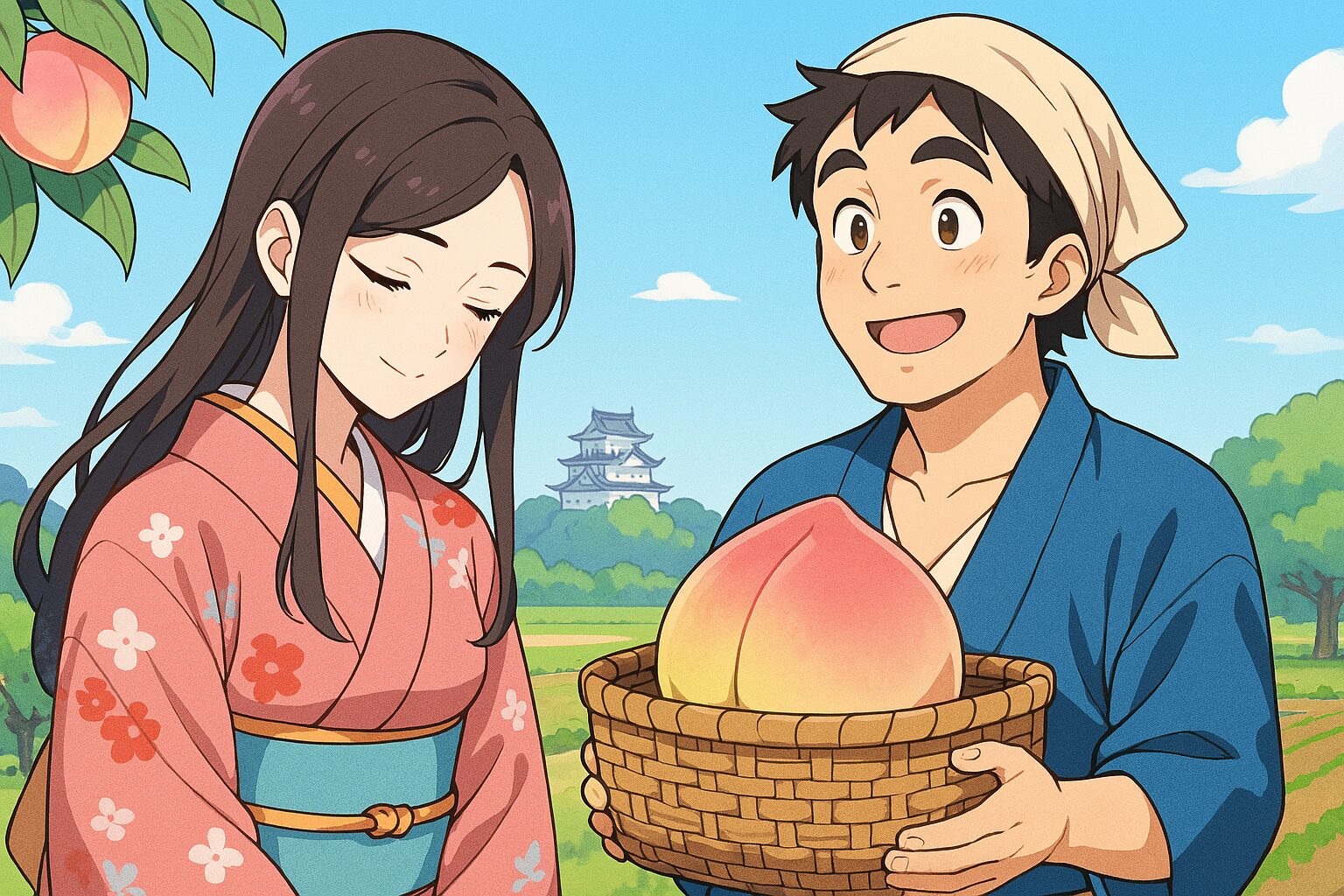
Category: Japanese Folktale Series

- ① The Folktale Story: Esugata Nyoubou (The Portrait Wife)
- ② Analysis of the Folktale: The Trial of Beauty and the Victory of Wit
- ③ The Folktale and Japanese Culture
- ④ A Question to Our Readers
- ⑤ External Links and Category
- ① 昔話のストーリー:絵姿女房
- ② 昔話を考察する記事:美貌が招く試練と知恵の勝利
- ③ 昔話から読み解く日本文化との関連性
- ④ 読者への問いかけ
- ⑤ 外部リンクとカテゴリー
① The Folktale Story: Esugata Nyoubou (The Portrait Wife)
Once upon a time, there lived a kind-hearted peasant man named Hyouroku. Hyouroku was married to a woman who was breathtakingly beautiful and had a gentle soul. They lived together happily.
However, Hyouroku loved his wife so much that he couldn’t take his eyes off her, and as a result, he neglected his farm work. Concerned, the wife thought of a solution. “This won’t do. I apologize for being a distraction. I shall paint my portrait for you. If you keep it close, you can work hard, feeling as though I am right there with you.”
The wife quickly painted a picture of her face. The portrait was so lifelike and beautiful that it seemed ready to smile. Hyouroku was overjoyed. He mounted the portrait on a board and took it to the field every day.
Thanks to the portrait, Hyouroku was able to concentrate on his work, and his crops flourished. One day, however, a strong wind violently swept through the field. The precious portrait, lifted by the gale, fluttered high into the air and was carried far away to a great Castle.
The portrait was found by the country’s Lord (Tono-sama). The Lord was instantly captivated by the image’s stunning beauty. “Find this woman at once and bring her to me! She shall be my wife!” he commanded his retainers.
Using the portrait as a clue, the retainers quickly found Hyouroku’s wife. Weeping, the wife was forcibly taken to the castle. But before leaving, she entrusted Hyouroku with a single peach seed.
“Hyouroku-san, please don’t despair. Plant this seed and nurture it for three years. When the peaches ripen, come to the castle to sell them. Then, we shall meet again.”
Hyouroku was heartbroken, but trusting his wife’s words, he planted the seed and diligently cared for the young tree for three long years. The peach tree grew strong and bore many large, beautiful fruits.
Meanwhile, the wife, now residing in the castle, became the Lord’s wife but never once smiled. The Lord was frustrated that such a beautiful woman remained constantly somber.
It was at this time that Hyouroku arrived in the castle town with a basket full of his ripened peaches. “Peaches, get your peaches! Sweet and delicious peaches, nurtured for three years!“
Upon hearing the familiar voice of the peach seller, the wife smiled—her first smile in three years.
The astonished Lord immediately summoned Hyouroku to the castle. “You made this woman smile! I shall reward you. Now, make her smile again, just as you did.”
Hyouroku repeated his peach-selling cry, making his wife smile once more. The Lord, convinced the cry itself was the secret, hatched a plan. “Aha! I shall dress up as you, imitate your voice, and make her smile!”
The Lord traded his magnificent robes for Hyouroku’s simple peasant clothes, and Hyouroku wore the Lord’s attire. “Now, I shall go into the town in this disguise and practice the peach-seller’s cry!”
As the Lord, dressed as a peasant, tried to re-enter the castle, the gatekeeper, not recognizing his master, stopped him. “Peasant! By whose permission do you attempt to enter the castle? Get out!”
The gatekeeper chased the Lord away. The wife, seeing Hyouroku in the Lord’s attire, welcomed him as the true master of the castle. The two, through the power of love and wisdom, lived happily ever after as the new Lord and Lady.
② Analysis of the Folktale: The Trial of Beauty and the Victory of Wit
Esugata Nyoubou contains universal themes within its captivating plot. The most notable is the **duality of “beauty”** at the story’s beginning. The wife’s beauty is a symbol of love for Hyouroku, yet it also becomes a “temptation” that causes him to neglect his work, and ultimately, the “seed of misfortune” that attracts the powerful Lord.
However, the true focus of the story is the wife’s **”wisdom.”** While her beauty was the external force that attracted the Lord, her intelligence and calm judgment are the “inner power” that protects her marriage and reverses their fate.
- Entrusting the Peach Seed: This is not just a promise of reunion; it is a strategic maneuver that provides Hyouroku with a “means” for reunion and a “trial” of waiting for three years. The wife uses patience and planning, not impulsive action.
- Silent Resistance in the Castle: The wife chooses spiritual resistance—refusing to smile—over physical struggle. This “no-smile” policy signifies that her heart belongs elsewhere, a quiet form of rebellion that undermines the Lord’s authority from within.
The conclusion is a satisfying **reversal of social status**. The simple, good-natured Hyouroku, guided by his wise wife and sustained by their love, ultimately gains the Lord’s position. This outcome reflects the common people’s implicit desire for justice and a subtle satire on the ruling class—that true power is earned through love and wisdom, not inherited status.
③ The Folktale and Japanese Culture
The structure of Esugata Nyoubou provides a key to understanding several important elements rooted in Japanese society and culture.
1. High Esteem for “Sai-shoku Kenbi” (Beauty and Wisdom)
The wife possesses not only beauty (“shoku”) but also the **wisdom (“sai”)** to calmly devise a plan to save her husband. In Japanese folktales, women are often depicted as the “power behind the scenes” or the “wise person” who drives the narrative. This story exemplifies the Japanese value that **wisdom and character are esteemed more highly than mere physical beauty.**
2. The Sacred Meaning of the “Peach”
The “peach” the wife entrusts to Hyouroku holds deep cultural significance in Japan.
- Symbol of Exorcism and Life: The peach has long been believed to possess the power to **ward off evil** (as seen in the tale of *Momotaro*). It symbolizes the strength to overcome hardship and the start of new life.
- The Virtue of Patience: The three years of waiting for the peach to ripen represent a period of trial for Hyouroku’s love and endurance. This agricultural spirit of **”waiting patiently for results”** aligns with the Japanese virtue of **Gaman (patience/perseverance).**
The peach functions not merely as fruit but as a **sacred item** symbolizing the couple’s pure love and their strong will to reunite.
3. Subtle Resistance and Satire Against Power
The ending—the switch between the peasant Hyouroku and the Lord—is a common feature in Japanese narratives that **satirizes the power structure from a commoner’s viewpoint.**
The Lord, despite his power, fails to buy the wife’s “love” (her smile) with wealth or status, and is ultimately chased away when wearing peasant clothes. This strongly suggests the cutting irony against the class system: **”true winners are those with wisdom and sincerity, regardless of their attire or rank,”** and emphasizes the value that **”a person’s true nature is not defined by their appearance.”**
This folktale powerfully reflects the spiritual values cherished by the Japanese—”wisdom,” “patience,” and the “power of love”—along with a commoner’s ethic that prioritizes human worth over mere authority.
④ A Question to Our Readers
We have explored the story of Esugata Nyoubou and the cultural context hidden within. We now ask you:
If you were in Hyouroku’s shoes, entrusted with just a single **peach seed** in a moment of despair, could you have truly believed and waited for three long years?
Or, if you were the wife, in a luxurious castle surrounded by power, could you have maintained that **silent struggle**—refusing to smile—believing your husband would return?
In the modern world, we often try to solve problems with “speed” and “force.” Yet, this couple overcame their trial with the invisible forces of **”time,” “wisdom,”** and above all, **”faith.”**
What resonates most with you after reading this folktale? When you face a difficulty in life, can you, like this couple, enlist “time” as an ally, use your wits, and remain faithful to what matters most? We look forward to hearing your thoughts.
⑤ External Links and Category
<External Links>
- Japan Folktales Association (General Incorporated Association): Official site of the organization dedicated to the transmission of Japanese folktales and folk narratives.
- Umi no Minwa no Machi Project Official Site (Sea Folktales): A site introducing folktales related to the sea across Japan.
<Category>
豪奢な運命と庶民の知恵:「絵姿女房」が映す日本の心
カテゴリー:Japanese Folktale Series
① 昔話のストーリー:絵姿女房
むかしむかし、あるところに兵六(ひょうろく)という、たいそうお人好しな百姓の男がいました。兵六は、誰が見ても息をのむほど美しく、心根の優しい女房を娶り、二人は仲睦まじく暮らしていました。
しかし、兵六は女房があまりにも愛おしく美しいので、朝から晩まで見とれてしまい、畑仕事が全く手につきません。困った女房は思案の末、言いました。「これでは困ります。私があなたの仕事の邪魔をしてしまっては申し訳ない。そうだ、私の絵姿を描いてあげましょう。それを肌身離さず持っていれば、私が傍にいると思って、安心して仕事に励めますでしょう。」
女房はさらさらと自分の顔の絵を描きました。その絵は、まるで生きているかのように美しく、今にも笑い出しそうなほどでした。兵六は大喜びで、その絵姿を板に貼り付けて、毎日畑に持っていきました。
絵姿のおかげで、兵六は仕事に集中できるようになり、畑は順調に育ちました。ところが、ある日、畑で強い風がぶうっと吹き荒れました。兵六が大事にしていた絵姿は、風にあおられ、ひらひらと空高く舞い上がってしまったのです。
兵六が必死に追いかけましたが、絵姿は遠くのお城にまで飛んでいってしまいました。
その絵姿を偶然見つけたのは、この国の殿様でした。殿様は絵姿のあまりの美しさに一目で心を奪われ、「この世にこのような美しい女性がいたのか!すぐに見つけ出し、わしの妻にするのだ!」と家来に命じました。
絵姿が手がかりとなり、家来たちはすぐに兵六の女房を見つけ出しました。女房は泣く泣く、無理やりお城へ連れて行かれることになります。しかし、その時、女房は兵六に一つの桃の種を託しました。「兵六さん、悲しまないでください。この種を植えて、三年間大切に育ててください。そして、桃が実ったら、それを城へ売りに来てください。そうすれば、きっとまた会えます。」
兵六は絶望しましたが、女房の言葉を信じ、毎日畑仕事の合間に桃の種を植え、来る日も来る日も水を与え、大切に育てました。三年が経ち、桃の木は立派に成長し、大きく美しい実をたくさんつけました。
一方、お城に迎えられた女房は、殿様の妻になりましたが、一日たりとも笑うことはありませんでした。殿様は、これほど美しい女性が、一度も笑わないことを大変不満に思っていました。
そこへ、立派に実った桃を籠に入れた兵六が、城下町にやってきました。「桃だ、桃だよ!三年かけて大切に育てた、甘くて美味しい桃はいらんかえ!」
その桃売りの声を聞いた女房は、にこっと、三年ぶりに初めて笑ったのです。
殿様は驚き、すぐに兵六を城へ呼び入れました。「お前は、この女を笑わせたではないか!褒美をやる。代わりに、もう一度あの時のように、女を笑わせてみよ。」
兵六は、再び桃売りの声を出して、女房を笑わせました。殿様は、女房が笑ったのは桃売りの声のおかげだと思い込みました。「そうだ!わしがお前の格好になり、お前の声を真似て、女を笑わせてやる!」
殿様は、兵六の百姓姿になり、兵六には自分の殿様の着物を着せました。「さあ、この姿で城下に行って、桃売りの真似をしてくるぞ!」
殿様が百姓の着物を着て城を出て行くと、城門の番人は、それが殿様だとは知る由もありません。「百姓!誰の許しを得て城に入ろうとしている!出て行け!」
番人は殿様を城の外へ追い出してしまいました。
一方、女房は殿様の着物を着た兵六を殿様として迎え入れ、二人は晴れてお城の主となり、知恵と愛の力で幸せに暮らしました。
② 昔話を考察する記事:美貌が招く試練と知恵の勝利
「絵姿女房」は、その魅力的なプロットの中に、いくつかの普遍的なテーマを内包しています。まず特筆すべきは、物語の発端となる「美しさ」の二面性です。女房の美しさは、夫の兵六にとっては愛の象徴でありながら、同時に仕事を疎かにさせる「誘惑」となり、最終的には殿様を魅了する「災いの種」となってしまいます。これは、古代から文学で描かれてきた、美貌がもたらす光と影のテーマです。
しかし、この物語の真の焦点は、その後の女房の「知恵」にあります。美貌が外部の権力者(殿様)を引き寄せる力であったのに対し、女房の知恵と冷静な判断力こそが、夫婦の絆を守り、運命を逆転させる「内なる力」として機能します。
- 桃の種を託す行為:これは単なる再会の約束ではなく、「三年間待つ」という試練と、再会を果たすための「手段」を与えています。女房は、衝動的な行動ではなく、時を味方につけ、計画的に状況を動かす知性を持っています。
- 城での無言の抵抗:女房は殿様に対して、物理的な抵抗ではなく、笑わないという精神的な抵抗を選びます。この「無笑」は、彼女の心が別の場所にあることを示し、殿様の権力を内側から侵食する静かなる闘争です。
物語の結末は、身分逆転の痛快な展開です。お人好しで無力に見えた百姓の兵六が、知恵ある女房の導きと、その愛によって、最終的に権力を手に入れます。これは、権力は身分ではなく、愛と知恵によって勝ち取られるべきであるという、庶民の潜在的な願望や、体制への風刺を強く含んでいると考えられます。
この物語は、単なるロマンスではなく、権力と愛、そして知恵の衝突を描いた、深遠な教訓を含むものとして捉えることができます。
③ 昔話から読み解く日本文化との関連性
「絵姿女房」の物語構造は、日本の社会や文化に根差したいくつかの重要な要素を読み解く鍵となります。
1. 「才色兼備の女性」への高い評価
物語の女房は、その美しさ(色)だけでなく、危機的状況において冷静に判断し、夫に再会のための具体的な手段(桃の種)を教える知恵(才)を持っています。日本の昔話において、女性はしばしば、物語を動かす「縁の下の力持ち」あるいは「賢者」として描かれます。これは、「美しさ以上に知恵と品性が尊ばれる」という日本の価値観を体現しています。
2. 「桃」が持つ神聖な意味と縁起物としての役割
女房が再会の手段として託した「桃」は、日本の文化において非常に重要な意味を持っています。
- 魔除け・生命の象徴: 古来より桃は邪を祓う力を持つと信じられてきました。困難を乗り越える力や、新たな生命の始まりを象徴します。
- 時を待つ忍耐: 種を植えて実がなるまでの三年間は、兵六の愛と忍耐の試練の期間です。この**「時間をかけて成果を待つ」**という精神は、日本の文化における忍耐(「我慢」)の美徳に通じています。
この物語における桃は、夫婦の純粋な愛と再会を願う強い意志を象徴する神聖なアイテムとして機能しているのです。
3. 権力への静かなる抵抗と風刺
物語の結末、すなわち百姓の兵六と女房が殿様と入れ替わる展開は、**庶民の視点から権力構造を風刺する**という、日本の説話にしばしば見られる特徴を示しています。
権力者は、女房の笑顔という「愛」を金や地位で買うことはできず、最終的に百姓の着物を着ただけで城から締め出されます。これは、**「着る物や肩書きがなくても、知恵と真心があれば真の勝者となれる」**という、身分制度に対する痛烈な皮肉**と、**「人の本質は見た目ではない」**という価値観を力強く示唆しています。
この昔話は、日本人が古来より大切にしてきた「知恵」「忍耐」「愛の力」といった精神性と、「権威よりも人としての価値を重んじる」という、庶民的な倫理観を色濃く反映しているのです。
④ 読者への問いかけ
さて、ここまで「絵姿女房」のストーリーと、そこに秘められた日本の文化的背景を考察してきました。
もし、あなたが兵六の立場であったなら、愛する妻を無理やり奪われた絶望的な状況で、たった一つの桃の種を託された時、それを信じ、本当に三年間も待ち続けることができたでしょうか?
あるいは、あなたが女房の立場であったなら、豪華絢爛な城の中で、権力者に囲まれながら、愛する夫を信じ、一度も笑わずに耐え抜くという**静かなる闘争**を続けることができたでしょうか?
現代の私たちは、多くの問題を「スピード」と「力」で解決しようとしがちです。しかし、この物語の夫婦は、**「時間」と「知恵」**、そして何よりも**「信じる心」**という、目に見えない力で試練を乗り越えました。
この昔話を読み終えた今、あなたの心には何が残りましたか?あなたが人生で困難に直面した時、この夫婦のように「時」を味方につけ、知恵を絞り、そして最も大切なものを信じ続けることができますか?ぜひ、あなたの考えを聞かせてください。
⑤ 外部リンクとカテゴリー
<外部リンク>
- 一般社団法人 日本昔ばなし協会:日本の昔話や民話の伝承・普及に携わる団体の公式サイト。
- 海ノ民話のまちプロジェクトオフィシャルサイト:日本各地の海にまつわる民話を紹介しているサイト。
<カテゴリー>


コメント