The Japanese calendar is more than just a sequence of dates; it holds deep meanings that illustrate the spiritual connection between nature and humanity. “Shunbun” (the Vernal Equinox), which falls around March 20th every year, is a prime example. While it marks the astronomical turning point where day and night are of almost equal length, it is also a special day that vividly reflects the views on life, death, and nature that flow at the foundation of Japanese culture.
In this article, we will explore the history of March 20th in Japan and why it remains so important today. By unraveling the concepts of “Shunbun” and the closely related “Shunki Koreisai,” we will delve deep into the heart of Japanese culture.
Shunbun: A Day to Admire Nature and Care for Living Things
In Japan, Shunbun no Hi (Vernal Equinox Day) is established as a national holiday. Japanese law officially defines the purpose of this day as “to admire nature and care for living things.” As the long, harsh winter ends, plum and cherry blossoms bloom in their full glory, and animals awaken from hibernation, Japanese people have historically held a deep reverence and gratitude for the vital energy of nature.
Furthermore, the seven-day period centered around the Vernal Equinox is called “O-higan.” In Buddhist teachings, the world of worldly desires where we live is called “Shigan” (this shore), and the world of enlightenment (the afterlife) is called “Higan” (the other shore). Because the sun rises due east and sets due west on the equinox, it is believed to be the day when our thoughts can most easily reach the Western Pure Land (heaven). Thus, it has become a deeply rooted custom to visit ancestral graves, clean family altars (Butsudan), and hold memorial services during this time.
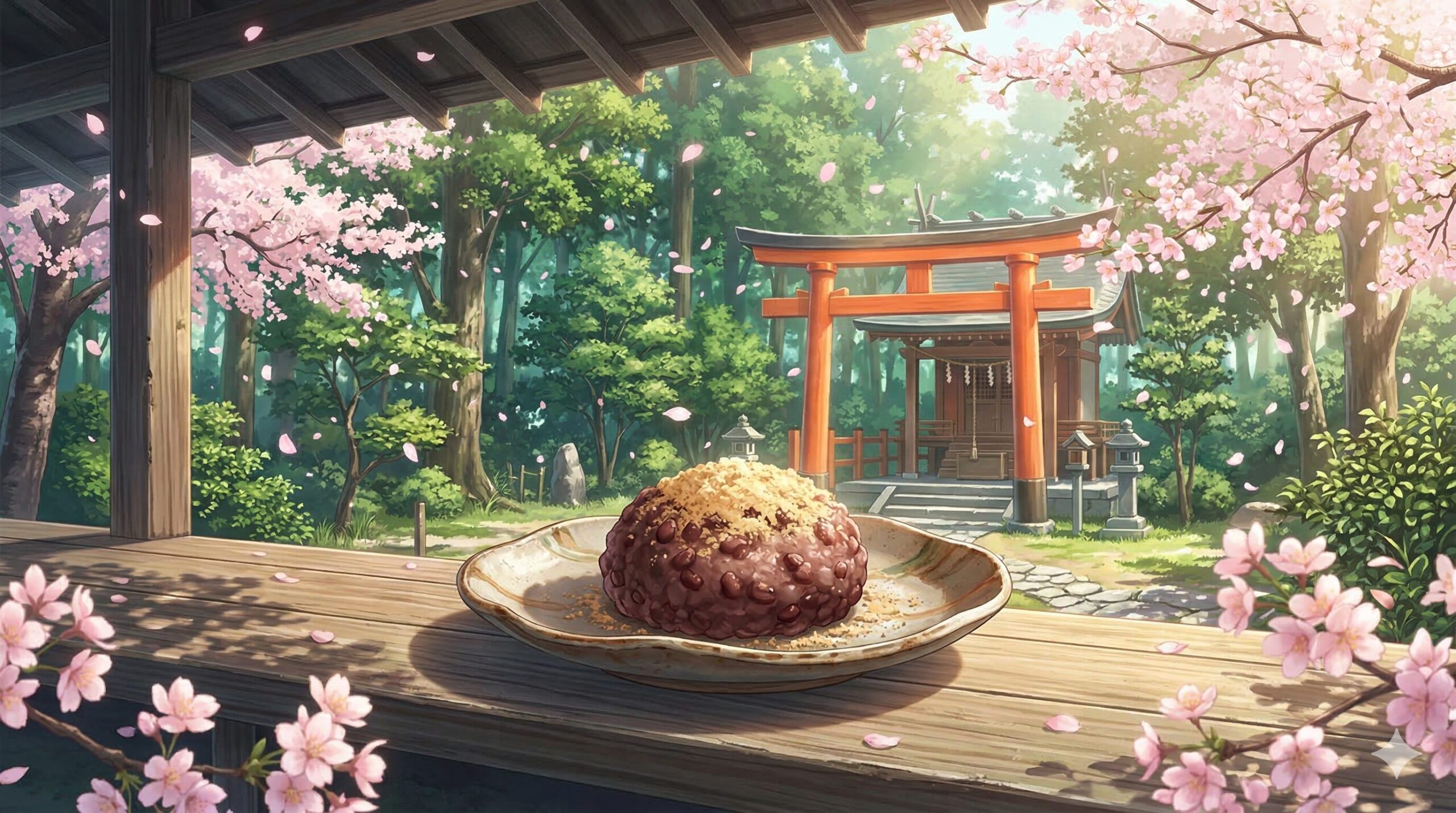
An essential part of O-higan is a traditional Japanese sweet called “Botamochi.” Made of molded sticky rice wrapped in sweet red bean paste, it is offered to ancestors and shared among families. The red color of the adzuki beans has long been believed to ward off evil spirits. Named after the botan (peony) flower that blooms in spring, it is a beautiful and delicious representation of Japanese culture.
Shunki Koreisai: A Prayer Passed Down from the Imperial Court to the People
While known today as Vernal Equinox Day, before World War II, this national holiday was called “Shunki Koreisai” (The Spring Festival of the Imperial Ancestors). It remains one of the most important traditional Shinto rituals conducted by the Imperial Family today.
At the Koreiden (the sanctuary enshrining the spirits of successive Emperors and imperial family members) inside the Imperial Palace, the Emperor reads a prayer, wishing for the peace of the nation, the prosperity of the people, and expressing gratitude to the ancestors. This solemn Shinto ritual held in the palace represents the highest form of “ancestor worship,” a concept Japanese people have cherished since ancient times.
Although the name was changed to “Shunbun no Hi” due to post-war legal revisions, the Imperial rituals praying for national tranquility and the widespread custom of ordinary families visiting ancestral graves during O-higan actually share the exact same spirit: “respecting one’s roots and honoring the interconnectedness of life.” During these seasonal milestones, Shinto and Buddhism—two different religions—beautifully merge and blend into the daily lives of the Japanese people.
Understanding the Essence of Japanese Culture Through Shunbun
What we can decode from the single day of March 20th is the strong Japanese awareness of “cycles.” The natural cycle of spring arriving as winter departs, and the cycle of life passed down from ancestors, to ourselves, and to our descendants. These are not viewed as separate phenomena, but rather as one grand cosmic operation.
The philosophy is not to dominate nature, but to live as a part of it. It involves humbly acknowledging that our very existence here today is thanks to countless ancestors of the past. This beautiful harmony of animism (the belief that spirits reside in all things) and ancestor worship is precisely what gives birth to Japanese kindness, delicate aesthetic sensibilities, and a culture that highly values harmony (the spirit of Wa).
A Question for You
In this way, the Japanese people give thanks to the power of nature at the changing of the seasons and direct their thoughts to those who lived before them. In our busy modern society, it is a quiet, beautiful time to reaffirm where we stand.
How do you and your culture welcome this beautiful season as the long, harsh winter transitions into spring? Also, how do you feel connected to and honor your own roots and ancestors? I hope this article inspires you to take a moment to reflect on your own connections of life and the beauty of nature around you.
Reference Links
- What’s Today’s Special Day Series – Explore more Japanese anniversaries and traditions on our blog category.
- National Astronomical Observatory of Japan – About National Holidays
- Japan National Tourism Organization (JNTO) – Official guide to traveling and experiencing Japanese culture.
日本の春の目覚め:3月20日「春分」と「春季皇霊祭」に隠された深い精神性
日本の暦には、単なる日付の羅列を超えた、自然と人間の精神的な結びつきを示す深い意味が込められています。毎年3月20日頃に訪れる「春分(Shunbun)」は、まさにその代表的な日です。この日は昼と夜の長さがほぼ同じになる天文学的な節目であると同時に、日本文化の根底に流れる死生観や自然観を鮮明に映し出す特別な一日です。
今回は、この3月20日が日本においてどのような歴史を持ち、なぜ現代においても大切にされているのか。そして、「春分」とそれに深く関わる「春季皇霊祭(Shunki Koreisai)」を通じて、日本人の心の奥底にある文化を紐解いていきます。
春分(Shunbun):自然をたたえ、生物をいつくしむ日
日本では、春分の日(Shunbun no Hi)は国民の祝日として定められています。日本の法律では、この日の意義を「自然をたたえ、生物をいつくしむ」と規定しています。長く厳しい冬が終わり、梅や桜が咲き誇り、動物たちが冬眠から目覚めるこの時期、日本人は古来より自然の生命力に対する畏敬の念と感謝を抱いてきました。
また、春分の日を中日とする前後3日間、合計7日間を「お彼岸(O-higan)」と呼びます。仏教の教えでは、私たちが生きる迷いの世界を「此岸(しがん)」、悟りの世界(あの世)を「彼岸(ひがん)」と呼びます。春分は太陽が真東から昇り真西に沈むため、西方浄土(西にあるとされる極楽浄土)に最も想いが通じやすい日とされ、先祖の墓参りに行き、仏壇を掃除して供養を行う習慣が根付いています。
このお彼岸の時期に欠かせないのが「ぼたもち(Botamochi)」と呼ばれる伝統的な和菓子です。もち米を丸め、甘く煮た小豆の餡で包んだこのお菓子は、小豆の赤い色が邪気を払うと信じられてきたため、先祖への供物として捧げられ、家族で分け合って食べます。春に咲く牡丹(ぼたん)の花に見立ててその名が付けられた、非常に美しく、美味しい日本の文化です。
春季皇霊祭(Shunki Koreisai):宮中から国民へ受け継がれる祈り
現代では「春分の日」として親しまれているこの日ですが、第二次世界大戦以前は「春季皇霊祭(Shunki Koreisai)」という名称の祝祭日でした。これは現在でも皇室で行われている重要な宮中祭祀の一つです。
皇居の中にある皇霊殿(歴代の天皇や皇族の御霊を祀る場所)において、天皇陛下が御告文を読み上げ、国家の安泰と国民の繁栄、そして先祖への感謝を祈ります。この宮中で行われる神道(Shinto)の厳かな儀式は、日本人が古くから大切にしてきた「祖先崇拝」の最高峰の形と言えます。
戦後の法改正によって名称は「春分の日」へと変わりましたが、国家の安寧を祈る宮中の儀式と、各家庭で先祖の墓参りをするお彼岸の風習は、実は「ルーツに感謝し、命の繋がりを尊ぶ」という全く同じ精神を共有しています。神道と仏教という異なる宗教が、季節の節目において見事に融合し、日本人の生活に溶け込んでいるのです。
春分から読み解く、日本文化の真髄
3月20日という一日から私たちが読み解くことができるのは、日本人が持つ「循環」への強い意識です。春が来て冬が去るという自然のサイクルと、祖先から自分、そして子孫へと受け継がれていく命のサイクル。これらは別々のものではなく、一つの大きな宇宙の営みとして捉えられています。
自然を支配するのではなく、自然の一部として生きる。そして、今自分がここに存在するのは、過去の無数の先祖たちのおかげであると謙虚に受け止める。このアニミズム(万物有霊論)と祖先崇拝が美しく調和した精神こそが、日本人の優しさや、細やかな美意識、そして調和を重んじる文化(和の心)を生み出しています。
あなたに問いかけたいこと
日本人はこのようにして、季節の変わり目に自然の力に感謝し、過去を生きた人々に想いを馳せます。これは、慌ただしい現代社会において、自分自身の立ち位置を再確認する静かで美しい時間でもあります。
あなたの国や文化では、長く厳しい冬から春へと変わるこの美しい季節を、どのように迎えますか?また、あなた自身のルーツであるご先祖様との繋がりを、どのように感じ、どのように敬っていますか?ぜひ、この記事をきっかけに、あなた自身の命の繋がりや、身の回りの自然の美しさに目を向けてみてください。
参考リンク
- 今日は何の日シリーズ (What’s Today’s Special Day Series) – 当ブログの記念日カテゴリーです。
- 国立天文台 (National Astronomical Observatory of Japan) – 国民の祝日について
- Japan National Tourism Organization (JNTO) – 日本の観光と文化の公式ガイド


コメント