#JapaneseCulture

“What’s Today’s Special Day?” Series

Miracle Night that Repelled the World’s Mightiest Empire: The Profound Shadow of the Battle of Bun’ei (October 20th) on Japanese Culture

October 20th marks the Battle of Bun'ei. Discover how 13th-century Japan, faced with the Mongol invasion, was saved by samurai valor and the legendary 'Kamikaze' (Divine Wind), shaping Bushido and Japanese culture forever.
Japanese Folktale Series

【Japanese Folktale Series】A Warning to the Greedy Neighbor: What the Japanese Folktale ‘Saru Jizo’ Reveals about the Japanese Spirit

Explore the Japanese folktale 'Saru Jizo' (The Monkey Jizo). Discover how the story of an honest man and his greedy neighbor reveals core Japanese values: the triumph of selflessness, the importance of purity, and a deep reverence for nature and deities. A must-read for Japan culture enthusiasts.
“What’s Today’s Special Day?” Series

October 18th & Koshin Day: The Japanese Vigil That Changes Destiny and Built Communities – Kiri53.com

Discover the deep history of Koshin Day (Kanoe-Saru), a unique Japanese folk belief rooted in Chinese Taoism. Learn about Koshin-Machi (the all-night vigil), the Koshin-to stone towers, the 'Three Wise Monkeys' (Mizaru, Iwazaru, Kikazaru), and how this ancient practice fostered strong Japanese communities.
Japanese Folktale Series

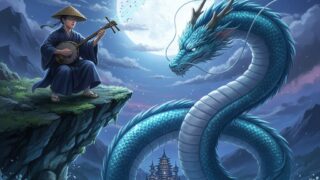
The Dragon’s Abyss (Ryu no Fuchi): A Deep Warning Awakened by Human Greed

Dive into "The Dragon's Abyss" (Ryu no Fuchi), a powerful Japanese folktale about two brothers, hidden treasure, and a wooden dragon brought to life by human malice. Explore its lessons on Ryūjin (Dragon God) reverence, the principle of "Taru wo Shiru" (knowing when enough is enough), and the profound connection between nature and ethics in Japanese culture.
Japanese Folktale Series

Ushiwakamaru: The Genesis of a Japanese Legend – The Story of the Tengu and Benkei | Japanese Folktale Series

Dive deep into the story of Ushiwakamaru, the boyhood of tragic hero Minamoto no Yoshitsune. Discover his secret training with the Kurama Tengu, his famous duel with Benkei, and the cultural roots of 'Hogan Biiki' (sympathy for the underdog) in Japanese culture.
Japanese Folktale Series

The Secret Dream That Forged a Destiny: Wisdom and Culture in the Japanese Folktale “Hatsuyume Choja”

A detailed introduction to the Japanese folktale 'Hatsuyume Choja' (The New Year's Dream Millionaire), deeply analyzing its themes of secrecy, the spirit of 'Wa' (harmony), and practical success philosophy for an international audience.
“What’s Today’s Special Day?” Series

October 15th is Doll’s Day: The Culture of Respect and Souls in Japanese Dolls – Ningyo no Hi

Discover the meaning of Japan's Doll's Day (October 15th) and the profound ritual of Ningyo Kuyo (Doll Memorial Service). Learn about the Japanese concept of "soul in objects," Animism, and the spirit of Mottainai that defines this unique tradition.
“What’s Today’s Special Day?” Series

October 14th: Railway Day – The Story of the Iron Road that Supported Japan’s Modernization | What’s Today’s Special Day Series

October 14th is 'Railway Day' (Tetsudo no Hi), commemorating the opening of Japan's first railway. This article delves into the history of Japan's modernization, world-class punctuality, the spirit of Omotenashi, and technological innovation, revealing the deeper cultural significance of railways for an international audience.
Japanese Folktale Series

Can You Hear It? The Voices of Animals: “Kikimimizukin” and the Japanese Spirit of Coexistence with Nature | Japanese Folktale Series

A thorough analysis of the Japanese folktale 'Kikimimizukin' (The Listening Cap), revealing the Japanese view of nature, animism, and the culture of 'Ongaishi' (returning a favor). We introduce the deep-rooted 'Yaoyorozu no Kami' (Eight Million Gods) spirit to international readers, offering lessons for modern society.
“What’s Today’s Special Day?” Series

October 13th: The Profound Story of “Moving Day” (Hikkoshi no Hi) Connecting Japan’s Life and Spirit – KIRI53.com

October 13th is 'Moving Day' (Hikkoshi no Hi), originating from Tokugawa Ieyasu's entry into Edo. This article explores the cultural significance of 'Hikkoshi Soba,' the spirit of 'Danshari,' and the Japanese concern for new beginnings, written for international readers.