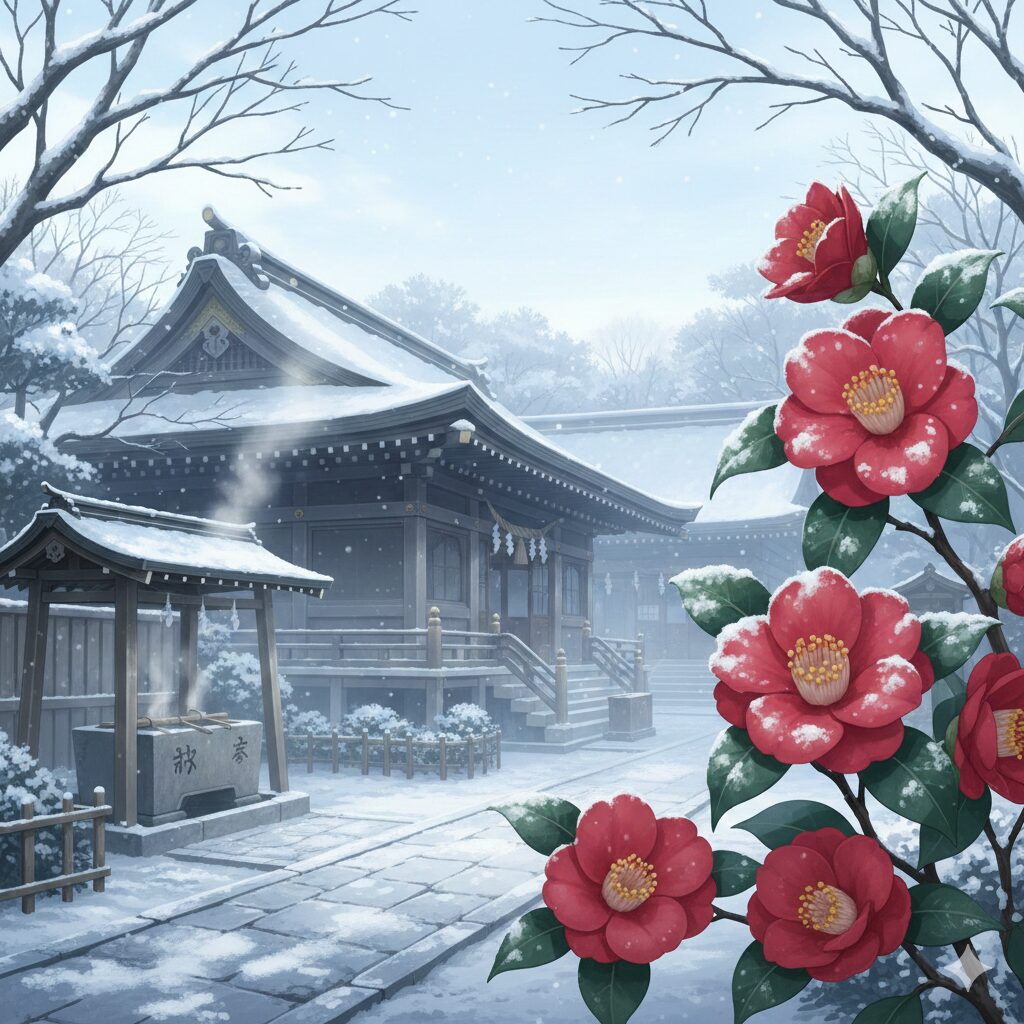
Around January 5th, just as the New Year celebrations begin to settle, the Japanese calendar marks another shift in the seasons. Today is “Shokan” (小寒), one of the 24 Solar Terms.
While many international visitors are captivated by Japan’s cherry blossoms in spring or the autumn foliage, did you know that the “deepening of winter” encapsulates the essence of Japanese spirituality and aesthetics? Today, we delve into “Shokan,” a time when Japanese culture finds signs of spring amidst the biting cold.

1. The History of the 24 Solar Terms and Shokan
Japan uses the Gregorian calendar today, but traditionally, life was guided by the “Nijushi-sekki” (24 Solar Terms). Originating in ancient China, this system divides the year into 24 distinct periods based on the sun’s position. It is so culturally significant that it was registered as a UNESCO Intangible Cultural Heritage in 2013.
“Shokan” falls between the Winter Solstice and “Daikan” (Major Cold). Although written with the characters for “Small” and “Cold,” do not be misled—it is certainly not warm! It marks the period known as “Kan-no-iri” (Entry into the Cold). The roughly 30 days starting from Shokan until “Risshun” (The beginning of Spring, around February 4th) are called “Kan-no-uchi” (Inside the Cold), representing the coldest time of the year in the Japanese archipelago.
Note: “Shokan” can refer to the specific day (January 5th) or the roughly 15-day period until the next solar term. In 2026, it begins on January 5th.
2. The Beautiful Custom of “Kanchu-mimai”
You may know about “Nengajo” (New Year’s cards), but Japan also has a custom of sending “Kanchu-mimai” (Winter Greeting Cards) between Shokan and the beginning of spring.
This is not just a greeting; it is an act of compassion. Sent during the harshest weather, these cards inquire after the recipient’s health: “The cold is severe; I hope you haven’t caught a cold.” They are also used by those who couldn’t send New Year’s cards due to a period of mourning.
Even in our digital age, receiving a postcard with a beautiful winter motif warms the heart. It reflects the wisdom of the Japanese people, who have historically supported one another to survive the severe natural environment.
3. Befriending the Cold: “Kan-geiko” and “Kan-zukuri”
The keyword for this season isn’t just “enduring” the cold, but “utilizing” it.
Training the Spirit: “Kan-geiko”
In the worlds of martial arts (like Judo and Kendo) and traditional performing arts, practitioners undergo “Kan-geiko” (Mid-winter Training). Training early in the morning in freezing dojos—or sometimes under icy waterfalls—is believed to forge not just technical skill, but the mental fortitude to overcome adversity.
Creating the Best Flavor: “Kan-zukuri”
Cold is also vital for cuisine. Brewing sake, soy sauce, and miso during this period is called “Kan-zukuri” (Winter Brewing). The low temperatures prevent the growth of unwanted bacteria and allow for slow fermentation, resulting in refined, deep flavors. Water drawn during this time, “Kan-no-mizu,” is considered so pure that legend says it never spoils.
4. Prologue to Nanakusa-gayu
Shortly after Shokan, on January 7th, there is a custom of eating “Nanakusa-gayu” (Seven Herb Rice Porridge). This porridge contains seven specific spring herbs.
This ancient wisdom allows the stomach to rest after the rich feasts of the New Year and replenishes vitamins lacking in winter. Around Shokan, supermarkets begin displaying “Nanakusa sets.” By consuming the vitality of young herbs sprouting from beneath the snow, people pray for good health in the coming year.
Interpreting Japanese Culture through Shokan: Vitality within Silence
What we see through Shokan is the Japanese approach of “Coexistence with Nature.”
In modern society, cold is often treated as something unpleasant to be eliminated with heaters. However, in traditional Japanese culture, cold is not something to be avoided, but a “necessary process to forge and deepen life.”
Beneath the silent, snow-covered landscape, the earth is steadily preparing for spring. Japanese people have long found beauty and sanctity not only in the visible brilliance (like spring cherry blossoms) but also in the “preparation period” (the severity of winter) that creates that brilliance.
A Question for You
Thank you for reading to the end. What do you think about the Japanese concept of “Shokan”?
Does your country have specific customs that enjoy or utilize the winter cold?
If you feel you are currently in a “harsh winter” phase of your life, please remember the spirit of Japan’s “Kan-geiko” or “Kan-zukuri.” The cold you endure now will surely bring deeper flavor and strength to your life.
Please let us know in the comments how you spend winter in your region.
References
- National Astronomical Observatory of Japan (Calendar Calculation Office)
- What’s Today’s Special Day Series (Category)
寒さが厳しくなる始まりの日「小寒(Shokan)」とは?
新年を迎え、まだお正月気分が残る1月5日頃。日本の暦(こよみ)では、季節がまた一つ歩みを進めます。今日は二十四節気の一つ「小寒(Shokan)」です。
多くの外国人観光客は、日本の春の桜や秋の紅葉に魅了されますが、実はこの「冬の深まり」にこそ、日本人の精神性や美意識が凝縮されていることをご存知でしょうか?今日は、寒さの中に春の兆しを見つける日本の繊細な文化、「小寒」について深く掘り下げていきます。
1. 二十四節気と小寒の歴史的背景
日本には、現代のカレンダー(グレゴリオ暦)とは別に、太陽の動きに基づいた「二十四節気(Nijushi-sekki)」という季節の区分が存在します。これは古代中国から伝来したもので、1年を24等分し、約15日ごとに季節の変化を表す名前が付けられています。2013年にはユネスコの無形文化遺産にも登録されました。
「小寒」は、冬至と大寒の間に位置します。「寒さがまだ小さい」と書きますが、決して寒くないわけではありません。むしろ、「寒の入り(Kan-no-iri)」と呼ばれ、これから本格的な寒さが始まる入り口を意味します。ここから立春(2月4日頃)までの約30日間を「寒の内(Kan-no-uchi)」と呼び、一年で最も厳しい寒さが日本列島を包み込みます。
ポイント:「小寒」は特定の一日を指す場合と、次の節気である「大寒」までの期間(約15日間)を指す場合があります。2025年や2026年においては、1月5日がその始まりの日となります。
2. 「寒中見舞い」という美しい習慣
日本には、年末年始に「年賀状(Nengajo)」を送る文化があることは有名ですが、小寒から立春までの間には「寒中見舞い(Kanchu-mimai)」を送る習慣があります。
これは単なる挨拶状ではありません。一年で最も寒い時期に、相手の健康を気遣い、「寒さが厳しいですが、風邪など引かれていませんか?」と問いかける、思いやりの手紙です。また、喪中(身内に不幸があった期間)のために年賀状を出せなかった人が、その代わりとして送ることもあります。
メールやSNSが普及した現代でも、美しい冬の絵柄のハガキで寒中見舞いが届くと、心が温かくなるものです。これは、厳しい自然環境の中で互いに支え合って生きてきた日本人の知恵とも言えるでしょう。
3. 寒さを味方につける「寒稽古」と「寒造り」
この時期のキーワードは、ただ寒さに耐えるだけではありません。「寒さを利用する」というポジティブな側面があります。
精神を鍛える「寒稽古(Kan-geiko)」
柔道や剣道などの武道、あるいは三味線などの芸事の世界では、この最も寒い時期に早朝から稽古を行う「寒稽古」が行われます。冷え切った道場で、あるいは時には冷たい滝に打たれながら修練することで、技術だけでなく、困難に打ち勝つ精神力を養うのです。
最高の味を生み出す「寒造り(Kan-zukuri)」
食の世界でも寒さは重要です。日本酒や味噌、醤油などは、この時期に仕込むことを「寒仕込み」や「寒造り」と呼びます。雑菌が繁殖しにくく、低温でゆっくりと発酵が進むため、キメが細かく味わい深い製品が出来上がります。「寒の水」は質が良いとされ、この時期の水で汲んだ水は腐らないという言い伝えさえあります。
4. 七草粥へのプロローグ
小寒を迎えた直後の1月7日には、「人日の節句」として「七草粥(Nanakusa-gayu)」を食べる習慣があります。春の七草(セリ、ナズナ、ゴギョウ、ハコベラ、ホトケノザ、スズナ、スズシロ)を入れたお粥です。
これは、お正月の豪華な食事で疲れた胃腸を休め、冬場に不足しがちなビタミンを補うための先人の知恵です。スーパーマーケットでは、小寒の日あたりから「七草セット」が並び始めます。雪の下から芽を出す若菜の生命力を体に取り入れ、無病息災を祈るのです。
小寒から読み解く日本文化の本質:静寂の中の生命力
小寒という日を通じて見えてくるのは、日本人の「自然との共生」のあり方です。
現代社会において、寒さはエアコンやヒーターで排除すべき「不快なもの」になりがちです。しかし、日本の伝統文化において、寒さは忌避すべきものではなく、「生命を鍛え、深めるために必要なプロセス」として捉えられています。
雪が降り積もる静寂な風景の中で、土の中では春に向けた準備が着々と進んでいます。日本人は、目に見える華やかさ(春の桜のような)だけでなく、その華やかさを生み出すための「準備期間(冬の厳しさ)」にも美しさと尊さを感じてきました。
「小寒の氷、大寒に解く(しょうかんのこおり、だいかんにとく)」という言葉があります。これは「物事が必ずしも順序通りにいかないこと」の例えですが、逆に言えば、自然界の予測不能な厳しささえも、言葉にして楽しんでしまう余裕が日本人にはあるのです。
あなたへの問いかけ
最後まで読んでいただき、ありがとうございます。日本の「小寒」という概念、いかがでしたか?
あなたの国には、冬の寒さを楽しむ、あるいは利用するような特定の習慣はありますか?
もしあなたが今、人生の中で「厳しい冬」のような時期にいると感じているなら、日本の「寒稽古」や「寒仕込み」の精神を思い出してください。今の寒さが、きっとあなたの人生により深い味わいと強さをもたらしてくれるはずです。
ぜひ、あなたのお住まいの地域の冬の過ごし方をコメントで教えてください。


コメント