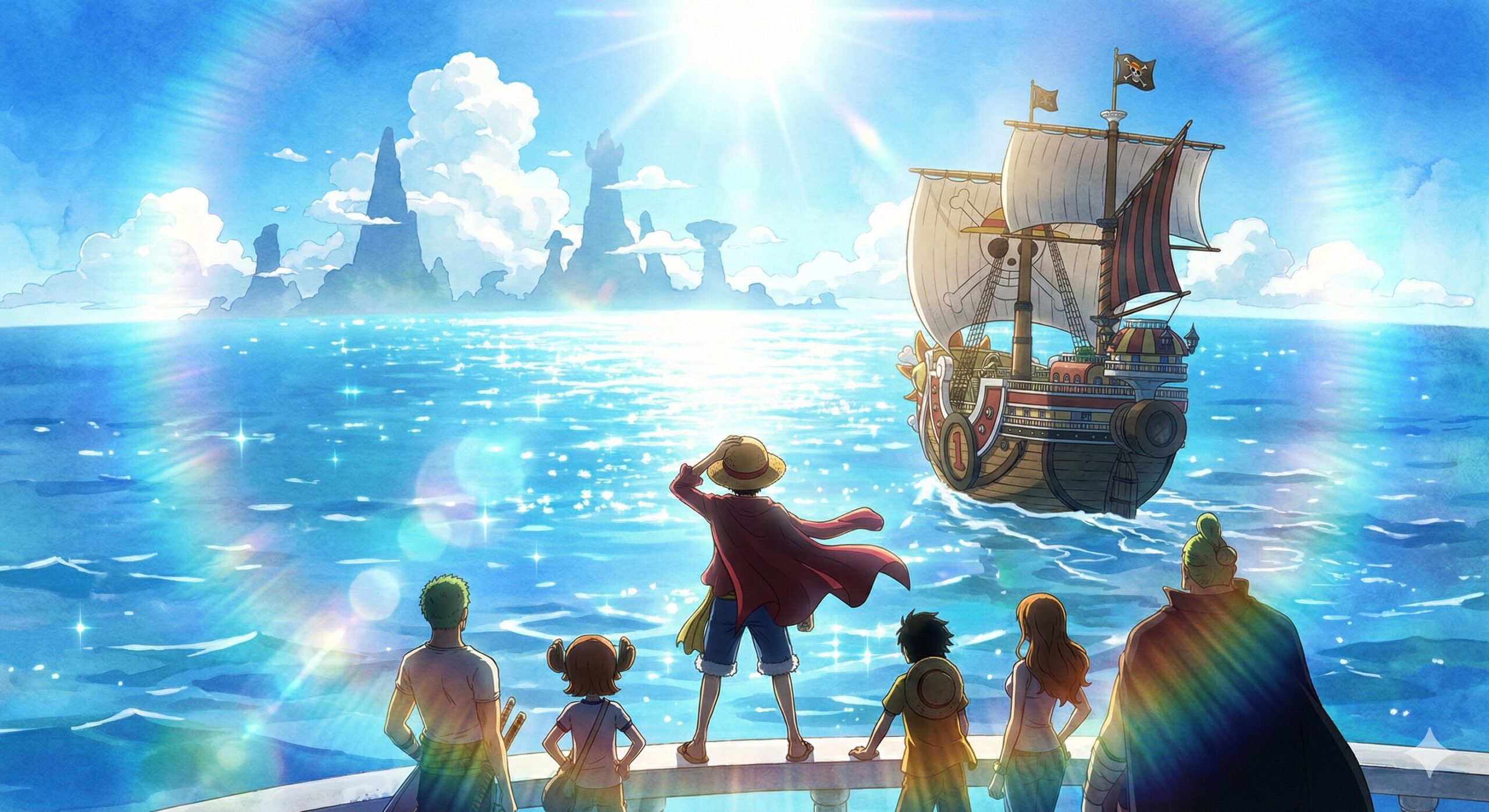
In the history of anime and manga, very few works transcend the realm of mere entertainment to become what can only be described as “modern myths.” Eiichiro Oda’s ONE PIECE stands at the very pinnacle of this category. Since its serialization began in 1997, it has exceeded 500 million copies in print worldwide and holds the Guinness World Record for “the most copies published for the same comic book series by a single author.”
If you have not yet experienced this magnificent saga, it must be said that you are missing out on one of the greatest adventures of your lifetime. In this article, we will delve deep into why ONE PIECE captivates the world so profoundly, providing a summary of its core plot and a unique critique interpreting it through the lens of Japanese cultural and historical contexts.

The Dawn of the Great Pirate Era: Plot Summary
The story of ONE PIECE begins with the execution of a legendary pirate. Just before his death, the “Pirate King,” Gol D. Roger, spoke these words:
“My treasure? If you want it, you can have it. Find it! I left everything this world has to offer there!”
These single words drove people across the world out to sea. It was the arrival of the “Great Pirate Era.” People set their sights on the Grand Line in search of the “One Piece,” the great treasure Roger was said to have left behind.
The protagonist, Monkey D. Luffy, is a boy who ate the “Gum-Gum Fruit” (Gomu Gomu no Mi), a Devil Fruit that turned his entire body into rubber. His dream is to become the Pirate King. Wearing his trademark straw hat, Luffy sets out to sea in a small rowboat. Through his voyages, he meets irreplaceable comrades—Zoro, who aims to be the world’s greatest swordsman; Nami, an excellent navigator; Usopp, a lying but brave sniper; Sanji, a fighting cook; and many other unique members—forming the “Straw Hat Pirates.”
While engaging in fierce battles against the powerful Navy, the World Government, and other villainous pirates, they pursue the true history of the world and the end of their dreams. This is not merely a treasure-hunting story. It is an epic narrative questioning what freedom is, what domination is, and what “inherited will” truly means.
Critique: Decoding the ONE PIECE Enthusiasm Through Japanese Culture
Why is ONE PIECE loved so intensely across linguistic and cultural barriers? The reason is that while it thoroughly pursues the royal road of universal shonen manga themes (Effort, Friendship, Victory), it contains deeply Japanese philosophies and historical views at its core.
1. The Unique Concept of Bonds Called “NAKAMA”
When international fans discuss this work, they often use the Japanese word “Nakama” as it is. This is because the term contains unique nuances that cannot be fully expressed by English words like “Friend,” “Ally,” or “Crew” alone.
“Nakama” for Luffy is not just a team with aligned interests. Each member possesses their own unique “dream,” and those dreams may sometimes even conflict. However, they absolutely respect each other’s dreams and risk their lives to help achieve them. This is a modern and idealized sublimation of traditional Japanese collectivism (village society unity).
Whereas Western individualism prioritizes the “establishment of the self,” ONE PIECE presents the paradox that “pursuing individual dreams results in the strongest collective.” Luffy is the captain, but he knows nothing of navigation, cooking, or medicine. He asserts, “I have confidence that I can’t survive unless I’m helped.” This “affirmation of weakness” and “mutual interdependence through division of roles” is the ultimate team image that Japanese society idealizes (though rarely achieves in reality).
2. The “Void Century” and Questioning History
The narrative structure of ONE PIECE is actually quite political. Within the story’s world, there exists a historical darkness called the “Void Century,” the research of which is forbidden by the World Government. The government conceals inconvenient truths and maintains global order through information manipulation.
This resonates with the complex feelings post-WWII Japan has held regarding historical perception and power structures. On the surface, society is peaceful and orderly, but there is a vague anxiety that uncounted histories or invisible power structures exist beneath it. A distrust of authority flows at the base of the work.
Luffy and his crew unintentionally touch upon the taboos of this world and become beings who shake the ruling structure (the return of Joy Boy). They are not anarchists, but they absolutely will not allow freedom to be taken away by absurd domination. This theme of “suppressed history and the restoration of freedom” is a universal question that pierces through to all of us living in modern society.
3. The Aesthetics of Chivalry (Ninkyo) and Self-Sacrifice
Surprisingly, this shonen manga strongly reflects the spirit of Japanese “Ninkyo films” (Yakuza films). Specifically, themes of duty and humanity (giri-ninjo), the stance of repaying debts of gratitude even at the cost of one’s life, and the spirit of self-sacrifice.
For example, the scene where Luffy’s brother Ace loses his life protecting his younger brother, or the scene where Zoro takes on瀕死 (near-fatal) injuries as a substitute to protect his captain, are the very definition of the “aesthetics of destruction” and belong to the lineage of classic Japanese hero images. These are behavioral principles that go beyond logical calculations of profit and loss—they are cries of the soul. This is what violently shakes the reader’s emotions. ONE PIECE is an extremely Japanese “Naniwa-bushi” (emotional narrative) story wearing the guise of modern fantasy.
It’s Not Too Late! Why You Must Read ONE PIECE Now
If you are hesitating to read it because it is a long-running series exceeding 100 volumes, that is a major mistake. Now is the best time to dive into this story.
- Meticulously Calculated Foreshadowing: Eiichiro Oda is a genius storyteller. Casual dialogue or backgrounds from early in the serialization frequently hold significant meaning hundreds of chapters later. This catharsis can only be experienced in a long-form narrative.
- Villains with Philosophy: The enemy characters that appear are not simply “evil.” They have their own justice and carry burdensome pasts. The drama where different beliefs clash in a world where absolute justice does not exist is overwhelming.
- A Microcosm of Modern Society: Discrimination, poverty, war, propaganda. Heavy themes facing the real world are skillfully incorporated into the fantasy worldview. Adults can read deep social satire into it.
Conclusion
ONE PIECE is one of the highest peaks achieved by the medium of manga. It is a thrilling adventure tale, yet also a philosophical text questioning what it means to be human and what constitutes a society. Luffy’s voyage is accelerating towards its final chapter. The moment they find the “One Piece,” the world will undoubtedly be enveloped in a whirlpool of enthusiasm. You should open the pages right now to become a witness to that historical moment.
For those who wish to learn more deeply about Japanese anime culture, please also see this article.
Anime Introduction Category: Japanese Culture and Animation
External Links for Further Exploration
- ONE PIECE.com (Official Portal Site) – For the latest information and official databases.
- Shonen Jump Official Site (VIZ Media) – The official English publisher of the manga.
- Wikipedia: One Piece – Suitable for checking the overall scope and detailed data of the work.
現代の神話『ONE PIECE』:なぜ世界はルフィの航海に熱狂するのか
アニメや漫画の歴史において、単なるエンターテインメントの枠を超え、「現代の神話」と呼ぶにふさわしい作品が稀に生まれる。尾田栄一郎による『ONE PIECE』は、まさにその頂点に君臨する作品だ。1997年の連載開始以来、発行部数は全世界で5億部を超え、「最も多く発行された単一作者によるコミックシリーズ」としてギネス世界記録にも認定されている。
もしあなたがまだこの壮大なサーガに触れていないのであれば、あなたは人生における最大の冒険の一つを見逃していると言わざるを得ない。この記事では、なぜ『ONE PIECE』がこれほどまでに世界を魅了するのか、そのプロットの核心と、日本の文化的・歴史的背景から読み解く独自の評論をお届けする。
大海賊時代の幕開け:プロットの要約
『ONE PIECE』の物語は、ある伝説的な海賊の処刑から始まる。「海賊王」ゴール・D・ロジャーは、死に際にこう言い放った。
「おれの財宝か?欲しけりゃくれてやる。探せ!この世の全てをそこに置いてきた」
この一言が、世界中の人々を海へと駆り立てた。「大海賊時代」の到来である。人々はロジャーが遺したとされる“ひとつなぎの大秘宝(ワンピース)”を求め、偉大なる航路(グランドライン)を目指した。
主人公、モンキー・D・ルフィは、悪魔の実「ゴムゴムの実」を食べ、全身がゴムのように伸びるゴム人間となった少年だ。彼の夢は、海賊王になること。トレードマークの麦わら帽子を被り、小さな手漕ぎボートで海に出たルフィは、航海の中でかけがえのない仲間たち——世界一の剣豪を目指すゾロ、優秀な航海士ナミ、嘘つきだが勇敢な狙撃手ウソップ、戦うコックのサンジ、その他多くの個性的なメンバー——と出会い、「麦わらの一味」を結成する。
彼らは、強大な力を持つ海軍、世界政府、そして他の凶悪な海賊たちと激闘を繰り広げながら、世界の真実と夢の果てを追い求める。これは単なる宝探しの物語ではない。自由とは何か、支配とは何か、そして「継承される意志」とは何かを問う、壮大な叙事詩である。
評論:日本文化から読み解く『ONE PIECE』の熱狂
なぜ『ONE PIECE』は、言語や文化の壁を越えてこれほどまでに愛されるのか。その理由は、本作が普遍的な少年漫画の王道(努力・友情・勝利)を突き詰めつつ、その根底に極めて日本的な哲学と歴史観を内包しているからである。
1. 「NAKAMA」という独自の絆の概念
海外のファンが本作を語る際、しばしばそのまま日本語の「Nakama(仲間)」という言葉を使う。これは、英語の “Friend” や “Ally”、”Crew” だけでは表現しきれない、独特のニュアンスが含まれているからだ。
ルフィにおける「仲間」とは、単なる利害の一致したチームではない。それぞれが独自の「夢」を持ち、その夢は時として相反する可能性すらある。しかし、彼らは互いの夢を絶対的に尊重し、その達成のために命を懸ける。これは、日本の伝統的な集団主義(ムラ社会的な結束)を、現代的に、そして理想的に昇華させた形である。
西洋的な個人主義が「個の確立」を優先するのに対し、『ONE PIECE』は「個の夢を追求することが、結果として最強の集団を生む」というパラドックスを提示する。ルフィは船長だが、航海術も料理も医学も知らない。彼は「助けてもらわねェと生きていけねェ自信がある」と断言する。この「弱さの肯定」と「役割分担による相互依存」こそが、日本社会が理想とする(しかし現実にはなかなか達成できない)究極のチーム像なのだ。
2. 「空白の100年」と歴史への問いかけ
『ONE PIECE』の物語構造は、実は非常に政治的である。物語の世界には、世界政府によって研究が禁じられている「空白の100年」という歴史の闇が存在する。政府は、都合の悪い真実を隠蔽し、情報操作によって世界の秩序を維持している。
これは、第二次世界大戦後の日本が抱えてきた、歴史認識や権力構造に対する複雑な感情と共鳴する。表向きは平和で秩序ある社会だが、その裏には語られてこなかった歴史や、不可視の権力構造があるのではないか——そうした漠然とした不安や権力への不信感が、作品の根底に流れている。
ルフィたちは、意図せずしてこの世界のタブーに触れ、支配構造を揺るがす存在(ジョイボーイの再来)となっていく。彼らは無政府主義者ではないが、不条理な支配によって自由が奪われることを絶対に許さない。この「抑圧された歴史と自由の回復」というテーマは、現代社会を生きる我々全員に突き刺さる普遍的な問いである。
3. 任侠と自己犠牲の美学
驚くべきことに、この少年漫画には日本の「任侠映画(ヤクザ映画)」の精神が色濃く反映されている。特に、義理人情、受けた恩は命に代えても返すという姿勢、そして自己犠牲の精神だ。
例えば、ルフィの兄エースが弟を庇って命を落とすシーンや、仲間を守るためにゾロが身代わりとなって瀕死の重傷を負うシーンは、まさに「滅びの美学」であり、日本の古典的な英雄像の系譜にある。論理的な損得勘定を超えた、魂の叫びとも言える行動原理。これが読者の感情を激しく揺さぶるのだ。『ONE PIECE』は、現代的なファンタジーの皮を被った、極めて日本的な浪花節(なにわぶし)の物語なのである。
今からでも遅くない!『ONE PIECE』を読むべき理由
100巻を超える長編であることを理由に、読むのを躊躇しているなら、それは大きな間違いだ。今こそが、この物語に飛び込む最高のタイミングである。
- 緻密に計算された伏線:尾田栄一郎は天才的なストーリーテラーである。連載初期の何気ないセリフや背景が、数百話後に重要な意味を持って回収されることが頻繁にある。このカタルシスは、長編でなければ味わえない。
- 哲学を持つヴィラン(悪役)たち:登場する敵キャラクターも、単なる「悪」ではない。彼らには彼らなりの正義があり、背負ってきた過酷な過去がある。絶対的な正義が存在しない世界で、それぞれの信念が衝突するドラマは圧巻だ。
- 現代社会の縮図:差別、貧困、戦争、プロパガンダ。現実世界が抱える重いテーマが、ファンタジーの世界観に巧みに落とし込まれている。大人はそこに深い社会風刺を読み取ることができる。
結論
『ONE PIECE』は、漫画というメディアが到達した最高峰の一つである。それは、スリル満点の冒険譚でありながら、人間とは何か、社会とは何かを問いかける哲学書でもある。ルフィたちの航海は、最終章に向けて加速している。彼らが「ひとつのなぎの大秘宝」を見つけるその瞬間、世界は間違いなく熱狂の渦に包まれるだろう。その歴史的瞬間の目撃者になるために、今すぐページを開くべきだ。
日本のアニメ文化についてさらに深く知りたい方は、こちらの記事もご覧ください。
アニメ紹介カテゴリー:日本の文化とアニメーション
更なる探求のための外部リンク
- ONE PIECE.com(公式ポータルサイト) – 最新情報や公式のデータベース。
- 少年ジャンプ公式サイト – 作品が連載されている日本のトップ漫画雑誌。
- Wikipedia: ONE PIECE – 作品の全体像や詳細なデータを確認するのに適している。

コメント