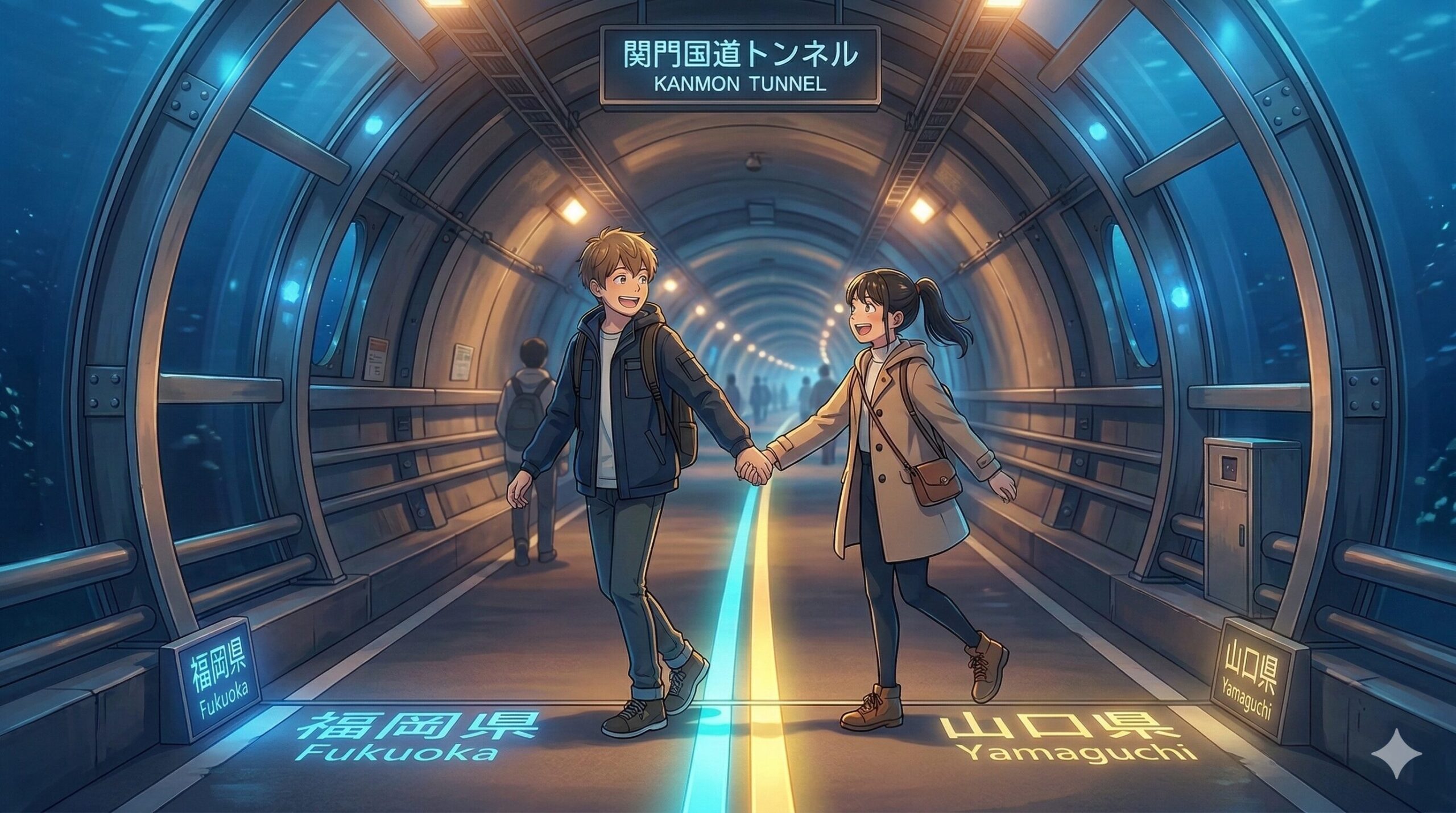
On March 9, 1958, a monumental event in Japanese history and infrastructure took place: the opening of the Kanmon National Highway Tunnel. The Kanmon Straits, a treacherous and fast-flowing body of water separating Shimonoseki City in Yamaguchi Prefecture (Honshu) and Moji Ward in Kitakyushu City (Kyushu), had long been a formidable barrier. The enduring human dream of crossing this chasm not by boat, but by walking or driving, finally became a reality on this very day.

21 Years of Construction and Unprecedented Challenges
The construction of the Kanmon Tunnel was by no means a smooth journey. Although construction began in 1937, it was repeatedly interrupted by the intensification of World War II. Furthermore, engineers constantly faced the wrath of nature, dealing with complex seabed geology, immense water pressure, and unexpected flooding accidents. However, Japanese engineers never gave up. Utilizing the latest shield tunneling methods at the time, and navigating the severe material shortages of the post-war reconstruction period, they completed the 3,461-meter tunnel over a staggering 21 years. This completion was not merely an improvement of the transportation network; it stood as a monumental achievement, proving to the world Japan’s miraculous post-war recovery and astonishing technological prowess.
A Rare “Walkable Undersea Tunnel”
The most striking feature of the Kanmon Tunnel is its unique two-tier structure. The upper level is a dedicated roadway for motor vehicles, while the lower level is a pedestrian tunnel that also accommodates bicycles and mopeds. Located approximately 50 to 60 meters below sea level, this 780-meter-long pedestrian path continues to attract tourists from all over the world. Descending deep underground via an elevator and walking along a straight path beneath the ocean floor offers an unparalleled thrill and sense of awe. In the exact center of the tunnel, the “prefectural border” between Yamaguchi and Fukuoka is painted on the floor. It boasts immense popularity as an extraordinary photo spot where you can literally straddle two major Japanese islands beneath the sea.
Interpreting Japanese History and Culture Through the Kanmon Straits
From the Genpei War to the Meiji Restoration: A Major Turning Point
The Kanmon Straits, pierced by this tunnel, is a location of paramount importance when discussing Japanese history. In 1185, the “Battle of Dan-no-ura” unfolded in these very waters. It is the tragic sea where the Heike clan, who boasted a magnificent aristocratic culture, was defeated by the newly rising samurai forces of the Minamoto clan, sinking beneath the waves along with the young Emperor Antoku. This battle propelled Japan fully into the era of the samurai. Later, in 1612, Japan’s two most legendary swordsmen, Miyamoto Musashi and Sasaki Kojiro, fought their epic duel on Ganryujima, a small island floating in this strait. Furthermore, in 1864 during the Bakumatsu period, the “Bombardment of Shimonoseki” erupted, a clash between the Choshu Domain and a combined fleet of four Western powers (Britain, France, Netherlands, USA). Prompted by this defeat, Japan rapidly steered toward modernization and opening its borders. The Kanmon Straits has always been an eyewitness to history, watching over the major turning points of Japanese eras.
The Culture of “Connecting” and the Indomitable Spirit of Reconstruction
The act of “connecting” two landmasses separated by the sea is deeply rooted in the traditional Japanese spirituality of “Musubi” (tying/connecting). In Shinto, “Musubi” signifies the sacred power that creates and harmonizes all things in the universe. Overcoming turbulent history and the destruction of war, the uninterrupted passion and technology of the people connected Honshu and Kyushu beneath the sea. The opening of the Kanmon Tunnel is a symbol of the indomitable Japanese spirit and the soul of craftsmanship—the desire to reconnect what was divided and create a new future and prosperity. Every time we pass through this tunnel, we can feel the powerful heartbeat of our predecessors who stood up against the threats of nature and sought to transcend physical limitations.
Would You Like to Walk Beneath the Sea?
Walking with your own feet far below massive ocean currents and giant passing ships—how would you feel experiencing this mystical and overwhelming sensation that you can never taste in everyday life? If you visit Japan and stand on the “prefectural border” in the center of the Kanmon Tunnel, planting your right and left feet on different landmasses, what part of Japanese history will you reflect upon? We urge you to cross this historic strait with your own feet and tell us about your experience.
Reference Links
- Today’s Special Day Series (Internal Link)
- Shimonoseki Official Tourist Site (External Link)
- Japan National Tourism Organization – JNTO (External Link)
1958年3月9日:本州と九州が海の下で結ばれた日
1958年3月9日、日本の歴史とインフラストラクチャーにおいて極めて重要な出来事が発生しました。「関門国道トンネル」の開通です。本州の山口県下関市と、九州の福岡県北九州市門司区を隔てる関門海峡。この流れの速い難所を、船ではなく「歩いて」あるいは「車で」渡るという人類の長年の夢が、この日ついに現実のものとなりました。
21年の歳月と困難を極めた大工事
関門国道トンネルの建設は、決して平坦な道のりではありませんでした。1937年に着工されたものの、第二次世界大戦の激化により工事は幾度となく中断を余儀なくされました。さらに、海底特有の複雑な地質、水圧、そして予期せぬ出水事故など、技術者たちは自然の猛威に直面し続けました。しかし、日本の技術者たちは決して諦めませんでした。最新のシールド工法を駆使し、戦後の復興期という物資が不足する中で、21年という途方もない歳月をかけて全長3,461メートルのトンネルを完成させたのです。この完成は、単なる交通網の整備にとどまらず、戦後日本の復興と驚異的な技術力を世界に証明する金字塔となりました。
世界でも稀有な「海の下を歩ける」二重構造トンネル
関門国道トンネルの最大の特徴は、そのユニークな構造にあります。上部は自動車専用の車道、そして下部は歩行者と自転車・原付が通行できる人道トンネルという二重構造になっています。海面下約50メートルから60メートルの深さに位置する全長約780メートルの人道トンネルは、現在でも世界中から多くの観光客を惹きつけています。エレベーターで地下深くへと降り立ち、まっすぐに伸びる海底の道を歩く体験は、他では決して味わえないスリルと感動を提供します。トンネルの中央部には、山口県と福岡県の「県境」を示す標識が床に描かれており、海の下で二つの島をまたぐという非日常的な記念撮影スポットとして絶大な人気を誇っています。
関門海峡から読み解く日本の歴史と文化
源平合戦から明治維新へ:歴史の巨大な転換点
関門トンネルが貫く関門海峡は、日本の歴史を語る上で欠かすことのできない最重要地点です。1185年、この海峡を舞台に「壇ノ浦の戦い」が繰り広げられました。華麗なる貴族文化を誇った平家一門が、新興の武士勢力である源氏に敗れ、幼い安徳天皇と共に波間に沈んだ悲劇の海です。この戦いにより、日本は本格的な武士の時代へと突入しました。また、1612年には、宮本武蔵と佐々木小次郎という日本を代表する二人の剣豪が、この海峡に浮かぶ巌流島で世紀の決闘を行いました。さらに幕末の1864年には、長州藩と西洋列強四カ国(英・仏・蘭・米)の連合艦隊が衝突した「下関戦争」が勃発。この敗北を機に、日本は急速に近代化と開国へと舵を切ることになります。関門海峡は、常に日本の時代が大きく変わるターニングポイントを見守ってきた歴史の目撃者なのです。
「結ぶ」文化と復興への不屈の精神
海を隔てた二つの陸地を「結ぶ」という行為は、日本の伝統的な精神性である「結び(Musubi)」の文化に深く根差しています。神道において「結び」は、万物を生み出し、調和させる神聖な力を意味します。激動の歴史と戦争による破壊を乗り越え、途切れることのなかった人々の想いと技術が、本州と九州を海底で結びつけました。関門トンネルの開通は、分断されたものを再び繋ぎ合わせ、新たな未来と繁栄を創造しようとする日本人の不屈の精神とモノづくりの魂(Craftsmanship)の象徴です。このトンネルを通るたびに、私たちは自然の脅威に立ち向かい、物理的な限界を超えようとした先人たちの力強い鼓動を感じることができます。
あなたは海の下を歩いてみたいですか?
頭上を巨大な海流が流れ、巨大な船が行き交うそのはるか下を、自分の足で歩いて渡る。日常では決して味わえないこの神秘的で圧倒的な体験を、あなたはどのように感じるでしょうか?もしあなたが日本を訪れ、この関門トンネルの中央にある「県境」の上に立ったなら、右足と左足で異なる大地を踏みしめながら、どのような日本の歴史に想いを馳せるでしょうか?ぜひ、あなた自身の足でこの歴史的な海峡を越え、その感想を私たちに教えてください。

コメント