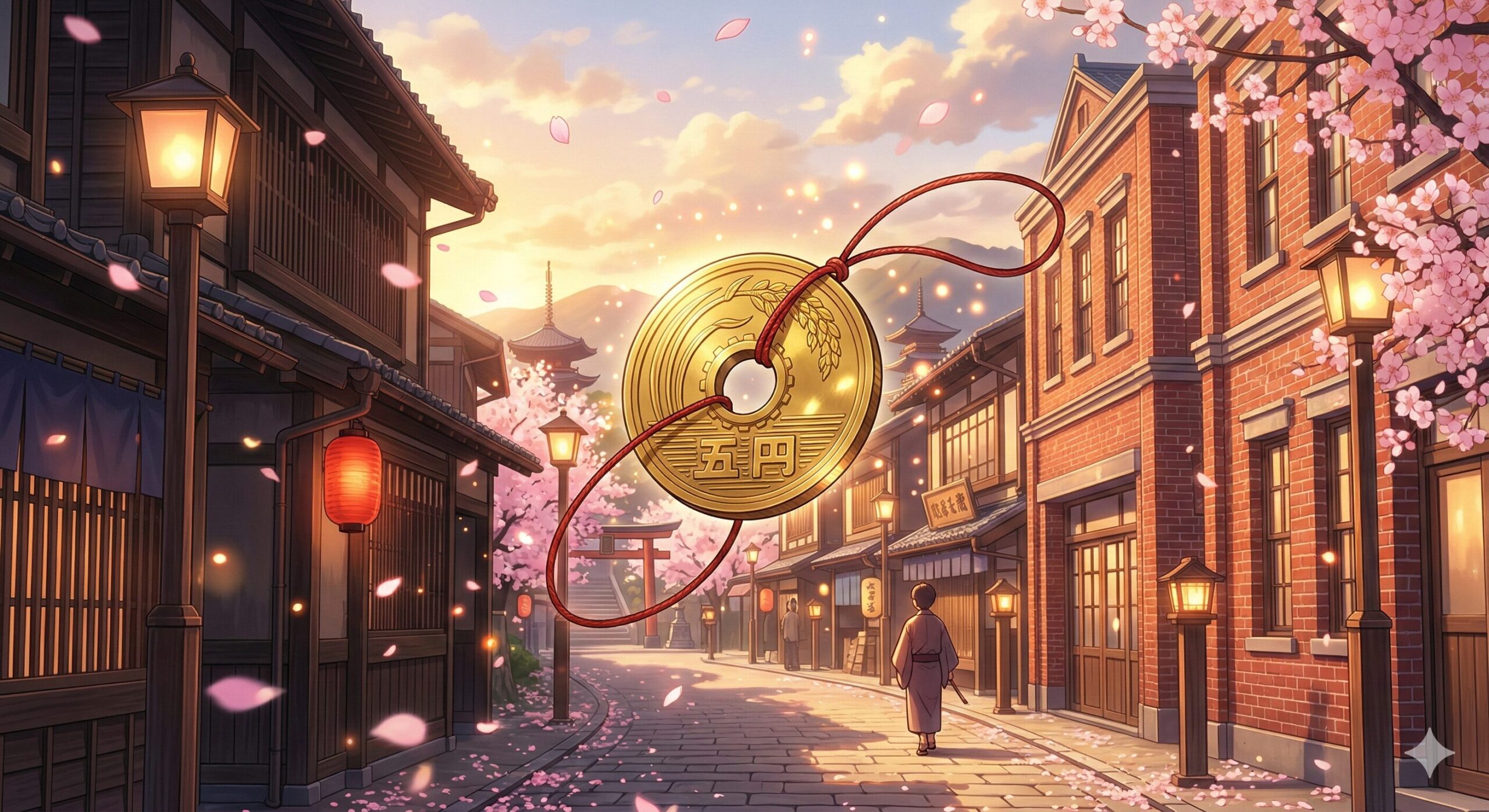
The “Yen,” Japan’s national currency, is used effortlessly every single day and stands as one of the most traded major currencies in the world. However, hidden behind its creation is a dramatic history of Japan’s rapid evolution into a modern nation. On March 4, 1869 (Meiji 2), a momentous decision was made that would fundamentally change the course of Japanese history. The Meiji government officially declared that the nation’s monetary unit would be the “Yen,” and that all new coins would be minted in a unified circular shape.
Today, we will thoroughly unravel the story of “Yen Day,” the dawn of the Japanese economy, exploring everything from its historical background to the deep spiritual concepts rooted in Japanese culture. By the time you finish reading this article, the coins in your wallet will no longer look like mere pieces of metal, but rather works of art embodying the soul of Japan.

1. Breaking Free from Chaos: Why Was the “Yen” Created?
Until the mid-19th century, Japan was in the era of the samurai, known as the Edo period. The monetary system of the time was incredibly complex. There was a chaotic mix of three different standards: “Ryo” (gold), “Monme” (silver), and “Mon” (copper). Furthermore, each feudal domain (equivalent to modern-day prefectures) issued its own local paper money. While this convoluted system somehow functioned during Japan’s period of national isolation, it became a fatal obstacle when the country finally opened its doors to trade with Western powers.
Having established a new government through the Meiji Restoration in 1868, Japan urgently needed a “modern, unified currency” to stand on equal footing with Western nations. Thus, on March 4, 1869, the government enacted the “Currency Act,” officially establishing the “Yen” as the base unit and decreeing that all coins must be circular.
Why a “Circular” Shape? The Unexpected Connection to Britain and Hong Kong
At that time, Japan lacked the technology to mass-produce high-quality, Western-style circular coins. The Japanese government turned its attention to Hong Kong, a British colony. Learning that the Hong Kong Mint was being closed down, Japan, with the help of Scottish merchant Thomas Blake Glover and others, purchased all the state-of-the-art minting machinery and shipped it to Japan.
Because they modeled their new currency on Western coins, the shape naturally became circular. Additionally, compared to the rectangular or oval coins (like the Edo period’s Koban), circular coins have no corners to chip off during circulation, providing the highly practical benefit of preventing the loss of the metal’s weight and value. Behind the Japanese “YEN” lies a global history deeply connected to British minting technology.
2. “Yen” and “En”: The Spirituality Alive in Japanese Culture
When discussing Japanese currency, one absolutely cannot ignore the linguistic wordplay and the profound spirituality imbued within it. In Japanese, the words for “circle/Yen” and “connection/destiny (En)” share the exact same pronunciation: “En.” For centuries, Japanese people have closely intertwined these two concepts.
The Magical Power of the 5-Yen Coin
If you have ever visited a Shinto shrine or a Buddhist temple in Japan, you have likely seen Japanese people tossing a “5-yen coin” into the offering box. There is a very specific reason for this. In Japanese, “five yen” is pronounced “Go-en,” which sounds exactly the same as the word for “good connection” or “divine favor” (ご縁).
Offering a 5-yen coin to the gods is a prayer meaning, “May I be blessed with good connections with wonderful people and opportunities.” Furthermore, the design of the 5-yen coin depicts the very foundation of Japan: an ear of rice (agriculture), water (fisheries), and a gear (industry). The hole in the center symbolizes “an unobstructed view of the future” (meaning you can see the future without difficulties). In just a single coin, Japanese people find a connection between national prosperity and personal destiny.
The Philosophy of “Wa” (Harmony) and the Circle
At the core of Japanese culture is the concept of “Wa” (Harmony). “Wa” idealizes a state without sharp edges, where people connect seamlessly in a circle (“En”). The same philosophy applies to money. Japanese people believe that money should not be hoarded in one place; rather, it should circulate from person to person, drawing a circle, thereby bringing “En” (good connections) to society as a whole. The name of Japan’s currency, “Yen,” perfectly embodies this philosophy of circulation and harmony.
3. How Will You Live? The “En” in Your Hands
On this day in 1869, Japan unified its economic system into a circle, taking its first step toward forging an “En” (connection) with the rest of the world. More than 150 years later, physical money is transforming into digital forms, but the fundamental truth remains: money is an energy that connects people.
Now, I have a question for you.
How are you planning to use the “Yen” (energy) you currently hold to create new “En” (connections) in your life?
Will you let your money end merely as a tool for consumption, or will you use it as an “investment”—to gain new experiences, acquire new knowledge, or bring a smile to someone’s face—thereby building rich connections? Let today, “Yen Day,” be the catalyst for you to reexamine how you use your energy. I truly hope that the next money you spend brings a wonderful “Go-en” into your life.
References and Related Links
- External Link: To dive deeper into the history of Japanese currency and view precious physical artifacts, please visit the official page of the Bank of Japan Currency Museum.
- Internal Link: If you want to discover more about Japan’s unique anniversaries, calendar events, and historical moments, enjoy other articles from our “What’s Today’s Special Day” Series Category.
3月4日は「円の日」:日本の通貨「YEN」の誕生秘話と「縁(En)」の哲学
日本国内で毎日当たり前のように使われている通貨「円(YEN)」。世界で最も取引される主要通貨の一つですが、その誕生には、日本が近代国家へと劇的な進化を遂げた激動の歴史が隠されています。1869年(明治2年)3月4日、日本の歴史を根本から変える重大な決定が下されました。それが、通貨単位を「円」とし、硬貨の形を「円形」に統一するという明治政府の宣言です。
今日は、日本経済の夜明けとも言える「円の日」について、歴史的背景から日本文化に深く根付くスピリチュアルな概念まで、徹底的に解き明かします。この記事を読み終える頃、あなたの財布の中にある硬貨は、単なる金属の塊ではなく、日本の魂を宿した芸術品に見えるはずです。
1. 混沌からの脱却:なぜ「円(YEN)」は生まれたのか?
19世紀半ばまで、日本は「江戸時代」と呼ばれる侍の時代でした。当時の通貨制度は極めて複雑で、「両(金)」「匁(銀)」「文(銅)」という3つの異なる基準が混在し、さらに各藩(現在の県に相当する地方政府)が独自の紙幣を発行していました。この複雑怪奇なシステムは、鎖国状態の日本国内では機能していましたが、欧米列強と貿易を始めるにあたり、致命的な障害となりました。
1868年の明治維新を経て新政府を樹立した日本は、西洋諸国と対等に渡り合うため、急務として「近代的な統一通貨」を必要としました。そして1869年3月4日、政府は通貨の基本単位を「円」と定め、硬貨をすべて円形に鋳造する「円貨の制度」を制定したのです。
なぜ「円形」だったのか?イギリスと香港の意外な関係
当時の日本には、高品質な西洋式の円形硬貨を大量生産する技術がありませんでした。そこで日本政府が目を付けたのが、イギリスの植民地であった香港です。当時、香港造幣局が閉鎖されるという情報を得た日本は、スコットランド出身の商人トーマス・ブレーク・グラバーらの協力を得て、香港から最新の硬貨製造機械を丸ごと買い取りました。
西洋の硬貨をモデルにしたため、必然的に形は「円形」となりました。また、四角形や楕円形(江戸時代の小判など)に比べて角がないため、流通の過程で欠けにくく、重さが減らない(価値が落ちない)という極めて実用的なメリットがありました。日本の「YEN」の裏には、実はイギリスの造幣技術というグローバルな歴史が結びついているのです。
2. 「Yen(円)」と「En(縁)」:日本文化に息づく精神性
日本の通貨を語る上で絶対に外せないのが、日本語における言葉遊びと、そこに込められた深い精神性です。日本語では、「円(Yen/Circle)」と「縁(En/Connection・Destiny)」は同じ「エン」という発音を持ちます。日本人は古くから、この二つの概念を密接に結びつけてきました。
五円玉(5-Yen Coin)が持つ魔法の力
日本の神社や寺院を訪れた際、賽銭箱に「五円玉」を投げ入れる日本人を見たことがあるでしょう。これには明確な理由があります。「五円(Go-en)」は、日本語で「ご縁(Good connection / Divine favor)」と全く同じ発音なのです。
神様に五円玉を捧げることは、「素晴らしい人や機会との良いご縁がありますように」という祈りを意味します。さらに、五円玉のデザインには日本の根幹が描かれています。稲穂(農業)、水面(水産業)、歯車(工業)が刻まれ、中央の穴は「未来への見通しが良い(困難なく未来が見える)」ことを象徴しています。日本人は、たった一枚の硬貨の中に、国家の繁栄と個人の運命の繋がりを見出しているのです。
「和」と「円」の哲学
日本文化の核心には「和(Wa = Harmony)」という概念があります。和は、角を立てず、人々が丸く繋がる「円」の状態を理想とします。お金も同様です。お金は一箇所に留めるものではなく、人から人へと円を描くように循環させることで、社会全体に「縁」をもたらすと日本人は考えています。日本の通貨「円」は、まさにこの循環と調和の哲学を体現した名前なのです。
3. あなたはどう生きるか:あなたの手の中にある「縁」
1869年のこの日、日本は自国の経済システムを円形に統一し、世界との「縁」を繋ぐための第一歩を踏み出しました。それから150年以上が経過した現在、物理的なお金は電子マネーへと形を変えつつありますが、お金が人と人を繋ぐエネルギーであるという本質は変わりません。
ここで、あなたに問いかけます。
あなたは今、自分の持っている「円(エネルギー)」を使って、どのような「縁(繋がり)」を生み出そうとしていますか?
お金を単なる消費の道具として終わらせるのか、それとも、新しい経験、新しい知識、あるいは誰かを笑顔にするための「投資」として使い、豊かな縁を築くのか。今日という「円の日」をきっかけに、あなた自身のエネルギーの使い方を見つめ直してみてください。あなたが次に使うそのお金が、素晴らしい「ご縁」を連れてくることを願っています。
関連リンク・参考文献
- 外部リンク:日本通貨の歴史と貴重な現物資料を深く知るなら、日本銀行が運営する日本銀行金融研究所貨幣博物館(Bank of Japan Currency Museum)の公式ページをご覧ください。
- 内部リンク:日本のユニークな記念日や暦、歴史的出来事についてもっと知りたい方は、「今日は何の日」シリーズのカテゴリーから他の記事もお楽しみください。

コメント