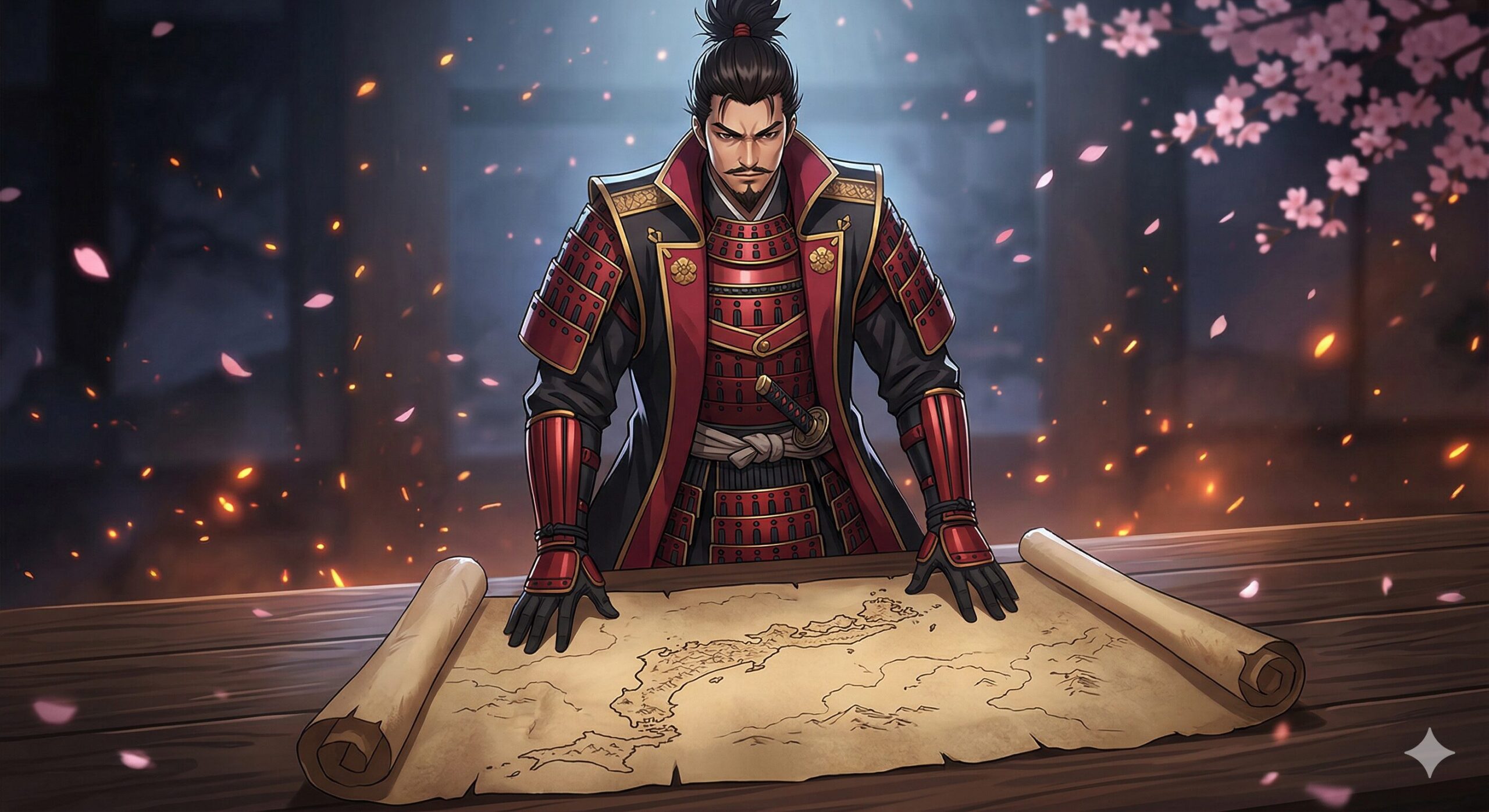
March 30th is a monumental anniversary for Japanese gaming history and history buffs alike: “Nobunaga’s Ambition Day” (Nobunaga no Yabou no Hi). On this day in 1983, Koei (now Koei Tecmo Games) released the very first installment of the PC game “Nobunaga’s Ambition.” Officially recognized by the Japan Anniversary Association, this day represents far more than just a game release; it symbolizes how Japanese people deeply love, interact with, and enjoy their own history.
Before this, action and simple puzzle games dominated the market. “Nobunaga’s Ambition” introduced a revolutionary level of complexity and strategy for its time: enriching your province, building military power, invading other territories, and aiming for the unification of Japan. Players take on the role of Oda Nobunaga—the most famous, feared, and beloved warlord in Japanese history—to conquer the nation. Through this game, generations of Japanese youth learned the ancient names of Japanese provinces (Owari, Mino, Kai, etc.), the names of samurai warlords, and the geography of Japan much more deeply than they ever did from school textbooks.
Who is Oda Nobunaga? The Maverick and Revolutionary of the Sengoku Period
If you are reading this, you might already be familiar with Japan’s “Sengoku Period” (Warring States Period, late 15th to late 16th century), the era of samurai and ninja. It was a time when Japan was fractured into numerous domains, with feudal lords (Daimyo) engaging in bloody territorial disputes. Among them, the one who came closest to “Tenka Fubu” (unifying the whole country under one rule) was Oda Nobunaga.
Nobunaga was not merely a brilliant tactician; he was a revolutionary who ruthlessly dismantled outdated authorities. He mass-deployed the latest weaponry of the time—matchlock muskets—in actual combat (the Battle of Nagashino). He revitalized the economy using free-market policies known as “Rakuichi Rakuza,” and he promoted people of low birth based purely on merit (such as the future ruler, Toyotomi Hideyoshi). Furthermore, he protected Western missionaries and possessed an international mindset, loving globes, wine, and velvet cloaks.
However, in 1582, right on the verge of unifying Japan, he was betrayed by his most trusted general, Akechi Mitsuhide, and perished in the flames of Honno-ji Temple in Kyoto (The Honno-ji Incident). This dramatic way of living and his tragic end are the reasons why he continues to captivate people to this day.
Decoding Japanese Culture and the Fascination with “Historical IFs”
The impact of “Nobunaga’s Ambition” on Japanese pop culture is immeasurable. What this game offered was the joy of personally experiencing “Historical IFs.” What if Nobunaga hadn’t died at Honno-ji and unified the country? What if a weak, regional warlord used brilliant strategies to topple a massive empire? The game allows players to turn these historical romances into their own reality.
In Japanese culture, there is a concept called the “Aesthetics of Destruction” (Horobi no Bigaku). Just as cherry blossoms fall almost immediately after reaching full bloom, there is a cultural tendency to empathize deeply with and find beauty in heroes who fall at the absolute peak of their glory. A verse from “Atsumori,” a traditional dance Nobunaga reportedly loved to perform, goes: “A human life of fifty years, compared to the time of the heavens, is nothing but a dream and an illusion.” These words perfectly encapsulate the Japanese view of life, death, and impermanence.
Within the game, players relive the lives of these warlords who burned through their fleeting existences on the battlefield. The fusion of Japan’s detail-oriented Otaku culture—which loves data-driven simulation games—with a profound respect and imagination for historical figures resulted in this massive franchise, growing into a series that has endured for over 40 years.
Embark on a Journey to the Sengoku Period
Today, “historical tourism” is booming across Japan, driven by fans whose interest in history was sparked by games. Sites associated with warlords, such as Gifu Castle in Gifu Prefecture (Nobunaga’s base), Kiyosu Castle in Aichi Prefecture, and the ruins of Honno-ji Temple in Kyoto (the site of his demise), have become sacred pilgrimage spots visited by tourists from all over the world.
Now, I have a question for you, who have read this far.
If you could time-slip back to Japan’s Sengoku period and become a Daimyo, would you conquer the land with military might? Or would you focus on the economy to build a wealthy, peaceful nation? Please imagine the “Historical IF” you would want to experience!
External Links:
“Nobunaga’s Ambition” Series Portal Site (Koei Tecmo Games)
Gifu Castle (Gifu Convention and Visitors Bureau)
Internal Link:
Read more in the “What’s Today’s Special Day” Series
3月30日は「信長の野望の日」:日本の歴史シミュレーションゲームの夜明け
3月30日は、日本のゲーム史、そして歴史ファンにとって非常に重要な記念日「信長の野望の日」です。1983年のこの日、株式会社光栄(現在の株式会社コーエーテクモゲームス)から、パソコン用ゲームソフト『信長の野望』の第1作目が発売されました。日本記念日協会にも正式に認定されているこの日は、単なるゲームの発売日を超え、日本人が自国の歴史をどのように愛し、楽しんでいるかを象徴する日となっています。
それまでのゲームはアクションやシンプルなパズルが主流でしたが、『信長の野望』は「国を豊かにし、軍事力を高め、他国を侵略して天下統一を目指す」という、当時としては画期的な複雑さと戦略性を持っていました。プレイヤーは、日本の歴史上最も有名で、最も恐れられ、そして最も愛されている戦国武将「織田信長」となり、日本全国の統一を目指します。このゲームの登場により、日本の若者たちは学校の教科書以上に、ゲームを通して日本の旧国名(尾張、美濃、甲斐など)や武将の名前、地理を深く学んでいくことになります。
織田信長とは何者か?戦国時代の異端児にして革命家
この記事を読んでいるあなたは、サムライや忍者が活躍した日本の「戦国時代(15世紀末〜16世紀末)」をご存知でしょうか。日本中がいくつもの領国に分かれ、大名(Lord)たちが血で血を洗う領土争いを繰り広げていた時代です。その中で、最も天下統一(日本全土の支配)に近づいたのが織田信長です。
信長は単なる優れた戦術家ではありませんでした。彼は旧態依然とした権威を徹底的に破壊した革命家です。火縄銃(マスケット銃)という当時の最新兵器を大量に実戦投入し(長篠の戦い)、「楽市・楽座」という自由市場政策を用いて経済を活性化させ、実力主義で身分の低い者(後の豊臣秀吉など)を大出世させました。さらには西洋から来た宣教師を保護し、地球儀やワイン、ビロードの外套を愛する国際感覚も持ち合わせていました。
しかし、天下統一を目前にした1582年、最も信頼していた部下である明智光秀の謀反に遭い、京都の「本能寺」で炎の中に消えます(本能寺の変)。このドラマチックな生き様と悲劇的な最期が、現代に至るまで多くの人々を惹きつけてやまない理由です。
『信長の野望』から読み解く、日本文化と「歴史のIF」への憧憬
『信長の野望』が日本のポップカルチャーに与えた影響は計り知れません。このゲームが提示したのは「歴史のIF(もしも)」を自分で体験できる喜びです。「もし、信長が本能寺で死なずに天下を統一していたら?」「もし、地方の弱小大名が知略を尽くして大国を倒したら?」という歴史のロマンを、プレイヤー自身の手で現実のものにできるのです。
日本文化には、「滅びの美学」という概念があります。桜が満開の後にすぐ散ってしまうように、絶頂期に散っていった英雄に対して強い感情移入と美しさを見出す文化です。信長が好んで舞ったとされる幸若舞『敦盛』の一節、「人間五十年、下天の内をくらぶれば、夢幻の如くなり(人間の50年の生涯は、天上世界の時間に比べれば夢や幻のようなものだ)」という言葉は、まさに日本人の死生観と無常観を表しています。
ゲーム内でプレイヤーは、この儚い命を燃やして戦った武将たちの人生を追体験します。緻密なデータに基づいたシミュレーションゲームを愛する日本のオタク文化(Otaku culture)と、歴史上の人物に対する深い敬意と想像力が融合した結果が、この『信長の野望』という一大フランチャイズを生み出し、40年以上続くシリーズへと成長させたのです。
戦国時代を体感する旅へ
現在では、ゲームをきっかけに歴史に興味を持ったファンたちが、実際に武将ゆかりの地を訪れる「歴史観光(コンテンツツーリズム)」が日本中で盛んに行われています。信長の拠点であった岐阜県の岐阜城や、愛知県の清洲城、そして最期の地である京都の本能寺跡などは、世界中から観光客が訪れる聖地となっています。
さて、最後まで読んでいただいたあなたに質問です。
もしあなたが日本の戦国時代にタイムスリップし、一人の大名になったとしたら、武力で天下を制圧しますか?それとも、経済を回して豊かな国造りを目指しますか?ぜひ、あなたが体験してみたい「歴史のIF」を想像してみてください。
外部リンク:
『信長の野望』シリーズ ポータルサイト(コーエーテクモゲームス)
岐阜城(岐阜観光コンベンション協会)
内部リンク:
今日は何の日シリーズをもっと読む

コメント