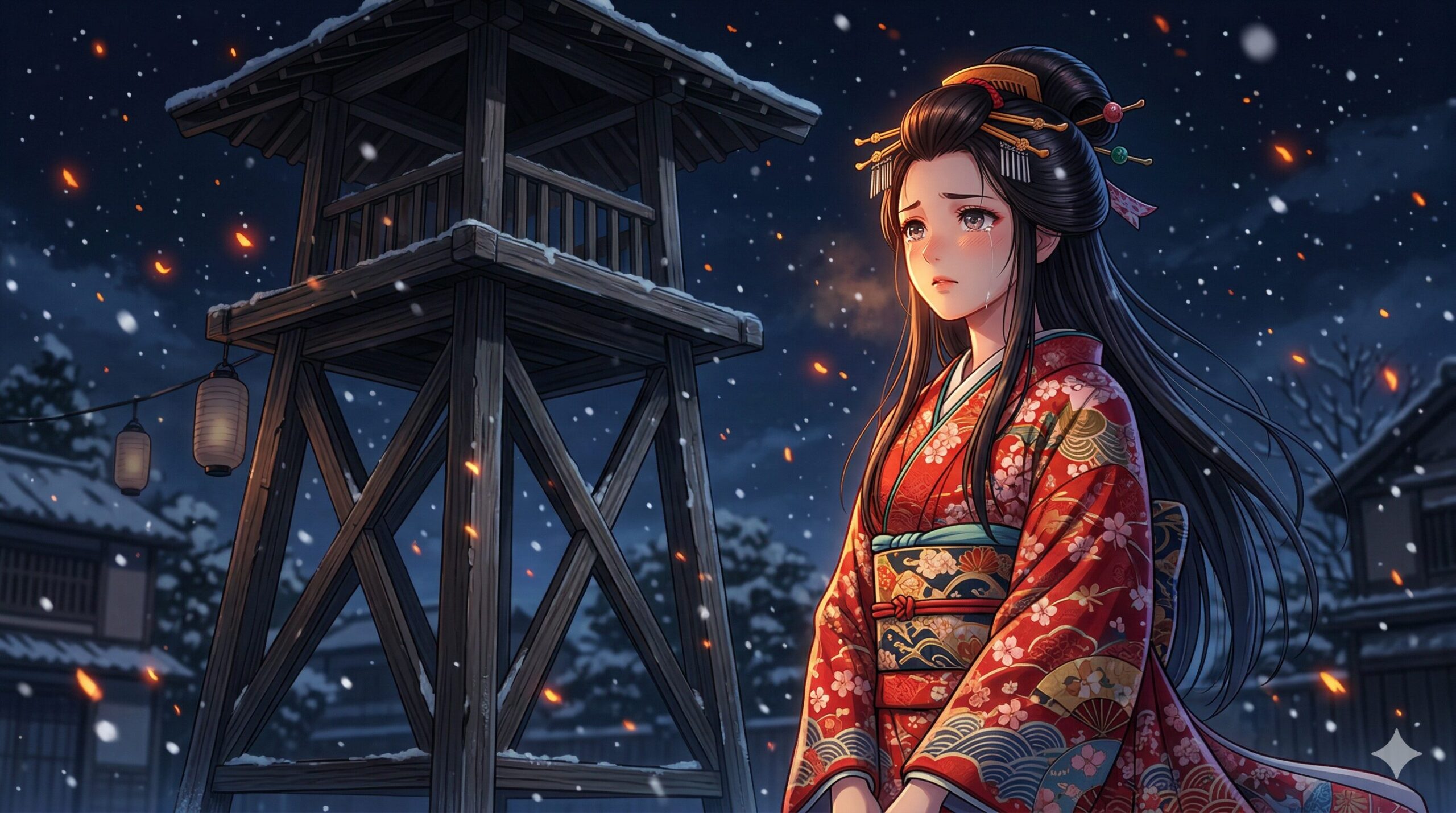
Every year on March 29th, Japan quietly remembers a historical event that sounds more like a dramatic novel than reality. This is Yaoya Oshichi no Hi (Yaoya Oshichi’s Day), marking the anniversary of the execution of a 16-year-old girl named Oshichi in the year 1683 (the Edo period). But why does Japan remember a teenage arsonist centuries later? The answer lies in the profound tragedy of her story—a tale of love so pure and desperate that it drove a young woman to madness, forever altering the landscape of Japanese literature and theater.
The Fateful Encounter in the Embers of Edo
To understand Oshichi, we must travel back to the winter of 1682. Edo (modern-day Tokyo) was a bustling metropolis of wooden structures, highly vulnerable to fire. During the devastating “Great Fire of Tenna,” Oshichi, the daughter of a prosperous greengrocer (yaoya), was forced to flee her home along with her family. They sought refuge at the family temple, Enjo-ji.
It was within the solemn grounds of this temple that Oshichi’s fate was sealed. She met a young temple page named Kichisaburo. In the strict, highly segregated society of Edo-period Japan, opportunities for young men and women to interact freely were rare. Amidst the chaos of the disaster, a passionate, clandestine romance blossomed between the two. However, once her family’s home was rebuilt, Oshichi was forced to leave the temple and her beloved Kichisaburo behind.
The Spark of Madness
Separated from Kichisaburo, Oshichi fell into a deep despair. Days turned into weeks, and her longing grew unbearable. In her young, naive mind, a dangerous logic took root: “If another fire destroys my home, I will have to return to the temple. If I return to the temple, I can see him again.”
Driven by blind passion, Oshichi deliberately set fire to her own house on the night of March 2nd, 1683. Fortunately, the fire was discovered early and extinguished before it could spread. However, arson was considered one of the most heinous crimes in Edo, a city that lived in constant fear of catastrophic blazes. Oshichi was immediately arrested.
The Strict Laws of the Tokugawa Shogunate
The tragedy of Oshichi is deeply intertwined with the strict judicial system of the time. According to Edo law, arsonists were punished by burning at the stake. However, there was a crucial caveat: minors under the age of 15 could be spared the ultimate penalty and exiled instead. The magistrate who interrogated Oshichi, feeling profound pity for the beautiful and misguided girl, tried to save her.
He repeatedly asked her, “You are fifteen, are you not?” giving her the chance to lie and save her life. But Oshichi, perhaps too honest or completely unaware of the legal implications, steadfastly replied, “No, I am sixteen.” Unable to bend the rigid laws of the Shogunate in the face of her confession, the magistrate was forced to sentence her to death. On March 29, 1683, Oshichi was executed at the Suzugamori execution grounds.
Decoding the Culture: How Oshichi Became a Legend
Oshichi’s story did not end in ashes. In fact, her execution was only the beginning of her cultural immortality. Her tragic fate struck a deep chord with the people of Edo. It highlighted the tension between Giri (social obligation/duty) and Ninjo (human emotion), a central theme in Japanese art and philosophy.
Ihara Saikaku and the Birth of a Literary Icon
Just three years after her death, the masterful writer Ihara Saikaku immortalized her in his famous work, Koshoku Gonin Onna (Five Women Who Loved Love). Saikaku transformed Oshichi from a mere criminal into a tragic heroine, a symbol of youthful purity corrupted by the overwhelming power of love. This narrative shift cemented her status in Japanese folklore.
The Theatrical Masterpiece: Yagura no Oshichi
Oshichi’s story naturally transitioned to the stage, becoming a staple in both Bunraku (puppet theater) and Kabuki. The most famous theatrical adaptation features the iconic “Fire Watchtower” (Yagura) scene. In the play, a desperate Oshichi climbs a snow-covered fire watchtower and beats the alarm drum to open the city gates and save her lover’s life, knowing that sounding a false alarm is a crime punishable by death.
In Kabuki, this scene is often performed using a unique acting style called Ningyo-buri, where the Kabuki actor moves like a lifeless Bunraku puppet, manipulated by stagehands dressed in black. This breathtaking technique symbolizes how Oshichi was entirely controlled by the invisible, uncontrollable strings of her own passion and fate.
A Question for You
The story of Yaoya Oshichi forces us to confront the terrifying power of human emotion. She committed an unforgivable crime, yet for over 300 years, Japanese culture has chosen to focus on the purity of her devotion and the tragedy of her youth.
When you read about Oshichi, do you see a dangerous criminal who endangered a city, or a tragic victim of an oppressive society and her own young heart? If you were in the magistrate’s position, bound by the strict laws of your time, what would you have done? Let us know how this intense piece of Japanese history resonates with you today.
Reference Links
- Explore more stories in our “What’s Today’s Special Day?” series
- Kabuki Official Website (Kabuki-bito) – Discover traditional Japanese theater
- National Diet Library – Explore historical Edo period literature
3月29日「八百屋お七の日」:都市を燃やした愛の炎
毎年3月29日、日本はまるで劇的な小説のような歴史的事件を静かに振り返ります。それが「八百屋お七の日」です。1683年(江戸時代)、お七という名の16歳の少女が処刑された日を指します。しかし、なぜ日本は数百年経った今でも、一人の十代の放火犯を記憶しているのでしょうか?その答えは、彼女の物語が持つ深い悲劇性にあります。純粋で絶望的な愛が一人の少女を狂気へと駆り立て、それが日本の文学や演劇の風景を永遠に変えてしまったからです。
江戸の残り火の中での運命の出会い
お七を理解するためには、1682年の冬に遡らなければなりません。当時の江戸(現在の東京)は木造建築が立ち並ぶ大都市であり、火災に対して非常に脆弱でした。壊滅的な被害をもたらした「天和の大火」の際、裕福な八百屋の娘であったお七は、家族と共に避難を余儀なくされました。彼らが身を寄せたのが、菩提寺である円乗寺でした。
この厳粛な寺の境内で、お七の運命は決定づけられます。彼女は吉三郎という若い寺小姓に出会ったのです。江戸時代の厳格で隔離された社会では、若い男女が自由に交流する機会は滅多にありませんでした。災害の混乱の中、二人の間には情熱的で秘密の恋が芽生えました。しかし、実家が再建されると、お七は寺と愛する吉三郎を置いて家に戻らなければなりませんでした。
狂気への火種
吉三郎と離れ離れになったお七は、深い絶望に陥りました。何日も何週間も過ぎ、彼女の切望は耐え難いものになっていきました。彼女の若く純真な心の中に、ある危険な論理が根付きました。「もしもう一度火事が起きて家が燃えれば、またあの寺に戻らなければならない。寺に戻れば、また彼に会える」
盲目的な情熱に突き動かされ、お七は1683年3月2日の夜、自らの家に火を放ちました。幸いなことに、火は早期に発見され、燃え広がる前に消し止められました。しかし、大火の恐怖と常に隣り合わせだった江戸において、放火は最も凶悪な犯罪の一つでした。お七は即座に逮捕されました。
徳川幕府の厳格な法律
お七の悲劇は、当時の厳格な司法制度と深く結びついています。江戸の法律では、放火犯は火あぶりの刑に処されることになっていました。しかし、そこには重要な例外規定がありました。15歳未満の未成年であれば、極刑を免れ、遠島(流罪)で済む可能性があったのです。お七を取り調べた奉行は、この美しくも道を踏み外した少女に深い哀れみを感じ、彼女を救おうとしました。
奉行は「そなたは15であろう?」と何度も尋ね、彼女が嘘をついて命を救う機会を与えました。しかし、お七は正直すぎたのか、あるいは法律の恐ろしさを全く理解していなかったのか、頑なに「いいえ、16でございます」と答え続けました。彼女の自白を前に、幕府の厳格な法律を曲げることができなかった奉行は、彼女に死刑を宣告せざるを得ませんでした。1683年3月29日、お七は鈴ヶ森刑場で処刑されました。
文化を読み解く:お七はいかにして伝説となったか
お七の物語は灰の中では終わりませんでした。実際、彼女の処刑は、彼女が文化的な不滅性を獲得する始まりに過ぎなかったのです。彼女の悲劇的な運命は、江戸の人々の心の琴線に深く触れました。それは、日本の芸術や哲学の中心的なテーマである「義理」と「人情」の間の葛藤を浮き彫りにしました。
井原西鶴と文学的アイコンの誕生
彼女の死からわずか3年後、名作家である井原西鶴は、彼の有名な著作『好色五人女』の中で彼女を不朽のものにしました。西鶴は、お七を単なる犯罪者から、圧倒的な愛の力によって堕落させられた若き純粋さの象徴である悲劇のヒロインへと変貌させました。この物語の転換が、日本の民間伝承における彼女の地位を確固たるものにしました。
演劇の傑作:櫓のお七
お七の物語は自然と舞台へと移行し、文楽(人形浄瑠璃)と歌舞伎の両方で定番の演目となりました。最も有名な舞台演出は、象徴的な「火の見櫓(やぐら)」のシーンです。劇中、絶望したお七は雪に覆われた火の見櫓に登り、恋人の命を救うために城門を開けさせようと半鐘を打ち鳴らします。理由なく半鐘を鳴らすことは死罪に値する犯罪であることを知りながら。
歌舞伎において、このシーンはしばしば「人形振り」という独特の演技様式で演じられます。歌舞伎役者が、黒衣を着た後見に操られる命のない文楽人形のように動くのです。この息を呑むような技法は、お七が自らの情熱と運命という目に見えない、制御不能な糸に完全に操られていたことを象徴しています。
あなたへの問いかけ
八百屋お七の物語は、私たちに人間の感情の恐るべき力と向き合わせます。彼女は許されない犯罪を犯しましたが、300年以上にわたり、日本文化は彼女の献身の純粋さと若さの悲劇に焦点を当てることを選んできました。
お七について読んだとき、あなたは都市を危険にさらした危険な犯罪者を見ますか?それとも、抑圧的な社会と自身の若き心の悲劇的な犠牲者を見ますか?もしあなたが奉行の立場にあり、当時の厳格な法律に縛られていたとしたら、あなたはどうしたでしょうか?この強烈な日本の歴史の一片が、今日のあなたにどう響くか、ぜひ教えてください。


コメント