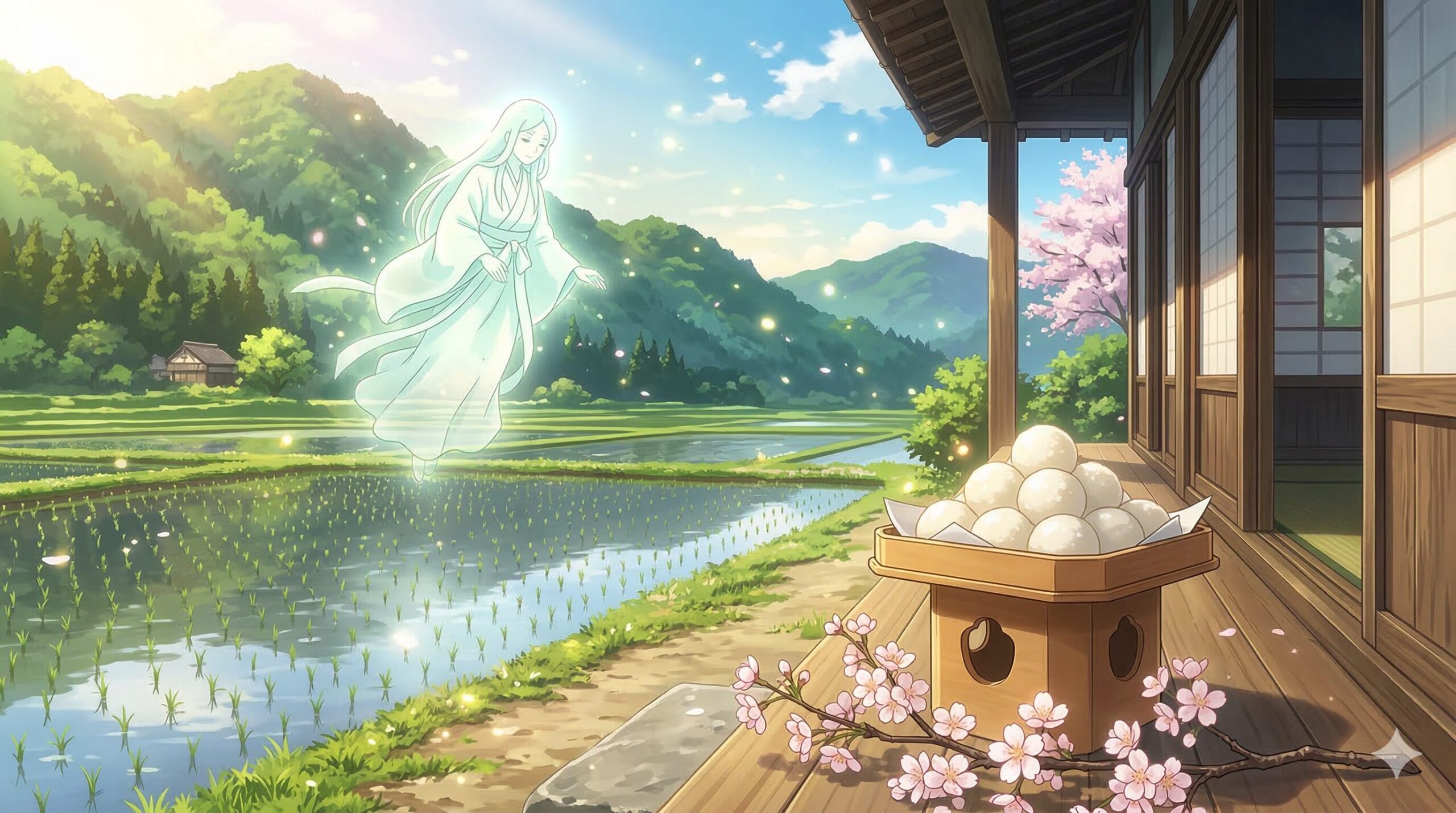
Spring in Japan is not just a season of blooming cherry blossoms and warmer weather. For the people who have lived in Japan since ancient times, spring represents a deeply mystical and energetic beginning—a time when invisible deities descend from the deep mountains to the human villages to help nurture new life.
Today, March 16th, marks the day of a traditional event called “Juroku Dango” (16 Dumplings), a custom passed down primarily in the farming villages of Japan’s Tohoku region. While it has become rare to see in modern urban areas, this day is packed with Japanese history, animism, and a beautiful spirit of coexistence with nature. Let’s explore the charm of Juroku Dango and the deep connections to Japanese culture it reveals.

What is Juroku Dango? The Deep Connection Between History and Culture
Juroku Dango literally means making and offering “16 round dumplings” to a deity. But who are these dumplings for, and why exactly 16?
The Day the “Mountain God” Transforms into the “Rice Field God”
In the past, Japanese farmers believed that during the harsh winter, the deity remained deep in the mountains, protecting nature as the “Yamanokami” (Mountain God). Then, on March 16th, as the snow begins to melt and preparations for farming begin, this Mountain God descends to the villages. Once in the village, the deity changes roles to become the “Tanokami” (God of the Rice Fields/Agriculture), watching over and assisting with that year’s rice harvest.
To warmly welcome the god, people would wake up early and pound mochi (rice cake) using a traditional mortar (usu) and pestle (kine). The rhythmic pounding sound of the mochi was not just for cooking; it served as a welcoming signal to the god in the mountains, echoing a message: “We are ready! Please come this way!” It was a sonic beacon to guide the deity to the village.
Why the Number “16”?
While there are various theories, the number “16” has held special significance throughout Japanese history. For example, during the Edo period, there was a custom called the “Kajo Ceremony” on June 16th, where people ate 16 kinds of sweets or mochi to pray for good health. It is also closely tied to the natural lunar calendar. By offering exactly 16 auspicious dumplings filled with love and gratitude, farmers prayed for an absolute bumper crop.
Sending the God Off in Autumn: The Autumn Juroku Dango
The Tanokami who descends in the spring works tirelessly to protect the rice fields until the autumn harvest is complete. Once the rice is safely harvested on October 16th (or November 16th in some regions), people make another 16 dumplings. This time, they are infused with deep gratitude, saying, “Thank you so much for this past year,” as they send the god back to the mountains to become the Yamanokami once again. This perfect cycle is the foundation of Japanese agricultural culture.
Understanding Japanese Spirituality and the View of Nature Through Juroku Dango
When we delve deeply into the Juroku Dango tradition, the unique Japanese “view of nature” and “spirituality” come into sharp focus.
Yaoyorozu no Kami (Eight Million Gods) and Animism
Unlike Western monotheism, Japan is rooted in the belief of “Yaoyorozu no Kami”—the idea that gods reside in everything: mountains, rivers, trees, rocks, and even in a single grain of rice. Juroku Dango is a perfect symbol of this. Rather than trying to control or dominate nature, the Japanese chose to deify natural phenomena, respect them with awe, and live alongside them. The idea that the Mountain God and the Rice Field God are the same entity changing roles with the seasons is a highly logical and beautiful interpretation of the “natural water cycle”—snow falling on the mountains, melting into rivers, watering the rice fields, and evaporating back into the sky.
Prayer as “Working Together”
Farming in Japan was never just manual labor. It was a “collaborative effort” between humans and gods, where people welcomed the deity, borrowed their strength, and worked desperately in the mud themselves. Juroku Dango is like a “kick-off meeting” or a “welcome party” before starting this joint venture. Eating delicious dumplings with the gods deepened their bond and increased their solidarity to survive in harsh natural environments.
To You, the Reader
Today, we can buy rice and food at the supermarket anytime, and fewer households call upon the gods to make dumplings. However, the meals we eat every day are still built upon the blessings of nature, the hard work of the people involved, and the cycle of immense, invisible forces.
After reading this article, what are your thoughts on the Japanese way of viewing nature?
If you were to invite the god of nature to your home today, what kind of food would you prepare, and what words would you use to welcome them? Please take a moment to reflect on how your culture welcomes spring and shows gratitude to nature.
Internal Link:
Check out other articles in the “What’s Today’s Special Day” series here.
Reference / External Link:
If you want to learn more about Japanese folk beliefs and agricultural gods, please visit this valid reference page.
Tanokami (God of Rice Paddies) – Wikipedia (Japanese)
3月16日は「十六団子」!日本の自然と神様を繋ぐ、神秘的な春の伝統行事
日本の春は、ただ桜が咲き、気候が暖かくなるだけの季節ではありません。古来より日本に住む人々にとって、春は「見えない神様が山から里へ下りてきて、人々と共に新しい命を育み始める」という、非常に神秘的でエネルギッシュな季節の始まりを意味しています。
本日3月16日は、主に日本の東北地方を中心とした農村に古くから伝わる伝統行事「十六団子(じゅうろくだんご)」の日です。現代の都市部ではあまり見かけなくなった風習ですが、この日には日本の歴史、アニミズム(精霊信仰)、そして自然との美しい共存の精神がぎっしりと詰まっています。今回は、この十六団子の魅力と、そこから見えてくる日本文化の深い繋がりについて詳しくご紹介します。
十六団子(じゅうろくだんご)とは?歴史と文化の深い繋がり
十六団子とは、文字通り「16個の丸いお団子」を作って神様にお供えする行事です。では、一体誰に向けて、なぜ16個のお団子をお供えするのでしょうか。
「山の神」が「田の神」へと姿を変える日
昔の日本の農民たちは、厳しい冬の間、神様は深い山奥に留まり「山の神」として自然を守っていると信じていました。そして、雪が解け、農作業の準備を始める春の3月16日、この山の神様が山を下りて里へとやってきます。里に下りた神様は、今度は「田の神(農事の神)」へと役割を変え、その年の稲作の豊作を見守り、助けてくれると考えられていました。
人々は神様を大歓迎するために、朝早くから杵(きね)と臼(うす)を使ってお餅をつきました。「トントン、ペッタン」というリズミカルな餅つきの音は、山にいる神様に対する「神様、私たちは準備ができました!こちらへどうぞ!」という歓迎の合図であり、神様を里へ導くための道しるべの音だったのです。
なぜ「16」という数字なのか?
諸説ありますが、日本の歴史において「16」という数字は特別な意味を持っていました。例えば、江戸時代には「嘉祥(かじょう)の儀式」という風習があり、6月16日に16個のお菓子やお餅を食べて無病息災を願う文化がありました。また、月齢(月の満ち欠け)においても、満月を過ぎた十六夜(いざよい)など、自然の暦と密接に関わる数字でもあります。たっぷりの愛情と感謝を込めて、縁起の良い16個のお団子を供えることで、絶対的な豊作を祈願したのです。
秋には神様を見送る「秋の十六団子」も
春に下りてきた田の神様は、秋の収穫が終わるまで休むことなく田んぼを守り続けます。そして無事に稲刈りが終わった10月16日(または11月16日)、人々は再び16個のお団子を作り、今度は「今年一年、本当にありがとうございました」という感謝の気持ちを込めて、神様が再び山へ帰り「山の神」に戻るのをお見送りします。この完璧なサイクルが、日本の農村文化の基本となっています。
十六団子から読み解く、日本人の精神性と自然観
この十六団子という行事を深く掘り下げると、日本特有の「自然観」と「精神性」が鮮明に浮かび上がってきます。
八百万の神(やおよろずのかみ)とアニミズム
西洋の一神教とは異なり、日本では「山、川、木、岩、そして田んぼや米粒の一つ一つにまで神様が宿っている」と考える「八百万の神」の信仰が根付いています。十六団子はまさにこの象徴です。人々は自然をコントロールして支配するのではなく、自然現象そのものを神格化し、畏れ敬い、共に生きていく道を選びました。山の神と田の神が同一の存在であり、季節によって役割を変えるという発想は、山に降った雪が解けて川となり、田んぼを潤して、再び水蒸気となって空へ還っていくという「自然の水循環」を神様に見立てた、極めて論理的で美しい解釈でもあります。
「共に働く」という祈りの形
日本の農作業は、単なる労働ではありませんでした。神様をお迎えし、神様の力を借りながら、人間も泥まみれになって必死に働く。つまり、人間と神様の「共同作業」だったのです。十六団子は、その共同作業を始める前の「結団式」や「歓迎パーティー」のようなものです。美味しいお団子を神様と一緒に食べることで絆を深め、過酷な自然環境の中で生き抜くための結束力を高めていました。
この記事を読んでくれたあなたへ
現代ではスーパーに行けばいつでもお米や食べ物が買えるようになり、神様を呼んでお団子を作る家庭は少なくなりました。しかし、私たちが毎日食べている食事は、今でも自然の恵みと、それに関わる人々の努力、そして目に見えない大きな力のサイクルの上に成り立っています。
この記事を読んで、あなたは日本の自然に対する考え方についてどう思いましたか?
もし今日、あなたが自然の神様を自分の家に招待するとしたら、どんな食べ物を作って、どんな言葉をかけて歓迎しますか?ぜひ、あなたの国の春の迎え方や、自然への感謝の示し方について考えてみてください。
内部リンク:
その他の「今日は何の日」シリーズはこちら
参考・外部リンク:
日本の民間信仰や農耕神についてさらに詳しく知りたい方は、こちらの実在する参考ページもご覧ください。
田の神 – Wikipedia(日本の農事信仰について)

コメント