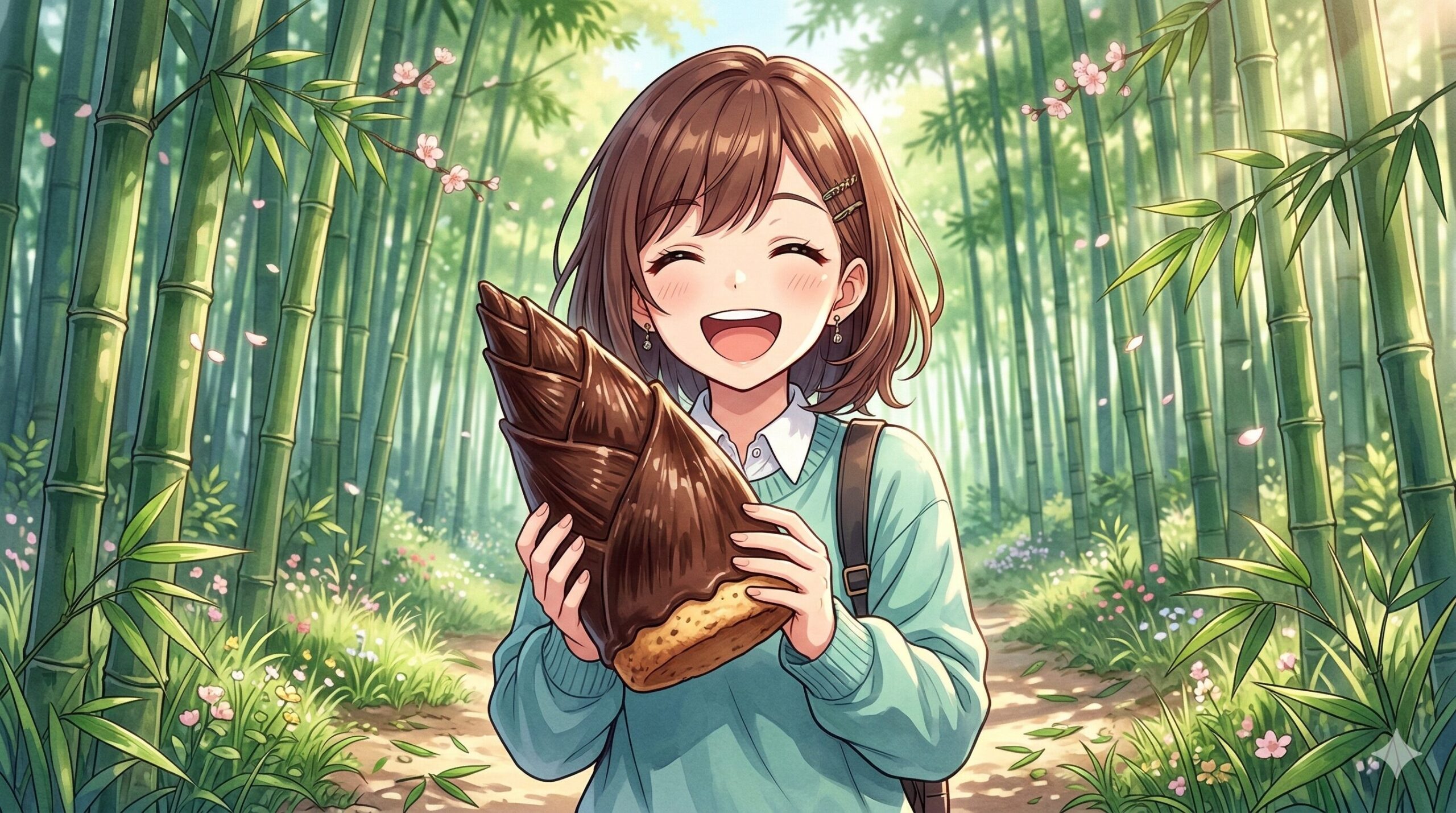
Every year on March 10, the Japanese internet is dominated by conversations about a single chocolate snack. This is “Takenoko no Sato Day” (Bamboo Shoot Village Day). Established by Meiji, a major Japanese food manufacturer, this anniversary transcends mere product promotion. It serves as an important day that showcases Japan’s uniquely exquisite snack culture and the existence of incredibly enthusiastic fan communities to the world.

What is “Takenoko no Sato”? And Why March 10?
“Takenoko no Sato” is a chocolate snack released by Meiji in 1979. As the name suggests, it is shaped like a bamboo shoot. It features a rich, crumbly cookie base coated in mild milk chocolate. It is truly a national snack that you are guaranteed to find in any supermarket or convenience store across Japan.
The reason this day falls on March 10 is due to a Japanese wordplay (goroawase). The number 3 can be read as “Sa” and 10 as “To” in Japanese, completing the word “Sato” (village). Consequently, it was officially recognized as “Takenoko no Sato Day” by the Japan Anniversary Association in 2017. Japanese anniversaries frequently use this kind of pun, representing the playful nature of Japanese culture integrated into the calendar.
Not Just a Cookie: The Golden Ratio of Calculated Taste
The reason “Takenoko no Sato” is so beloved lies in its overwhelming balance of flavor. The foundational cookie dough is not just a plain biscuit. It is a rich cookie kneaded with almond paste, providing a melt-in-the-mouth texture. On top of this sit two layers of chocolate: one that enhances the cacao aroma, and another with a strong, rich milk flavor.
The moment you put it in your mouth, the sweetness of the chocolate and the savory aroma of the cookie are designed to intertwine and melt perfectly together. Here, you can taste the “extraordinary obsession with detail and technical prowess” of Japanese confectioners. Within a single bite-sized piece, a calculated texture that can only be described as craftsmanship is packed tightly.
The Greatest “Civil War” in Japanese History: The Kinoko-Takenoko War
When discussing “Takenoko no Sato,” it is absolutely impossible to avoid the biggest internet debate in Japan, known as the “Kinoko-Takenoko War” (Mushroom vs. Bamboo Shoot War).
In 1975, four years before the release of Takenoko no Sato, Meiji released a sister product called “Kinoko no Yama” (Mushroom Mountain). This snack is shaped like a mushroom, with a crispy cracker for the stem. The “Mushroom Faction” argues that “the contrast between the crispy cracker and the chocolate is the best,” while the “Bamboo Shoot Faction” passionately claims that “the unity and melting texture of the cookie is supreme.” For decades, these two sides have fought a fierce (yet entirely peaceful) debate.
This rivalry is constantly discussed on television shows, internet message boards, and social media. Meiji itself has even officially run “National General Election” campaigns. The culture of forming factions and debating passionately over a single snack demonstrates just how deeply Japanese consumers care about their food.
A Small Snack Packed with Japan’s View of Nature and Playfulness
The deeper layers of Japanese culture that can be decoded from this anniversary are the “imitation of nature” and the “gamification of everyday life.”
Mushrooms are an autumn delicacy, while bamboo shoots represent spring. Since ancient times, Japanese people have valued the changing of the seasons and expressed it through cooking and traditional sweets (Wagashi). That traditional sensibility has been brilliantly inherited by modern, mass-produced chocolate snacks.
Furthermore, turning a delicious snack into a communication tool by asking “Which side are you on?” showcases the unique playfulness of Japanese pop culture. The spirit of enjoying small daily choices like a game or a festival is deeply concentrated in this “Takenoko no Sato Day.”
Which Faction Will You Join?
If you ever have the opportunity to visit Japan, please head to the snack aisle of a supermarket. Buy both “Takenoko no Sato” and “Kinoko no Yama” and compare them. That single bite will surely serve as your gateway into Japan’s profound snack culture.
So, the sweet chocolate united with a rich cookie of “Takenoko no Sato,” or the distinct crispy cracker texture of “Kinoko no Yama”? After reading this article, which faction will you join? We invite you to make a decision with your own taste buds and experience this peaceful, sweet Japanese culture.
Reference Links
- External Link: Kinoko no Yama & Takenoko no Sato Official Brand Site (Meiji Co., Ltd.)
- Internal Link: Read more from “What’s Today’s Special Day Series”
- What is “Takenoko no Sato”? And Why March 10?
- Not Just a Cookie: The Golden Ratio of Calculated Taste
- The Greatest “Civil War” in Japanese History: The Kinoko-Takenoko War
- A Small Snack Packed with Japan’s View of Nature and Playfulness
- Which Faction Will You Join?
- 3月10日は「たけのこの里の日」:日本を二分する甘く激しい「国民的チョコレート」の真実
3月10日は「たけのこの里の日」:日本を二分する甘く激しい「国民的チョコレート」の真実
毎年3月10日、日本のインターネット上は一つのチョコレート菓子の話題で持ちきりになります。それが「たけのこの里の日」です。日本の大手食品メーカーである株式会社明治が制定したこの記念日は、単なる商品のプロモーションの枠を超え、日本独自の精巧な菓子文化と、熱狂的なファンコミュニティの存在を世界に示す重要な日となっています。
「たけのこの里」とは何か?そしてなぜ3月10日なのか
「たけのこの里(Takenoko no Sato)」は、1979年に明治から発売されたチョコレートスナックです。名前の通り「竹の子(Bamboo shoot)」の形をしており、サクサクとしたクッキー生地の上に、マイルドなミルクチョコレートがコーティングされています。日本ではスーパーマーケットやコンビニエンスストアで必ず見かける、まさに国民的なお菓子です。
この日が3月10日に制定された理由は、日本語の語呂合わせによるものです。「さ(3)と(10)」と読むことができるため、2017年に一般社団法人日本記念日協会によって正式に「たけのこの里の日」として認定されました。日本の記念日にはこうした言葉遊び(語呂合わせ)が非常に多く用いられており、カレンダーに遊び心を取り入れる日本文化の特徴の一つと言えます。
ただのクッキーではない:計算し尽くされた味の黄金比
「たけのこの里」がこれほどまでに愛される理由は、その圧倒的な味のバランスにあります。土台となるクッキー生地は、単なるビスケットではありません。アーモンドペーストが練り込まれた、リッチでホロホロとした食感のクッキーなのです。その上にカカオの香りが引き立つチョコレートと、ミルクのコクが強いチョコレートの2層が重なっています。
口に入れた瞬間、チョコレートの甘さとクッキーの香ばしさが絶妙に絡み合いながら溶けていくように設計されており、日本の菓子メーカーの「細部への異常なまでの執着と技術力」を味わうことができます。小さな一口サイズの中に、職人技とも言える食感の計算が詰め込まれているのです。
日本史上最大の「内戦」:きのこ・たけのこ戦争
「たけのこの里」を語る上で絶対に避けて通れないのが、「きのこたけのこ戦争(Kinoko-Takenoko War)」と呼ばれる日本最大のインターネット上の論争です。
「たけのこの里」が発売される4年前の1975年、明治は「きのこの山(Kinoko no Yama)」という姉妹商品を発売していました。こちらはマッシュルームの形をしており、持ち手部分がカリッとしたクラッカーになっています。「クラッカーのサクサク感とチョコのコントラストが最高だ」と主張する『きのこ派』と、「クッキーの一体感と口どけこそ至高だ」と主張する『たけのこ派』は、数十年にわたり激しい(そして非常に平和的な)議論を戦わせてきました。
この対立はテレビ番組、インターネット掲示板、SNSで常に話題となり、明治自身も公式に「国民総選挙」というキャンペーンを実施するほどです。一つの菓子に対して派閥を作り、情熱的に語り合うこの文化は、日本の消費者がいかに食に対して強いこだわりと愛着を持っているかを示しています。
日本の自然観と遊び心が詰まった小さなスナック
この記念日から読み解ける日本文化の深層は、「自然の模倣」と「日常のエンターテインメント化」です。
秋の味覚である「きのこ」と、春の味覚である「たけのこ」。日本人は古来より四季の移ろいを大切にし、それを料理や和菓子で表現してきました。その伝統的な感性が、現代の大量生産されるチョコレートスナックにも見事に受け継がれているのです。
さらに、単においしいお菓子を食べるだけでなく、それをめぐって「あなたはどっち派?」とコミュニケーションのツールにしてしまうのは、日本のポップカルチャーが持つ特有の遊び心です。日常の小さな選択をゲームや祭りのように楽しむ精神が、この「たけのこの里の日」には凝縮されています。
あなたはどちらの陣営に加わりますか?
もしあなたが日本を訪れる機会があれば、ぜひスーパーマーケットのお菓子売り場へ足を運んでみてください。そして、「たけのこの里」と「きのこの山」を両方買って、食べ比べてみてください。その一口が、日本の奥深いお菓子文化への入り口となるはずです。
さて、サクサクのクッキーと一体になった甘いチョコレートの「たけのこの里」と、カリッとしたクラッカーの食感が際立つ「きのこの山」。この記事を読んだあなたなら、どちらの陣営に加わりますか?ぜひ、あなたの味覚で決断を下し、この平和で甘い日本の文化に触れてみてください。
参考リンク
- 外部リンク:きのこの山・たけのこの里 公式ブランドサイト(株式会社明治)
- 内部リンク:今日は何の日シリーズをもっと読む

コメント