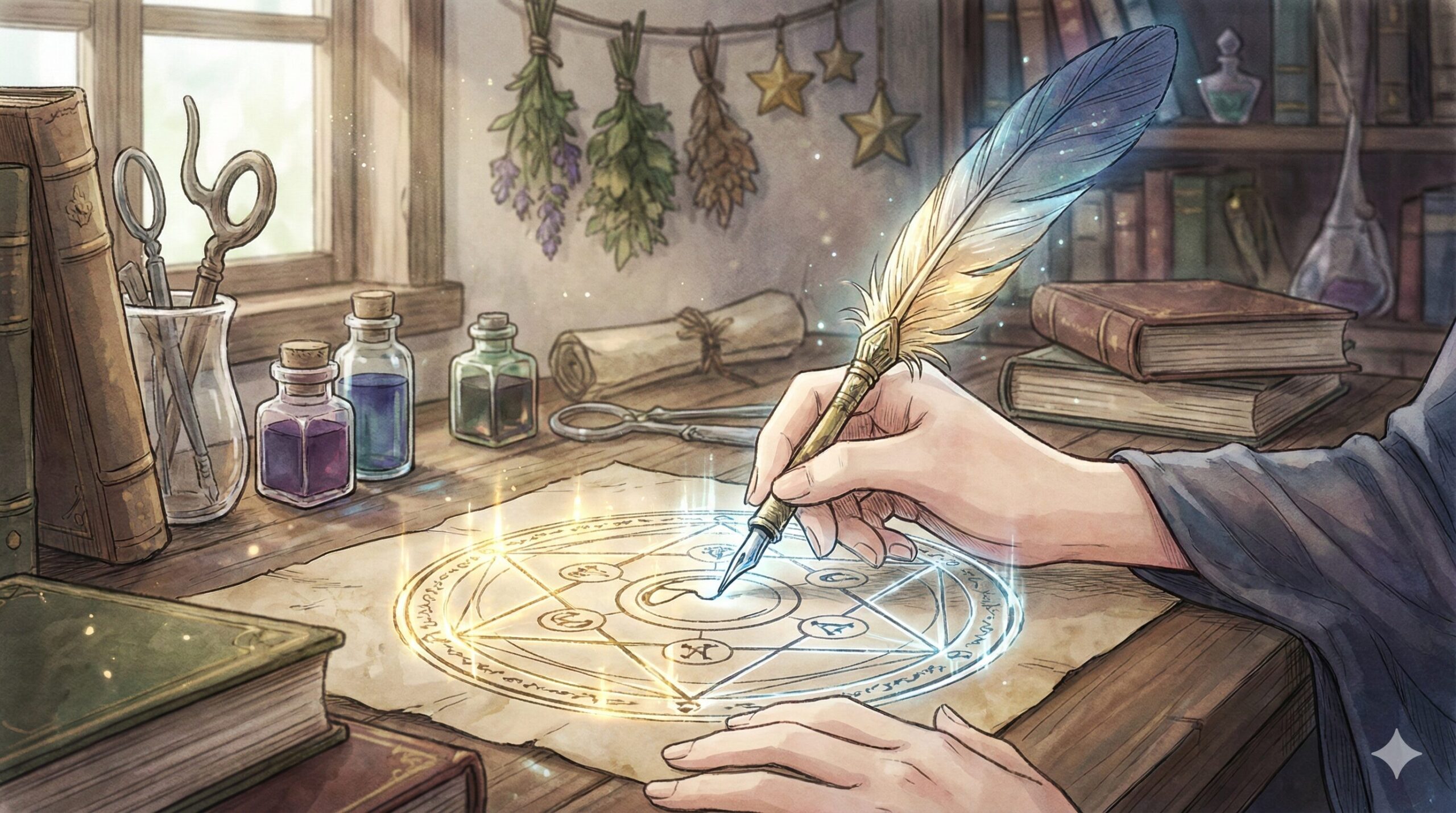
If the word “magic” conjures images of innate talent or miraculous powers wielded only by the chosen few, this masterpiece will fundamentally overturn your common sense. “Witch Hat Atelier” (Tongari Boushi no Atelier), a brilliant fantasy manga by Kamome Shirahama, drags magic down from its pedestal of mystery and redefines it as a “skill” that anyone can learn. However, the world it portrays is neither egalitarian nor gentle. Hidden within is a beautiful yet cruel truth that resonates deeply with traditional Japanese “craftsman culture.”
Why has this work garnered enthusiastic support in Japan and captivated fantasy fans around the world? We delve into the profound allure of this story, which is far more than a simple tale of a magical girl coming of age.
Plot Summary: The Path to Becoming a Witch Begins in Despair
Coco, a young girl born as the daughter of a tailor in a small village, had always dreamed of becoming a witch. However, in this world, “witches are born with inherent aptitude,” making it an impossible dream for a normal human like her. Witches never show ordinary people how they use magic. There is an absolute taboo: “One must never witness the moment magic is cast.”
One day, Coco accidentally witnesses a visiting witch named Qifrey casting magic. What she saw was not chanting spells or waving wands. It was an incredibly physical “task” that anyone could theoretically perform: “drawing specific geometric shapes (magic circles) with special ink and a pen.”
Knowing the truth, Coco mimics what she saw, using a “picture book” and “pen” she had bought from a suspicious masked figure in her childhood to draw a magic circle. As a result, the activated magic tragically turns her beloved mother into stone.
It was Qifrey who saved Coco from her despair. He tells her, “A curse cast by magic can only be undone by magic.” The only way to restore her mother is for Coco to become a witch herself and find the advanced magic circle capable of breaking the petrification. Thus, the girl who was never supposed to use magic becomes Qifrey’s apprentice and begins her training life at the “Atelier” alongside three other unique apprentices.
However, the shadow of the dark faction known as the “Brimmed Hats,” who seek to expose the secrets of magic, creeps along Coco’s path. The grueling and beautiful journey of atonement for a girl who touched a forbidden taboo begins.
Commentary: Why It Is So Highly Acclaimed in Japan
“Witch Hat Atelier” receives extremely high praise within Japan not only for its overwhelming artistic quality but also because the philosophy underlying the work resonates deeply with the Japanese mentality, particularly the attitude towards “monozukuri” (craftsmanship/making things).
1. Redefining “Magic as Craftsmanship”
The greatest invention of this work is setting magic as the act of “drawing.” The effect of a magic circle changes dramatically depending on the thickness of the lines, the precision of the circles, the quality of the ink, and even the mental state of the person drawing it. This is no longer the realm of superpowers, but the domain of “craftsmanship,” much like calligraphy, pottery, or precision machinery manufacturing.
Since ancient times, Japan has had a culture that reveres the “Shokunin” (artisan) who masters specific skills. They do not rely solely on talent but hone their skills through repetitive practice and extraordinary concentration to reach a divine level. The training Coco and her peers undergo at the atelier is exactly this artisan apprenticeship system. They steal techniques from their master, repeat failures, and agonize over line deviations of mere millimeters. This process is very familiar to Japanese readers and embodies the aesthetic of “effort and guts” that is a subject of respect. Precisely because magic is a “skill anyone can use,” a cruel reality of talent gaps exists, creating a passionate drama of trying to overcome that gap through hard work.
2. The Culture of “Secrecy” and Social Responsibility
In the world of this series, the method of drawing magic is thoroughly hidden from the general public. Why? To avoid the chaos caused by “a powerful force that anyone can use.” Learning from past history where magic was used for war and crime, nearly destroying the world, witches monopolize and manage the technology, even utilizing “memory-wiping magic.”
This setting is reminiscent of how technology has been inherited throughout Japanese history. Traditional performing arts and advanced craft techniques have long been inherited only within limited communities as “Isshi Souden” (transmission to only one heir) or “Hiden” (secret transmission). This was wisdom intended to prevent the outflow of technology and to prevent easily handing power to immature individuals who did not understand the magnitude of its influence.
“Witch Hat Atelier” sharply depicts this dilemma of the “privilege of knowing” and the “responsibility of hiding.” Coco faces immense responsibility as a human on the side who “ended up knowing.” Why isn’t convenient magic opened to the public? This question overlaps with ethical issues surrounding modern science, technology, and AI, prompting deep reflection in the reader.
3. Persuasive Power Supported by Overwhelming Artistic Ability
The author, Kamome Shirahama, is a talented artist who also works on American comic book covers, and her drawing ability ranks among the highest in the current Japanese manga industry. Her dense, delicate touch, reminiscent of etching engravings and Art Nouveau, perfectly captures the atmosphere of a world where magic exists, the solemnity of magic circles glowing, and the minute emotional fluctuations of the characters.
The design of the magic circles, in particular, is breathtaking, possessing a persuasive power that makes them feel not just like patterns, but that every line has meaning. The reality that makes readers have the illusion that “if I draw these lines, wouldn’t magic really activate?” maximizes the immersive feel of the work. This uncompromising “dedication to art” itself can be said to be a manifestation of the aforementioned Japanese artisan spirit.
Reasons Why You Must Read This Work and Recommended Points
- Vicarious Experience of the Joy and Suffering of “Learning”:
Coco is not a genius. She fails repeatedly and is crushed by her own powerlessness. However, the joy of gaining knowledge and finally being able to do something she couldn’t do before is irreplaceable. Anyone who has ever struggled to acquire a new skill will overlap themselves with Coco’s figure and shed hot tears. - A Meticulously Constructed High Fantasy World:
Not only the mechanics of magic but also the culture, clothing, architecture of the people living in that world, and even the political structure of the magical society are set in astonishing detail. For readers seeking a profound and immersive worldview like the “Harry Potter” series or “The Lord of the Rings,” there is no finer experience than this. - Complex and Lovable Characters:
Master Qifrey appears elegant and perfect, but hidden beneath is a dark past and his own secret agenda. The senior apprentices also each harbor their own complexes and issues. The human drama of characters who cannot be simply divided into good and evil adds depth to the story.
“Witch Hat Atelier” is not merely fantasy for escapism. It is a superb human drama dealing with universal themes of technology and ethics, talent and effort, and despair and hope. This story, drawn with magical ink, will surely carve an indelible, vivid magic circle into your heart as well.
If you wish to learn more deeply about Japanese culture through anime and manga, please also visit this category.
kiri53.com – Japanese Culture & Anime Categories
Reference Links (To Dive Deeper)
- Kodansha Comics – Witch Hat Atelier Official Page (English)
The official English publisher’s page. You can check for previews and the latest release information. - Kamome Shirahama Official Twitter Account (@shirahamakamome)
The author’s own account. You can catch glimpses of breathtaking illustrations and behind-the-scenes creation.

魔法は「奇跡」ではない。「技術」だ。『とんがり帽子のアトリエ』が描く、残酷で美しい日本の職人魂
魔法は「奇跡」ではない。「技術」だ。『とんがり帽子のアトリエ』が描く、残酷で美しい日本の職人魂
もし、あなたが「魔法」という言葉を聞いて、生まれながらの才能や、選ばれた者だけが使える奇跡の力を想像するなら、この作品はあなたの常識を根本から覆すだろう。白浜鴎による傑作ファンタジー漫画『とんがり帽子のアトリエ』は、魔法を「神秘」の座から引きずり下ろし、誰にでも習得可能な「技術」として再定義した。しかし、その世界は決して平等で優しいものではない。そこには、日本の伝統的な「職人文化」にも通じる、美しくも残酷な真実が隠されている。
なぜこの作品が日本で熱狂的な支持を集め、世界中のファンタジーファンを虜にしているのか。単なる魔法少女の成長譚ではない、その深淵なる魅力に迫る。
あらすじ:絶望から始まる、魔法使いへの道
小さな村で仕立屋の娘として生まれた少女、ココ。彼女は幼い頃から魔法使いに憧れていたが、この世界では「魔法使いは生まれつきの素質」とされており、普通の人間である彼女には決して手の届かない夢だった。魔法使いたちは、どのように魔法を使っているのか、その方法を一般人には決して見せない。「魔法をかける瞬間を見てはならない」という絶対の禁忌が存在するからだ。
ある日、ココの村を訪れた魔法使い・キーフリーが魔法を使う瞬間を、ココは偶然目撃してしまう。そこで彼女が見たのは、呪文詠唱でも、杖を振るう姿でもなかった。それは、「特殊なインクとペンで、特定の図形(魔法陣)を描く」という、あまりにも物理的で、誰もが実践可能な「作業」だったのだ。
真実を知ったココは、幼い頃に怪しげな仮面の人物から買い取った「絵本」と「ペン」を使い、見よう見まねで魔法陣を描いてしまう。その結果、発動した魔法は、ココの最愛の母親を石に変えてしまった。
絶望するココを救ったのはキーフリーだった。彼はココに告げる。「魔法でかけた呪いは、魔法でしか解けない」。母親を元に戻す方法は、ココ自身が魔法使いとなり、石化を解くための高度な魔法陣を見つけ出すことしかない。こうして、魔法を使ってはいけないはずの少女は、キーフリーの弟子となり、他の3人の個性的な弟子たちと共に、「アトリエ」での修行生活を始めることになる。
しかし、ココの行く手には、魔法の秘密を暴こうとする闇の勢力「つばあり帽」の影が忍び寄る。禁忌に触れてしまった少女の、過酷で美しい贖罪の旅が幕を開ける。
評論:なぜ日本でこれほどまでに評価されるのか
『とんがり帽子のアトリエ』が日本国内で極めて高い評価を得ている理由は、その圧倒的な画力もさることながら、作品の根底に流れる哲学が、日本人の精神性、特に「ものづくり」に対する姿勢と深く共鳴するからである。
1. 「魔法=職人芸(クラフトマンシップ)」という再解釈
本作の最大の発明は、魔法を「描く」という行為に設定した点にある。魔法陣は、線の太さ、円の正確さ、インクの質、そして描く者の精神状態によって、その効果が劇的に変化する。これは、もはや超能力ではなく、書道や陶芸、あるいは精密機械の製造と同じ「職人芸」の領域である。
日本には古来より、特定の技術を極める「職人(Shokunin)」を尊ぶ文化がある。才能だけに頼らず、反復練習と並外れた集中力によって技術を研鑽し、神業の域に達する。ココたちがアトリエで行う修行は、まさにこの職人の徒弟制度そのものだ。師匠の技術を盗み、失敗を繰り返し、ミリ単位の線のズレに苦悩する。このプロセスは、日本の読者にとって非常に馴染み深く、また尊敬の対象となる「努力と根性」の美学を体現している。魔法が「誰にでも使える技術」であるからこそ、そこには才能の差という残酷な現実と、それを努力で覆そうとする熱いドラマが生まれるのだ。
2. 「秘匿」の文化と社会的責任
本作の世界では、魔法の描き方は一般人には徹底的に隠されている。なぜか。それは「誰でも使える強力な力」が引き起こす混沌を避けるためだ。過去の歴史において、魔法が戦争や犯罪に利用され、世界が崩壊しかけた教訓から、魔法使いたちは「記憶を消す魔法」まで駆使して、その技術を独占・管理している。
この設定は、日本の歴史における技術継承のあり方を彷彿とさせる。伝統芸能や高度な工芸技術は、長らく「一子相伝」や「秘伝」として、限られたコミュニティ内でのみ継承されてきた。それは技術の流出を防ぐと同時に、その技術が持つ影響力の大きさを理解していない未熟な者に、安易に力を渡さないための知恵でもあった。
『とんがり帽子のアトリエ』は、この「知る特権」と「隠す責任」のジレンマを鋭く描く。ココは「知ってしまった」側の人間として、その重すぎる責任に直面する。便利な魔法がなぜ一般に開放されないのか。その問いは、現代社会における科学技術やAIの倫理的問題とも重なり、読者に深い思索を促す。
3. 圧倒的な画力が支える説得力
著者の白浜鴎は、アメリカンコミックのカバーアートなども手掛ける実力派であり、その画力は現在の日本の漫画界においても最高峰に位置する。エッチング版画やアール・ヌーヴォーを思わせる緻密で繊細な筆致は、魔法が存在する世界の空気感、魔法陣が発光する際の荘厳さ、そしてキャラクターの微細な感情の揺れ動きを完璧に捉えている。
特に魔法陣のデザインは圧巻であり、ただの模様ではなく、それぞれの線に意味があると思わせる説得力がある。「この線を描けば、本当に魔法が発動するのではないか」と読者に錯覚させるほどのリアリティが、作品の没入感を極限まで高めている。この妥協なき「画へのこだわり」自体が、前述した日本の職人魂の現れとも言えるだろう。
この作品を読むべき理由とおすすめポイント
- 「学ぶこと」の喜びと苦しみの追体験:
ココは天才ではない。何度も失敗し、自分の無力さに打ちひしがれる。しかし、知識を得て、できなかったことができるようになる瞬間の喜びは、何物にも代えがたい。何か新しいスキルを習得しようと努力した経験のある人なら、ココの姿に自分を重ね合わせ、熱い涙を流すだろう。 - 緻密に構築されたハイ・ファンタジーの世界観:
魔法の仕組みだけでなく、その世界に住む人々の文化、服装、建築物、そして魔法社会の政治的構造まで、驚くほど詳細に設定されている。「ハリー・ポッター」シリーズや「指輪物語」のような、重厚で没入感のある世界観を求める読者にとって、これ以上の極上の体験はない。 - 複雑で愛すべきキャラクターたち:
師匠のキーフリーは優雅で完璧に見えるが、その裏には暗い過去と独自の目的を隠し持っている。兄弟子たちもそれぞれにコンプレックスや課題を抱えている。単純な善悪で割り切れないキャラクターたちの人間ドラマが、物語に深みを与えている。
『とんがり帽子のアトリエ』は、単なる現実逃避のためのファンタジーではない。それは、技術と倫理、才能と努力、そして絶望と希望という、普遍的なテーマを扱う極上の人間ドラマである。魔法のインクで描かれたこの物語は、あなたの心にも、消えることのない鮮やかな魔法陣を刻み込むはずだ。
日本のアニメや漫画を通じて、さらに深く日本文化を知りたい方は、こちらのカテゴリーもぜひご覧ください。
kiri53.com – Japanese Culture & Anime Categories
参考リンク(さらに深く知るために)
- 講談社コミックプラス – とんがり帽子のアトリエ公式ページ(日本語)
出版社の公式ページ。試し読みや最新情報が確認できる。 - 白浜鴎 公式Twitterアカウント (@shirahamakamome)
作者本人のアカウント。息をのむようなイラストや、制作の裏側が垣間見える。 - Wikipedia – Witch Hat Atelier (English)
英語版ウィキペディア。作品の概要、登場人物、世界的な評価がまとめられている。


コメント