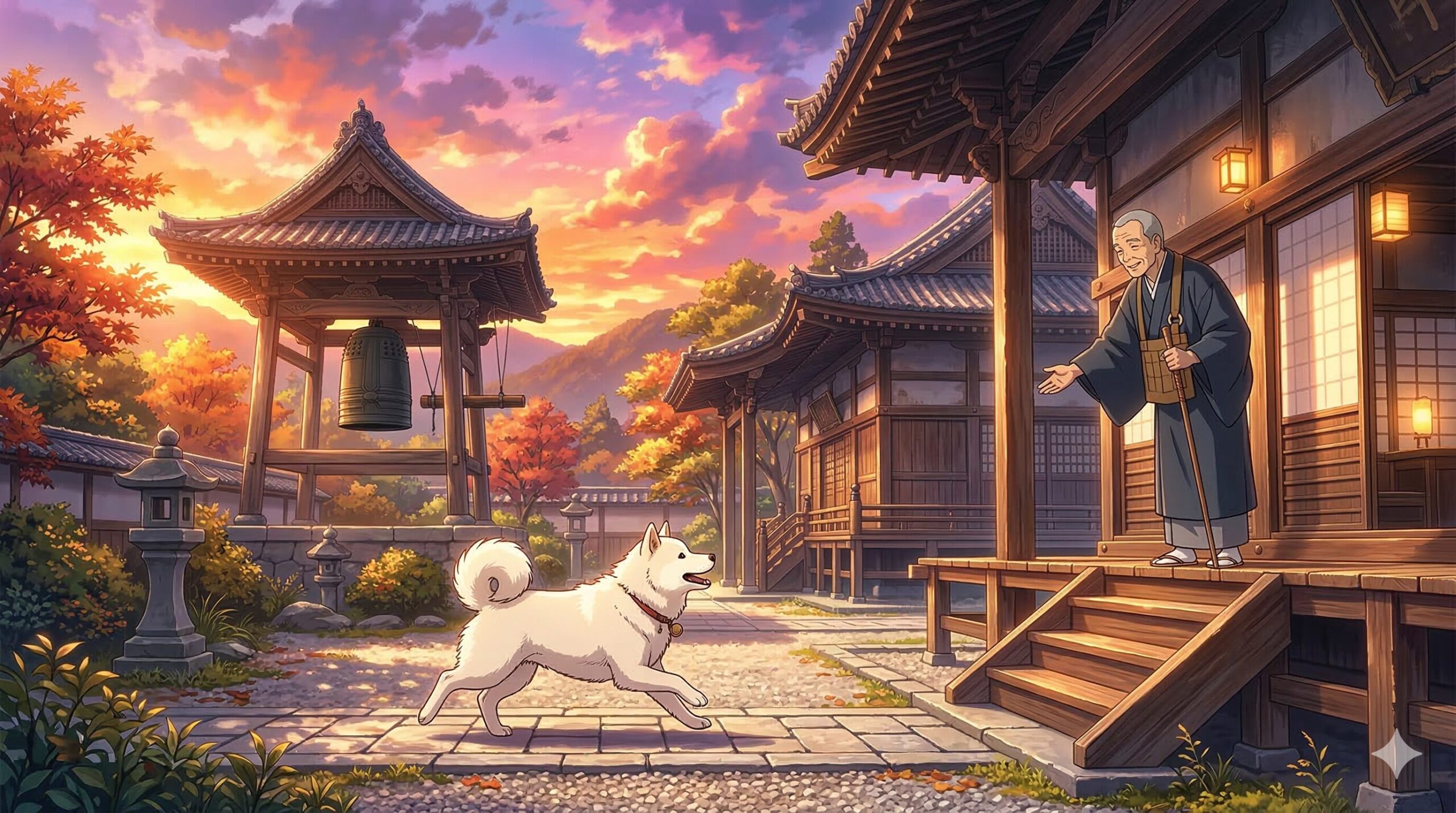
Let me introduce you to “The Story of the Dog’s Monument” (Inu no Ishibumi no Hanashi), a deeply moving folktale passed down in Miyazu City, Kyoto Prefecture. This is not just a simple story about an animal; it is a masterpiece woven with complex emotions—unwavering loyalty, human jealousy, profound regret, and ultimate forgiveness.

The Devotion and Intelligence of Shiro the Dog
Long ago, at a temple named Kaigan-ji in the town of Miyazu, there lived a white dog named Shiro. Originally a stray, Shiro was taken in by the head priest and raised with deep affection. As if to repay this kindness, Shiro grew into an incredibly intelligent dog who fully understood human words.
As the head priest grew older, his legs weakened, making it difficult to travel to Chion-ji Temple for his duties. Instead, he conducted all his business via letters. The one entrusted with delivering these important letters was none other than Shiro. Wearing a letter box around his neck, Shiro flawlessly completed his errands every day. The townspeople constantly praised him, saying, “What a remarkably smart dog!”
A Tragic Ending Brought by Jealousy
There was a young monk living at Kaigan-ji who was constantly scolded by the head priest. The priest would often say, “You should learn from Shiro!” or “You are not even half as good as that dog.” Because of this, a dark jealousy toward Shiro began to swirl in the young monk’s heart.
One day, the priest gave Shiro an urgent letter to deliver and firmly instructed, “You must return before the evening bell rings.” The young monk, who had been eavesdropping, decided to play a trick to get Shiro in trouble. He deliberately rang the temple’s evening bell an hour earlier than usual.
“Gong… Gong…”
Hearing the bell from Chion-ji Temple, Shiro was thrown into a panic. Believing he had broken his promise to the priest, Shiro bolted out of the temple and ran back as fast as his legs could carry him. Panting heavily, pushing his heart to the absolute limit, he finally reached the garden of Kaigan-ji where the priest was waiting. But in that exact moment, Shiro collapsed and died from sheer exhaustion and a broken heart.
The head priest broke down in tears, crying, “If only I hadn’t been so strict about the time…” Soon after, the young monk appeared, sobbing uncontrollably. Realizing his childish prank had caused an irreversible tragedy, he deeply apologized. Surprisingly, the head priest did not scold the young monk. Instead, he reflected on his own flaws, saying, “The fault lies in my own heart. I played favorites and treated you poorly, which caused this tragedy.” Together, to eternally console Shiro’s soul, they built a magnificent grave. This remains in Miyazu today, known as “The Dog’s Monument.”
Analyzing the Depths of the Story: Why Did Shiro Have to Die?
When we analyze this story, we realize how realistically the intersecting emotions of the characters are portrayed.
First, consider Shiro’s actions. He didn’t just run; he ran until his life faded away. This showcases his absolute love for the priest and his desperate desire not to break a promise. For a dog, the master’s words are the entire world.
Next is the young monk. His jealousy is painfully human, and readers might even feel a slight twinge of sympathy for him. He never intended to kill Shiro; he merely wanted to cause a minor inconvenience to see the dog get scolded. However, this trivial malice resulted in a stolen life. This highlights the cruel truth of life: a momentary dark impulse can lead to irreversible consequences.
Finally, the head priest. In an ordinary story, the priest would severely punish the mischievous monk. Yet, he immediately recognized that the root cause was his own excessive favoritism toward the dog and his coldness toward the monk. This high level of self-reflection elevates the story from a mere tragedy to a profound moral fable.
Understanding Japanese Culture Through “The Dog’s Monument”
The Loyalty of Dogs Linked to “Hachiko”
In Japan, the true story of “Hachiko,” the loyal dog who waited years for his deceased master, is widely known. Similarly, “The Story of the Dog’s Monument” shows that Japanese people have long viewed dogs as noble beings who never forget a debt of gratitude and serve their masters to the very end. The Japanese ethos that values loyalty and duty is heavily projected onto Shiro.
The Spirit of “Ishibumi” (Monuments) for Animal Souls
In Japan, there is a deep-rooted culture of building monuments (Ishibumi) or mounds not only for humans but also for animals, and sometimes even tools, to console their spirits. The act of building a grand grave for Shiro and passing the story down through generations strongly reflects Japanese Buddhist views and animism—the belief that all living things possess a Buddha nature.
Buddhist Concepts of Karma and Self-Reflection
The ending, where the priest forgives the young monk, is highly Buddhist. Instead of blaming others for their mistakes, facing the “worldly desires” (favoritism) within oneself aligns perfectly with the teachings of Zen. Japanese folktales have historically used everyday events to impart these religious and ethical values to the people.
A Question for Your Heart
Shiro believed in the words of his beloved master and risked his life to keep a promise. Meanwhile, the humans were forced to realize the terrifying nature of jealousy.
How did you feel after reading “The Story of the Dog’s Monument”?
If you were the head priest, could you have forgiven the young monk who rang the false bell? Or if you were the young monk, how would you live with such profound guilt?
Please take a moment to reflect on your thoughts, and share if there are similar stories of devotion in your own culture.
Reference Links
- Reference: Manga Nippon Mukashibanashi Database – “The Story of the Dog’s Monument”
- Amanohashidate Tourism Guide (Miyazu City Info)
- Check out other Japanese Folktale Series here
忠義と悲劇の日本昔話「犬の碑の話」の世界へ
日本の京都府宮津市に古くから伝わる、胸を打つ昔話「犬の碑(いぬのいしぶみ)の話」をご紹介します。この物語は、単なる動物の昔話ではなく、忠誠心、人間の嫉妬、そして深い後悔と赦しという、複雑な感情が入り交じった傑作です。
愛犬シロの献身と賢さ
昔、宮津の町にある戒岩寺(かいがんじ)というお寺に、シロという一匹の白い犬がいました。シロは元々捨て犬でしたが、和尚さんに拾われ、深い愛情を受けて育ちました。その恩を返すかのように、シロは人間の言葉を完全に理解する非常に賢い犬へと成長しました。
和尚さんは年老いて足腰が弱くなっており、少し離れた智恩寺(ちおんじ)にある文殊堂への用事は、すべて手紙で済ませていました。その大切な手紙を運ぶ役目を担っていたのが、他ならぬシロでした。シロは文箱を首から下げて、毎日きちんとお使いをこなしました。町の人々も「本当に利口な犬だ」とシロを褒め称えていました。
嫉妬が招いた悲しい結末
戒岩寺には一人の小僧がいましたが、彼は和尚さんに「お前もシロを見習え」「シロの爪の垢でも煎じて飲め」といつも叱られていました。そのため、小僧の心にはシロに対するどす黒い嫉妬が渦巻いていました。
ある日、和尚さんは急ぎの用事でシロにお使いを頼み、「夕方の鐘が鳴る前には必ず帰ってくるんだよ」と言い含めました。それを影で聞いていた小僧は、シロを困らせてやろうと企み、夕暮れよりも一時間も早くお寺の鐘を鳴らしてしまったのです。
「ゴーン、ゴーン…」
智恩寺にいたシロは、その鐘の音を聞いて激しく動揺しました。和尚さんとの約束を守れなかったと思ったシロは、パニックになりながら全速力でお寺へ向かって走り出しました。息を切らし、心臓を破裂させんばかりの勢いで駆け抜け、ようやく戒岩寺の庭にいた和尚さんの元へたどり着いた瞬間、シロはそのまま力尽き、息絶えてしまいました。
和尚さんは「私が時間を厳しく言ったばかりに…」と泣き崩れました。そこへ、自分の悪戯が取り返しのつかない悲劇を招いたことを悟った小僧が泣きながら現れ、深く謝罪しました。和尚さんは小僧を責めず、「シロを特別扱いして贔屓(ひいき)した私の心にこそ隙があったのだ」と自らを深く戒めました。そして、二人はシロの魂を永遠に供養するため、立派な墓を建てました。これが現在も宮津に伝わる「犬の碑」なのです。
物語の深層を考察する:なぜシロは死ななければならなかったのか
この物語を考察すると、登場人物たちの感情の交錯が非常にリアルに描かれていることに気づきます。
まず、シロの行動です。ただ走っただけでなく、命を落とすまで走り続けたシロの姿には、和尚さんへの絶対的な愛と、「約束を破って和尚さんを悲しませたくない」という強烈な忠誠心が表れています。犬にとって、飼い主の言葉は世界のすべてなのです。
次に、小僧の行動です。彼の嫉妬は非常に人間らしく、読者も少し同情してしまう部分があるかもしれません。彼はシロを殺そうとしたわけではなく、ただ少し困らせて和尚さんに叱られる姿を見たかっただけなのです。しかし、その些細な悪意が命を奪う結果となりました。これは、「ほんの出来心」が取り返しのつかない事態を招くという、人生の残酷な真理を突いています。
最後に和尚さんです。普通の物語であれば、悪戯をした小僧を激しく罰して終わるでしょう。しかし和尚さんは、根本的な原因が「自分の過度な動物への偏愛と、それによる小僧への冷遇」にあったと即座に悟りました。この高度な自己省察こそが、物語を単なる悲劇から、深い教訓を持つ寓話へと昇華させています。
「犬の碑の話」から読み解く日本文化
忠犬ハチ公に繋がる「犬の忠誠心」
日本には、亡くなった主人を待ち続けた「忠犬ハチ公」の物語が広く知られています。この「犬の碑の話」も同様に、日本人が古くから犬という動物に対して「恩義を忘れず、主人に最後まで尽くす高潔な存在」というイメージを抱いていたことを示しています。主従関係や義理人情を重んじる日本の精神性が、シロの姿に投影されているのです。
動物の魂を供養する「碑(いしぶみ)」の精神
日本では、人間だけでなく、動物や時には道具に対してさえも、その魂を慰めるために碑や塚を建てる文化があります(例:針供養、筆塚など)。シロのために立派な墓を建て、それを後世まで語り継ぐという行為には、すべての命に仏性が宿ると考える日本の仏教観やアニミズムの精神が色濃く反映されています。
仏教的な因果応報と自己反省
和尚さんが小僧を許した結末は、非常に仏教的です。他者の過ちを責めるのではなく、自分自身の内面にある「煩悩(偏愛)」に向き合う姿勢は、禅の教えにも通じます。日本の昔話は、このように日常の出来事を通じて、宗教的な倫理観を人々に伝えてきました。
あなたの心に問いかける
愛する者の言葉を信じ抜き、命を懸けて約束を守ろうとしたシロ。そして、嫉妬という感情の恐ろしさに気づかされた人間たち。
あなたはこの「犬の碑の話」を読んで、何を感じましたか?
もしあなたが和尚さんだったら、嘘の鐘を鳴らした小僧を許すことができたでしょうか。あるいは、あなたが小僧だったら、この深い罪悪感とどう向き合って生きていくでしょうか。
ぜひ、あなたの考えや文化における似たようなエピソードについて、思いを巡らせてみてください。

コメント