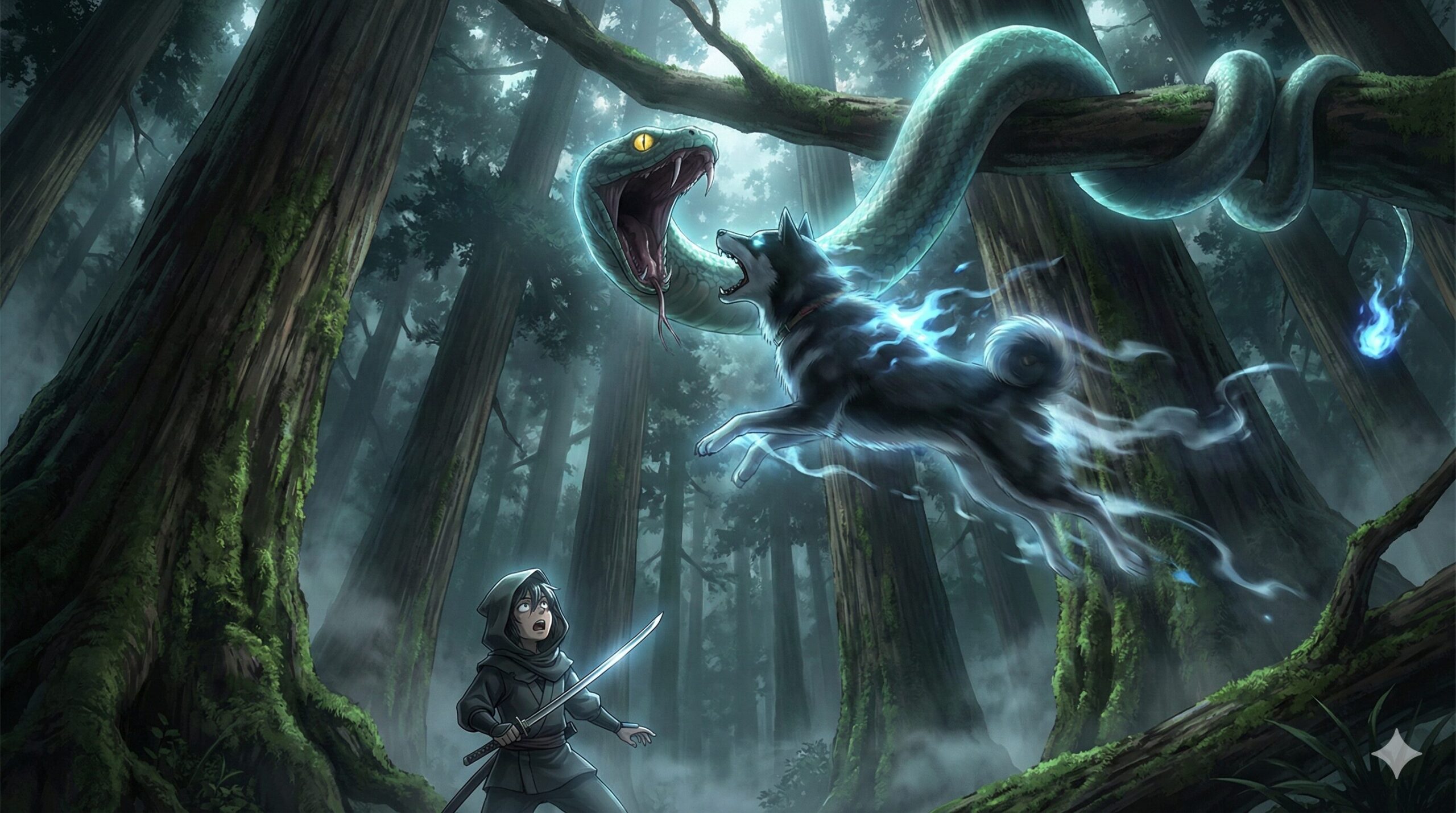
Japanese folklore is not just about famous tales like Momotaro or Urashima Taro. There are countless heartbreakingly beautiful legends deeply rooted in local shrines and small hokora (wayside shrines) across the country. Today, I would like to introduce the story of “Kurohachi Daimyojin,” a tale of a dog who sacrificed its life to save its master and was subsequently enshrined as a deity.
This is not merely an animal story. It profoundly reflects the difficulty of communication with voiceless beings, the weight of regret, and the Japanese view of life and death, particularly the appeasement of spirits.

1. The Story: The Legend of Kurohachi Daimyojin
Long ago, in a deep mountain village, there lived a skilled hunter.
The hunter had a partner named “Kurohachi.” Kurohachi was a dog as black as the darkest night, intelligent, and above all, deeply loyal to his master. The two were inseparable. Kurohachi would sense the game, and the hunter would shoot. Their coordination was perfect, and the villagers often rumored, “As long as Kurohachi is there, the hunter is safe.”
One autumn day, the hunter took Kurohachi deep into the mountains as usual in search of prey. Strangely, they could not find any game that day, leading them further into the ancient forest.
Past noon, they decided to rest under a gigantic ancient tree. Just as the hunter sat down to open his lunch box…
“Woof! Woof! Woof!!”
Kurohachi, who had been quiet until then, suddenly began to bark frantically. He looked up at the treetops of the ancient tree and barked fiercely.
“What’s wrong, Kurohachi? Be quiet. You’ll scare away the game,” the hunter tried to soothe him. But Kurohachi wouldn’t stop. Instead, he bit the hem of his master’s kimono, desperately trying to pull him away from that spot.
“Woof! Woof!”
The hunter grew increasingly irritated. “Enough! Have you gone mad?!”
Hungry, tired, and frustrated by the lack of catch, the hunter lost his temper. Enraged by the dog that wouldn’t stop barking no matter how much he scolded, the hunter drew the machete at his waist and, in a fit of anger, cut off his beloved dog’s head.
At that very moment, a miracle happened.
Kurohachi’s severed head did not fall to the ground. Instead, it flew high into the sky. With the speed of an arrow, it flew straight into the dense branches of the ancient tree.
“Gyaaaaaa!”
With a tremendous sound, something heavy fell to the ground. When the hunter fearfully approached, he saw a giant serpent (uwabami), as thick as a log, lying dead with its throat torn out. And there, clamped tightly onto the serpent’s throat, was the severed head of Kurohachi.
Kurohachi had not gone mad. He had noticed the giant serpent lurking above, preparing to swallow his master, and was desperately trying to warn him. Even after losing his head, his instinct to protect his master remained, driving him to kill the monster.
“Oh, Kurohachi… What have I done…”
The hunter collapsed in tears. His short temper and foolishness had killed his irreplaceable friend. The hunter buried Kurohachi and the serpent with great care and built a small shrine on the spot.
After that, the hunter gave up his bow and arrows and dedicated the rest of his life to praying for Kurohachi’s soul. The villagers, moved by Kurohachi’s loyalty in saving his master, worshipped his spirit as “Kurohachi Daimyojin” (The Great Illuminating Deity Kurohachi), and the legend continues to be told to this day.
2. Analysis: A Narrative of Regret and Requiem
While this story follows a classic structure of “tragedy through misunderstanding” in Japanese folklore, it offers profound insights:
Invisible Danger and Animal Intuition
In the story, the human (hunter) perceives only visible reality, while the dog (Kurohachi) senses invisible danger (the serpent). This contrasts the limitations of human reason with the wild intuition of animals. We often dismiss warnings we don’t understand as “noise,” but this story teaches us that truth often lies hidden within them.
The Metaphor of the “Flying Head”
The depiction of the severed head biting the enemy represents a “tenacity of soul” that transcends the physical body. In Japanese culture, loyalty and obligation are often portrayed as absolute values that go beyond death, and Kurohachi’s action is the ultimate example of this.
3. Connection to Japanese Culture: Animals Becoming Gods
From the legend of “Kurohachi Daimyojin,” we can decipher several key aspects of Japanese culture:
- Goryo-shinko (Faith in Spirits): Japan has a tradition of appeasing the spirits of those who died tragic deaths and worshipping them as guardian deities. Similar to the famous Sugawara no Michizane, the hunter’s repentance and gratitude towards the unjustly killed Kurohachi led to his deification as “Daimyojin.”
- Spirituality of Matagi Culture: Japanese traditional hunters (Matagi) view the mountains as sacred and do not treat animals merely as prey or tools. Dogs are partners, more than family. The fact that this story has been passed down among hunters as a cautionary tale reflects their reverence for life.
- Respect for the Voiceless: Many Japanese shrines feature animals like Komainu (lion-dogs) or foxes as messengers of the gods. This represents the Japanese humility towards beings in the natural world that do not possess human language.
4. Questions for the Reader
How did you feel after reading the story of Kurohachi?
If you were in the hunter’s shoes, would you have been able to trust Kurohachi’s desperate barking? Or would you have been irritated by the immediate situation and made the same mistake?
In modern society, we rely too heavily on “words.” Are we overlooking unspoken warnings, atmospheres, or someone’s silent dedication? The legend of Kurohachi Daimyojin challenges us to regain the “power to listen to the voice of the heart.”
Does your country have similar legends of sad yet proud animals? If so, please compare them with Kurohachi in your heart.
Related Links & References
- Japanese Folktale Series (KIRI53.com) – Read more Japanese folktales
- Japan National Tourism Organization – Travel to the lands of Japanese legends
- Shinto & Animal Deities (Wikipedia) – Learn about Japanese spirituality
【日本昔話】忠義の果ての悲劇と神格化:黒八大明神の伝説
日本の民話には、桃太郎や浦島太郎のような有名な物語だけでなく、地方の神社や祠(ほこら)に深く根ざした、切なくも美しい伝説が無数に存在します。今回ご紹介するのは、主人の命を救うために自らの命を捧げ、神として祀られた一匹の犬の物語、「黒八大明神(くろはちだいみょうじん)」です。
この物語は、単なる動物の物語ではありません。そこには、言葉を持たない者とのコミュニケーションの難しさ、後悔、そして魂を鎮めるという日本人の死生観が色濃く反映されています。
1. 昔話:黒八大明神の物語
むかしむかし、ある深い山奥の村に、腕利きの猟師が住んでいました。
猟師には、「黒八(くろはち)」という名の相棒がいました。黒八は全身が漆黒の闇のように黒く、賢く、そして何よりも主人に対して深い忠誠心を持った犬でした。二人はいつも一緒で、黒八が獲物の気配を察知し、猟師が仕留める。その連携は阿吽の呼吸で、村人たちも「黒八がいれば、猟師どのは安泰だ」と噂していました。
ある秋の日のことです。猟師はいつものように黒八を連れて、獲物を求めて山深くへと入っていきました。その日は不思議と獲物が見つからず、二人はさらに奥深い森へと足を踏み入れました。
昼過ぎ、彼らは巨大な古木の下で休憩を取ることにしました。猟師が弁当を開こうと腰を下ろしたその時です。
「ワン!ワン!ワン!!」
今まで静かだった黒八が、突然狂ったように吠え始めたのです。黒八は古木の梢(こずえ)を見上げ、激しく吠え立てます。
「どうした黒八、静かにしろ。獲物が逃げてしまうじゃないか」
猟師は黒八をなだめようとしました。しかし、黒八は止まりません。それどころか、主人の着物の裾を噛んで、必死にその場から引き離そうとします。
「ワン!ワン!」
猟師は次第に腹を立てました。 「ええい、うるさい! 気が狂ったのか!」
空腹と疲れ、そして獲物が獲れない焦りもあって、猟師はカッとなりました。何度叱っても吠え止まない黒八に激昂した猟師は、持っていた腰刀を抜くと、あろうことか愛犬の首を切り落としてしまったのです。
その瞬間でした。
切り落とされた黒八の首は、地面に落ちることなく、空高く舞い上がりました。そして、矢のような速さで古木の枝の茂みへと飛び込んでいったのです。
「ギャアアアア!」
凄まじい音と共に、ドサリと何かが落ちてきました。猟師が恐る恐る近づくと、そこには太さが丸太ほどもある巨大な大蛇(うわばみ)が、喉笛を食いちぎられて死んでいたのです。そして、その大蛇の喉には、黒八の首がしっかりと食らいついたままでした。
黒八は気が狂ったのではありませんでした。主人の頭上から、今まさに飲み込もうと狙っていた大蛇に気づき、必死に危険を知らせていたのです。そして首だけになってもなお、主人を守るために大蛇を倒したのです。
「ああ、黒八……俺はなんということをしてしまったのだ……」
猟師はその場に泣き崩れました。自分の短気と愚かさが、かけがえのない友を殺してしまったのです。猟師は黒八と大蛇を丁寧に葬り、そこに小さな祠を建てました。
その後、猟師は弓矢を捨て、生涯を黒八の供養に捧げました。村人たちは、主を守った黒八の忠義に涙し、その霊を「黒八大明神」として祀り、今も語り継いでいるのです。
2. 考察:後悔と鎮魂のナラティブ
この物語は、日本の民話における典型的な「誤解による悲劇」の構造を持っていますが、以下の点で非常に深い示唆を与えてくれます。
不可視の危険と動物の直感
物語の中で、人間(猟師)は目に見える現実しか認識できませんが、犬(黒八)は目に見えない危険(大蛇)を察知しています。これは、人間が持つ理性の限界と、動物が持つ野生の直感の対比です。私たちは往々にして、自分の理解できない警告を「ノイズ」として排除しがちですが、そこには真実が隠されている場合があることを、この物語は教えてくれます。
「首が飛ぶ」という強烈なメタファー
首を切られてなお、敵に食らいつくという描写は、肉体を超越した「魂の執念」を表しています。日本文化において、忠義や恩義は死をも超える絶対的な価値観として描かれることが多いですが、黒八の行動はその極致と言えるでしょう。
3. 日本文化との関連:神になる動物たち
「黒八大明神」の物語から、私たちは以下の日本文化の特徴を読み解くことができます。
- 御霊信仰(ごりょうしんこう)の変形: 日本には、非業の死を遂げたものの霊を慰め、逆に守護神として祀る「御霊信仰」があります。菅原道真(天神様)が有名ですが、この物語もまた、不当に殺された黒八への懺悔と感謝が、神格化(大明神)へと繋がっています。
- マタギ文化との精神性: 日本の狩猟者(マタギ)は、山を神聖な場所とし、動物を単なる獲物や道具とは見なしません。犬は家族以上のパートナーであり、この物語が猟師たちの間で戒めとして語り継がれてきた背景には、命への畏敬の念があります。
- 言葉なき者への敬意: 日本の多くの神社には、狛犬やお稲荷様など、動物が神の使いとして祀られています。これらは、言葉を持たない自然界の存在に対する日本人の謙虚な姿勢の表れです。
4. 読者への問いかけ
黒八の物語を読んで、あなたはどのように感じましたか?
もしあなたが猟師の立場だったとしたら、黒八の必死の鳴き声を信じることができたでしょうか? それとも、やはり目の前の状況に苛立ち、同じ過ちを犯してしまったでしょうか。
現代社会において、私たちは「言葉」に頼りすぎています。言葉にならない警告、雰囲気、あるいは誰かの無言の献身を見落としていないでしょうか。黒八大明神の伝説は、私たちが失いかけた「心の声を聞く力」を問い直しているのかもしれません。
あなたの国にも、このような悲しくも誇り高い動物の伝説はありますか? もしあれば、ぜひ心の中で黒八と比べてみてください。
関連リンク・参考情報
- Japanese Folktale Series (KIRI53.com) – もっと日本の昔話を読む
- Japan National Tourism Organization – 日本の伝説の地を旅する
- 犬投伝説(Wikipedia) – 日本各地に残る類似の伝説について


コメント