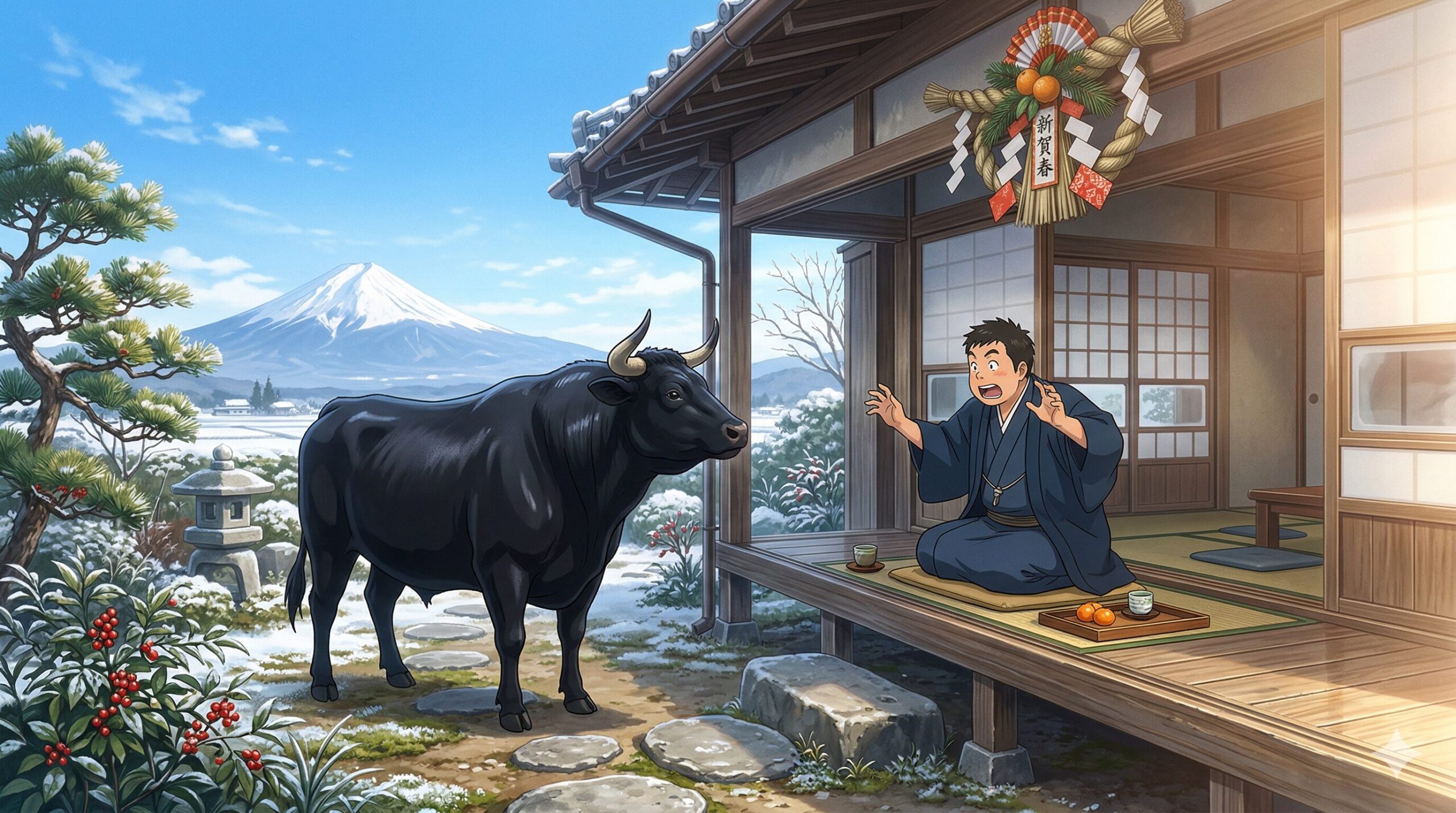
The Story of “Hatsuyume no Ushi” (The First Dream of the Cow)
Once upon a time, in the Suo Province (modern-day Yamaguchi Prefecture), lived a man named Yosaburo. He was notoriously the laziest man in the village. He would stay rolled up in his futon until the sun was high in the sky, and even when he got up, he never worked. He survived day by day by flashing an ingratiating smile at his neighbors and begging for their leftover food.
The event Yosaburo looked forward to the most all year was “Oshogatsu” (the New Year). During the New Year, if he went to greet the Shoya (the village headman) at his grand estate, he would be treated to a lavish feast and plenty of sacred sake (Omiki). On the cold, snowy morning of New Year’s Day, Yosaburo eagerly dressed up and headed straight to the headman’s house.
The headman saw right through Yosaburo’s true intentions. However, believing it was poor form to be angry on the first day of the year, he welcomed the lazy man into his warm parlor. Yosaburo devoured the traditional New Year’s dishes (Osechi) and mochi like a starving wolf. Watching this with a mix of exasperation and amusement, the headman took a sip of green tea and gave Yosaburo a sharp, pointed remark.
“Yosaburo, your appetite is as impressive as ever. But you are a grown man now. Have you finally decided to work seriously this year? By the way, what was your ‘Hatsuyume’ (the first dream of the New Year)? It predicts your fortune for the year. Don’t tell me you dreamed of lying on your back while mochi fell from the sky?”
Struck where it hurt, Yosaburo panicked inwardly. The truth was, his dream was a useless one where he simply took a nap all day. But if he admitted that, he feared he might be banned from the New Year’s feast forever. Desperate, Yosaburo used all his wits and told a massive lie.
“O-Of course not, Sir! I had a magnificent and highly auspicious first dream. In my dream, I received the finest, glossiest black cow from your very estate! Then, side by side with that cow, I sweat and toiled to plow every inch of my fields, resulting in a harvest so abundant it shocked the entire village. It was a truly wonderful dream!”
Hearing this, the headman’s eyes widened, and then he burst into a booming laugh from the bottom of his stomach. “What! A dream where you take my cow and actually work! It may not beat ‘Mt. Fuji, a hawk, and an eggplant’ (the ultimate lucky dreams), but a dream of an energetic cow is undeniably a sign of great fortune. Very well, Yosaburo. Since you say so, I will make that dream come true!”
The headman immediately ordered his servants to bring out the largest, most magnificent black cow from the barn. “Here you go, Yosaburo. Just like in your dream, this cow is yours. Starting today, make this cow your partner and show me the magnificent fields you can cultivate.”
Yosaburo, who only meant it as a lie, was so shocked his knees almost gave out. However, facing the headman’s earnest eyes and the magnificent cow breathing heavily right in front of him, he absolutely could not say, “I was lying.” With trembling hands, Yosaburo took the reins and led the massive beast back to his run-down shack.
Receiving the cow was one thing, but a cow is a living creature. It needs to eat piles of grass and drink plenty of water every day. Yosaburo, who had barely taken care of himself, looked into the cow’s pure, innocent eyes and found he simply could not let it starve. With a heavy sigh, he forced himself out of bed early every morning, climbing the mountain slopes to cut fresh grass for his new companion.
As Yosaburo established a regular routine to care for the cow, his physical strength rapidly increased, and his face took on a sharp, focused look. As the cow grew healthier, Yosaburo realized, “It’s a complete waste of a treasure to have such a fine cow and not plow the fields.” He grabbed his hoe and, together with the cow, vigorously began to plow his long-abandoned, weed-choked land.
He sowed seeds in the spring, sweat through the heat pulling weeds in the summer, and by the time autumn arrived, Yosaburo’s fields were overflowing with golden rice stalks and rich vegetables. It was a spectacular harvest. Yosaburo took his finest crops straight to the headman’s house, bowing deeply to express his profound gratitude.
Thanks to the headman’s cleverness and a single cow, Yosaburo, once the laziest man in the village, was reborn into the most trusted and hardest worker of them all.
Analysis of the Story: A Lie Turned Truth and Clever Psychology
The greatest charm of this story lies in the headman’s brilliant management skills. Instead of preaching or scolding the lazy Yosaburo, he took the desperate lie and turned it around, giving Yosaburo both a physical asset (the cow) and immense social responsibility simultaneously.
This closely resembles the “Pygmalion effect” in modern psychology, where high expectations lead to improved performance. The headman materialized his expectation of “You can do it” in the form of a cow. Yosaburo initially acted out of a sense of duty toward a living creature, but ultimately found the joy of labor on his own. There is no better folktale that embodies the Japanese proverb “Uso kara deta makoto” (A truth born from a lie).
Connection to Japanese Culture: Hatsuyume and the Cow in Agriculture
This folktale deeply reflects unique aspects of Japanese culture. First is the culture of “Hatsuyume” (the First Dream). In Japan, there is a strong belief that the first dream you have in the New Year foretells your luck for the next 12 months. Finding meaning in the contents of a dream acts as the primary driving force of this narrative.
Second is the vital importance of cows in Japanese agricultural history. In ancient Japan, cattle and horses were not merely livestock; they were deeply loved and highly valued as “members of the family” who supported farming side by side with humans. The value of a single cow was immeasurable. The headman’s generosity in giving one away, and the heavy responsibility Yosaburo felt in accepting it, vividly reflect the authentic values of historical Japanese farming communities.
To Our Readers
Have you ever drastically changed yourself because of someone else’s high expectations or an unexpected gift, just like Yosaburo did? Also, if you were in the position of the village headman, how would you have dealt with a lazy person like Yosaburo? This folktale poses significant questions about human potential and how we interact with others. We would love to hear your thoughts!
Related Links:
【日本昔話】「初夢の牛」怠け者の運命を変えた新年の奇跡と心理術
「初夢の牛」の物語
むかしむかし、周防の国(現在の山口県)のある村に、与三郎という男が住んでいました。与三郎は村中が呆れるほどの怠け者でした。毎日太陽が高く昇るまで布団の中でゴロゴロと過ごし、起き出しても働くことはありません。食べるものがなくなれば、近所の人々に愛想笑いを浮かべて食べ物を分けてもらうという、その日暮らしの生活を送っていました。
そんな与三郎が一年で最も楽しみにしているのが「お正月」でした。お正月になれば、村のまとめ役である庄屋の家へ新年の挨拶に出向くことで、豪華なご馳走とお神酒をたっぷりと振る舞ってもらえるからです。冷たい雪が舞う元旦の朝、与三郎はいそいそと身支度を整え、庄屋の大きなお屋敷へと向かいました。
庄屋は、与三郎の魂胆などとうにお見通しでした。しかし、新年から腹を立てるのも野暮だと思い、与三郎を暖かな座敷へと招き入れました。目の前に並べられたおせち料理や餅を、与三郎は狼のようにガツガツと平らげていきます。その様子を呆れ半分、面白さ半分で見ていた庄屋は、食後にお茶をすすりながら、チクリと与三郎に釘を刺しました。
「与三郎よ、今年も見事な食べっぷりじゃな。しかし、お前ももういい大人だ。今年こそは真面目に働く気になったか?ところで、新年の吉凶を占う初夢には、一体どんな夢を見たんだ?まさか、寝転がって空から餅が降ってくる夢じゃあるまいな?」
痛いところを突かれた与三郎は、内心ひどく焦りました。実際に彼が見た夢は、一日中昼寝をしているだけのくだらない夢だったからです。しかし、ここで正直に答えれば、来年からご馳走にありつけなくなるかもしれません。与三郎はとっさに、ありったけの知恵を絞って大嘘をつきました。
「と、とんでもねえ!庄屋様、私は実に立派で縁起の良い初夢を見ましたよ。なんと、この庄屋様のお屋敷から、真っ黒で艶やかな立派な牛を一頭譲り受けたのです。そして、その牛と一緒に汗水垂らして畑を隅々まで耕し、秋には村中が驚くほどの大豊作になるという、それはそれは素晴らしい夢でございます!」
それを聞いた庄屋は、目を丸くした後、ハッハッハと腹の底から大声で笑い出しました。「なんと、わしの牛をもらって働く夢とな!一富士二鷹三茄子には敵わんかもしれんが、働く意欲に満ちた牛の夢は間違いなく大吉夢じゃ。よし、与三郎、お前がそこまで言うのなら、その夢、わしが正夢にしてやろう!」
庄屋は家来に命じ、本当に牛小屋から村で一番立派な黒牛を連れ出してきました。「さあ、与三郎。お前の夢の通り、この牛をやろう。今日からこの牛を相棒にして、立派な畑を作ってみせよ」
嘘のつもりだった与三郎は腰を抜かさんばかりに驚きました。しかし、庄屋のまっすぐな目と、目の前で鼻息を荒くする立派な牛を前にして、「嘘でした」とは口が裂けても言えません。与三郎は震える手で手綱を受け取り、牛を連れて自分のあばら家へと帰りました。
牛をもらったはいいものの、牛は生きています。毎日大量の草を食べ、水を飲みます。これまで自分の世話すらまともにしなかった与三郎ですが、自分を見つめる牛の純粋な瞳を見ていると、どうしても飢えさせることはできませんでした。与三郎は重い腰を上げ、毎朝早くから山の斜面へ登り、新鮮な草を刈り集めるようになりました。
牛の世話のために規則正しい生活を送るようになった与三郎は、みるみるうちに体力がつき、顔つきも精悍になっていきました。牛が健康に育つと、今度は「せっかく立派な牛がいるのに、畑を耕さないのは宝の持ち腐れだ」と気がつきました。与三郎は鍬を握り、荒れ果てていた自分の畑を、牛と共に力強く耕し始めました。
春に種を撒き、夏には汗だくになりながら草むしりをし、秋を迎える頃には、与三郎の畑は黄金色に輝く稲穂と、豊かな野菜で溢れかえっていました。見事な大豊作です。与三郎は収穫した一番良い作物を持って庄屋の家へ行き、深く頭を下げて感謝を伝えました。
庄屋の機転と一頭の牛がきっかけとなり、村一番の怠け者だった与三郎は、村で最も信頼される働き者へと生まれ変わったのです。
物語の考察:嘘から出たまこと、庄屋の巧妙な心理術
この物語の最大の魅力は、庄屋の優れた「人材育成」の手腕にあります。庄屋は怠け者の与三郎に対して、頭ごなしに説教をするのではなく、彼が苦し紛れについた嘘を逆手にとり、物理的な資産(牛)と社会的責任を同時に与えました。
これは現代の心理学でいう「ピグマリオン効果(他者から期待されることで、その期待に沿うように成果を出す現象)」に通じるものがあります。庄屋は与三郎に「お前ならできる」という期待を牛という形で具現化して渡しました。与三郎もまた、最初はもらった命に対する義務感から行動を起こしましたが、最終的には自らの意志で労働の喜びを見出しました。「嘘から出たまこと」ということわざを、これほど見事に体現した昔話は他にありません。
日本文化との関連:初夢信仰と農耕のパートナーとしての牛
この昔話には、日本独自の文化が色濃く反映されています。第一に「初夢(はつゆめ)」の文化です。日本では、新年最初に見る夢がその一年を占うという強い信仰があります。「一富士二鷹三茄子」が縁起が良いとされるように、夢の内容に意味を見出す文化が、この物語の推進力となっています。
第二に、日本の農耕文化における「牛」の重要性です。昔の日本において、牛や馬は単なる家畜ではなく、農業を共に支える「家族の一員」として深く愛され、重宝されていました。牛一頭の価値は計り知れず、それをポンと与えた庄屋の財力と器の大きさ、そしてそれを任された与三郎の責任の重さが、当時の日本の農村社会のリアルな価値観を反映しています。
読者の皆様へ
あなたは与三郎のように、誰かの期待や予想外の贈り物によって、自分自身を大きく変えた経験はありますか?また、もしあなたが庄屋の立場なら、怠け者の与三郎に対してどのような対応をしますか?この昔話は、人間の可能性や他者への接し方について、現代の私たちにも重要な問いを投げかけています。ぜひ、あなたの考えを聞かせてください。
関連リンク:

コメント