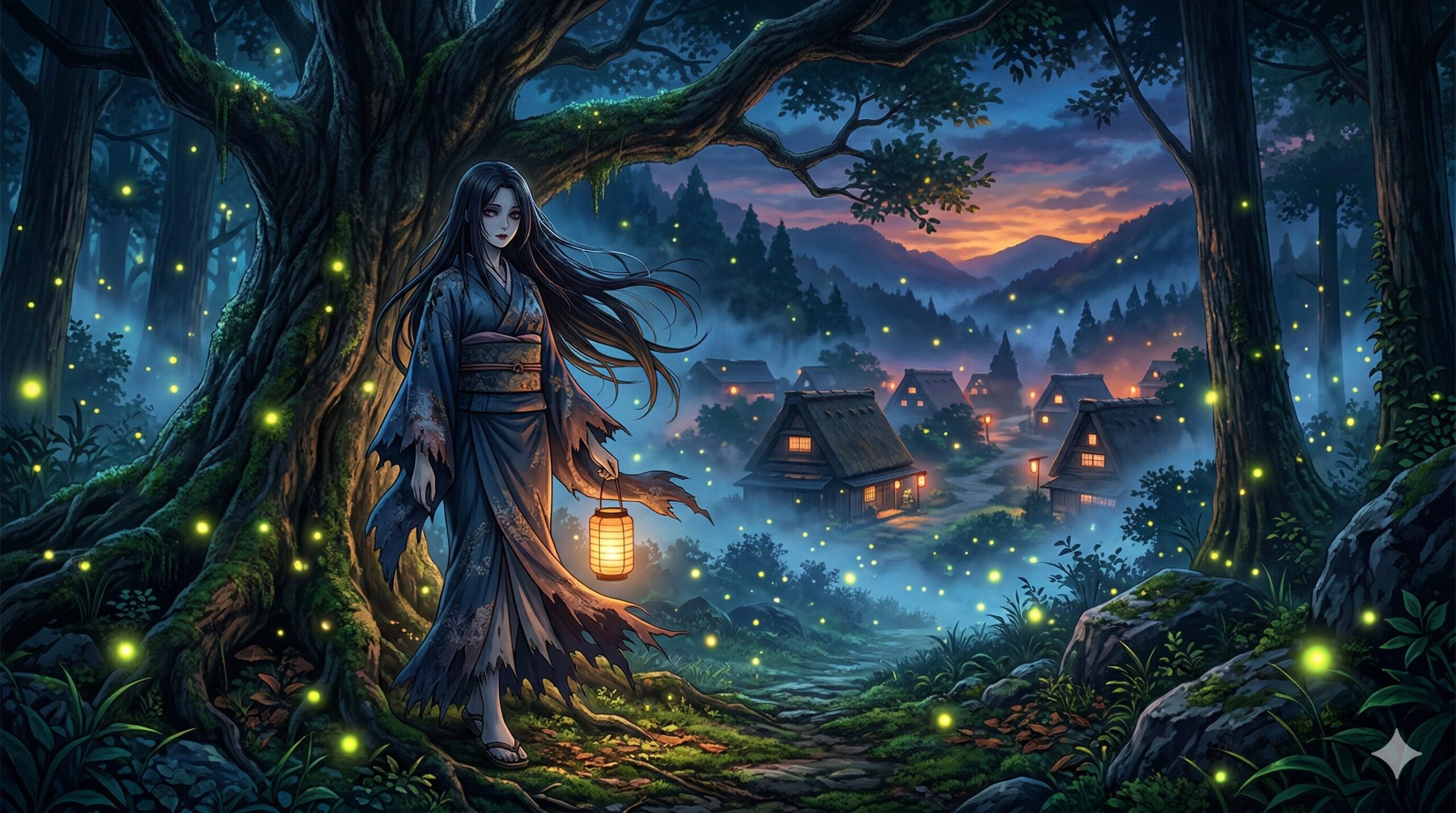
Behind Japan’s rich natural landscapes and ancient history lie numerous mysterious folktales and legends. Today, we are introducing a story set in an old Japanese village that is a bit scary, yet somehow humorous, featuring a highly bizarre ending: “Yamanba no Yomesan” (The Yamanba Bride).
A “Yamanba” is an ancient Japanese yokai (monster/spirit) or mountain deity, typically taking the form of a terrifying old woman who lives deep in the mountains. While somewhat similar to witches or trolls in Western folklore, the Yamanba strongly reflects Japan’s unique perspective on nature. Let’s step into the world of this strange and fascinating tale.

1. The Story of “The Yamanba Bride”
Once upon a time, there was a single man living in a small village. One day, a terrifying-looking “Yamanba” suddenly appeared at his house and demanded:
“Make me your bride.”
The man was terrified from the bottom of his heart. However, fearing that he might be eaten on the spot if he refused, he trembling agreed to take the Yamanba as his wife.
Surprisingly, the Yamanba bride was an incredibly hard worker. She flawlessly handled farm work and household chores from morning till night without a single break, making the man’s life much easier than before. But there was one strange thing: the rice in the man’s storehouse was disappearing at an unusually rapid pace.
Suspicious, the man pretended to go out to the fields one day but secretly hid in the attic to spy on her. To his shock, he saw the Yamanba bride cooking massive amounts of rice in a giant pot. She then formed several enormous rice balls—each the size of a human head—and opened a terrifyingly large mouth, devouring all of them in an instant.
Witnessing her monstrous appetite and terrifying true nature, the man realized that he would eventually be eaten if things continued. That night, he gathered his courage and asked the Yamanba to return to her parents’ home in the mountains. Surprisingly, she readily agreed, but on one condition:
“Before I leave, buy me a large ‘Koshiki’ (a traditional wooden steamer used for cooking rice).”
When the man brought back the large steamer as requested, the Yamanba suddenly grabbed him, shoved him inside the wooden container, and sealed the lid tight. Carrying the heavy steamer on her back, she sprinted toward the deep mountains where her children were waiting. Her plan was to feed the man to her family.
But the man was not going to be eaten without a fight. While the Yamanba was running at full speed along the mountain path, he managed to break the bottom of the steamer and quietly slipped out. Unaware of his escape, the Yamanba arrived at her mountain lair, called her children, and opened the steamer—only to find it completely empty. Realizing he had escaped, she became furious and raced back down the mountain path with a demonic expression.
The fleeing man noticed the enraged Yamanba closing in with terrifying speed and frantically climbed a tall tree. When the Yamanba reached the bottom of the tree, she looked up at him, pulled out her own massive breasts, and began violently smashing them against the tree trunk—*Whack! Whack!*—attempting to chop the tree down. Thanks to her monstrous strength, the huge tree shook violently, and the wood began to chip away.
Driven to absolute desperation, the man began chanting like a magical spell:
“The breasts may tear, but the tree will not be cut! The breasts may tear, but the tree will not be cut!”
Then, something miraculous happened. Whether it was the magical power embedded in the man’s words or sheer luck, before the tree could snap, the Yamanba’s breasts tore off with a loud *BAM!* Crying and screaming, “It hurts! It hurts!”, the Yamanba fled back into the deepest part of the mountains, and the man safely escaped with his life.
2. Analysis of “The Yamanba Bride”
This story shares a very similar structure to a famous Japanese folktale archetype known as “Kuazu Nyobo” (The Wife Who Doesn’t Eat), where a woman who claims she eats nothing reveals a hidden mouth under her hair. However, “The Yamanba Bride” is unique because the creature openly reveals her identity as a Yamanba from the very beginning, and the ending is utterly bizarre.
The Yamanba shows a side of being a “hard worker.” This symbolizes the “blessings” (abundant resources) that nature and the mountains provide to humans. However, simultaneously consuming an abnormal amount of rice and ultimately trying to eat a human symbolizes the “threats” (natural disasters and famine).
Furthermore, the surreal and slightly grotesque climax of “chopping down a tree with breasts” is a dynamic exaggeration typical of oral folklore. Breasts are fundamentally a symbol of “nurturing life,” but here they are transformed into a “tool of destruction” that ultimately destroys itself. This bizarre twist perfectly encapsulates the overwhelming, untamed energy of nature and the wild vitality of the Yamanba yokai.
3. Connections to Japanese Culture
From this folktale, we can deeply understand the traditional Japanese view of nature and the belief in Kotodama (the spiritual power of words).
1. Animism and the Dual Nature of Mountains
About 70% of Japan’s landmass is covered in forests, and since ancient times, people have lived right next to the mountains. Mountains were a “place of blessing” that provided wood and food, but also a “terrifying place bordering death” due to wild beasts and sudden weather changes. The Yamanba is the personification of this dual nature. The man who takes her as a bride out of fear represents ancient Japanese people who had no choice but to coexist with a harsh natural environment.
2. The Power of “Kotodama”
At the climax of the story, the man chants, “The breasts may tear, but the tree will not be cut,” and that is exactly what happens in reality. In Japan, there has been an ancient belief called “Kotodama,” which dictates that words possess a mysterious spiritual power, and what is spoken can influence actual events. This scene demonstrates the victory of human willpower and cultural magic (words) over brute physical violence (the monster’s strength).
4. What Would You Do?
Now that you’ve read this bizarre and terrifying Japanese folktale, what do you think?
If a terrifying-looking stranger who was an incredibly hard worker and completely took care of all your household chores suddenly came to your home and said, “Marry me,” what would you do? Would you accept out of fear or convenience, or absolutely refuse?
Also, what are your thoughts on the Yamanba’s completely unexpected method of trying to chop down the tree? We would love to hear your opinions and thoughts in the comments below!
5. Reference Links & Related Categories
- External Reference: Manga Nippon Mukashibanashi Database – The Yamanba Bride (Japanese)
- Read more Japanese folktales (Internal Link): Japanese Folktale Series
【日本昔話】恐怖と奇妙な結末!「山んばの嫁さん」の物語と日本文化の深い繋がり
日本の豊かな自然と古い歴史の裏側には、数多くの不思議な昔話や伝説が隠されています。今回ご紹介するのは、日本の古い村を舞台にした、少し怖くて、それでいてどこかユーモラスで奇妙な結末を迎える「山んばの嫁さん(やまんばのよめさん)」という物語です。
「山んば(山姥)」とは、日本の山奥に住むと恐れられていた老婆の姿をした妖怪、あるいは山の精霊のことです。海外の民話に登場する魔女やトロールにも似ていますが、日本独自の自然観が強く反映されています。それでは、早速この不思議な物語の世界へと足を踏み入れてみましょう。
① 昔話「山んばの嫁さん」のストーリー
むかしむかし、ある村に独り身の男が住んでいました。ある日のこと、男の家に突然、不気味な姿をした「山んば」がやってきて、こう言いました。
「私を、お前の嫁にしておくれ」
男は心の底から恐ろしくなりましたが、断ればその場で食べられてしまうかもしれないという恐怖から、震えながら山んばを嫁に迎えることにしました。
意外なことに、山んばの嫁さんは非常に働き者でした。朝から晩まで休むことなく畑仕事や家事をこなし、男の生活は以前よりもずっと楽になりました。しかし、奇妙なことが一つだけありました。男の家にある米俵の減りが、異常なほど早いのです。
不思議に思った男は、ある日、畑に出かけるふりをしてこっそり天井裏に隠れ、家の中の様子を伺うことにしました。すると、山んばの嫁さんは大量の米を大鍋で炊き始めました。そして、人間の頭ほどもある巨大なおにぎりをいくつもいくつも握り、それらを信じられないような大口を開けて、あっという間に全て平らげてしまったのです。
その凄まじい食欲と恐ろしい姿を見た男は、やはりこのままでは自分がいつか食べられてしまうと確信し、その夜、山んばに「実家に帰ってくれないか」と切り出しました。すると山んばは意外にもあっさりと承諾しましたが、一つだけ条件を出しました。
「帰る前に、大きな『甑(こしき:米を蒸すための木製の道具)』を一つ買ってきておくれ」
男が言われた通りに大きな甑を買ってくると、山んばは突然男を捕まえてその甑の中に押し込み、蓋を閉めてしまいました。そして、甑を背負うと、自分の子どもたちが待つ深い山奥へと猛スピードで走り出したのです。山んばは、男を自分たちの食料にするつもりでした。
しかし、男も黙って食べられるわけにはいきません。山んばが山道を走っている隙を突き、男は甑の底を破ってこっそりと外へ逃げ出しました。そうとは知らずに山奥の住処にたどり着いた山んばは、子どもたちを呼び集めて甑を開けましたが、中は空っぽです。男が逃げたことに気づいた山んばは激怒し、ものすごい形相で来た道を引き返しました。
逃げていた男は、後ろから凄まじい勢いで追いかけてくる山んばに気づき、慌てて近くの背の高い木に登りました。木の下までやってきた山んばは男を見上げると、なんと自分の巨大な乳房を取り出し、それを「ドスーン!ドスーン!」と木の幹に激しくぶつけて木を切り倒そうとし始めたのです。山んばの怪力により、大木はグラグラと揺れ、幹がどんどん削られていきます。
絶体絶命の男は、必死に呪文のように唱え始めました。
「乳は切れても、木は切れない!乳は切れても、木は切れない!」
すると不思議なことに、男の言葉に呪力が宿ったのか、木が折れるよりも先に、山んばの乳房が「バアァン!」とちぎれて吹き飛んでしまいました。「痛い、痛い!」と泣き叫びながら、山んばは山の一番深い場所へと逃げ帰っていき、男は無事に命拾いをしたのでした。
② 「山んばの嫁さん」の考察
この物語は、日本の有名な昔話の類型である「食わず女房(何も食べないと言って嫁に来た女が、実は髪の毛の下に大きな口を持つ妖怪だったという話)」と非常に似た構造を持っています。しかし、「山んばの嫁さん」が特異なのは、相手が最初から「山んば」であると正体を明かしている点と、その結末の奇妙さにあります。
山んばは「働き者」であるという側面を見せます。これは、自然や山が人間に与えてくれる「恵み(豊富な資源)」の象徴です。しかし同時に、異常な量の米を消費し、最後には人間を食おうとする「脅威(自然災害や飢饉)」の象徴でもあります。
また、最後の「乳房で木を切り倒そうとする」という極めてシュールでグロテスクな描写は、民間伝承特有のダイナミックな誇張表現です。乳房は本来「生命を育むもの」ですが、それが「破壊の道具」として使われ、最後には自壊してしまうという展開には、自然の持つ強大なエネルギーとその限界、あるいは山んばという妖怪の持つ荒々しい生命力が凝縮されています。
③ 昔話から読み解く日本文化との関連
この昔話からは、日本人の伝統的な「自然観」と「言霊(ことだま)信仰」を読み解くことができます。
1. 畏れ敬う自然観(アニミズム)
日本の国土の約7割は森林であり、古来より人々は山のすぐそばで生活してきました。山は木材や食料を与えてくれる「恵みの場所」であると同時に、獣や天候の急変によって命を奪われる「死と隣り合わせの恐ろしい場所」でもありました。山んばはそのような「山の二面性」が擬人化された存在です。彼女を恐れながらも嫁として受け入れた男の姿は、厳しい自然環境と共存せざるを得なかった昔の日本人の姿そのものです。
2. 言霊(ことだま)の力
物語のクライマックスで、男が「乳は切れても、木は切れない」と唱えることで、実際にその通りの結果をもたらします。日本には古くから「言葉には不思議な霊力が宿っており、発した言葉が現実の事象に影響を与える」という「言霊」の信仰があります。このシーンは、物理的な暴力(山んばの力)に対し、人間の精神力と言葉の呪力(文化)が勝利したことを示しています。
④ あなたならどうする?
さて、この奇妙で恐ろしい日本の昔話を読んで、あなたはどう思いましたか?
もしあなたの家に、恐ろしい姿をしているけれど、ものすごく働き者で家の仕事を完璧にこなしてくれる見知らぬ存在が「結婚してくれ」とやってきたら、あなたならどうしますか? 恐怖から受け入れますか? それとも絶対に断りますか?
また、山んばが木を切り倒そうとした予想外の方法について、どのような感想を持ちましたか? ぜひ、あなたの意見や考えをコメント欄で教えてください!
⑤ 参考リンク・関連カテゴリー
- 参考ページ(外部サイト):まんが日本昔ばなし〜データベース〜 山んばの嫁さん
- もっと日本の昔話を読む(内部リンク):Japanese Folktale Series(日本昔話シリーズ)

コメント