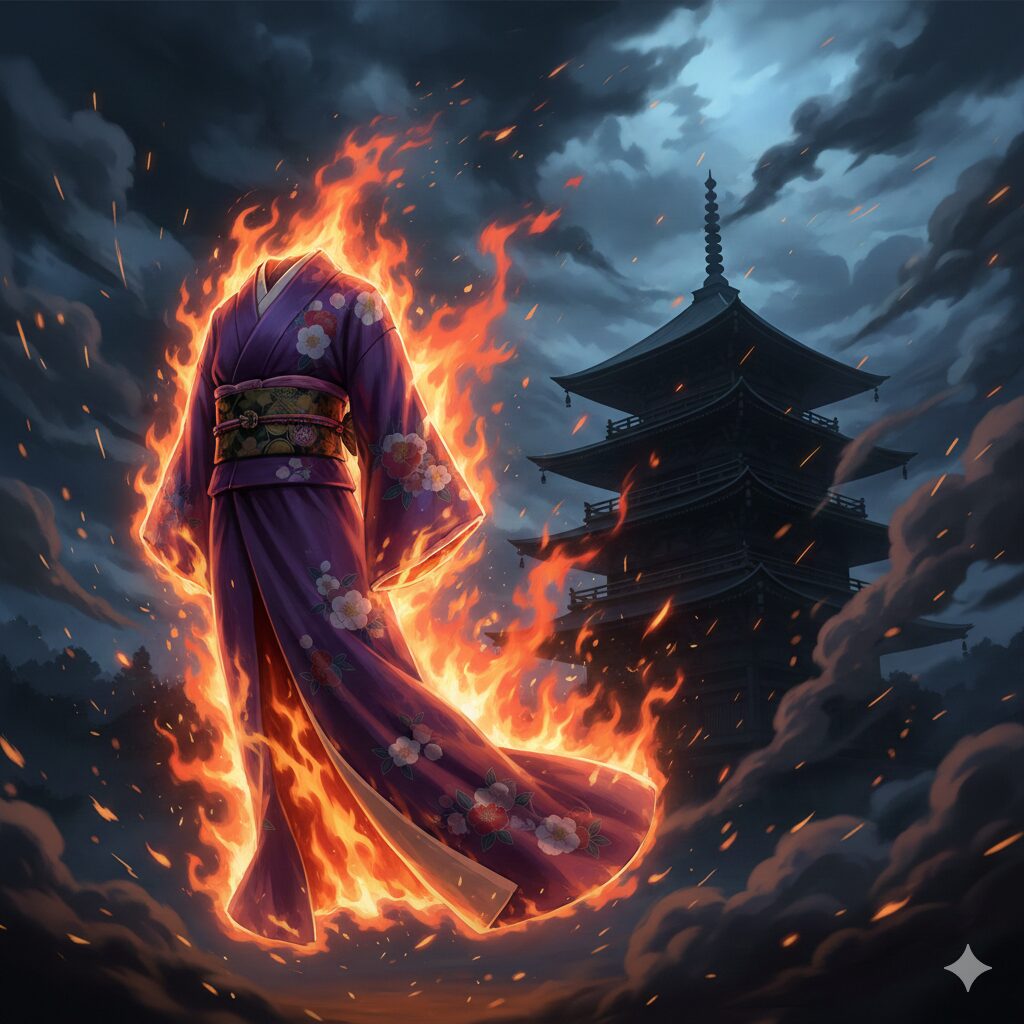
January 18th marks a date in Japanese history that is remembered for a legend as beautiful as it is terrifying. This day is known as the “Furisode Fire” (Furisode Kaji), or historically, the start of the “Great Fire of Meireki.” On this day in 1657 (Year 3 of the Meireki era), a single kimono triggered a disaster that reduced 60% of Edo (modern-day Tokyo), then one of the world’s largest cities, to ashes.
How could a beautiful silk robe cause a catastrophe that claimed over 100,000 lives? Today, we delve into this mystery where urban legend meets historical fact, and explore the resilient spirit of Japan that rose from the flames.

The Legend: The Cursed Purple Furisode
The reason this fire is called the “Furisode Fire” stems from a heartbreaking and inexplicable tale passed down at Honmyo-ji Temple, the fire’s origin point.
The First Girl
The story begins with Umeno, the daughter of a wealthy merchant. She fell in love at first sight with a handsome young temple page in Ueno. To express her love, she had a “purple chirimen (silk crepe) furisode kimono with a camellia pattern” made—matching what he wore. She embraced the kimono day after day, pining for him. However, her love remained unrequited, and she passed away from lovesickness at the tender age of 17.
A Chain of Curses
After Umeno’s death, the kimono was sold to a second-hand clothing store. It then passed to a girl named Kino. Shortly after receiving it, she too fell ill and died at 17. The kimono was sold again to a girl named Iku, who suffered the same fate, dying at 17.
“This kimono is cursed.”
Terrified, the grieving families consulted Honmyo-ji Temple and decided to burn the ominous garment in a ritual known as “Otakiage” (burning offering) to appease the spirits. The date was set for January 18, 1657.
The Gust of Destiny and the Fall of Edo
The moment the priest finished his chant and set fire to the kimono, a sudden, violent gust of wind roared through the temple grounds. The burning kimono, as if possessed by a living spirit, soared high into the sky and landed on the thatched roof of the main hall.
At that time, Edo had seen no rain for over 80 days and was tinder-dry. Historical records state a “northwesterly gale” was blowing. The flames from Honmyo-ji spread instantly, swallowing the city of Edo whole.
- Scope of Damage: Approximately 60% of the city. 500 Daimyo (feudal lord) residences, 770 Hatamoto residences, 350 temples and shrines, and 400 town blocks were destroyed.
- Casualties: Estimated between 30,000 and over 100,000 deaths. This equated to roughly 20% of Edo’s population at the time.
- Historical Loss: The main keep (Tenshukaku) of Edo Castle, the symbol of the Tokugawa Shogunate, was lost and never rebuilt.
Ranked alongside the Great Fire of London (1666) and the Great Fire of Rome (64 AD), this disaster is counted among the world’s three great fires—all said to have started from the “feelings” imbued in a single kimono.
Cultural Insight: The Foundation of Modern Tokyo Born from Destruction
Reflecting on this tragic day allows us to understand two critical elements deep within Japanese culture.
1. The Soul of Objects and the Spirit of “Kuyo”
Why did people go to the trouble of burning the kimono at a temple? Since ancient times, Japanese people have held animistic beliefs (Tsukumogami) that “souls reside in objects that have been used for a long time or are deeply cherished.”
The furisode, soaked in the strong emotions of the deceased girls, was treated not as mere fabric but as an entity with a soul. Therefore, it required the ritual of “Otakiage”—purification by fire to return the spirit to the heavens—rather than being discarded as trash. Even today, this respect and awe for objects persist in rituals like “Ningyo Kuyo” (doll memorial services) and “Hari Kuyo” (broken needle memorial services).
2. Urban Planning and Resilience
The Great Fire of Meireki became the catalyst for completely reconstructing Edo. The Shogunate did not merely rebuild; they implemented revolutionary urban planning to ensure such a tragedy would never happen again.
Creation of Hirokoji: To prevent fire from spreading, extremely wide avenues and open squares (firebreaks) were created in areas like Ueno.
Bridge Construction: Learning from the many who died trapped by rivers, major bridges like Ryogoku Bridge were built across the Sumida River.
Relocation of Residences: To relieve overcrowding, samurai residences and temples were moved to the outskirts.
Current Tokyo’s geographical structure—place names like “Ueno Hirokoji” and the numerous bridges over the Sumida River—exists because of the lessons learned from this fire. Japanese society has constantly evolved to become stronger and safer with every disaster faced.
Flowers Blooming from the Ashes
January 18 is a day of sad memories involving the tragic love of three girls and the destruction of a city. Yet, it is also the “origin of rebirth” where the framework of modern Tokyo began to take shape.
Do you believe that objects can possess a “soul”? And in your country’s history, are there events where a great tragedy served as a turning point for positive social change?
Perhaps the seeds of the future are buried within the ashes of history.
Related Links
Read more: What’s Today’s Special Day Series
1月18日:振袖火事(明暦の大火)—呪われた着物が焼き尽くした江戸の都と、灰からの再生
1月18日は、日本の歴史において決して忘れることのできない、美しくも恐ろしい伝説が残る日です。この日は「振袖火事(ふりそでかじ)」、歴史的には「明暦の大火(めいれきのたいか)」が始まった日として知られています。1657年(明暦3年)のこの日、たった一枚の着物がきっかけとなり、当時の世界最大級の都市の一つであった「江戸(現在の東京)」の6割が灰燼に帰しました。
なぜ、美しい着物が10万人もの命を奪う大惨事を引き起こしたのか?今日は、都市伝説と史実が交差するこのミステリーと、そこから立ち上がった日本の不屈の精神について深く掘り下げていきます。
伝説:死を呼ぶ紫の振袖
この火災が「振袖火事」と呼ばれるのには、あまりにも悲しく、不可解な理由があります。火元の寺院、本妙寺(ほんみょうじ)には、ある一枚の「紫色の振袖」にまつわる因縁話が伝わっています。
第一の少女
物語は、上野の山で美しい寺小姓(若衆)に一目惚れした商家の娘、梅乃(うめの)から始まります。彼女は彼とお揃いの「紫縮緬(むらさきちりめん)に山茶花(さざんか)をあしらった振袖」を仕立て、来る日も来る日もその振袖を抱いて彼を想い続けました。しかし恋は叶わず、彼女は恋の病で17歳という若さでこの世を去ります。
呪いの連鎖
梅乃の死後、その振袖は古着屋に売られました。次にその振袖を手にしたのは、別の娘、きの。しかし彼女もまた、振袖を手にして間もなく17歳で病死してしまいます。さらにその次は、いくという娘の手に渡りますが、彼女もまた同じ運命を辿り、17歳で亡くなりました。
「この振袖には呪いがかかっている」
恐れおののいた遺族たちは、娘たちの菩提寺である本妙寺に相談し、この不吉な振袖を供養のために燃やすこと(お焚き上げ)にしました。それが、1657年1月18日のことでした。
運命の突風と江戸の崩壊
住職が経を読み上げ、振袖に火を放ったその瞬間でした。突如として一陣の強風が吹き荒れました。火のついた振袖は、まるで生き物のように空高く舞い上がり、本妙寺の本堂の屋根へと落下しました。
折しも江戸は80日以上雨が降っておらず、極度の乾燥状態にありました。さらに当日は「西北の暴風」が吹いていたと記録されています。本妙寺から上がった炎は瞬く間に燃え広がり、江戸の町を飲み込んでいきました。
- 被害範囲:江戸市街の約60%。大名屋敷500軒、旗本屋敷770軒、寺社350カ所、町屋400町。
- 死者数:推定3万人から10万人以上。当時の江戸の人口の約2割に相当します。
- 歴史的損失:徳川将軍家の象徴であった「江戸城天守閣」も焼失し、以降、再建されることはありませんでした。
ロンドン大火(1666年)、ローマ大火(64年)と並び、世界三大大火の一つに数えられるこの惨事は、たった一枚の着物への「想い」から始まったと伝えられているのです。
日本文化の読み解き:破壊が生んだ「近代東京」の礎
この悲劇的な日を振り返ることで、私たちは日本文化の深層にある二つの重要な要素を理解することができます。
1. 「物」に宿る魂と供養の精神
なぜ人々は着物をわざわざ寺で燃やそうとしたのでしょうか?日本では古来より、「長く使われた道具や愛着のある品物には魂が宿る」というアニミズム的信仰があります(付喪神/つくもがみ)。
亡くなった少女たちの強い想いが染み込んだ振袖は、単なる布切れではなく、魂を持った存在として扱われました。だからこそ、ゴミとして捨てるのではなく、火によって浄化し、天へ還す「お焚き上げ」という儀式が必要だったのです。現代でも、人形供養や針供養など、日本人は「物」に対する感謝と畏怖の念を持ち続けています。
2. 災害を乗り越える都市計画(リジリエンス)
明暦の大火は、江戸という都市を根本から作り変えるきっかけとなりました。幕府はただ復興するのではなく、二度と同じ惨劇を繰り返さないための画期的な都市改造を行いました。
広小路(ひろこうじ)の設置:火事の延焼を防ぐため、上野や両国などに極端に道幅の広い通りや広場(火除地)を作りました。
橋の建設:逃げ場を失った人々が川で亡くなった教訓から、隅田川に「両国橋」などの大きな橋を架けました。
大名庭園の移転:過密状態を解消するため、大名屋敷や寺社を郊外へ移転させました。
現在の東京の地理的構造、例えば上野広小路という地名や、隅田川にかかる橋の数々は、実はこの大火の教訓によって作られたものです。日本人は災害に遭うたびに、より強く、より安全な社会を築くために進化してきました。
灰の中から咲く花
1月18日は、3人の少女の悲恋と、都市の壊滅という悲しい記憶の日です。しかし同時に、現在の東京の骨格が作られ始めた「再生の原点」でもあります。
あなたは、大切にしている物に「魂」があると感じたことはありますか?また、あなたの国の歴史において、大きな悲劇がきっかけで社会が良い方向へ変わった出来事はありますか?
歴史の灰の中にこそ、未来への種が埋まっているのかもしれません。


コメント