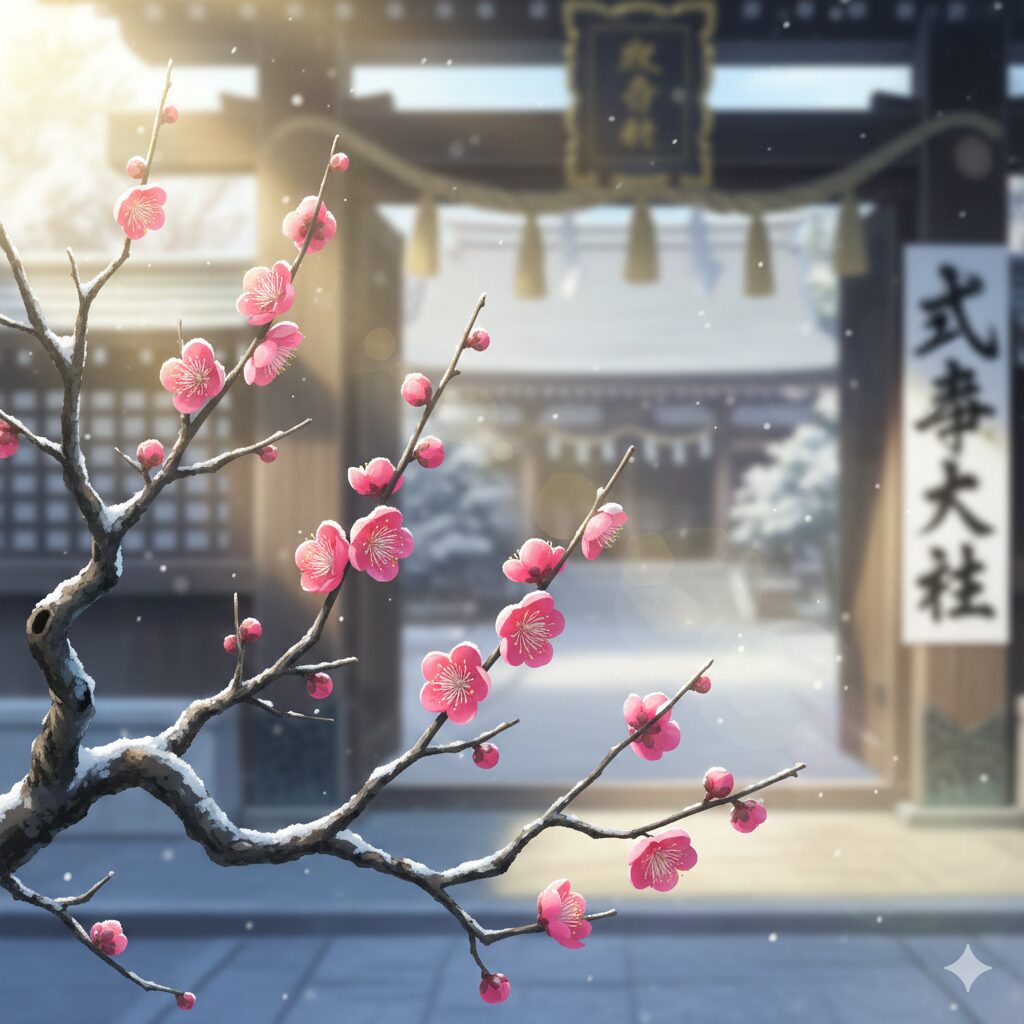
February 4th is Risshun: Why Spring Begins in the Coldest Month in Japan
Here in Kizugawa City, Kyoto, the morning air is still crisp and biting, yet there is a faint, distinct scent of earth awakening. As a programmer, I usually rely on logic and binary certainties, but living in Japan teaches you to appreciate the analog shifts of the seasons. Today, I want to take a deep dive into “Risshun,” the most significant turning point in the Japanese calendar.
February 4th. While we still cling to our gloves and scarves, why do Japanese people declare that “Spring has stood up” (the literal translation of Risshun)? This isn’t just an outdated calendar quirk. It reflects a profound wisdom of coexistence with nature and a “system engineering” approach to warding off bad luck and inviting fortune.

1. What is Risshun? The Starting Line of the 24 Solar Terms
In the modern Gregorian calendar, the new year starts on January 1st. However, in the old lunar calendar and the concept of “Nijushi Sekki” (The 24 Solar Terms), Risshun marks the true beginning of the year.
Astronomical Definition: Solar Longitude 315 Degrees
We programmers love definitions. Risshun is not ambiguous. It marks the point when the sun reaches 315 degrees longitude on the ecliptic path. In 2026, Risshun falls on February 4th.
It is the midpoint between the Winter Solstice and the Vernal Equinox. From this day until the day before “Rikka” (Start of Summer), the season is defined as spring. The wind that blows from today onwards is entitled to be called “Haru Ichiban” (Spring’s First Gale).
Why “Spring” in the Dead of Winter?
There is a standard phrase in Japanese weather forecasts: “According to the calendar, it is spring, but…” There is a deep reason for this gap. The 24 Solar Terms originated in the Yellow River basin of China, so there is a slight climate discrepancy with Japan. But there is more to it.
The true meaning is that “signs of spring are beginning to rise.” It’s not about visible warmth, but about detecting the subtle shifts—insects stirring underground, plum buds swelling. Finding the seeds of the next season within the peak of winter requires a delicate sensibility, which is the essence of Japanese culture.
2. Risshun Customs and Spiritual “Hacks”
Risshun comes with unique customs to welcome the new cycle. Yesterday was “Setsubun,” where people threw beans to drive away demons (oni). Today, we install what I like to call a “security patch” for the home.
The Symmetrical Talisman: “Risshun Daikichi”
Have you ever seen a paper talisman with the characters “立春大吉” (Risshun Daikichi) pasted on the gates of Zen temples? This isn’t just a greeting; it’s a logical security system.
If you write these four characters vertically, you will notice they are perfectly symmetrical. If you draw a line down the middle, the left and right sides mirror each other. Even seen from the back of the paper, it reads “Risshun Daikichi.”
Legend has it that if a demon entered a gate and looked back, it would see the same characters from behind. Confused, thinking, “Wait, did I not enter yet?” or “Should I be going out?”, the demon would turn around and leave. It is a protective charm that utilizes a visual trick—a symmetrical glitch to confuse evil spirits.
Risshun Morning Squeeze (Sake)
For Sake lovers, “Risshun Asashibori” is a premier event. This sake is squeezed in the early hours of Risshun, blessed by a Shinto priest, and shipped out the same day. It is the ultimate celebration drink, combining “freshness” with “sacredness.”
3. The Philosophy of “Beginnings” in Japanese Culture
This day makes me contemplate the Japanese perception of time.
While Western time often feels linear, Japanese time is cyclical. Risshun is the knot in that loop. Interestingly, Japanese aesthetics often find more beauty in “signs” (kizashi) and “remnants” (nagori) than in the peak of an event like full-blown cherry blossoms.
Finding spring in the cold of Risshun is a mindset of finding hope for the future within the severity of the present. In programming terms, it’s like that quiet excitement when the logic of your code is beautiful and complete, even before you’ve hit “run.”
4. A Question for You
Today is February 4th. Whether you are freezing in the northern hemisphere or enjoying summer in the south, the Japanese calendar signals the start of a new cycle.
Are you the type who waits for visible results? Or are you the type who moves as soon as you feel the invisible “signs”?
Risshun is a day to declare the spring within yourself, even if no one else notices it yet. What will you cause to “stand up” (start) this year? Please let me know your resolutions in the comments.
References & Links
- National Astronomical Observatory of Japan (NAOJ) – For accurate dates of the 24 Solar Terms.
- Japan National Tourism Organization (JNTO) – Guide to Japan’s seasonal events.
- What’s Today’s Special Day Series – More articles on Japanese special days.
2月4日は立春。日本の春はここから始まる。二十四節気の魔法と立春大吉の謎。
2月4日は立春。カレンダー上の「春」がもたらす日本人の精神性とは?
京都府木津川市の静かな朝、冷たい空気の中にも微かな土の匂いを感じる今日この頃。プログラマーとしての論理的な思考を持ちながらも、季節の移ろいというアナログな変化に心を寄せる私が、日本の最も重要な暦の転換点「立春」について深く掘り下げます。
2月4日。まだ手袋が手放せないこの時期に、なぜ日本人は「春が立った」と言うのでしょうか。単なる暦上の区分ではありません。ここには、自然と共生してきた日本人の鋭い感性と、厄を払い福を招くためのシステムエンジニアリング的な知恵が詰まっています。
1. 立春とは何か?二十四節気のスタート地点
現代のカレンダー(グレゴリオ暦)では1月1日が新しい年の始まりですが、旧暦や、季節の移ろいを表す「二十四節気(にじゅうしせっき)」においては、この立春こそが「一年の始まり」と捉えられます。
天文学的な定義:太陽黄経315度
私たちプログラマーは定義を好みます。立春は曖昧なものではありません。太陽が天球上の軌道(黄道)の315度の地点を通過する瞬間を含む日、あるいは期間を指します。2026年の立春は2月4日です。
冬至と春分の中間点にあたり、この日から立夏の前日までが「春」と定義されます。つまり、今日から吹く風は「春一番」と呼ぶ資格を持ち、今日以降に降る雷は「春雷」となるのです。
なぜ一番寒い時期に「春」なのか?
「暦の上では春ですが…」という天気予報の決まり文句。実は、これには深い理由があります。二十四節気は中国の黄河流域で作られたものであり、日本の気候とは多少のズレがあります。しかし、それだけではありません。
「春の気配が立ち始める」というのが本来の意味です。可視化された暖かさではなく、地中で虫が動き出し、梅の蕾が膨らみ始める「兆し」を捉える日なのです。ピークを過ぎた冬の中に、次の季節の種を見つける。この繊細な感性こそが、日本文化の真髄です。
2. 立春の風習とスピリチュアルな仕掛け
立春には、新しい年を迎えるための独特な習慣があります。昨日の「節分」で鬼(厄)を払い、身を清めた状態で今日を迎えるわけですが、ここにも興味深い「バグ回避」のような儀式が存在します。
左右対称の最強護符「立春大吉」
禅寺などの門前で「立春大吉」と書かれたお札を見かけたことはありませんか?これは単なるお祝いの言葉ではありません。高度なセキュリティシステムです。
「立春大吉」という四文字を縦書きにしてみてください。真ん中に線を引くと、左右対称になっていることに気づくはずです。紙の裏から見ても「立春大吉」と読めます。
かつて、門に入ってきた鬼がふと振り返った時、裏から見ても同じ文字が見えたため、「あれ?まだ入っていなかったか?」あるいは「ここから出るべきか?」と混乱して出て行ってしまったという逸話があります。シンメトリーという視覚的トリックを使った、非常に論理的な魔除けなのです。
立春朝搾り:縁起の良い酒
日本酒好きにはたまらないイベントが「立春朝搾り」です。立春の日の未明に搾り上がったばかりの生原酒を、その日のうちに神主のお祓いを受け、出荷するというもの。「鮮度」と「神聖さ」を掛け合わせた、究極の祝い酒です。
3. 日本文化における「始まり」の哲学
この日から私は、日本人の「時間の捉え方」について考えさせられます。
西洋的な時間は直線的(リニア)に進みますが、日本の時間は円環的(ループ)です。立春は、その円環の結び目にあたります。 面白いのは、日本人は「満開の桜」や「真夏の日差し」といったピークの状態よりも、「兆し(きざし)」や「名残(なごり)」に美を見出す点です。
立春の寒さの中に春を見つける行為は、現状の厳しさの中に未来の希望を見出すマインドセットに通じます。プログラミングで言えば、まだコンパイルは通っていないけれど、コードのロジックが美しく整った瞬間のような、静かな高揚感と言えるでしょうか。
「さえる」空気感
この時期の寒さを表す言葉に「冴返る(さえかえる)」があります。一度暖かくなりかけたのにまた寒くなることですが、「冴える」という言葉には、空気が澄み渡り、五感が研ぎ澄まされるようなポジティブな響きもあります。立春の空気は、私たちを覚醒させる冷たさを持っているのです。
4. 読者への問いかけ
今日、2月4日。あなたの住む場所がたとえ真冬の寒さであっても、あるいは南半球で夏の盛りであっても、日本の暦は「新しいサイクル」の始まりを告げています。
あなたは、目に見える結果が出るまで待つタイプですか?それとも、目に見えない「兆し」を感じ取って動き出すタイプですか?
立春は、まだ誰も気づいていない春を、自分の中で宣言する日です。今年、あなたが新しく「立たせる」ものは何ですか?ぜひ、その決意をコメントで教えてください。
参考リンク・関連情報
- 国立天文台 暦計算室 (National Astronomical Observatory of Japan) – 正確な二十四節気の日時が確認できます。
- 日本政府観光局 (JNTO) – 日本の四季のイベント情報。
- What’s Today’s Special Day Series – 当ブログの他の記念日記事はこちら。


コメント