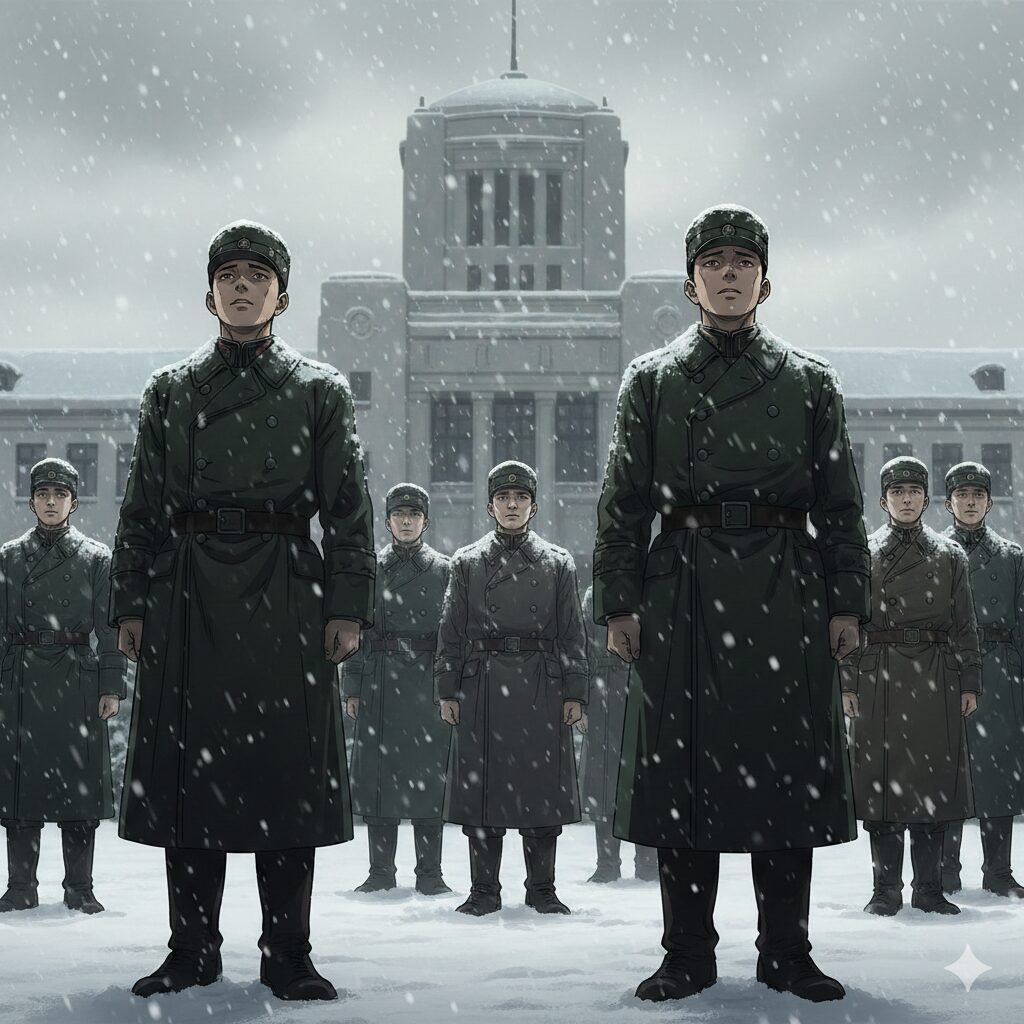
In the modern history of Japan, there is no day where the pure white of snow and the deep red of blood contrast as starkly as February 26, 1936. Known as the “February 26 Incident” (Ni-Ni-Roku Jiken), this was the largest attempted coup d’état in Japanese history, led by young officers of the Imperial Japanese Army who commanded approximately 1,500 troops to militarily occupy the heart of Tokyo.
In the early hours of that morning, Tokyo was blanketed by the heaviest snowfall seen in 30 years. Through the silent, snow-covered streets, heavily armed rebel troops marched in secret. Their targets were the nation’s supreme leaders, including Prime Minister Keisuke Okada, Finance Minister Korekiyo Takahashi, and Lord Keeper of the Privy Seal Makoto Saito. Several prominent statesmen were assassinated, and central Tokyo districts like Nagatacho and Kasumigaseki were completely blockaded by the rebels.
The slogan they raised was “Sonno Tokan” (Revere the Emperor, Destroy the Traitors). This was driven by a fierce sense of justice: to show absolute reverence for the Emperor while purging the corrupt politicians and wealthy conglomerates who they believed were blinding and deafening the Emperor to the true plight of the people.

- The Dream of the “Showa Restoration”: Why Did These Young Men Resort to Violence?
- Understanding Japanese Culture Through the Incident: “Makoto” (Sincerity) and the Rampage of Self-Sacrifice
- Standing at the Turning Point of History: What Would You Do?
- 1936年2月26日、雪降る帝都を震撼させた未曾有のクーデター「二・二六事件」
- 「昭和維新」の夢:なぜ若者たちは凶行に走ったのか?
- 二・二六事件から読み解く日本文化:「誠(まこと)」と自己犠牲の暴走
- 歴史の転換点に立つ:あなたならどうするか?
The Dream of the “Showa Restoration”: Why Did These Young Men Resort to Violence?
This incident cannot be dismissed simply as an act of terrorism. To understand it deeply, one must grasp the severe social issues plaguing Japan at the time. In the 1930s, Japan was heavily affected by the Great Depression. Rural areas, in particular, suffered from extreme poverty, to the point where families were forced to sell their daughters to survive. Meanwhile, a select few—the privileged classes, conglomerates, and politicians—monopolized the nation’s wealth, and political corruption was rampant.
Many of the young officers who instigated the rebellion were either from these rural areas themselves or directly commanded impoverished conscripts. They firmly believed that “to save the starving citizens, we must execute a drastic national reorganization under the direct rule of the Emperor (the Showa Restoration).” At the core of their actions was not self-interest, but an “overly pure patriotism” driven by deep concern for their country and its people.
Understanding Japanese Culture Through the Incident: “Makoto” (Sincerity) and the Rampage of Self-Sacrifice
In Japanese history and culture, there is a tendency to romanticize those who risk their lives for a “pure motive” (Makoto), even if their actions violate law and order. This is, in part, a transformed inheritance of the “Bushido” (Way of the Warrior) spirit.
These young officers were willing to throw their lives away to purge the nation’s corruption. However, they lacked a concrete political plan for the aftermath of a successful coup. They harbored an unrealistic, almost religious, absolute loyalty, believing that “if we assassinate the traitors, the Emperor will naturally enact righteous governance.”
Tragically, Emperor Showa, whom they worshipped absolutely, was furious. Viewing them as a “brutal rebel army” for murdering his closest advisors, the Emperor declared he would personally lead the Imperial Guard to crush them if necessary. The young men who rose up for the Emperor met their ultimate tragic end by being branded as traitors and ordered to be subjugated by the Emperor himself. Consequently, the rebellion was suppressed within days, and the ringleaders faced severe executions.
This incident vividly illustrates the terrifying nature of human beings when overly pure justice twists into madness and brings destruction. It also highlights the “aesthetics of tragedy” flowing beneath the surface of Japanese society. Following this incident, the military’s intervention in politics became decisive, plunging Japan down the dark path toward World War II.
Standing at the Turning Point of History: What Would You Do?
The violent actions of young men who worried for their country’s future and believed in absolute justice can never be condoned. However, the societal distortions that drove them to such extremes—stark inequality and widespread political distrust—are not irrelevant to the modern world we face today.
If you lived in a society full of absurdity where the people you love were suffering, how would you try to change the world? Faced with overwhelming power and corruption, would you choose the path of radical revolution involving violence, or the steady road of dialogue and reform? History confronts us with ultimate choices. After reading this article, please take a moment to deeply reflect on your own thoughts and convictions.
[Related Links]
- Discover more historical events of Japan: What’s Today’s Special Day Series
- Historical Archives & Information: Japan Center for Asian Historical Records (National Archives of Japan)
1936年2月26日、雪降る帝都を震撼させた未曾有のクーデター「二・二六事件」
日本の近代史において、1936年(昭和11年)2月26日ほど、雪の白さと血の赤さが対比される日はありません。「二・二六事件(ににろくじけん)」と呼ばれるこの出来事は、大日本帝国陸軍の青年将校たちが約1,500名の部隊を率いて首都・東京の中枢を武力占拠した、日本国内における最大規模のクーデター未遂事件です。
その日の未明、東京は珍しく30年に1度の大雪に見舞われていました。静まり返った雪の街を、重武装した反乱軍が密かに進軍しました。彼らの標的は、当時の岡田啓介首相、高橋是清大蔵大臣、斎藤実内大臣など、国家の最高指導者たちでした。数名の重臣が暗殺され、東京の中心部である永田町や霞が関は反乱軍によって完全に封鎖されました。
彼らが掲げたスローガンは「尊皇討奸(そんのうとうかん)」。つまり、「天皇陛下を絶対的に敬い、天皇の目と耳を塞いでいる腐敗した政治家や財閥などの悪人を討ち果たす」という激しい正義感に基づくものでした。
「昭和維新」の夢:なぜ若者たちは凶行に走ったのか?
この事件を単なるテロリズムとして片付けることはできません。事件を深く理解するためには、当時の日本が抱えていた深刻な社会問題を知る必要があります。1930年代の日本は、世界恐慌の影響を強く受け、特に農村部では娘を身売りしなければならないほどの極限の貧困にあえいでいました。その一方で、一部の特権階級や財閥、政治家たちは富を独占し、政治の腐敗が蔓延していました。
反乱を起こした青年将校たちの多くは、農村の出身者や、貧しい部下を直接統率する立場にありました。彼らは「飢える国民を救うためには、天皇親政による国家改造(昭和維新)を断行するしかない」と固く信じ込んでいたのです。彼らの行動の根底にあったのは、私利私欲ではなく、国と民を憂う「純粋すぎる愛国心」でした。
二・二六事件から読み解く日本文化:「誠(まこと)」と自己犠牲の暴走
日本の歴史と文化において、しばしば「純粋な動機(誠)」のために命を懸ける者は、たとえその行動が法や秩序に反するものであっても、一定の美学として語られる傾向があります。これは「武士道」の精神が形を変えて受け継がれたものでもあります。
青年将校たちは、自らの命を投げ打ってでも国家の膿を出そうとしました。彼らは反乱が成功した後の具体的な政治計画を持っておらず、「自分たちが奸物を暗殺すれば、あとは天皇陛下が正しい政治を行ってくださる」という、極めて非現実的で宗教的なまでの絶対的な忠誠心を抱いていました。
しかし、彼らが絶対的に崇拝していた昭和天皇は、重臣たちを殺害した彼らを「凶暴な反乱軍」として激しく怒り、自ら近衛師団を率いてでも鎮圧すると宣言しました。天皇のために決起した若者たちは、その天皇自身から逆賊として討伐の命令を下されるという、最大の悲劇的な結末を迎えることになります。結果として、反乱は数日で鎮圧され、首謀者たちは厳しい処刑を受けました。
この事件は、純粋すぎる正義感が狂気へと変わり、破壊をもたらすという人間の恐ろしさと、日本社会の底流にある「滅びの美学」を強烈に物語っています。そして、この事件を機に軍部の政治への介入は決定的なものとなり、日本は第二次世界大戦への暗い道を突き進んでいくことになります。
歴史の転換点に立つ:あなたならどうするか?
国の未来を憂い、絶対的な正義を信じた若者たちの凶行。彼らの行動は決して許されるものではありませんが、彼らをそこまで追い詰めた社会の歪みは、現代の私たちが直面している格差社会や政治不信と無関係ではありません。
もしあなたが、不条理に満ち、愛する人々が苦しんでいる社会に生きていたら、どのような手段で世界を変えようとしますか?圧倒的な権力や腐敗に対して、暴力を伴う急進的な革命を選ぶのか、それとも地道な対話と改革の道を歩むのか。歴史は、私たちに極限の選択を突きつけています。ぜひ、この記事を読んだあなた自身の考えを深く見つめ直してみてください。
【関連リンク】
- 日本の歴史的出来事をもっと知る:今日は何の日シリーズ
- 歴史資料提供・詳細情報:アジア歴史資料センター(国立公文書館)
コメント