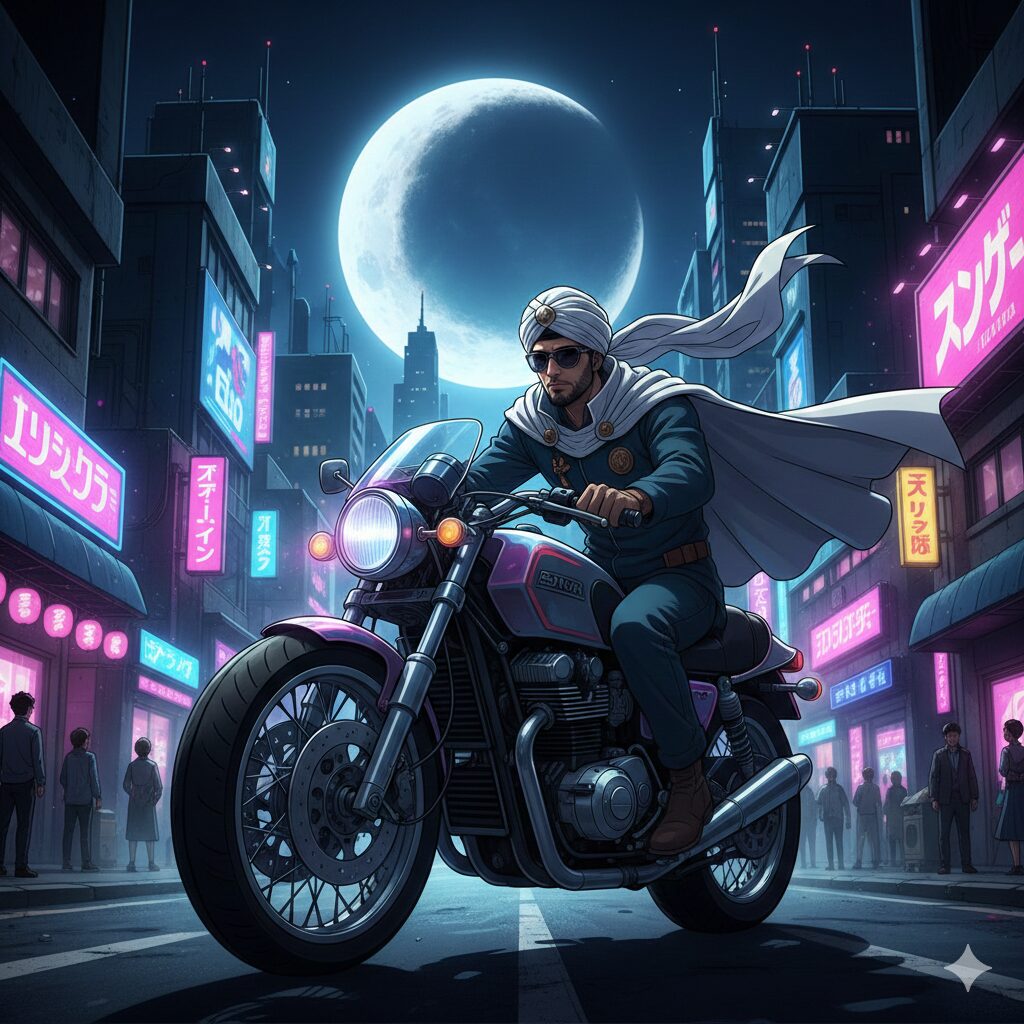
Heroes from Japanese anime and tokusatsu (special effects) shows are now loved all over the world. There are many legendary heroes such as “Kamen Rider,” “Super Sentai (Power Rangers),” and “Ultraman,” but do you know the one who started it all?
On February 24, 1958, a groundbreaking television program began broadcasting on Japan’s KR TV (now TBS). It was Japan’s first domestically produced TV movie and first tokusatsu superhero show: Gekko Kamen (Moonlight Mask). To commemorate this milestone, February 24th is designated as “Moonlight Mask Appearance Day.” Today, we will delve deeply into how this legendary hero influenced Japanese pop culture and the spirituality of the Japanese people.

Who is Moonlight Mask? The Phenomenon that Captivated Showa-era Children
Moonlight Mask is an ally of justice who fights evil clad in a white turban, a white mask, dark sunglasses, and a white cape, riding a motorcycle. At a time when television sets were still expensive and rare in Japan, the show sparked an explosive boom among children the moment it aired.
Streets were filled with children imitating Moonlight Mask, holding toy pistols and using wrapping cloths (furoshiki) as capes. It is said that the show reached an astounding viewership rating of nearly 70%, making it a true social phenomenon. His true identity was never revealed in the show, and his mysterious presence—appearing out of nowhere to save the day and then vanishing—captivated audiences even more.
“Do Not Hate, Do Not Kill, Forgive”: Japan’s Unique Hero Philosophy
When discussing Moonlight Mask, it is absolutely essential to understand the profound philosophy embedded by the original creator, Kohan Kawauchi. Although Moonlight Mask carries twin pistols, he never shoots to kill villains. He only uses his guns to shoot weapons out of his enemies’ hands or to intimidate them.
The ultimate theme of Moonlight Mask was “Do not hate, do not kill, forgive.” This is a highly Buddhist and uniquely Japanese expression of pacifism, in stark contrast to the catharsis of “thoroughly destroying evil” often seen in Western comic book superheroes.
It is said that the model for Moonlight Mask is the “Gakko Bosatsu” (Suryaprabha / Moonlight Bodhisattva) in Buddhism. The Moonlight Bodhisattva is a being who gently and quietly saves people from worldly desires, much like the light of the moon. Just 13 years after the end of World War II, in an era when Japan was still trying to recover from the scars of war, it was no mere coincidence that the nation sought a hero who brought peace through “forgiveness” rather than countering violence with more violence.
Interpreting Japanese Culture and its Message to the Modern World
Moonlight Mask’s spirit of “reforming villains” and “never taking a life” had a massive impact on subsequent Japanese superhero works. Many Japanese heroes empathize with the “sorrow” or “circumstances” of their enemies, developing complex storylines that do not end with simple black-and-white morality.
In modern society, “intolerance” is viewed as a serious problem, evident in cyberbullying on social media and the exclusion of different values. Today, when it has become so easy to attack others in the name of justice, Moonlight Mask’s motto—”Do not hate, do not kill, forgive”—strikes us with a powerful and urgent message. Perhaps true strength is not the power to defeat an enemy, but the generosity of heart to forgive those who have made mistakes and guide them to the right path.
What Do You Think?
If a superhero whose creed is “never kill, always forgive the enemy” appeared in your country, how do you think people would react? Does the modern world truly need warriors with overwhelming power, or beings with hearts full of tolerance? Please let us know your thoughts.
[Reference & Related Links]
- External Link: Moonlight Mask – Wikipedia
- Internal Link: Read more from “Today’s Special Day” series
2月24日は「月光仮面登場の日」:日本のスーパーヒーローの原点と平和への祈り
日本のアニメや特撮番組のヒーローたちは、今や世界中で愛されています。「仮面ライダー」「スーパー戦隊」「ウルトラマン」など、数々の伝説的なヒーローがいますが、そのすべての原点とも言える存在をご存知でしょうか?
1958年(昭和33年)2月24日、日本のテレビ局KRテレビ(現在のTBS)で、ある画期的な番組の放送が開始されました。それが、日本初の国産テレビ映画であり、初の特撮ヒーロー番組『月光仮面(Gekko Kamen / Moonlight Mask)』です。この日を記念して、2月24日は「月光仮面登場の日」とされています。今回は、この伝説のヒーローが日本のポップカルチャー、そして日本人の精神性にどのような影響を与えたのかを深く掘り下げていきます。
月光仮面とは何者か?:テレビにかじりついた昭和の子供たち
月光仮面は、白いターバンに白い覆面、黒いサングラス、そして白いマントを身にまとい、オートバイに乗って悪と戦う正義の味方です。当時、テレビそのものがまだ高価で珍しい時代でしたが、放送が始まると同時に子供たちの間で爆発的なブームを巻き起こしました。
おもちゃのピストルを持ち、風呂敷をマント代わりにして月光仮面の真似をする子供たちが街にあふれました。最高視聴率は70%近くに達したとも言われており、まさに社会現象でした。彼の正体は劇中で明かされることはなく、「どこからともなく現れ、危機を救って去っていく」というミステリアスな存在感が、視聴者をさらに引きつけました。
「憎むな、殺すな、赦しましょう」:日本独自のヒーロー哲学
月光仮面を語る上で絶対に外せないのが、原作者である川内康範(かわうち こうはん)が込めた深い思想です。月光仮面は、二丁拳銃を持っていますが、決して悪人を撃ち殺すことはありません。彼が銃を使うのは、相手の武器を撃ち落としたり、威嚇したりするためだけです。
月光仮面のテーマは「憎むな、殺すな、赦(ゆる)しましょう」でした。これは、西洋のアメコミヒーローが持つ「悪を徹底的に粉砕する」というカタルシスとは対極にある、非常に仏教的で日本的な平和主義の表れです。
月光仮面のモデルは、仏教における「月光菩薩(がっこうぼさつ)」だと言われています。月光菩薩は、月の光のように優しく静かに人々を煩悩から救い出す存在です。第二次世界大戦の終戦からわずか13年後、日本がまだ戦争の傷跡から立ち直ろうとしていた時代に、暴力で暴力を制するのではなく、「赦し」によって平和をもたらすヒーローが求められたのは、単なる偶然ではないでしょう。
月光仮面から読み解く日本文化と現代へのメッセージ
この「悪人を改心させる」「命までは奪わない」という月光仮面の精神は、その後の日本のヒーロー作品にも大きな影響を与えました。日本のヒーローの多くは、敵対する者の中にある「悲しみ」や「事情」に寄り添い、単純な勧善懲悪では終わらない複雑なストーリーを展開します。
現代の社会は、SNSなどでの誹謗中傷や、異なる価値観の排除など、「不寛容」が問題視される時代です。正義の名の下に他者を攻撃することが容易になった今こそ、月光仮面が掲げた「憎むな、殺すな、赦しましょう」という言葉は、強烈なメッセージ性を帯びて私たちに迫ってきます。本当の強さとは、敵を倒す力ではなく、過ちを犯した者を赦し、正しい道へ導く心の広さなのではないでしょうか。
あなたはどう考えますか?
もし、あなたの国に「敵を決して殺さず、赦す」ことを信条とするスーパーヒーローが現れたら、人々は彼をどのように受け入れると思いますか? 現代の世界が本当に必要としているのは、圧倒的な力を持つ戦士でしょうか、それとも寛容の心を持つ存在でしょうか。ぜひ、あなたの考えを教えてください。
【参考・関連リンク】
- 外部リンク:月光仮面 – Wikipedia
- 内部リンク:今日は何の日シリーズをもっと読む


コメント