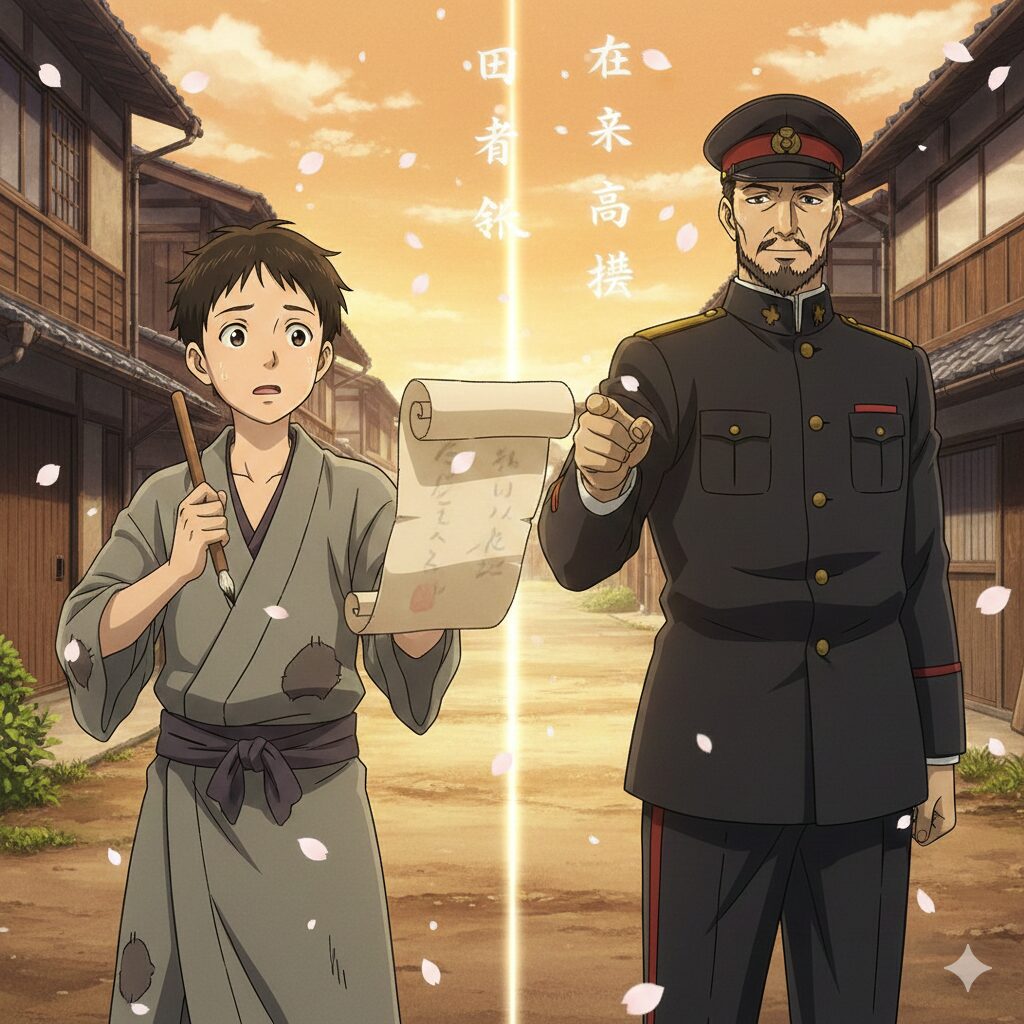
What history is carved into your name?
It is said that there are over 100,000—and by some counts, up to 300,000—different surnames (family names) in Japan today. This number is extraordinarily high compared to neighbors like China and Korea. Sato, Suzuki, Takahashi, Tanaka… What if I told you that all these names were suddenly mandated “one day” by the government?
February 13 is designated as “Surname Establishment Commemoration Day” (Myoji Seitei Kinenbi) in Japan. On this day in 1875 (Meiji 8), the Meiji government issued a decree mandating that “all citizens must take a surname.” This was not merely an administrative procedure. It was a revolutionary day in the history of Japanese human rights, marking the collapse of a centuries-old class system and the recognition of every human being as an “individual.”

Why Didn’t They Have Surnames Before?
To be precise, Japanese people did have surnames in the past. However, before the Edo period, strictly speaking, only samurai, aristocrats, and a select few wealthy farmers or merchants were allowed to use them in public. Common farmers and townspeople called each other only by their given names, such as “Hyoe of [Location]” or “Tomekichi the Carpenter.”
For them, a surname was a “symbol of the privileged class,” something unrelated to them, or even something to be feared.
The Meiji Government’s Rush and the “Mandatory Surname Order”
With the Meiji Restoration in 1868, Japan pushed for rapid modernization. To create family registers, collect taxes, and organize a military, the government needed to identify each individual citizen.
Actually, five years prior to February 13, in 1870, permission had already been granted stating “Commoners may use surnames.” However, old habits die hard. Many citizens thought:
“It’s presumptuous to have a surname,” “They’ll just increase our taxes,” or “We’re fine as we are.”
As a result, most people did not adopt surnames. Growing impatient, the Meiji government issued “Great Council of State Proclamation No. 22” on February 13, 1875, forcibly changing the use of surnames from “permitted” to “mandatory.”
Japanese View of Nature and Creativity Decoded from Surnames
This is where it gets interesting. The people of that time, suddenly told “Make up a surname starting today,” frantically thought of names. The way they named themselves condenses Japanese unique sensibility and culture.
1. Capturing Landscapes and Scenery
Many Japanese surnames are derived from nature and topography. This is proof of how Japanese people have lived in harmony with nature.
- Tanaka (田中): Inside the rice paddy. The center of rice farming culture.
- Yamamoto (山本): At the foot of the mountain.
- Kawaguchi (川口): The mouth of the river.
- Matsushita (松下): Because their house was under a large pine tree.
They adopted the places they lived and the scenery they saw every day as their identity. This represents the Japanese spirituality of living not as rulers of nature, but as a part of it.
2. Directions and Relations
Nishimura (West Village), Kitagawa (North River), Ueda (Upper Rice Field). These indicate positional relationships within a settlement. It is an extremely social way of naming, showing where one belongs within the community.
3. Unique Names Chosen in a Panic
Some names were chosen randomly because officials rushed them, or were complex names given by Buddhist monks. There was also an explosion of playfulness using Kanji (ideograms), such as the surname “Ninomae” written as “One” (一) (read as “ni-no-mae” meaning “before two”).
Cultural Impact of “Surnames” Remaining in Modern Japan
This system created 150 years ago is still deeply rooted in modern Japanese culture.
The Establishment of Hanko (Seal) Culture
With the mandatory use of surnames, the culture of using a “Hanko” (personal seal) rather than a signature for personal identification became solidified. Your own surname, intricately carved into a small circle. It is proof of your social existence. The reason why a registered seal is still required for important contracts in this digital age lies in this historical background.
The Debate on Separate Surnames for Married Couples
Currently, in Japan, when couples marry, they must unify under either the husband’s or wife’s surname (96% choose the husband’s). This is a remnant of the “Ie (Family) System” from the Meiji Civil Code. However, as introduced today, it has only been about 150 years since commoners started having surnames. What is “tradition”? What is individual identity? February 13 gives us an opportunity to redefine these concepts.
A Question for You
If the government suddenly ordered you tomorrow, “Create a new surname for yourself,” what would you name yourself?
Would you include the scenery of where you live? Or would you put your profession or dreams into words?
The diversity of Japanese surnames is the crystal of creativity where people of the past desperately converted their roots into words (Kanji). The next time you see a Japanese name, try to imagine the “scenery” behind those Kanji characters.
Related Links & References
- What’s Today’s Special Day Series (Category)
- Myoji Yurai Net (Surname Origins) – A site to search for roots and rankings of Japanese surnames.
2月13日:日本人が「名前」を手に入れた日。苗字制定記念日の真実
あなたの名前には、どんな歴史が刻まれていますか?
日本には現在、約10万種類以上、数え方によっては30万種類もの「苗字(Family Name)」が存在すると言われています。これは、隣国の中国や韓国と比較しても異常なほど多い数字です。佐藤、鈴木、高橋、田中……。これらの名前が、実は「ある日突然」義務付けられたものだとしたら、あなたはどう思いますか?
2月13日は、日本において「苗字制定記念日」とされています。1875年(明治8年)のこの日、明治政府は国民に対し「すべての国民は必ず苗字を名乗ること」を義務付けました。これは単なる行政手続きの話ではありません。数百年続いた身分制度が崩れ去り、すべての人間が「個」として認められた、日本の人権史における革命的な一日なのです。
なぜ、それまで苗字がなかったのか?
正確に言えば、かつての日本人も苗字を持っていました。しかし、江戸時代以前、公の場で苗字を名乗ることが許されていたのは、武士や貴族、あるいは特別な許可を得た一部の豪農や商人だけでした。一般の農民や町人は、「どこどこの兵衛」「大工の留吉」といったように、名前(Given Name)だけで呼び合っていたのです。
彼らにとって苗字は「特権階級の象徴」であり、自分たちには関係のない、あるいは恐れ多いものでした。
明治政府の焦りと「平民苗字必称義務令」
1868年の明治維新により、日本は急速な近代化を推し進めました。戸籍を作り、税金を徴収し、軍隊を組織するためには、国民一人ひとりを特定する必要がありました。
実は、2月13日の5年前、1870年に一度「平民も苗字を名乗って良い」という許可が出ていました(平民苗字許可令)。しかし、長年の慣習とは恐ろしいものです。国民の多くはこう思いました。
「苗字なんておこがましい」「税金が増やされるのではないか」「今のままで十分だ」
結果、多くの人が苗字を名乗ろうとしませんでした。業を煮やした明治政府は、1875年2月13日、「太政官布告第22号(平民苗字必称義務令)」を発令し、苗字の使用を「許可」から「義務」へと強制的に変更したのです。
苗字から読み解く日本人の自然観とクリエイティビティ
ここからが面白いところです。突然「今日から苗字をつけろ」と言われた当時の人々は、大慌てで名前を考えました。この時の「名付け方」に、日本人の独特な感性と文化が凝縮されています。
1. 地形や風景を切り取る(Landscape)
日本の苗字の多くは、自然や地形に由来しています。これこそが、日本人が自然といかに共生してきたかの証です。
- 田中 (Tanaka): 田んぼの中。稲作文化の中心。
- 山本 (Yamamoto): 山の麓。
- 川口 (Kawaguchi): 川の入り口。
- 松下 (Matsushita): 大きな松の木の下に家があったから。
彼らは、自分たちの住む場所、毎日見ている風景をそのままアイデンティティとして採用しました。これは、自然を支配するのではなく、自然の一部として生きる日本人の精神性を表しています。
2. 方角や位置関係(Direction)
西村、北川、上田。これらは集落の中での位置関係を示しています。コミュニティの中で自分がどこに属しているかを示す、極めて社会的な命名です。
3. 慌ててつけたユニークな名前
中には、役人に急かされて適当につけた名前や、僧侶につけてもらった難解な名前もあります。「一(Ninomae)」のようにトンチを効かせた名前(一の下に二がないから「にのまえ」と読む)など、漢字という表意文字を使った遊び心も爆発しました。
現代日本に残る「苗字」の文化的影響
150年前に作られたこのシステムは、現代の日本文化にも深く根付いています。
ハンコ(印鑑)文化の定着
苗字が義務化されたことで、個人の証明として「サイン」ではなく「印鑑(Hanko)」を押す文化が強固になりました。小さな円の中に、精巧に彫られた自分の苗字。それは自分自身が社会的に存在する証です。デジタル化が進む現代でも、重要な契約には実印が求められるのは、この歴史的背景があるからです。
選択的夫婦別姓の議論
現在、日本では結婚すると夫婦どちらかの(96%は夫の)苗字に統一しなければなりません。これは明治民法以来の「家制度」の名残です。しかし、今日紹介した通り、庶民が苗字を持ってからはまだ150年程度しか経っていません。「伝統」とは何か、個人のアイデンティティとは何か。2月13日は、現代の私たちにその定義を問い直すきっかけを与えてくれます。
あなたへの問いかけ
もし、明日突然、政府から「新しい苗字を自分で作りなさい」と命令されたら、あなたは何と名乗りますか?
あなたの住む場所の風景を入れますか? それとも、あなたの職業や夢を言葉にしますか?
日本の苗字の多様性は、かつての人々が自分のルーツを必死に言葉(漢字)に変換したクリエイティビティの結晶です。次に日本人の名前を見かけたときは、その漢字の向こう側にある「風景」を想像してみてください。
関連リンク・参考文献
- What’s Today’s Special Day Series (Category)
- 国立公文書館 (National Archives of Japan) – 太政官布告などの一次資料が検索可能です。
- 名字由来net – 日本の苗字のルーツやランキングを検索できるサイト。


コメント