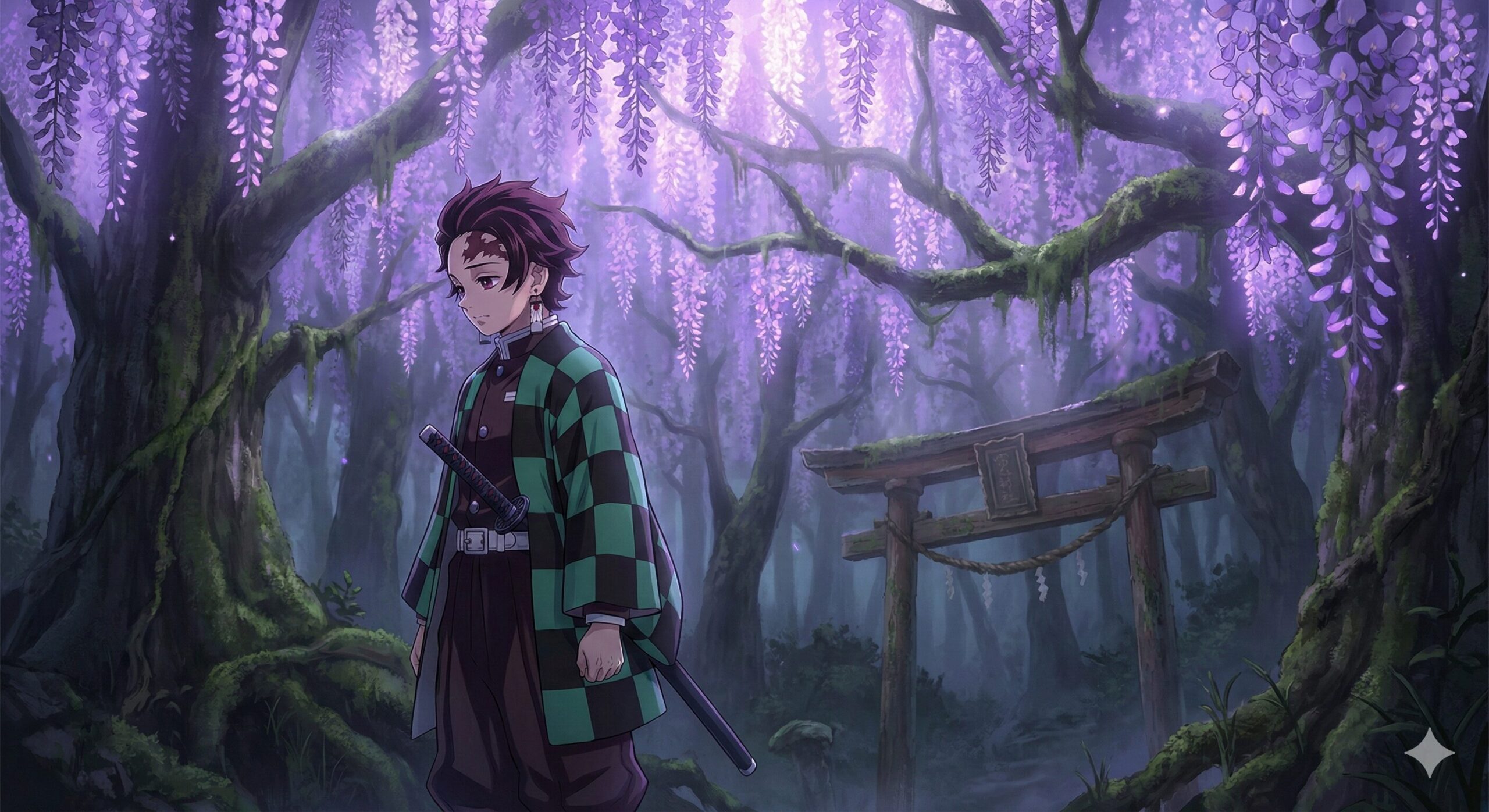
“Demon Slayer: Kimetsu no Yaiba” represents a pinnacle achieved by Japanese animation. This masterpiece is far more than a simple action saga. Condensed within it are Japanese views on life and death, familial love, and the “beautiful Japanese spirit” that was fading amidst rapid modernization. Today, we thoroughly unravel the multilayered appeal of this masterpiece from the perspectives of Japanese history and culture.

1. Story Summary: Wisteria Flowers Blooming in Despair
The story is set in the “Taisho Era” (1912-1926), a period that shines with a unique brilliance in Japanese history. The protagonist, Tanjiro Kamado, having succeeded his late father, lives a humble but happy life as a charcoal burner. However, one snowy day, his fate changes drastically.
His family is brutally slaughtered by man-eating demons (Oni), and his sole surviving sister, Nezuko, is transformed into a demon herself. Standing on the precipice of despair, Tanjiro decides to join the “Demon Slayer Corps” to turn his sister back into a human and to slay the demon that stole his family.
His weapons are the “Nichirin Sword” and a special breathing technique called “Total Concentration Breathing.” But above all, his strongest weapon is his “heart of compassion,” directed even towards demons. This is a story of revenge, yet simultaneously, a story of the soul’s salvation.
2. The True Value of “Demon Slayer” Decoded through Japanese Culture and History
Why has this work recorded such a hit as to become a social phenomenon not only in Japan but around the world? The reason lies in the unique Japanese philosophy and aesthetics flowing at the root of the work.
Taisho Roman: The Interval Between Tradition and Modernity
The Taisho Era, the setting of this work, was a short period of only 15 years, but it is one of the most dramatic eras in Japanese history. Traditional culture such as kimonos and Japanese houses continuing from the Edo period mixed with modern civilization imported from the West, such as steam locomotives, electric lights, and Western clothing.
The contrast depicted in the work between the dazzling electric lights of Asakusa and the silent life deep in the mountains represents this era itself. The composition where the progenitor of demons, Muzan Kibutsuji, prefers Western clothing, while the Demon Slayer Corps wears traditional Haori coats and carries swords, can be read as a structure of conflict between “desire for Western materialism” and “protection of Japanese spirituality.”
“Mono no Aware” and Requiem for Demons
The definitive difference between Western hero archetypes and Tanjiro lies in how they face the enemy, the “Demons.” Many demons were once humans who bore sad pasts. Tanjiro slays them, but he empathizes with their fading souls and offers prayers.
This connects to the Japanese Buddhist spirit of “Kuyo” (memorial service) and the aesthetic of “Mono no Aware,” which finds fleeting beauty in all existence. It does not end with destroying evil; the process of purifying the sorrow of those who were forced to fall into evil is the core of this work.
Breathing and Nature Worship
It is also very Japanese that sword techniques bear the names of natural phenomena, such as “Water Breathing” and “Flame Breathing.” Since ancient times, Japan has held the idea of Animism (Yaoyorozu no Kami), where gods dwell in all things. The idea of exceeding one’s limits by unifying one’s power with nature strongly reflects the spirituality of Bushido (the way of the warrior) and Shinto.
3. Recommended Points to Read and Watch
Overwhelming Visual Beauty (Animation)
The visual expression by the animation production studio ufotable has reached the realm of art. In particular, the depiction of “waves” reminiscent of Hokusai’s Ukiyo-e and the effects of sword trails recreate the stylistic beauty of Japanese painting with modern anime technology. The contrast between silent snowy landscapes and fierce battle scenes is a must-see.
A Story of “Inheritance” Beyond Family Bonds
The character for “Metsu” (Slayer/Destruction) in the title feels as though it contains the meaning not only of destroying demons but also of making thoughts “immortal.” As the character Kyojuro Rengoku demonstrates, even if life ends, that will is inherited by the next generation. This drama of “inheritance” gives readers a strong catharsis in modern society, where individual success is often prioritized.
Kindness Within Cruelty
This work contains many cruel depictions, but they are essential elements to highlight the preciousness of life. Amidst the bloody battles, Tanjiro’s pure and straightforward eyes have the power to wash away the impurities in the viewer’s heart.
4. Conclusion
“Demon Slayer” has gone beyond mere entertainment to become a bible that transmits the “Heart of Wa (Harmony),” “Harmony with Nature,” and “Respect for the Deceased”—values Japanese people have cherished—to the world. If you have not yet touched this work, please immerse yourself in its beautiful yet sorrowful world. You will surely find something important there that you had begun to forget.
Reference Links & Related Info
- Demon Slayer: Kimetsu no Yaiba Official English Website
- Anime News Network – Demon Slayer: Kimetsu no Yaiba (Data)
To learn more about Japanese Anime Culture, please visit:
Japanese Anime Culture Category
鬼滅の刃:大正ロマンと日本精神の結晶 – なぜ世界は炭治郎に涙するのか
日本のアニメーションが到達した一つの頂点、『鬼滅の刃(Demon Slayer: Kimetsu no Yaiba)』。この作品は単なるアクション活劇ではありません。そこには日本の死生観、家族愛、そして急速な近代化の中で失われつつあった「美しき日本の精神」が凝縮されています。今回は、この傑作が持つ多層的な魅力を、日本の歴史的背景と文化的な視点から徹底的に紐解いていきます。
1. 物語の要約:絶望の中で咲く藤の花
物語の舞台は、日本の歴史において独特な輝きを放つ「大正時代(1912-1926)」。主人公・竈門炭治郎(かまど たんじろう)は、亡き父の跡を継ぎ、炭焼きとして慎ましくも幸せな生活を送っていました。しかし、ある雪の日、彼の運命は一変します。
人食い鬼によって家族は惨殺され、唯一生き残った妹・禰豆子(ねずこ)もまた、鬼へと変貌してしまったのです。絶望の淵に立たされた炭治郎ですが、彼は妹を人間に戻すため、そして家族を奪った鬼を討つために「鬼殺隊」に入隊することを決意します。
彼の武器は「日輪刀」と、全集中の呼吸と呼ばれる特殊な呼吸法。そして何より最強の武器は、鬼に対してさえ向けられる「慈悲の心」です。これは復讐の物語でありながら、同時に魂の救済の物語でもあります。
2. 日本文化と歴史から読み解く『鬼滅の刃』の真価
なぜこの作品は、日本のみならず世界中で社会現象となるほどのヒットを記録したのでしょうか。その理由は、作品の根底に流れる日本独自の哲学と美学にあります。
大正ロマン:伝統と近代の狭間
本作の舞台である大正時代は、わずか15年という短い期間でしたが、日本史上最もドラマチックな時代の一つです。江戸時代から続く着物や日本家屋といった伝統文化と、西洋から輸入された蒸気機関車や電灯、洋装といった近代文明が混ざり合っていました。
作中で描かれる、浅草の煌びやかな電灯と、山奥の静寂な生活の対比はこの時代そのものです。鬼の始祖である鬼舞辻無惨が洋装を好み、鬼殺隊が伝統的な羽織と刀を身にまとう構図は、「西洋的な物質主義への欲望」と「日本的な精神性の守護」の対立構造とも読み取ることができます。
「もののあわれ」と鬼への鎮魂
西洋のヒーロー像と炭治郎の決定的な違いは、敵である「鬼」への向き合い方にあります。多くの鬼は、かつては悲しい過去を背負った人間でした。炭治郎は彼らを斬りますが、消えゆく彼らの魂に寄り添い、手を合わせます。
これは日本仏教的な「供養」の精神であり、すべての存在に儚い美しさを見出す「もののあわれ」の美学に通じます。悪を滅ぼして終わりではなく、悪に堕ちざるを得なかった悲しみを浄化するプロセスこそが、この作品の核となっています。
呼吸と自然崇拝
「水の呼吸」「炎の呼吸」など、剣技が自然現象の名を冠しているのも日本的です。日本には古来より、万物に神が宿るというアニミズム(八百万の神)の思想があります。自らの力を自然と一体化させることで限界を超えるという発想は、武道や神道の精神性を色濃く反映しています。
3. この作品を読む・観るべきおすすめポイント
圧倒的な映像美(アニメーション)
アニメーション制作会社ufotableによる映像表現は、芸術の域に達しています。特に、浮世絵の葛飾北斎を彷彿とさせる「波」の表現や、剣技の軌跡のエフェクトは、日本画の様式美を現代のアニメ技術で見事に再現しています。静寂な雪景色と激しい戦闘シーンのコントラストは必見です。
家族の絆を超えた「継承」の物語
タイトルの「滅」という字には、鬼を滅ぼすという意味だけでなく、思いを「不滅」にするという意味も込められているように感じられます。煉獄杏寿郎というキャラクターが示すように、命は尽きても、その意志は次世代へと受け継がれていく。この「継承」のドラマは、個人の成功を重視する現代社会において、強烈なカタルシスを読者に与えます。
残酷さの中にある優しさ
本作は残酷な描写も多いですが、それは生命の尊さを際立たせるために必要不可欠な要素です。血なまぐさい戦いの中で、炭治郎の純粋で真っ直ぐな瞳は、見る者の心の汚れを洗い流すような力を持っています。
4. まとめ
『鬼滅の刃』は、単なるエンターテインメントを超え、日本人が大切にしてきた「和の心」「自然との調和」「死者への敬意」を世界に発信するバイブルとなりました。まだこの作品に触れていない方は、ぜひその美しくも切ない世界に没入してみてください。そこには、忘れかけていた大切な何かが必ず見つかるはずです。
参考リンク・関連情報
日本のアニメ文化についてもっと知りたい方は、こちらもご覧ください:
Japanese Anime Culture Category


コメント