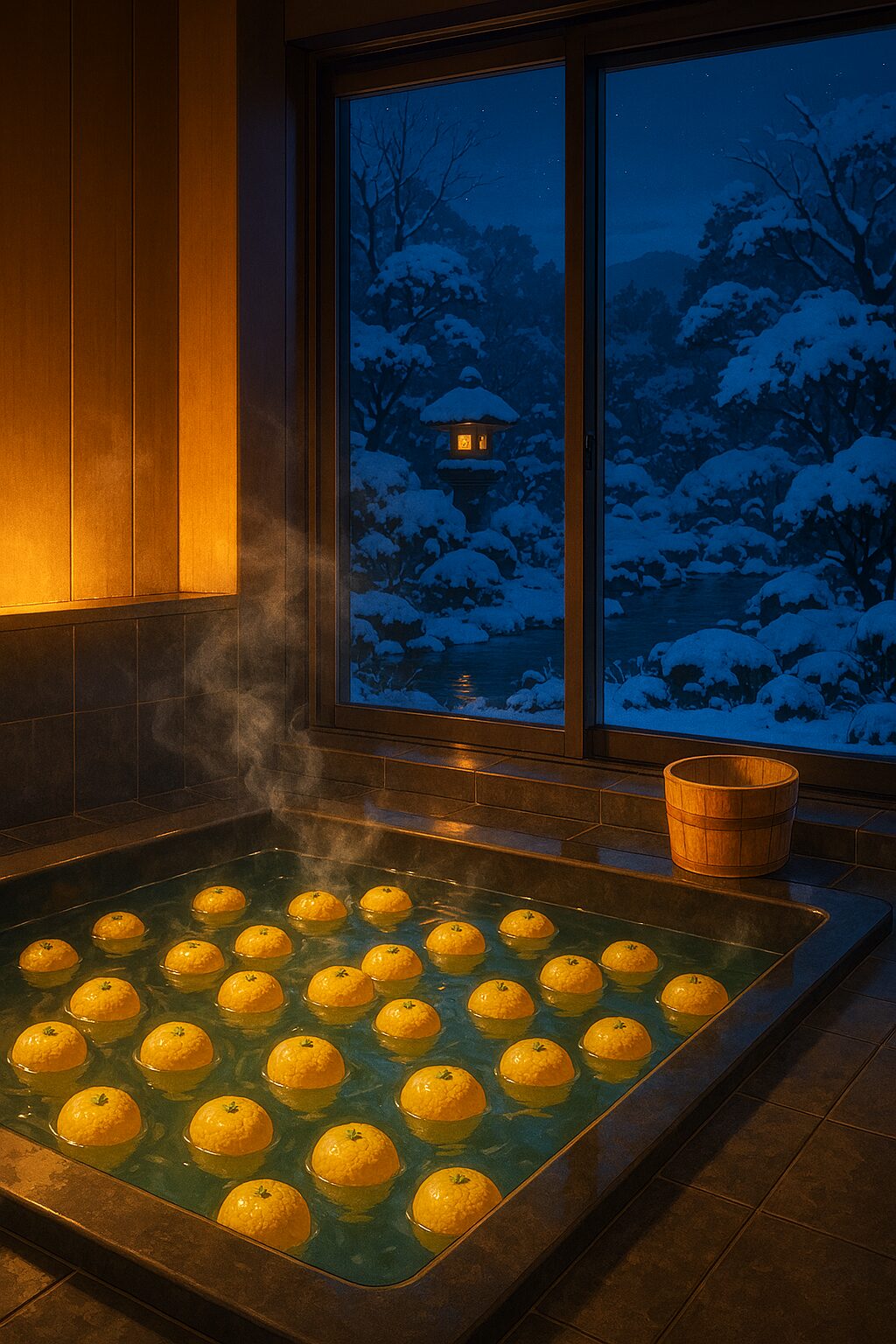
It is the day with the longest night and the shortest daylight of the year. For those of us living in the Northern Hemisphere, “Toji” (Winter Solstice), which falls around December 22nd, is not merely an astronomical milestone. In Japanese culture, this day represents a crucial turning point signifying “death and rebirth” and the “rising of fortune.”
Why do Japanese people eat Kabocha (pumpkin) and bathe in Yuzu (citrus) on this day? Embedded in these practices are the wisdom of ancestors to survive the harsh winter, the Japanese love for wordplay, and deep prayers for the future.

1. What is Toji? Yin Reaches its Peak and Turns to Yang
Toji is one of the 24 solar terms. It is the day when the sun’s power is at its weakest. Ancient people feared this day as something akin to the “death of the sun.” However, looking at it from another perspective, daylight hours begin to lengthen starting from this day.
“Ichiyo Raifuku” (One Yang Returns)
This is another name for Toji, derived from the I Ching (Book of Changes). It means that “once Yin (darkness/negativity) reaches its extreme, it turns into Yang (light/positivity).” In other words, after a streak of bad luck, good fortune will surely return.
Therefore, Toji is not a day of ending, but a “day of the beginning of a new cycle.” At this positive turning point, Japanese people have long performed rituals to invite luck (or “Un” in Japanese).
2. Elevating Luck with “N” Foods: The Law of Un-mori
Japan has a belief in “Kotodama” (spirit of words), the idea that words hold power. On Toji, it is believed that eating foods with the sound “n” in their names leads to acquiring “Un” (luck). This practice is called “Un-mori” (accumulating luck).
The Seven Herbs of Winter and Kabocha (Nankin)
Ingredients that contain the “n” sound twice are considered to bring particularly strong luck and are called the “Seven Herbs of Winter.”
- Nankin: Kabocha squash (pumpkin).
- Renkon: Lotus root (symbolizes seeing into the future due to its holes).
- Ninjin: Carrot (red color wards off evil).
- Ginnan: Ginkgo nut (strong vitality).
- Kinkan: Kumquat (wish for wealth and success).
- Kanten: Agar (rich in fiber).
- Undon: Udon noodles.
Among these, why did Kabocha (Nankin) become synonymous with Toji? It relates to preservation technology of the past. Rich in Vitamin A and carotene, Kabocha was one of the few vegetables harvested in summer that could be stored at room temperature until winter. It was essentially “canned nutrition” to prevent colds and stay healthy during the winter when fresh vegetables were scarce.
3. Yuzu-yu: Purifying the Body and Warding off Evil with Scent
On the night of Toji, Japanese households take a “Yuzu-yu” (Yuzu bath). This custom of floating many Yuzu fruits in the bathtub became established along with public bathhouse culture during the Edo period (1603-1867).
Two Meanings: Wordplay and Medical Benefits
Here again, the Japanese love for puns comes into play.
- Toji (Winter Solstice) = Toji (Hot Spring Cure): Healing the body in hot water.
- Yuzu (Citrus) = Yuzu (Flexibility): Hoping to go through life smoothly and flexibly.
Essentially, the wish is: “Cleanse the body in hot water and live flexibly and healthily.”
Scientifically, this makes sense. The essential oils (such as limonene) in the Yuzu peel dissolve in the hot water, promoting blood circulation and warming the body. Furthermore, the strong fragrance is believed to ward off evil spirits, serving as a ritual purification (Misogi) to cleanse bad luck from the body and mind before welcoming the New Year.
4. The Significance of Toji in Modern Society
Even in modern Japan, Toji customs remain strong. Supermarkets set up special corners for Kabocha and Yuzu, and hot spring facilities host giant Yuzu bath events.
However, its essence is more than just an “event”; it is a “return to the rhythm of nature.” In modern times, where lights keep the night bright, we tend to forget the gratitude for the sun. Toji reminds us that we live within the cycles of the cosmos.
Experiencing the darkest night is an act of confirming the hope that light will surely increase from tomorrow. No matter how difficult the situation (Yin), a time for improvement (Yang) will always come. The philosophy of Toji holds a strength that resonates with the self-care needs of modern people.
A Question for You
How do you spend the Winter Solstice in your country? It might often be treated as part of the Christmas season, but do you have unique customs celebrating the return of the sun?
If you don’t have a specific tradition, why not try floating citrus fruits in a warm bath and eating pumpkin (or yellow vegetables) this December 22nd? Try declaring in your heart, “The bad things end here; from tomorrow, things will only get better.”
Accepting the darkness and waiting for the light. I would love to hear your thoughts on how to spend this quiet time.
Related Information & Links
- What’s Today’s Special Day Series (Category)
- Winter Solstice – Wikipedia (Scientific Definition)
- Japan National Tourism Organization (Winter Guide)
【12月22日】冬至(とうじ):太陽が生まれ変わる、日本古来の再生の儀式
1年で最も夜が長く、昼が短い日。北半球に住む私たちにとって、12月22日頃に訪れる「冬至(Toji)」は、単なる天文学的な通過点ではありません。日本の文化において、この日は「死と再生」、そして「運気の上昇」を意味する極めて重要な分岐点です。
なぜ日本人はこの日にカボチャを食べ、柚子湯に入るのか。そこには、厳しい冬を生き抜くための先人の知恵と、言葉遊び(語呂合わせ)を愛する日本人の遊び心、そして深い祈りが込められています。
1. 冬至とは何か:陰が極まり、陽にかえる
冬至は二十四節気の一つで、太陽の黄経が270度に達する日を指します。太陽の力が最も弱まる日であり、古代の人々はこれを「太陽の死」に近いものとして恐れました。しかし、裏を返せば、この日を境に日照時間は徐々に延びていきます。
「一陽来復(いちようらいふく)」
これは冬至を指す別名であり、中国の「易経」に由来する言葉です。「陰が極まって陽に転ずる」こと、つまり、悪いことが続いた後に幸運が向いてくることを意味します。
つまり、冬至は「終わりの日」ではなく、「新しいサイクルの始まりの日」なのです。このポジティブな転換点において、日本人は古くから運(ん)を呼び込むための儀式を行ってきました。
2. 「ん」のつく食べ物で運気を上げる:運盛りの法則
日本には「言霊(ことだま)」という信仰があります。言葉には力が宿るという考え方です。冬至の日には、「ん」のつく食べ物を食べると「運(うん)」がつくと信じられてきました。これを「運盛り(うんもり)」と呼びます。
冬の七草とカボチャ(南京)
特に「ん」が2回つく食材は、強烈な運気を呼び込むとされ、「冬の七草」と呼ばれています。
- 南瓜(なんきん):カボチャのこと。
- 蓮根(れんこん):穴が開いていることから「先が見通せる」。
- 人参(にんじん):赤い色は魔除けになる。
- 銀杏(ぎんなん):生命力が強い。
- 金柑(きんかん):金運や大成を願う。
- 寒天(かんてん):食物繊維が豊富。
- 饂飩(うんどん):うどんのこと。
中でもなぜカボチャ(南瓜)が冬至の代名詞になったのでしょうか? それは、当時の保存技術に関係しています。ビタミンAやカロテンが豊富なカボチャは、夏に収穫しても冬まで常温で保存できる数少ない野菜でした。野菜が不足する冬に、風邪をひかず健康に過ごすための「栄養の缶詰」だったのです。
3. 柚子湯:香りで邪気を払い、身を清める
冬至の夜、日本の家庭では「柚子湯(Yuzu-yu)」に入ります。お風呂にたくさんの柚子を浮かべるこの習慣は、江戸時代(1603-1867)から銭湯文化と共に定着しました。
二つの意味:語呂合わせと医学的効能
ここでも日本人の大好きな語呂合わせが登場します。
- 冬至(とうじ) = 湯治(とうじ):お湯に入って療養すること。
- 柚子(ゆず) = 融通(ゆうずう):融通が利く(物事がスムーズに進む)ように。
つまり、「お湯に入って身を清め、融通よく暮らしていこう」という願いです。
科学的な視点でも、これは理にかなっています。柚子の果皮に含まれる精油成分(リモネンなど)は、湯に溶け出すと血行を促進し、冷え性を改善します。また、強い香りは邪気を払うと信じられており、新年を迎える前に心身の厄を落とす禊(みそぎ)の意味合いもありました。
4. 現代社会における冬至の意義
現代の日本でも、冬至の習慣は色濃く残っています。スーパーマーケットの入り口にはカボチャと柚子の特設コーナーができ、温泉施設では巨大な柚子湯イベントが開催されます。
しかし、その本質は「イベント」以上に、「自然のリズムへの回帰」です。電気をつければ夜でも明るい現代において、私たちは太陽のありがたみを忘れがちです。冬至は、私たちが宇宙のサイクルの中で生きていることを思い出させてくれます。
最も暗い夜を過ごすということは、明日から必ず光が増していくという希望を確認する行為でもあります。どんなに辛い状況(陰)にあっても、必ず好転(陽)する時が来る。冬至の思想は、現代人の心のセルフケアにも通じる強さを持っています。
あなたへの問いかけ
あなたの国では、冬至(Winter Solstice)をどのように過ごしますか? クリスマスの一部として扱われることが多いかもしれませんが、太陽の復活を祝う独自の風習はありますか?
もし特別な習慣がないのであれば、今年の12月22日は、温かいお風呂に柑橘類を浮かべ、カボチャ(あるいは黄色い野菜)を食べてみてはいかがでしょうか。「悪いことはこれで終わり、明日からは良くなる一方だ」と心の中で宣言してみてください。
暗闇を受け入れ、光を待つ。その静かな時間の過ごし方について、あなたの考えを聞かせてください。


コメント