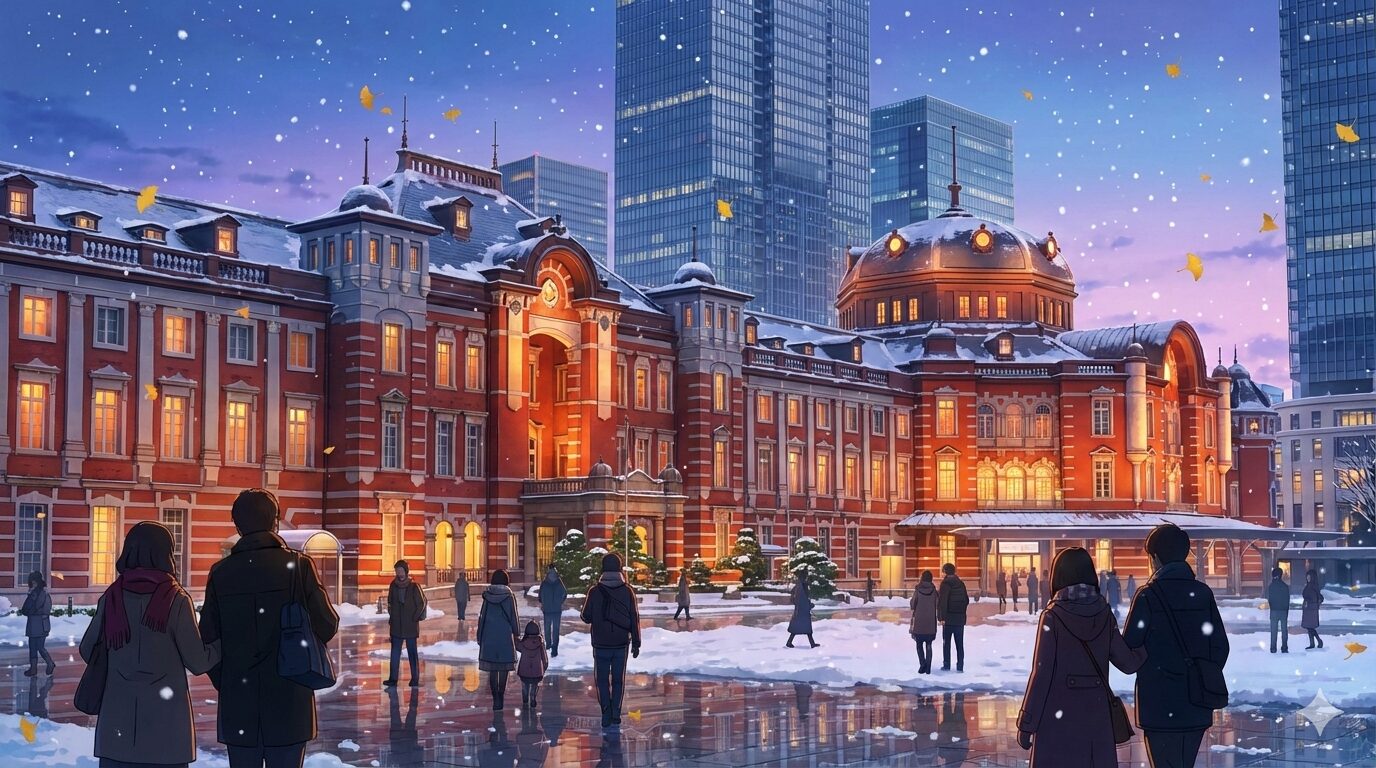
December 18: Tokyo Station Completion Anniversary – The Red Brick Symbol of Japan’s Modernization

Tokyo, the capital of Japan. Sitting at its very heart is a massive terminal where hundreds of thousands of people cross paths every day: Tokyo Station. Today, December 18th, marks the anniversary of the completion of this iconic red brick station building.
Beyond being just a transit point, Tokyo Station is a masterpiece of architectural beauty filled with grand historical drama and the sentiments of the Japanese people. Let’s dig deeper into the story behind the bricks—an invitation to a time tunnel connecting the past and the future.
- A National Project of Prestige: The Miracle of 1914
- The Turbulent Showa Era: A Story of Destruction and Rebirth
- The Grand Opening of 2012: Reclaiming Lost Time
- Decoding Japanese Culture through Tokyo Station: The “Ekinaka” Microcosm
- A Question for the Reader
- 日本の威信をかけた国家プロジェクト:1914年の奇跡
- 激動の昭和:破壊と再生の物語
- 2012年のグランドオープン:失われた時を取り戻す
- 東京駅から読み解く日本文化:「駅ナカ」という小宇宙
- 読者への問いかけ:あなたにとっての「駅」とは?
A National Project of Prestige: The Miracle of 1914
Let’s turn the clock back over 100 years. On December 18, 1914 (Taisho Year 3), the completion ceremony for Tokyo Station was held grandly (it officially opened on December 20). At that time, Japan was in the midst of rapid modernization. To stand shoulder to shoulder with Western powers, building a “Central Station” as the face of the capital was a massive project staked on national prestige.
The Magic of “Red Bricks” by Kingo Tatsuno
The design was led by Kingo Tatsuno, known as the father of modern Japanese architecture. He insisted on a robust steel-framed brick structure. Influenced by British Victorian Gothic styles but fused with unique Japanese aesthetics, the “Tatsuno Style” is characterized by vivid red bricks accented with white granite stripes.
The colossal station building, stretching approximately 335 meters, is positioned directly facing the Imperial Palace. A dedicated entrance for the Imperial Family was installed in the center, signifying that this was not merely a railway facility, but a monument symbolizing the authority of the state.
The Turbulent Showa Era: A Story of Destruction and Rebirth
The history of Tokyo Station has not been a smooth ride. It mirrors the turbulent history of Japan itself.
- A Stage for Assassination: Prime Minister Hara Takashi was attacked within the station in 1921, followed by Prime Minister Hamaguchi Osachi in 1930. The light and shadow of modern politics are etched into these platforms.
- Destruction by War: In May 1945, during the Tokyo Air Raids, the station’s pride—the north and south domes and the third floor—were destroyed by fire. However, in the post-war chaos, restoration work was carried out with astonishing speed. Due to budget and material shortages, the structure was changed from three stories to two, and the domes were replaced with simple octagonal roofs, but the station continued to support Japan’s recovery.
The Grand Opening of 2012: Reclaiming Lost Time
While Tokyo Station was loved for decades in its “post-war specification,” a historic preservation and restoration project was completed in October 2012. This was not just a renovation. It was a project transcending time to faithfully restore the station to its original 1914 form: “three stories” and “North and South Domes.”
I especially urge you to look up at the ceiling reliefs inside the domes. Sculptures of the Chinese zodiac and eagles are displayed, blending the craftsmanship of the past with modern technology. Interestingly, only eight of the twelve zodiac animals are depicted in the domes. Where are the remaining four? It is said they are located at the Takeo Onsen Tower Gate in Saga Prefecture, near the architect Kingo Tatsuno’s hometown. It is a 100-year-old mystery left by the architect.
Decoding Japanese Culture through Tokyo Station: The “Ekinaka” Microcosm
Now that we understand the historical background, let’s look at Tokyo Station from a cultural perspective. Here, Japan’s unique “Ekinaka” (inside the station) culture is concentrated.
A major difference between major stations overseas and in Japan is that the station itself is a “destination.” Without passing through the ticket gates, you can eat ramen from Michelin-listed shops, buy the latest sweets, and purchase limited-edition character goods.
The Heart of Japan Seen in “Omiyage”
The most vibrant area of Tokyo Station is the souvenir (Omiyage) section. During the New Year holidays, homecoming seasons, or business trips, Japanese people almost always bring gifts. This is a culture of care that says, “I am thinking of you,” and Tokyo Station is its epicenter. The sight of beautifully wrapped boxes of sweets flying off the shelves is a symbol of Japanese sense of duty and hospitality.
A Question for the Reader
From its completion in 1914, overcoming earthquakes and war, to regaining its original form in 2012, Tokyo Station stands as a testament to resilience. Amidst the ever-changing skyline of Tokyo, this red brick building seems to protect the unchanging “heart of Japan.”
Does your country have a station with over 100 years of history that is still in active use today? How do you feel about restoring and continuing to use old architectural structures versus building new ones?
If you have the chance to visit Tokyo, before jumping on the Shinkansen, please step outside the station and look up at these magnificent red bricks from the Marunouchi plaza. There, the future envisioned by people 100 years ago intersects with the past that we today have strived to protect.
Related Links
- Tokyo Station City Official Site
- JR East: Tokyo Station Guide
- What’s Today’s Special Day Series Category
12月18日は東京駅完成記念日:赤レンガに秘められた100年の物語と日本の近代化
12月18日:東京駅完成記念日 – 復興と進化を続ける日本の表玄関
日本の首都、東京。その中心に鎮座し、毎日何十万人もの人々が行き交う巨大なターミナル、東京駅。今日、12月18日は、この美しい赤レンガ駅舎が完成した記念すべき日です。
単なる通過点として駅を利用しているだけでは気づかない、壮大な歴史ドラマと建築美、そして日本人がこの駅に託した「想い」について、深く掘り下げていきましょう。これは、過去と未来をつなぐタイムトンネルへの招待状です。
日本の威信をかけた国家プロジェクト:1914年の奇跡
時計の針を100年以上戻しましょう。1914年(大正3年)の12月18日、東京駅の完成式典が盛大に執り行われました(開業は12月20日)。当時の日本は、急速な近代化の真っただ中。欧米列強に肩を並べるため、首都の顔となる「中央停車場」の建設は、国家の威信をかけた一大プロジェクトでした。
辰野金吾が描いた「赤レンガ」の魔法
設計を指揮したのは、日本近代建築の父と称される辰野金吾です。彼がこだわったのは、堅牢な鉄骨レンガ造り。イギリスのヴィクトリアン・ゴシック様式に影響を受けつつも、日本独自の美意識を融合させた「辰野式」と呼ばれるスタイルは、鮮やかな赤レンガと白い花崗岩の帯(ストライプ)が特徴です。
全長約335メートルにも及ぶ巨大な駅舎は、皇居の正面に位置し、中央には皇室専用の貴賓出入口が設けられました。これは、単なる鉄道施設ではなく、国家の権威を象徴するモニュメントだったことを物語っています。
激動の昭和:破壊と再生の物語
東京駅の歴史は、決して平坦なものではありませんでした。それは、日本の激動の歴史そのものです。
- 暗殺の舞台として:1921年には原敬首相が、1930年には浜口雄幸首相が駅構内で襲撃されました。近代政治の光と影が、このプラットホームには刻まれています。
- 戦火による破壊:1945年5月、東京大空襲により、自慢の南北ドームと3階部分が焼失しました。しかし、戦後の混乱期において、驚異的な速さで修復工事が行われました。予算と資材不足のため、3階建てから2階建てへと姿を変え、ドームは八角屋根のシンプルな形になりましたが、それでも駅は日本の復興を支え続けました。
2012年のグランドオープン:失われた時を取り戻す
長らく「戦後仕様」のままで愛されてきた東京駅ですが、2012年10月、歴史的な保存・復原工事が完了しました。これは単なるリフォームではありません。大正時代の創建当時の姿である「3階建て」「南北のドーム屋根」を忠実に蘇らせるという、時を超えたプロジェクトでした。
特に見上げていただきたいのが、南北ドームの天井レリーフです。干支(えと)の彫刻や、鷲の装飾が施され、当時の職人技と現代の技術が見事に融合しています。実は、ドーム内には干支のうち8つしか描かれていません。残りの4つはどこにあるのか? それは辰野金吾の故郷に近い佐賀県の武雄温泉楼門にあると言われています。建築家が仕掛けた100年越しのミステリーです。
東京駅から読み解く日本文化:「駅ナカ」という小宇宙
さて、歴史的背景を知った上で、現在の東京駅を文化的な視点で見てみましょう。ここには、日本特有の「駅ナカ(Ekinaka)」文化が凝縮されています。
海外の主要駅と日本の駅の大きな違いは、駅そのものが「目的地」になっている点です。改札を出ることなく、ミシュラン掲載店のラーメンを食べ、最新のスイーツを購入し、限定のキャラクターグッズを手に入れることができます。
「お土産」に見る日本人の心
東京駅で最も活気があるのは、お土産売り場です。年末年始や帰省シーズン、ビジネスの移動において、日本人は必ず「手土産」を持参します。これは「あなたを大切に思っています」という気遣いの文化であり、東京駅はその発信地です。美しく包装された菓子折りが飛ぶように売れる光景は、日本人の義理堅さとホスピタリティの象徴と言えるでしょう。
読者への問いかけ:あなたにとっての「駅」とは?
1914年の完成から、震災や戦争を乗り越え、2012年に本来の姿を取り戻した東京駅。この赤レンガの駅舎は、変わりゆく東京の街並みの中で、変わらない「日本の心」を守り続けているように見えます。
あなたの国には、100年以上の歴史を持ち、今なお現役で活躍している駅はありますか? また、古い建築物を修復して使い続けることについて、どう感じますか?
もし東京を訪れる機会があれば、新幹線に飛び乗る前に、一度駅舎の外に出て、丸の内側の広場からこの壮大な赤レンガを見上げてみてください。そこには、100年前の人々が見た未来と、現代の私たちが守ろうとした過去が交差しています。


コメント