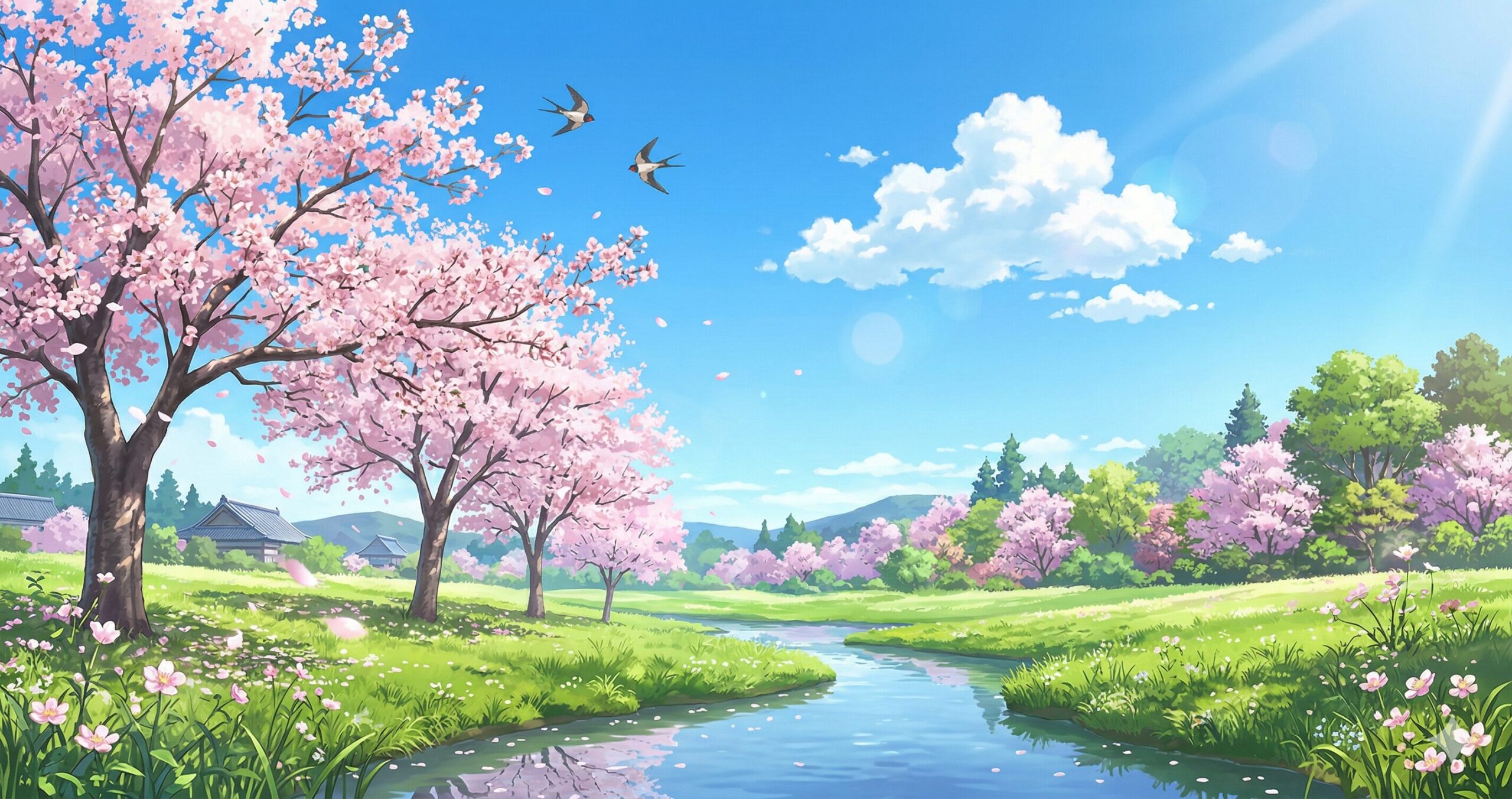
Spring in Japan is not just about warmer weather. It breathes with ancient wisdom that senses the subtle transitions of nature. April 5th marks a highly significant day in the Japanese calendar. It is the fifth of the “24 Solar Terms” (Niju-shi Sekki), known as “Seimei” (清明).
In this article, we will delve deep into what the season of “Seimei” means in the context of Japanese history and culture.
What is “Seimei”? Its Historical Background
The word “Seimei” is an abbreviation of the phrase “Shojo Meiketsu,” which translates to “everything is pure, vibrant, bright, and beautiful.” The cold winter winds have completely vanished, and under the warm spring sun, flowers bloom in profusion, birds sing, and the sky is crystal clear. It is truly a time overflowing with the joy of life.
The 24 Solar Terms originally originated in the Yellow River basin of ancient China and were established before the Common Era. They were introduced to Japan around the 6th century and adapted to fit the Japanese climate and natural environment. In Japan, an agricultural society, knowing the exact timing for sowing seeds and harvesting was a matter of life and death. Therefore, the 24 Solar Terms, based on the sun’s position, became deeply rooted in people’s lives as an essential agricultural calendar.
During the period of Seimei, Japan also experiences the migration of birds; swallows arrive from southern countries, and wild geese return to the north. It is also a time when gentle spring rains fall, nurturing the growth of crops.
Decoding Seimei: The Symbiosis of Japanese Culture and Nature
The period of “Seimei” holds a very special meaning in modern Japanese society. This is because, in Japan, April is the “month of new beginnings.”
While the new school year starts in September in many countries, in Japan, schools open their new academic year in April, and companies welcome their new employees. The fascinating aspect of unique Japanese culture is how this social “new start” synchronizes perfectly with the natural world’s “sprouting of life” (Seimei).
And the undeniable symbol of this season is the “Cherry Blossom” (Sakura). During Seimei, cherry blossoms reach full bloom in many parts of Japan. Japanese people gather under the cherry trees with family, friends, and colleagues to enjoy food and drinks in a tradition called “Ohanami” (cherry blossom viewing). Ohanami is not merely a picnic. In the cherry blossoms, which bloom brilliantly for a short period and then scatter beautifully, the Japanese perceive both the “radiance of life” and its “ephemerality.” This is the aesthetic of “Mono no Aware,” which forms the core of the Japanese spiritual mindset.
Seimei is not just a date on a calendar. It is a time that best expresses the Japanese heart, which seeks to stay close to the changes in nature and live in harmony with them. Breathing in the pure and bright spring air allows you to be reborn as a new self. Seimei offers us the opportunity for such a spiritual reset.
A Question for You: The Arrival of Spring
In Japan, “Seimei” is a season full of hope, where the beauty of nature is intimately connected with people’s daily lives. Being captivated by the beauty of the cherry blossoms while swelling with expectations for a new life—that is the scenery of April in Japan.
How did you feel reading this article? How do you celebrate and perceive the arrival of spring or the beginning of a new season in your country or region? If you are planning to start something new right now, why not borrow the refreshing energy of “Seimei” and take that first step?
Related Category:
Read more in the What’s Today’s Special Day Series
Reference Link (External Site):
4月5日 二十四節気「清明」:日本に訪れる「清浄明潔」の季節
日本の春は、ただ暖かいだけではありません。そこには、自然の細やかな移ろいを感じ取る、古来からの知恵が息づいています。4月5日は、日本の暦において非常に重要な意味を持つ日です。この日は、太陽の動きに基づいて1年を24の季節に分けた「二十四節気(にじゅうし節気)」の第5番目、「清明(せいめい)」にあたります。
今回は、この「清明」という季節が日本の歴史や文化においてどのような意味を持つのか、深く掘り下げてご紹介します。
「清明」とは何か?その歴史的背景
「清明」という言葉は、「清浄明潔(しょうじょうめいけつ)」という言葉を略したものです。これは「すべてのものが清らかで、生き生きとして、明るく美しい」状態を意味しています。冷たい冬の風が完全に去り、暖かな春の陽射しのもとで、花々が咲き誇り、鳥が歌い、空が澄み渡る。まさに生命の喜びが満ち溢れる時期です。
二十四節気は、元々古代中国の黄河流域で生まれ、紀元前にはすでに確立されていました。それが6世紀頃に日本に伝わり、日本の気候風土に合わせて定着していきました。農耕社会であった日本において、種まきや収穫の時期を正確に知ることは死活問題でした。そのため、太陽の位置を基準とする二十四節気は、農業の重要なカレンダーとして人々の生活に深く根付いたのです。
清明の時期、日本ではツバメが南の国から渡ってきたり、雁(がん)が北へ帰っていったりする、渡り鳥の移動の季節でもあります。また、春の雨が静かに降り注ぎ、穀物の成長を助ける時期でもあります。
清明から読み解く、日本文化と自然の共生
「清明」の時期は、現代の日本社会において、特別な意味を持っています。なぜなら、日本では4月が「新しい始まりの月」だからです。
多くの国では9月に新学期が始まりますが、日本では4月に学校の新学期が始まり、企業では新入社員が入社する新年度がスタートします。この社会的な「新しいスタート」と、自然界の「生命の芽吹き(清明)」が完全に見事にシンクロしているのが、日本独自の文化の面白いところです。
そして、この時期の象徴といえば、間違いなく「桜(Cherry Blossom)」です。清明の時期は、日本の多くの地域で桜が満開を迎えます。日本の人々は、桜の木の下に集まり、家族や友人、同僚と食事や酒を楽しむ「お花見」を行います。お花見は単なるピクニックではありません。短い期間で一気に咲き、美しく散っていく桜の花に、日本人は「命の輝き」と「儚さ(はかなさ)」の両方を感じ取ります。これは「もののあわれ」と呼ばれる、日本人の精神性の根幹を成す美意識です。
清明は、ただカレンダー上の日付ではありません。自然の変化に寄り添い、共に生きようとする日本人の心が最も表れる時期なのです。清らかで明るい春の空気を胸いっぱいに吸い込み、新しい自分に生まれ変わる。清明は、そのような精神的なリセットの機会を私たちに与えてくれます。
あなたに問いかける、春の訪れ
日本における「清明」は、自然の美しさと人々の生活が密接に結びついた、希望に満ちた季節です。桜の美しさに心を奪われながら、新しい生活への期待に胸を膨らませる。それが日本の4月の風景です。
この記事を読んで、あなたはどのように感じましたか?あなたの住む国や地域では、春の訪れ、あるいは新しい季節の始まりをどのように祝い、どのように感じ取っていますか?もしあなたが今、何か新しいことを始めようとしているなら、この「清明」のすがすがしいエネルギーを借りて、最初の一歩を踏み出してみてはいかがでしょうか。
関連カテゴリー:
What’s Today’s Special Day Series をもっと読む
参考リンク(外部サイト):

コメント