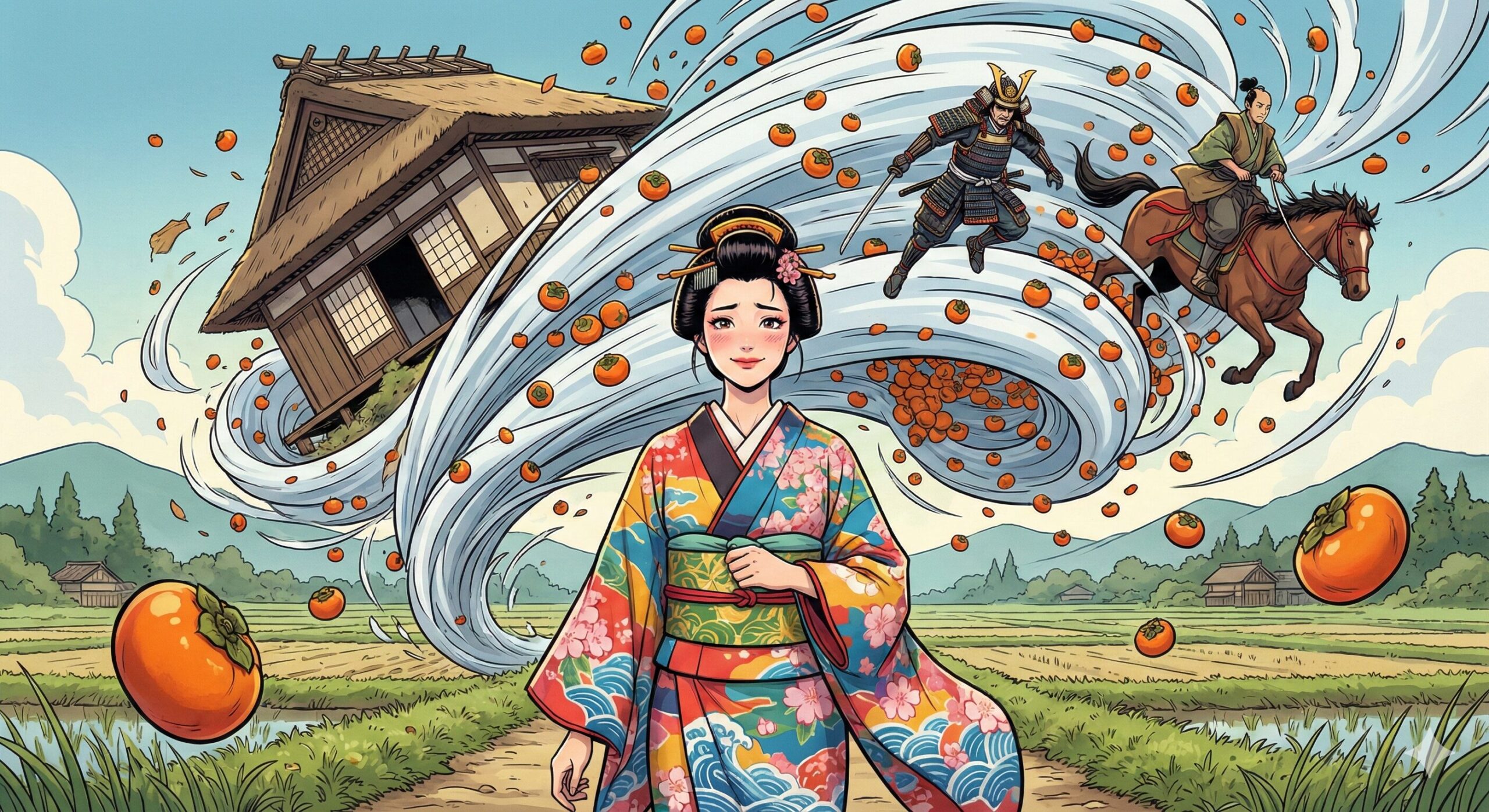
Japanese folktales are not just about beautiful legends or terrifying ghost stories; there are also many incredibly unique and hilarious tales. Today, we are introducing “Hehiri Nyoubou” (The Farting Wife), an exceptionally humorous story that actually reflects the deep nuances of traditional Japanese culture.

The Story of “Hehiri Nyoubou”
Once upon a time, an elderly mother and her son lived in a small village. One day, the son welcomed a beautiful, hardworking, and devoted bride from a neighboring village.
However, about ten days into the marriage, the bride grew pale and lost all her energy. Worried, her mother-in-law gently asked, “What’s wrong? Are you feeling ill?” The bride hesitated, blushing, and finally confessed:
“Actually… I really need to fart, but I have been holding it in all this time.”
Hearing this, the mother-in-law laughed kindly. “Is that all? We are family inside our own home. Don’t hold back; let it out!” Encouraged, the bride said, “Excuse me, then,” lifted the hem of her kimono, and unleashed a fart with all her might.
BOOOOM!!!
With a deafening roar, a massive gust of wind swept through the house. The shockwave was so powerful that it blew the poor mother-in-law right out of the house and all the way into the radish field across the street!
Witnessing this disaster, the husband (the son) flew into a rage. “I can’t keep such a dangerous wife in my house! I’m sending you back to your parents!” He immediately demanded a divorce. Weeping, the bride followed behind her angry husband as they walked back toward her family’s home.
As they trudged along, they reached a port. There, they saw a grand merchant ship stranded, unable to set sail because there was no wind. Seeing their plight, the bride said, “Let me help you,” and unleashed a massive fart toward the sea. The gale instantly caught the ship’s sails, propelling it powerfully out into the open ocean. The sailors were overjoyed and gave the bride three large bales of rice as a reward.
Further down the road at a mountain pass, they encountered a merchant struggling to harvest persimmons from a tall tree. Once again, the bride let out a powerful fart. The wind violently shook the tree, causing all the ripe persimmons to fall perfectly to the ground. The grateful merchant rewarded her with rolls of luxurious silk and a fine horse to carry them.
Watching this unfold, the husband’s attitude completely changed. “I thought her farts were just a dangerous nuisance, but I was wrong! This is a magical talent that brings wealth! It would be a massive waste to send such a treasure of a wife back to her parents!”
The husband quickly bowed his head to his wife and pleaded, “Please, I beg you, come back home with me.” The bride’s face lit up with joy. “Yes! I’d love to!” she replied. In her extreme excitement, she let out one more colossal fart. The blast instantly blew her husband all the way back to their house. The bride then leisurely walked back home, leading the horse loaded with rice and silk.
Afterward, the husband built a special, separate house (room) just for his wife so she could fart comfortably whenever she wanted. The couple lived happily and prosperously ever after.
Deep Analysis of the Folktale
At first glance, this is just a silly comedy, but the narrative structure is highly logical. Initially, the bride’s fart is rejected as “domestic violence and a nuisance” that harms her family. However, once introduced to society, that exact same destructive energy becomes “motive power for a ship” and “labor for harvesting,” generating massive wealth.
The strong underlying message is: “A unique trait or an embarrassing complex can be transformed into a tremendous talent or asset if you change your perspective or the environment in which it’s used.” The husband’s sudden change of heart might seem materialistic, but it symbolizes the tough, pragmatic wisdom of the common people.
Cultural Connections: Why a “Fart”?
This folktale reveals several unique aspects of traditional Japanese culture and history.
- The Repressed Role of the Bride: In Japan’s historical patriarchal society, a woman marrying into another family had to be hyper-aware of her surroundings, often suppressing her true self—even natural bodily functions—to avoid offending her in-laws. The depiction of “getting sick from holding in a fart” comically but accurately portrays the immense physical and mental pressure brides faced.
- The Broad-minded Humor of Agrarian Society: Japanese folklore is full of “scatological humor” involving bodily functions. In a farming society closely tied to the earth, these were not merely seen as “dirty,” but rather as symbols of vitality and the energy that enriches the soil. It showcases the resilient, down-to-earth spirit of the Japanese people who could turn natural human phenomena into laughter.
- The Origin of the Word “Heya” (Room): At the end of the story, the husband builds a “He-no-ya” (House of Farts) for his wife. One folkloric interpretation is that this is a humorous folk etymology explaining the origin of the Japanese word “Heya” (部屋), which means “room.” It’s an intellectual wordplay typical of traditional storytellers.
What Would You Do?
If you possessed an unusual trait or a deeply hidden complex, how would you flip the script and turn it into a positive talent? Furthermore, if you were in the husband’s shoes, would you be able to accept a partner with the power to literally blow everything away?
We invite you to reflect on your own life and values as you ponder this uniquely entertaining Japanese folktale. Let us know your thoughts in the comments!
Reference & Related Links
You can verify the details of the folktale introduced in this article at the following database:
External Reference Link: Manga Nippon Mukashibanashi Database – “Hehiri Nyoubou” (Japanese)
If you want to discover more fascinating Japanese folktales, please visit our dedicated category:
Internal Link: Japanese Folktale Series
日本のユーモアと奥深さを知る!昔話「屁ひり女房」の世界へようこそ
日本の昔話には、美しい伝説や恐ろしい怪談だけでなく、思わず吹き出してしまうようなユニークな物語も数多く存在します。今回ご紹介するのは、その中でも群を抜いてユーモラスでありながら、実は日本文化の奥深さを反映している「屁ひり女房(へひりにょうぼう)」というお話です。
昔話「屁ひり女房」のストーリー
むかしむかし、ある村に年老いた母親と息子が暮らしていました。ある日、息子は隣村からとても働き者で親孝行な、美しい娘を嫁に迎えました。
ところが、結婚して10日ほど経つと、嫁の顔色が悪くなり、すっかり元気がなくなってしまいました。心配した姑(母親)が「どうしたの?どこか具合でも悪いの?」と優しく尋ねると、嫁はもじもじしながらこう答えました。
「実は……おならをしたくてたまらないのですが、ずっと我慢しているのです」
それを聞いた姑は笑って、「なんだ、そんなことかい。家の中なんだから、遠慮せずに思い切り出しなさい」と促しました。すると嫁は、「それでは、少し失礼して……」と着物の裾をまくり上げ、渾身の力を込めておならを放ちました。
ドッカーーーン!!!
凄まじい轟音とともに突風が吹き荒れ、なんと姑はその風圧で家から外へ吹き飛ばされ、向かいの大根畑まで飛んでいってしまったのです。
この惨状を見ていた亭主(息子)はカンカンに怒りました。「いくらなんでも、こんな危険な嫁を家に置いておくわけにはいかない!実家に帰れ!」と離縁を言い渡しました。嫁は泣く泣く、亭主の後ろを歩いて実家へと向かいました。
二人がとぼとぼと道を歩いていると、港に出ました。そこには、風がなく帆が張れずに、出航できなくて困り果てている立派な貨物船がありました。それを見た嫁は「私がお手伝いしましょう」と言うなり、海に向かっておならを放ちました。凄まじい突風が帆をはらませ、船は勢いよく沖へと進んでいきました。船乗りたちは大喜びし、お礼として米俵を三俵もプレゼントしてくれました。
さらに道を歩いて峠に差し掛かると、今度は高い柿の木に登れず、実を取れずに困っている商人に出会いました。嫁はここでもおならを放ち、その風圧で木を激しく揺らし、柿の実をすべて綺麗に落としてあげました。商人は大いに感謝し、お礼に高級な反物と、それを運ぶための立派な馬をくれました。
この一部始終を見ていた亭主の態度は一変しました。「ただの迷惑なおならだと思っていたが、とんでもない。これは家を豊かにする宝のような才能だ!こんな素晴らしい嫁を実家に返すなんて、もったいない!」
亭主は慌てて嫁に頭を下げ、「どうか家に戻ってきておくれ」と頼み込みました。嫁はパァッと顔を輝かせて喜び、「はい!喜んで!」と返事をするなり、嬉しさのあまり再び特大のおならを放ちました。その風圧で亭主はあっという間に自宅まで吹き飛ばされて帰っていきました。嫁は手に入れた米俵や反物を馬に積んで、悠々と歩いて家に戻りました。
その後、亭主は嫁がいつでも気兼ねなくおならができるように、専用の特別な家(部屋)を作ってあげました。夫婦はそれから末永く、裕福に幸せに暮らしたということです。
「屁ひり女房」から読み解く深い考察
一見するとただの笑い話ですが、この物語は非常に論理的な展開を持っています。最初、嫁のおならは「身内を吹き飛ばす暴力・迷惑行為」として否定されます。しかし、社会に出た途端、その強大なエネルギーは「船を動かす動力」「農作物を収穫する労働力」として価値を持ち、富(米や布、馬)を生み出します。
つまりこれは、「個人の持つ特異な性質やコンプレックスは、活かす場所や見方を変えれば、巨大な才能や財産に変わる」という強烈なメッセージを持った物語なのです。亭主の態度の変化は現金にも見えますが、実用主義的でたくましい庶民の生きる知恵を象徴しています。
日本文化との関連性:なぜ「おなら」なのか?
この昔話から、日本固有の文化や歴史的背景を読み解くことができます。
- 抑圧された嫁の立場: 昔の日本の家父長制社会において、他家から嫁いできた女性は、常に周囲に気を配り、本来の自分(自然な生理現象すらも)を極端に押し殺して生きなければなりませんでした。「おならを我慢して病気になる」という描写は、当時の嫁の精神的・肉体的なプレッシャーをコミカルに、しかし的確に表しています。
- おおらかな農耕社会のユーモア: 日本の民間伝承には、排泄物やおならを題材にした「スカトロジー・ユーモア」が数多く存在します。大地と密接に結びついた農耕社会において、これらは決して単なる「穢れ」ではなく、生命力や土壌を豊かにするエネルギーの象徴でもありました。自然現象を笑いに昇華する、日本人のたくましくおおらかな精神性が垣間見えます。
- 「部屋」という言葉の語源?: 物語の結末で、亭主は嫁のために「屁の家(へ・の・や)」を作ります。民俗学的な解釈の一つとして、これが日本語の「部屋(へや)」の語源になったという言葉遊び(民間語源)が込められています。日常的な言葉の起源をユーモアで説明する、昔話ならではの知的な楽しみ方です。
あなたならどうする?
もしあなたが、人に言えないようなコンプレックスや、変わった特徴を持っていたとしたら、それをどのようにポジティブな才能に変えますか?また、もしあなたがこの亭主の立場だったら、すべてを吹き飛ばす規格外のパワーを持つパートナーを受け入れることができますか?
ぜひ、あなた自身の環境や価値観に照らし合わせて、このユニークな日本の昔話についてどう思ったか、考えてみてください。
参考リンク・関連記事
本記事で紹介した昔話の詳細は、以下のデータベースからも確認できます。
外部参考リンク:まんが日本昔ばなし〜データベース〜「屁ひり女房」
さらに日本の魅力的な昔話を知りたい方は、当ブログの専門カテゴリーをご覧ください。
内部リンク:Japanese Folktale Series(日本の昔話シリーズ)

コメント