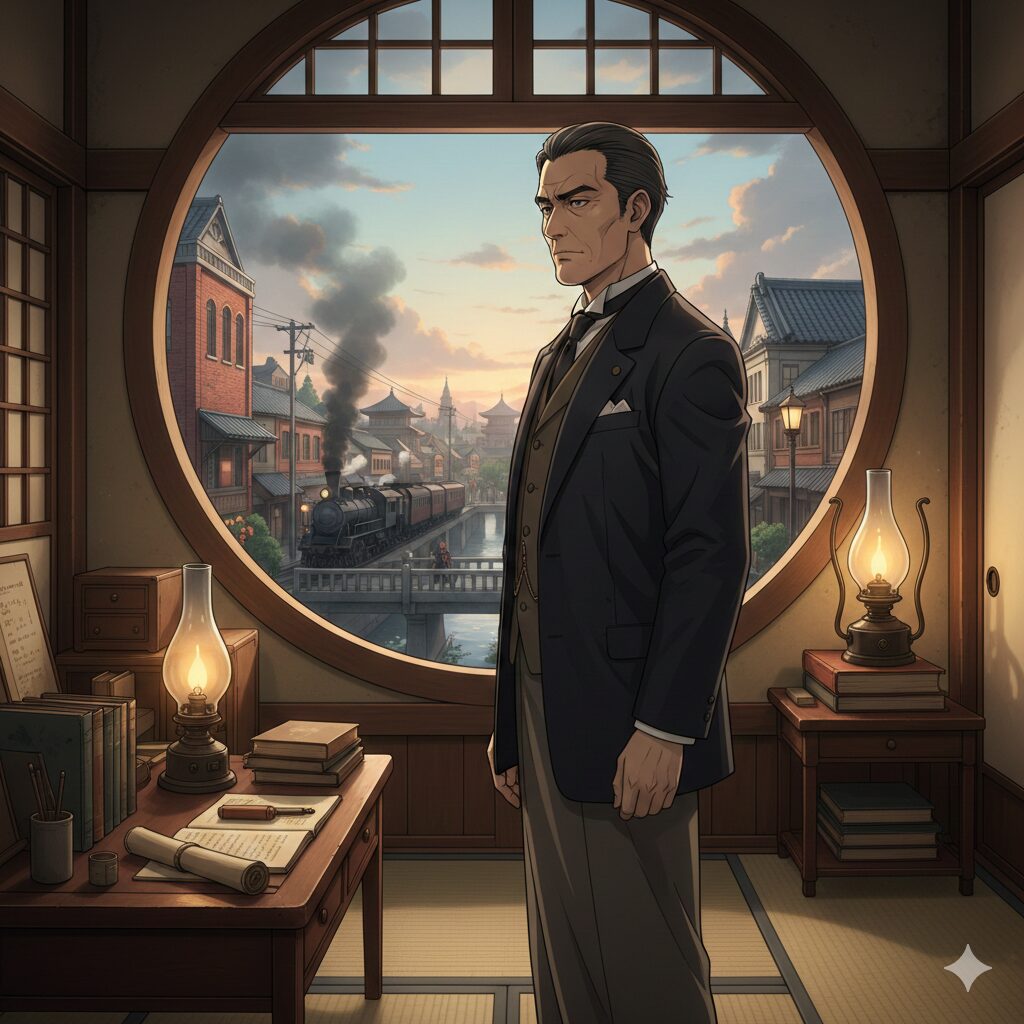
Every year on February 21, Japan commemorates “Soseki Day.” This is not merely a literary anniversary. It marks a highly symbolic historical event when Natsume Soseki, one of the most influential writers in modern Japanese literature, outright rejected a massive national honor. For our international readers looking to understand the depths of Japanese culture, this “spirit of rebellion against authority” is a crucial key.

Who is Natsume Soseki? The Literary Giant Who Built Modern Japan’s Spiritual Pillar
Natsume Soseki (1867–1916) is the representative novelist and scholar of English literature of the Meiji era, a period when Japan underwent rapid modernization. He is so deeply familiar and respected by the Japanese people that his portrait graced the Japanese 1000-yen banknote for many years.
His masterpieces include I Am a Cat, which satirizes the foolishness of human society from a feline perspective; Botchan, depicting the struggles of a young, righteous teacher; and his ultimate masterpiece, Kokoro, which thoroughly explores the abyss of human egoism and loneliness. More than a century later, Soseki’s works remain in all Japanese junior high and high school textbooks, continuing to profoundly influence the formation of Japanese spirituality and ethics.
February 21, 1911: Why Did Soseki Return the Title of “Doctor of Literature”?
On February 21, 1911, the Japanese Ministry of Education (the government agency equivalent to today’s Ministry of Education, Culture, Sports, Science and Technology) notified Natsume Soseki that he would be awarded the title of “Doctor of Literature.” In Japan at the time, receiving a doctorate from the state was the highest honor anyone could envy and a glory for one’s entire family.
However, Soseki immediately sent a letter of refusal to the Ministry. In it, he clearly declared, “I have lived merely as Natsume Kinnosuke (his real name) up until now, and I wish to continue living merely as Natsume Kinnosuke. There is no reason for me to receive a special title from the state.” He fiercely despised the idea that the value of scholarship or literature should be dictated by “authority granted by the state.” This absolute spirit of independence and refusal to pander to authority is one of the main reasons he garners overwhelming support to this day.
- Who is Natsume Soseki? The Literary Giant Who Built Modern Japan’s Spiritual Pillar
- February 21, 1911: Why Did Soseki Return the Title of “Doctor of Literature”?
- Understanding Japanese Culture Through “Soseki Day”: The Struggle Between Peer Pressure and “Individualism”
- To Our Readers: Would You Choose “National Honor” or “Living True to Yourself”?
- 2月21日は「漱石の日」:日本の偉大なる文豪が国家の権威を完全拒絶した日
- 「漱石の日」から深く読み解く日本文化:同調圧力と「自己本位」の闘争
- 読者の皆様へ:あなたなら「国家の名誉」と「自分らしい生き方」、どちらを選びますか?
Understanding Japanese Culture Through “Soseki Day”: The Struggle Between Peer Pressure and “Individualism”
Soseki’s action was not simply the eccentric behavior of a cranky artist. Hidden within it is a strong antithesis to the complex structures that flow at the foundation of Japanese culture.
The Wave of Westernization and a Warning Against the Loss of Japanese Identity
At the time, Japan was pushing for rapid modernization (Westernization) at a national level to catch up with Western powers. The government was desperate to turn citizens into cogs for a wealthy and militarily strong nation, cultivating elites who would serve the state. Being awarded a doctorate by the country meant being incorporated into the establishment as a “state-certified superior talent.”
Having studied in London, Soseki understood the overwhelming power of Western civilization, but he felt a strong sense of crisis toward Japan’s “superficial enlightenment”—copying the West only on the surface while losing its original spirit. The background to his refusal of the doctorate was a quiet yet fierce resistance against the modern state: the determination to face art as an independent human being, without being absorbed into the state’s framework.
The Value of “My Individualism” Living on in Modern Japanese Society
Japanese society has long had a culture that values group harmony, as represented by the ancient proverb “Harmony is to be valued.” However, this can sometimes turn into “peer pressure,” harboring the danger of crushing individual free will and diversity.
In his later years, Soseki delivered a famous lecture titled My Individualism. In it, he preached the importance of living based on the conviction bubbling up from within one’s own inner self (self-centeredness), rather than blindly obeying the standards of others or state authority. Respect the individuality of others, while thoroughly maintaining your own. For modern Japanese people who often feel suffocated by organizational rules and societal expectations, Soseki’s philosophy continues to provide immense salvation and guidance. Soseki Day can truly be called a day that celebrates the “birth of the true individual” in Japan.
To Our Readers: Would You Choose “National Honor” or “Living True to Yourself”?
Authority and titles certainly bring social credibility and economic stability. Yet, Natsume Soseki chose to remain “just himself,” even if it meant letting all of that go. To him, freedom and independence of the mind were treasures that could not be replaced by anything else.
If you, reading this article, were offered the highest honor your country could bestow, could you refuse it and say, “I am fine just the way I am,” like Soseki did? Or would you accept the honor and choose the path of expanding your social influence? Across time and borders, Soseki throws a sharp question at us: “Are you living your own life?” How would you answer?
References and Related Links
- Natsume Soseki Memorial Museum (Official museum exploring Soseki’s life and works)
- Aozora Bunko: Natsume Soseki Collection (Free Japanese archives of his original texts)
- What’s Today’s Special Day Series (Explore more Japanese anniversaries and events here)
2月21日は「漱石の日」:日本の偉大なる文豪が国家の権威を完全拒絶した日
毎年2月21日は、日本において「漱石の日」として記憶されています。この日は、単なる作家の記念日ではありません。日本の近代文学において最も影響力のある作家の一人である夏目漱石(なつめ そうせき)が、国家からの巨大な名誉をきっぱりと拒絶したという、非常に象徴的な出来事が起きた日なのです。海外の読者の皆様に日本文化の深層を理解していただく上で、この「権威に対する反骨精神」は非常に重要な鍵となります。
夏目漱石とは誰か?近代日本の精神的支柱を築いた文学の巨人
夏目漱石(1867年〜1916年)は、日本の近代化が急速に進んだ「明治時代」を代表する小説家であり、英文学者です。彼の肖像画は、長年にわたって日本の千円紙幣に描かれていたほど、日本人にとって馴染み深く、尊敬されている人物です。
代表作には、猫の視点から人間社会の愚かさを風刺した『吾輩は猫である』、正義感の強い青年教師の奮闘を描いた『坊っちゃん』、そして人間のエゴイズムと孤独の深淵を描き切った最高傑作『こころ』などがあります。漱石の作品は、100年以上が経過した現在でも、日本のすべての中学校や高校の教科書に掲載されており、日本人の精神性や倫理観の形成に多大な影響を与え続けています。
1911年2月21日:なぜ漱石は「文学博士」の称号を突き返したのか
1911年(明治44年)の2月21日、日本の文部省(現在の文部科学省にあたる政府機関)は、夏目漱石に対して「文学博士」の称号を授与すると通知しました。当時の日本において、国から博士号を与えられることは、一族の誉れであり、誰もが羨む最高の栄誉でした。
しかし、漱石は即座に文部省へ辞退の手紙を送ります。その手紙の中で彼は、「自分はこれまでただの夏目金之助(本名)として生きてきたし、これからもただの夏目金之助として生きていきたい。国から特別な肩書きをもらう理由はない」と明確に宣言しました。彼は、学問や文学の価値が「国家が与える権威」によって決められることを激しく嫌悪したのです。この徹底した独立心と、権威に媚びない姿勢こそが、彼が現代に至るまで圧倒的な支持を集める理由の一つです。
「漱石の日」から深く読み解く日本文化:同調圧力と「自己本位」の闘争
この漱石の行動は、単なるへそ曲がりなエピソードではありません。ここには、日本文化の根底に流れる複雑な構造と、それに対する強烈なアンチテーゼが隠されています。
西洋化の波と日本のアイデンティティ喪失への警鐘
当時の日本は、西洋列強に追いつくために、国を挙げて急速な近代化(西洋化)を推し進めていました。政府は国民を富国強兵の歯車とし、国家に役立つエリートを育成しようと躍起になっていました。国から博士号を与えられるということは、いわば「国家公認の優れた人材」として体制側に組み込まれることを意味していました。
ロンドンへの留学経験がある漱石は、西洋文明の圧倒的な力を理解しつつも、日本が上辺だけ西洋の真似をして本来の精神を失っていく「上滑りの開化」に対して強い危機感を抱いていました。彼が博士号を拒否した背景には、「国家の枠組みに回収されず、一人の自立した人間として芸術に向き合う」という、近代国家に対する静かな、しかし強烈な抵抗があったのです。
現代日本社会に生き続ける「私の個人主義」の価値
日本社会は古くから「和をもって尊しとなす」という言葉に代表されるように、集団の調和を重んじる文化を持っています。しかし、それは時に「同調圧力」となり、個人の自由な意思や多様性を押しつぶしてしまう危険性を孕んでいます。
漱石は晩年、『私の個人主義』という有名な講演を行いました。彼はそこで、他人の基準や国家の権威に盲従するのではなく、自分自身の内面から湧き上がる確信(自己本位)に基づいて生きることの重要性を説きました。他者の個性を尊重しつつ、自分の個性も徹底的に貫く。この漱石の哲学は、組織のルールや世間の空気に息苦しさを感じることが多い現代の日本人にとって、今なお強烈な救いと指針を与え続けています。漱石の日とは、日本における「真の個人の誕生」を祝福する日と言えるでしょう。
読者の皆様へ:あなたなら「国家の名誉」と「自分らしい生き方」、どちらを選びますか?
権威や肩書きは、確かに社会的な信用や経済的な安定をもたらします。しかし、夏目漱石はそれらをすべて手放してでも、「ただの自分」であることを選びました。彼にとって、心の自由と独立は何物にも代えがたい財産だったのです。
この記事を読んでいるあなたは、もし国を挙げての最高の栄誉を打診されたとき、漱石のように「私は私のままで良い」と断ることができるでしょうか? それとも、その名誉を受け入れて社会的な影響力を拡大する道を選びますか? 時代や国境を越えて、漱石は私たちに「自分自身の人生を生きているか?」という鋭い問いを投げかけています。あなたなら、どう答えますか?

コメント