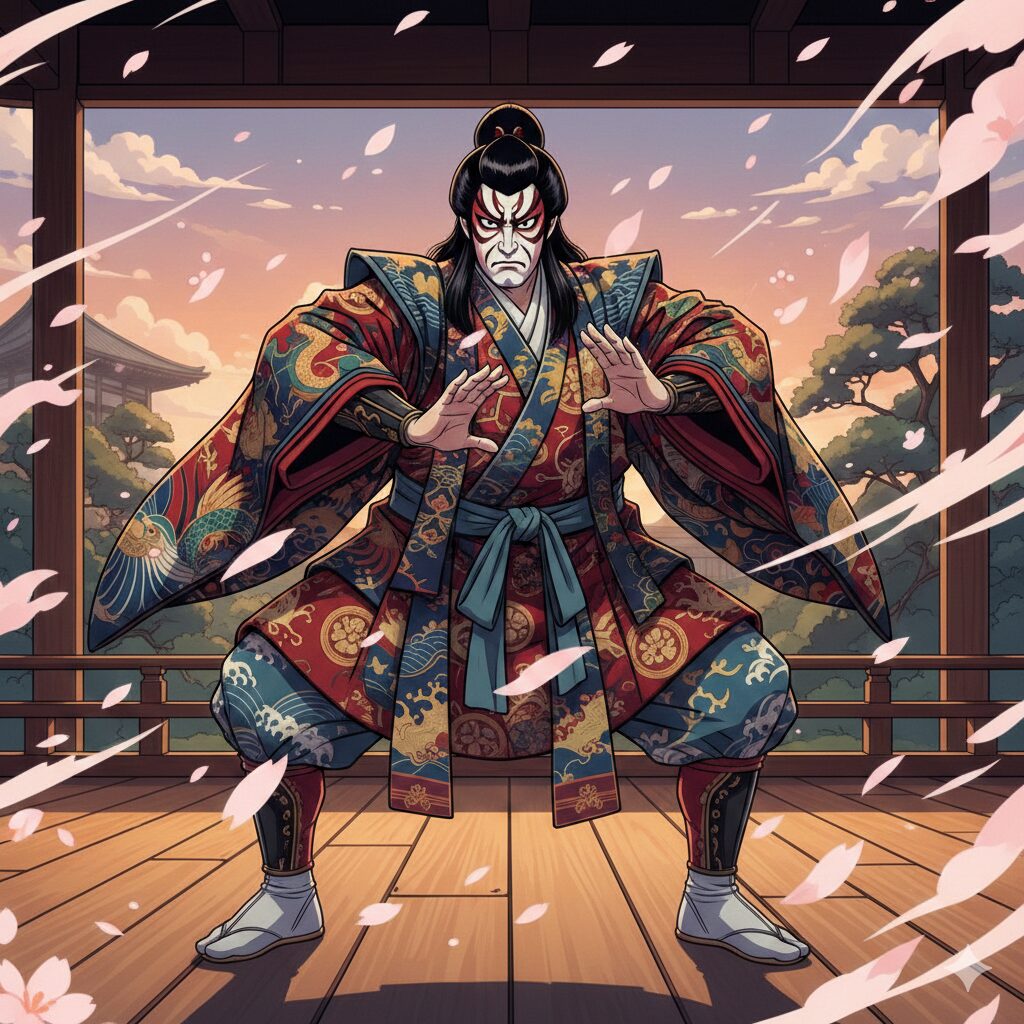
February 20th marks “Kabuki Day,” a celebration of Japan’s world-renowned traditional performing art. While Kabuki is often viewed today as a highly formalized, prestigious art form with a high barrier to entry, its roots are surprisingly avant-garde and full of a rebellious spirit.
On February 20, 1607, a woman named Izumo no Okuni performed the “Kabuki Odori” (Kabuki dance) before Tokugawa Ieyasu and other warlords at Edo Castle. This event is widely recognized as the official dawn of Kabuki history. To celebrate this day, let’s unravel the profound history of Kabuki and the essence of Japanese culture breathing within it.

The Spirit of “Kabuku”: Kabuki as Edo’s Counterculture
The word “Kabuki” originates from the verb “kabuku,” which means to lean, to act out of the ordinary, or to wear eccentric, flashy fashion. During the transition from the Warring States period to the early Edo period, rebellious youths who paraded the streets in flamboyant outfits defying the establishment were known as “Kabukimono.”
Izumo no Okuni’s “Kabuki Odori” fully embraced this “Kabukimono” style. Okuni, a woman, dressed as a male warrior, brandished a sword, and playfully flirted with teahouse girls on stage. This scandalous and highly original performance instantly captivated the masses. In essence, the origins of Kabuki were akin to modern punk rock or avant-garde street culture.
Suppression and Evolution: Why Did Kabuki Become an “All-Male” World?
Okuni’s wildly popular “Women’s Kabuki” was soon banned by the Shogunate for corrupting public morals. It was replaced by “Boys’ Kabuki,” which met the exact same fate and was also outlawed.
Faced with relentless suppression, the performers adapted to survive. This led to the birth of “Yaro Kabuki,” performed exclusively by adult men. No longer able to rely solely on youthful beauty, these actors had to radically refine their acting and expressive skills. The sophistication of the “Onnagata” (male actors specializing in female roles), the development of complex narratives, and the creation of unique stylized aesthetics like “Mie” and “Kumadori” were the results of artists pushing their craft to the absolute limit under strict constraints.
Decoding Japanese Cultural DNA Through Stylized Beauty
The Kabuki stage deeply reflects Japanese aesthetics and spirituality. Here are two iconic elements:
- Kumadori (Makeup): A method of exaggerating facial blood vessels and muscles to express a character’s emotions and nature. A righteous hero wears red, a ruthless villain wears blue, and a supernatural monster wears brown. This color-coded visual expression is the undisputed ancestor of character design in modern Japanese anime and manga.
- Mie (Posing): The dramatic moment when an actor freezes in a striking pose at the emotional climax of a scene. It functions exactly like a freeze-frame or an extreme close-up in cinema, focusing the entire audience’s attention on a single point. It embodies the Japanese aesthetic of valuing “Ma” (the negative space or pause), concentrating explosive energy within absolute silence.
Kabuki has never been confined to a rigid box of “tradition.” It has always incorporated the cutting-edge trends of its era. Even today, Kabuki continues to challenge boundaries with adaptations of popular manga like ONE PIECE and Hayao Miyazaki’s Nausicaä of the Valley of the Wind. The spirit of “Kabuku”—rebellion and innovation—flows continuously through the undercurrents of Japanese pop culture, over 400 years later.
What Will You “Kabuku” in Your Own Life?
Kabuki is the crystallization of the energy of pioneers who constantly questioned common sense and sought new forms of expression. It teaches us a vital lesson: true tradition is not about preserving the past in amber, but about surviving through relentless innovation.
Did reading this change your image of what “traditional” means? If you were to take on a new challenge in today’s society, what conventions would you smash? How would you embody the spirit of “Kabuku”? Let me know your thoughts.
Related Links
- External Reference: To explore performance schedules and dive deeper into Kabuki knowledge, visit the official portal site operated by Shochiku Co., Ltd., “Kabukibito” (Kabuki Web).
- Internal Link: Discover more fascinating Japanese anniversaries and historical events in our What’s Today’s Special Day Series.
2月20日は「歌舞伎の日」:江戸時代のパンクロックはいかにして日本の伝統芸能となったのか
2月20日は、日本が世界に誇る伝統芸能の記念日「歌舞伎の日」です。今でこそ「敷居が高い」「格式高い伝統芸術」と見なされる歌舞伎ですが、そのルーツは驚くほど前衛的で、反逆精神に満ちたものでした。
1607年(慶長12年)の2月20日、出雲阿国(いずものおくに)という女性が、江戸城で徳川家康や諸大名の前で「かぶき踊り」を披露しました。これが、今日まで続く歌舞伎の公式な歴史の幕開けとされています。この日を祝し、歌舞伎の奥深い歴史と、そこに息づく日本文化の真髄を紐解いていきましょう。
「かぶく」精神:歌舞伎は江戸時代のカウンターカルチャーだった
「歌舞伎(かぶき)」という言葉は、「傾く(かぶく)」という動詞に由来しています。常識から外れた行動をとる、奇抜なファッションで身を包む、といった意味を持つ言葉です。当時の戦国時代から江戸時代初期にかけて、派手な衣装で街を練り歩き、体制に反抗する若者たちを「かぶき者」と呼びました。
出雲阿国の「かぶき踊り」は、まさにこの「かぶき者」のスタイルを取り入れたものでした。女性である阿国が男装し、刀を振り回し、茶屋の娘と戯れるという、当時としてはスキャンダラスで斬新なパフォーマンスは、民衆の心を一瞬にして掴みました。つまり、歌舞伎の原点は、現代で言うところのパンクロックやアバンギャルドなストリートカルチャーだったのです。
弾圧と進化:なぜ歌舞伎は「男性のみ」の世界になったのか
大流行した阿国の「遊女歌舞伎」ですが、風紀を乱すという理由から幕府によって禁止されます。次に少年たちによる「若衆歌舞伎」が流行しますが、これも同じ理由で禁止されました。
度重なる幕府の弾圧に対し、役者たちは表現の形を変えることで生き残りを図ります。成人男性のみで演じる「野郎歌舞伎」の誕生です。容姿の美しさで観客を惹きつけることができなくなった彼らは、純粋に「演技力」と「表現力」を磨く道を選びました。女性の役を男性が演じる「女形(おんながた)」の洗練、物語の複雑化、そして「見得(みえ)」や「隈取(くまどり)」といった独特の様式美は、制限された環境下で芸術性を極限まで高めようとした努力の結晶です。
独自の様式美から読み解く日本文化のDNA
歌舞伎の舞台には、日本人の美意識や精神性が色濃く反映されています。ここでは代表的な2つの要素を解説します。
- 隈取(くまどり): 役の感情や性質を顔の血管や筋肉を誇張して描くメイクアップ手法です。正義のヒーローは「赤」、冷酷な悪役は「青(藍)」、人間離れした妖怪は「茶色」と、色彩によってキャラクターを一目で表現します。これは、現代の日本のアニメや漫画におけるキャラクターデザインの原点とも言える視覚表現です。
- 見得(みえ): 感情が最高潮に達した瞬間に、動きを止めてポーズを決める演出です。映画のストップモーションやクローズアップ効果と同じ役割を果たし、観客の視線を一点に集中させます。「間(ま)」を重んじ、静寂の中に最大のエネルギーを込める日本の美学がここにあります。
歌舞伎は「伝統」という枠に収まることなく、常にその時代の最先端を取り入れてきました。現代でも、人気漫画『ONE PIECE』や『風の谷のナウシカ』を歌舞伎化するなど、新たな挑戦を続けています。「かぶく」という反逆と革新の精神は、400年以上経った今でも日本のポップカルチャーの底流に脈々と受け継がれています。
あなたは自分の人生で何を「かぶき」ますか?
常識を疑い、新しい表現を模索し続けた先人たちのエネルギーの結晶、それが歌舞伎です。伝統とは、過去のものをそのまま保存することではなく、常に革新を続けることでしか生き残れないという事実を、歌舞伎は私たちに教えてくれます。
この記事を読んで、あなたは伝統に対するイメージが変わりましたか? もしあなたが、現代の社会で何か新しい挑戦をするとしたら、どんな常識を打ち破り「かぶき」たいですか? ぜひ、あなたの考えを聞かせてください。
関連リンク
- 参考外部リンク:歌舞伎の公演情報や深い知識を探求するなら、松竹株式会社が運営する公式ポータルサイト「歌舞伎美人(かぶきびと)」をご覧ください。
- 内部リンク:日本の他の特別な記念日や歴史的な出来事については、What’s Today’s Special Day Seriesのカテゴリーからご覧いただけます。
コメント