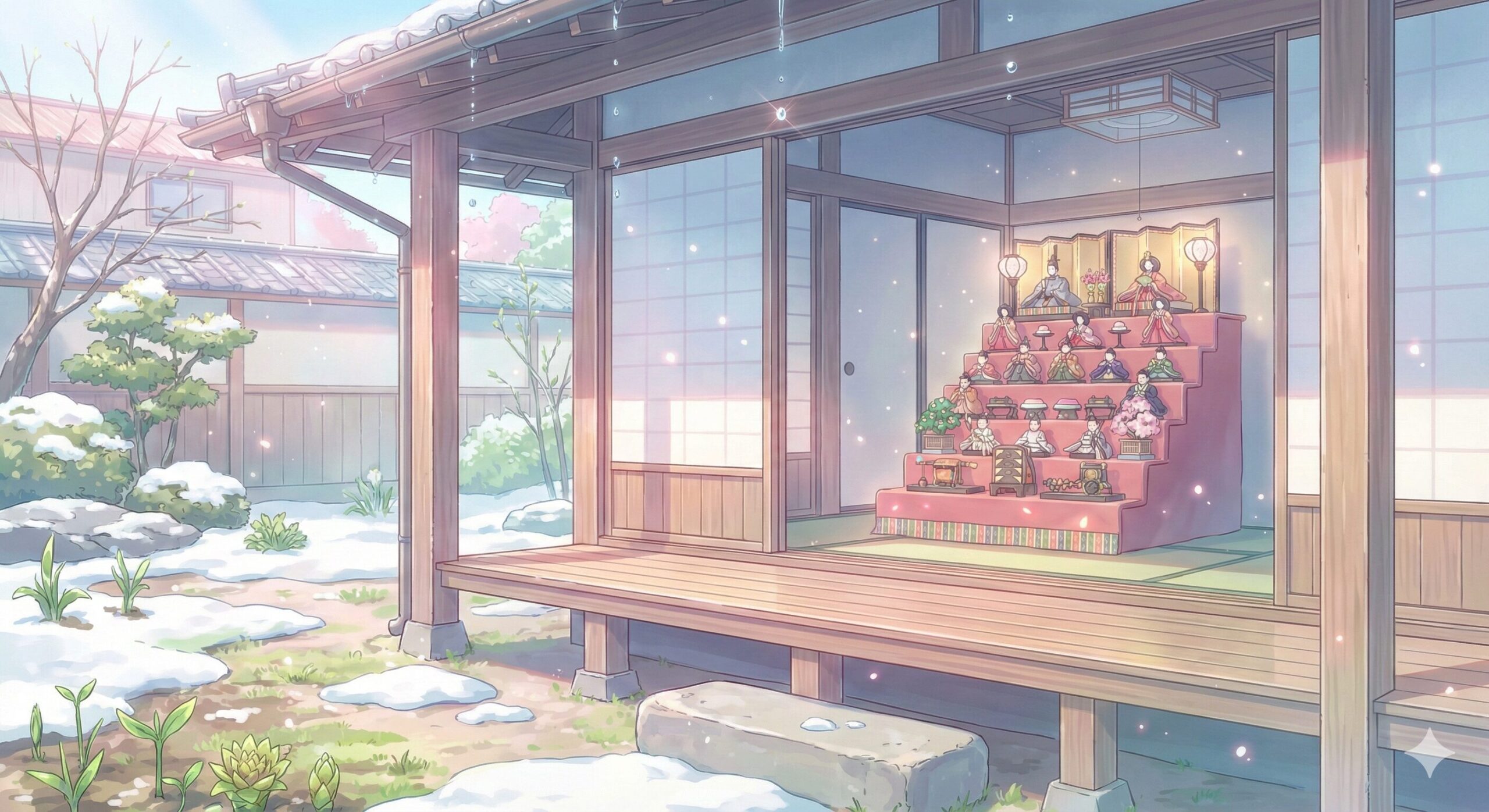
The Japanese calendar possesses a beautiful system called “Nijūshi Sekki” (The 24 Solar Terms), which divides the four seasons into even finer segments. Today, February 19th, marks one of these specific terms known as “Usui (雨水)“.
In many countries, the arrival of spring might be judged by temperature or blooming flowers. However, Japanese sensibility is far more subtle, detecting spring in the humidity levels and the sound of melting snow. “Usui” marks the decisive moment when the harsh reign of winter is quietly handed over to spring.

1. What is Usui? History and Nature’s Cycle
“Usui” literally translates to “Rain Water.” It signifies the time when “precipitation falling from the sky turns from snow to rain, and accumulated snow and ice begin to melt into water.” On the calendar, it falls roughly 15 days after “Risshun” (The Start of Spring, around Feb 4th).
For Japanese farmers of the past, this day was crucial. It was the signal that snowmelt would begin to moisten the fields, marking the start of preparations for agriculture. The snow piled on the mountains melts, increasing the volume of river water, and the sound of flowing water breaks the silence of winter. This natural orchestra is what Japanese people perceive as the “footsteps of spring.”
During this period, the phrase “San-kan-shi-on” (Three Cold Days, Four Warm Days) is often used in Japan. It describes a weather pattern of three cold days followed by four warm ones. The way nature moves back and forth, yet steadily towards spring, resembles the journey of life itself.
2. Usui and Hina Dolls: Why Display Them Today?
The cultural event most deeply associated with Usui is the display of “Hina-ningyo” (Hina Dolls).
While March 3rd is widely known as “Momo no Sekku” (Peach Festival / Girls’ Day), tradition dictates that the best day to start displaying the dolls is actually today, on Usui (Feb 19th).
The Legend of Good Matchmaking
There is an old saying in Japan:
“If you display Hina dolls on the day of Usui, you will be blessed with a good marriage.”
Why is this?
It relates to “water.” Usui is the season when water becomes abundant, and life begins to sprout. Water is the source of all life and is constantly flowing. The wish is for “happiness to flow in without stagnation” and for “the daughter’s life to ride a good current.” Conversely, there is a superstition that if you leave the dolls out too long after the festival, “marriage will be delayed.” Japanese people cherish this sense of timing—knowing when to display and when to put away.
3. How to Spend Usui in Modern Japan
Even in modern Japan, spring ingredients begin to line the shelves of supermarkets during this time.
- Hamaguri (Clams): A staple for the Doll Festival, coming into season now. Because the two shells of a clam fit perfectly only with each other and never with another shell, they are a symbol of a “happy married couple.”
- Mountain Vegetables (like Butterbur sprout): These bitter vegetables that poke their heads out of the melting snow are believed to help expel toxins accumulated in the body during winter.
Even living in the city, you might notice that the smell of rain has changed from the cold, dry scent of winter to the scent of damp earth. That is the essence of Usui.
To Our Readers
What signs do you look for to feel that winter is ending and spring is coming in your country?
Is it the song of birds, or perhaps the scent of a specific breeze?
How do you feel about the Japanese culture of naming the specific moment when snow turns to rain, like “Usui,” and cherishing the subtle changes of the seasons? If you hear the sound of rain today, it might not just be bad weather; it could be the sound of spring knocking on your door.
Please let us know in the comments what the “sign of spring’s beginning” is in your part of the world.
References & Links
- Japan National Tourism Organization – Seasons and Travel Guide
- What’s Today’s Special Day Series – Read more articles here
【2月19日】雨水(Usui):雪が雨に変わり、春が静かに目覚める日
日本の暦には、四季をさらに細かく分けた「二十四節気(にじゅうしせっき)」という美しいシステムが存在します。今日、2月19日はその一つ、「雨水(Usui)」にあたります。
海外の多くの国では、春の訪れを「気温」や「花」で判断するかもしれません。しかし、日本の感性はもっと微細で、湿度や雪解けの「音」に春を感じ取ります。この「雨水」は、厳しかった冬の王座が、静かに春へと譲り渡される決定的な瞬間なのです。
1. 雨水(Usui)とは何か?歴史と自然のサイクル
「雨水」とは、文字通り「雨の水」を意味します。これは、「空から降るものが雪から雨に変わり、積もった雪や氷が解けて水になる」という時期を示しています。暦の上では、立春(2月4日頃)から数えて15日目にあたります。
昔の日本の農家にとって、この日は非常に重要でした。雪解け水が田畑を潤し始め、農耕の準備を始める合図だったからです。山に積もった雪が解け、川の水量が増し、その音が冬の静寂を破る。この自然のオーケストラこそが、日本人が感じる「春の足音」なのです。
この時期、日本では「三寒四温(San-kan-shi-on)」という言葉がよく使われます。3日間寒い日が続き、その後の4日間は暖かい日が続くという気象パターンです。行きつ戻りつしながら、確実に春へと向かう様子は、まるで人生の歩みのようでもあります。
2. 雨水と雛人形:なぜ今日飾るのか?
雨水の日に最も関連深い日本の文化行事は、「雛人形(Hina-ningyo)」を飾ることです。
3月3日は「桃の節句(ひな祭り)」として知られていますが、実はその準備を始めるのに最適な日が、この「雨水」の日(2月19日)だと古くから言い伝えられています。
良縁を呼ぶ伝説
日本には古くからこのような言い伝えがあります。
「雨水の日に雛人形を飾ると、良縁に恵まれる」
なぜでしょうか?
これには「水」が関係しています。雨水は、水が豊かになり生命が芽吹く時期です。水は全ての命の源であり、流れ続けるもの。「滞りなく、幸せが流れてくるように」「娘の人生が良い流れに乗るように」という願いが込められているのです。逆に、ひな祭りが終わっても人形を出しっぱなしにしていると「婚期が遅れる」という迷信もあり、日本人はこの「飾る時期」と「片付ける時期」を非常に大切にします。
3. 現代日本における雨水の過ごし方
現代の日本でも、この時期になるとスーパーマーケットには春の食材が並び始めます。
- 蛤(ハマグリ):ひな祭りの定番ですが、この時期から旬を迎えます。対になっている貝殻が他の貝とは決して合わないことから、「夫婦円満」の象徴とされています。
- 山菜(ふきのとう等):雪解けの土から顔を出す苦味のある野菜は、冬の間に体に溜まった毒素を排出すると考えられています。
都会に住んでいても、ふとした瞬間に降る雨の匂いが、冬の冷たく乾燥した匂いから、湿り気を帯びた土の匂いに変わっていることに気づくでしょう。それが雨水です。
読者の皆様へ
あなたの国では、冬が終わり春が来ることを、どのようなサインで感じ取りますか?
鳥の声でしょうか、それとも特定の風の匂いでしょうか?
日本の「雨水」のように、雪が雨に変わるその一瞬に名前を付け、季節の変化を愛でる文化について、どう感じましたか?もしあなたが今日、雨音を聞いたなら、それはただの悪天候ではなく、春がドアをノックしている音かもしれません。
ぜひ、あなたの国の「春の始まりのサイン」をコメントで教えてください。
参考リンク
- 雨水(Wikipedia) – 日本語での詳細な解説
- Japan National Tourism Organization – 日本の四季と旅行情報
- What’s Today’s Special Day Series – その他の記念日記事はこちら
コメント