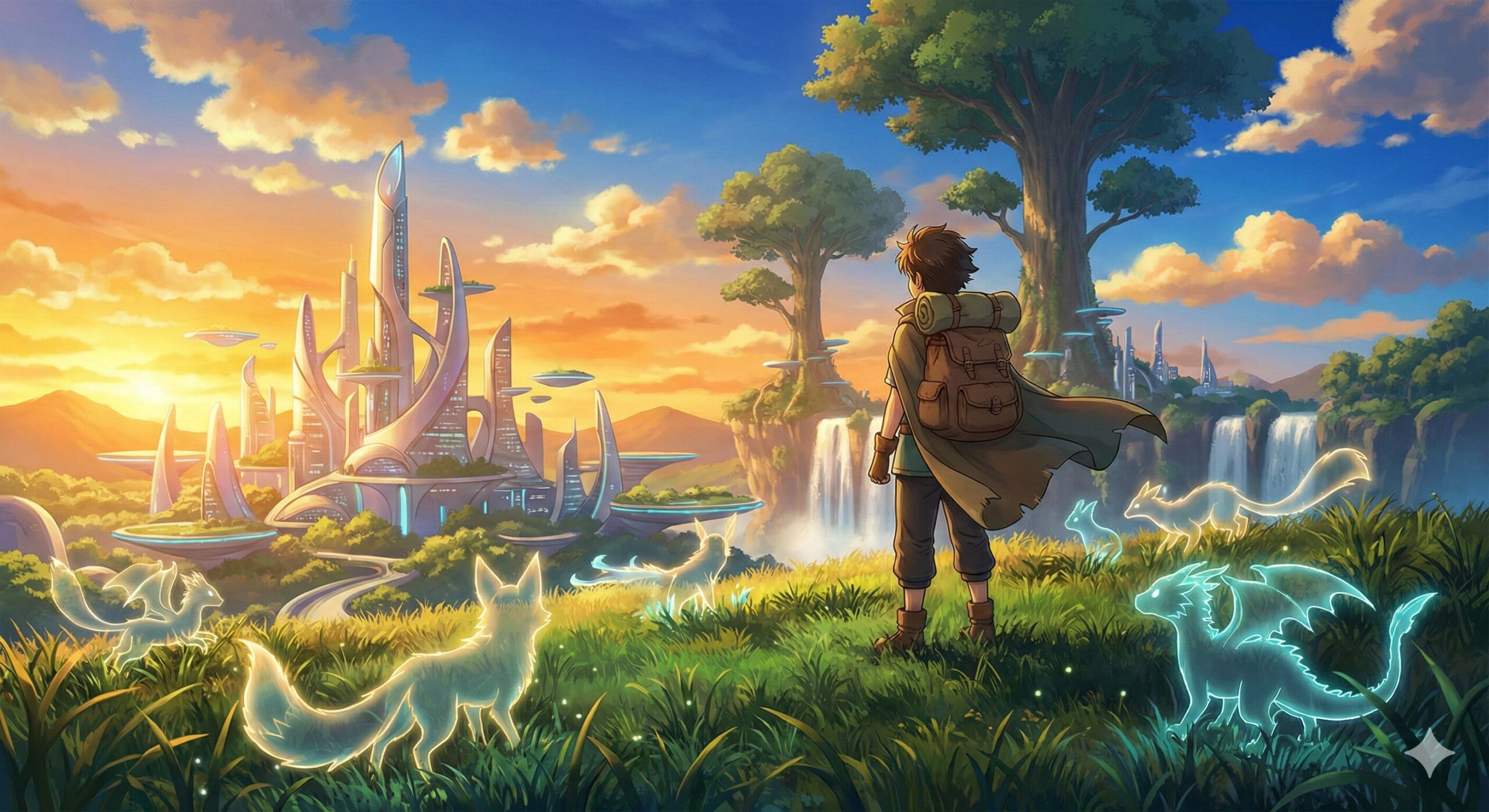
When discussing Japanese anime, one title is impossible to ignore: “Pokémon” (Pocket Monsters). Since its broadcast debut in 1997, this franchise has continued to captivate children—and adults who were once children—around the globe. But Pokémon is more than just an action-adventure series. It encapsulates unique Japanese spirituality, views on nature, and the philosophy of play. Today, from a Japanese perspective, we dissect the true essence of Pokémon.

Overview: An Never-Ending Adventure
The basic structure of the story is simple yet universal. Satoshi (known internationally as Ash Ketchum), a boy from Masara Town (Pallet Town), meets his partner Pokémon, “Pikachu,” on his 10th birthday. Although they initially clash, they form a unique bond by overcoming crises together. To fulfill his dream of becoming a “Pokémon Master,” Ash travels the world, encountering various Pokémon, catching them, raising them, and battling other trainers.
While Ash’s journey, spanning over 25 years, reached a conclusion in 2023, a new series featuring protagonists Liko and Roy has begun, carrying the torch forward. The essence of the Pokémon anime lies not in winning or losing, but in “coexistence with different species” and “curiosity about the wider world.”
Critique from a Japanese Cultural Perspective: Why is Pokémon Special?
Why has an anime born from a Japanese RPG become so beloved across borders? The answer lies deep within Japan’s history and culture.
1. The Origin of “Collecting”: Satoyama Insect Catching Culture
Satoshi Tajiri, the creator of Pokémon, was an avid “insect collecting” boy in his childhood. In 1970s Japan, many “Satoyama” landscapes—places where nature and humans coexisted—still remained. Children would enter the forests, searching for beetles and stag beetles, fascinated by their beauty and strength, and showing them off to friends.
However, with urbanization, that nature was lost. “I want to deliver the excitement of those summer days to modern children.” At the root of Pokémon lies a nostalgia for the vanishing original landscapes of Japan and a passion to reclaim the joy of exploration. The idea of containing nature (monsters) within technology (Poké Balls) can be seen as a symbol of the “fusion of nature and technology” unique to Japan during its period of high economic growth.
2. Embodiment of Japanese Animism (Yaoyorozu no Kami)
In Western fantasy, monsters are often depicted as “evil to be defeated.” However, Pokémon is different. They are “friends” and “partners.” This is heavily influenced by Shinto, Japan’s indigenous religion.
Shinto has the concept of “Yaoyorozu no Kami” (Eight Million Gods), believing that spirits or gods dwell in everything—mountains, rivers, stones, and trees. The way Pokémon symbolize natural elements like fire, water, grass, and thunder, and interact with humans as equals, is a modern interpretation of this animistic worldview. Humans do not dominate nature; they live with it. This philosophy of harmony resonates subconsciously with viewers around the world as a wish for peace.
3. The Aesthetics of “Evolution” and “Bonsai”
Pokémon “evolve.” They grow from small, cute forms into strong, robust ones. This parallels the growth process of “Shuhari” in Japanese martial arts and traditional performing arts. Furthermore, the idea of packing a vast world and powerful monsters into small capsules falls within the lineage of Japan’s “shrinkage orientation”—seen in Bonsai, miniature gardens, and miniaturization technology like the Walkman. There is a unique Japanese aesthetic of finding infinite possibilities within limited spaces.
Recommended Points: Why Watch It Now?
- Communication Beyond Words: Pikachu does not speak human language, yet its emotions are painfully clear. The pinnacle of non-verbal communication is found here.
- Endless Diversity: With over 1,000 types of Pokémon, the series represents diversity itself. Everyone will surely find their own favorite.
- Balance of Daily Life and Adventure: The anime carefully depicts not only epic battles but also scenes of eating and camping. The “sense of life on a journey” is the hidden charm of this work.
Conclusion
Pokémon is not merely an anime for children. It is a grand epic containing Japanese views on nature, the culture of play, and a question to modern society: “How do we coexist with those who are different?” If you haven’t yet dived deep into the world of Pokémon, you should pick up a Poké Ball right now. Your forgotten “spirit of adventure” is waiting for you there.
Reference Links
To learn more about Japanese Anime Culture:
Japanese Culture – Anime Archives
ポケットモンスター:なぜ日本の「虫取り少年」の夢は世界を征服したのか
日本のアニメを語る上で、この作品を避けて通ることはできません。「ポケットモンスター(Pokémon)」。1997年の放送開始以来、世界中の子供たち、そしてかつて子供だった大人たちを熱狂させ続けているこの作品は、単なる冒険活劇ではありません。そこには、日本固有の精神性、自然観、そして遊びの哲学が凝縮されています。今回は、日本人の視点からポケモンの真髄を徹底解剖します。
作品概要:終わらない冒険の旅
物語の基本構造はシンプルかつ普遍的です。マサラタウンに住む少年・サトシ(海外名:Ash Ketchum)は、10歳の誕生日にパートナーとなるポケモン「ピカチュウ」と出会います。最初は反目し合う二人ですが、危機を乗り越えることで唯一無二の絆を結びます。「ポケモンマスター」になるという夢を叶えるため、サトシは世界中を旅し、様々なポケモンと出会い、ゲット(捕獲)し、育て、他のトレーナーたちとバトルを繰り広げます。
25年以上にわたるサトシの旅は2023年に一区切りを迎えましたが、現在は新たな主人公リコとロイによる新シリーズが始まり、その精神は受け継がれています。ポケモンアニメの本質は、勝敗以上に「異種族との共存」と「広い世界への好奇心」にあります。
日本文化的視点からの論評:なぜポケモンは特別なのか
なぜ、日本のRPGから生まれたアニメが、国境を超えてここまで愛されるのでしょうか。その答えは、日本の歴史と文化の深層にあります。
1. 「収集」の原点:里山の虫取り文化
ポケモンの生みの親である田尻智氏は、幼少期に熱心な「昆虫採集」少年でした。1970年代の日本にはまだ多くの「里山(Satoyama)」――自然と人間が共生する場所――が残っていました。子供たちは森に入り、カブトムシやクワガタを探し、その美しさや強さに魅了され、友達と見せ合いました。
しかし、都市化と共にその自然は失われました。「あの夏の日の興奮を、現代の子供たちに届けたい」。ポケモンという作品の根底には、失われゆく日本の原風景へのノスタルジーと、探索の喜びを取り戻そうとする情熱があります。モンスターボールというテクノロジーの中に自然(モンスター)を収めるという発想は、高度経済成長期の日本ならではの「自然と技術の融合」の象徴とも言えます。
2. 日本のアニミズム(八百万の神)の体現
西洋のファンタジーにおいて、モンスターはしばしば「倒すべき悪」として描かれます。しかし、ポケモンは違います。彼らは「友達」であり「パートナー」です。これは、日本古来の宗教観である神道(Shinto)の影響を色濃く受けています。
神道には「八百万(Yaoyorozu)の神」という概念があり、山、川、石、木、すべてのものに魂や神が宿ると考えます。ポケモンたちが火、水、草、雷といった自然のエレメントを象徴し、人間と対等に関わり合う姿は、まさにこのアニミズム的世界観の現代的解釈です。人間が自然を支配するのではなく、自然と共に生きる。この調和の哲学こそが、無意識のうちに世界中の視聴者に平和への願いとして響いているのです。
3. 「進化」と「盆栽」の美学
ポケモンは「進化」します。小さくて可愛い姿から、強くたくましい姿へ。これは、日本の武道や芸道における「守破離(Shuhari)」の成長プロセスに通じます。また、小さなカプセルの中に広大な世界や強力な怪獣を詰め込むという発想は、日本の「縮み志向」――盆栽や箱庭、そしてウォークマンのような小型化技術――の系譜にあります。限られたスペースの中に無限の可能性を見出す、日本独特の美学がそこにはあります。
この作品を読む・観るべきおすすめポイント
- 言葉を超えたコミュニケーション:ピカチュウは人間の言葉を話しませんが、その感情は痛いほど伝わります。非言語コミュニケーションの極致がここにあります。
- 終わりのない多様性:1000種類を超えるポケモンたちは、多様性(Diversity)そのものです。どんな人でも、必ず自分のお気に入りの「推し」が見つかります。
- 日常と冒険のバランス:アニメでは、壮大なバトルだけでなく、食事のシーンやキャンプのシーンが丁寧に描かれます。「旅の生活感」こそが、この作品の隠れた魅力です。
まとめ
ポケットモンスターは、単なる子供向けアニメではありません。それは、日本の自然観、遊びの文化、そして「異なる他者とどう共生するか」という現代社会への問いかけを含んだ壮大な叙事詩です。もしあなたがまだポケモンの世界に深く触れていないなら、今すぐモンスターボールを手に取るべきです。そこには、あなたが忘れていた「冒険心」が必ず待っています。
参考リンク
日本のアニメ文化についてもっと知りたい方はこちら:
Japanese Culture – Anime Archives
コメント